

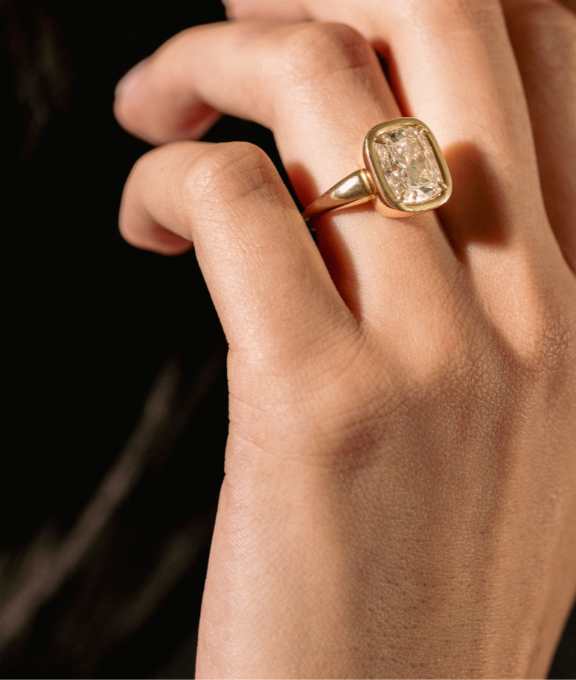
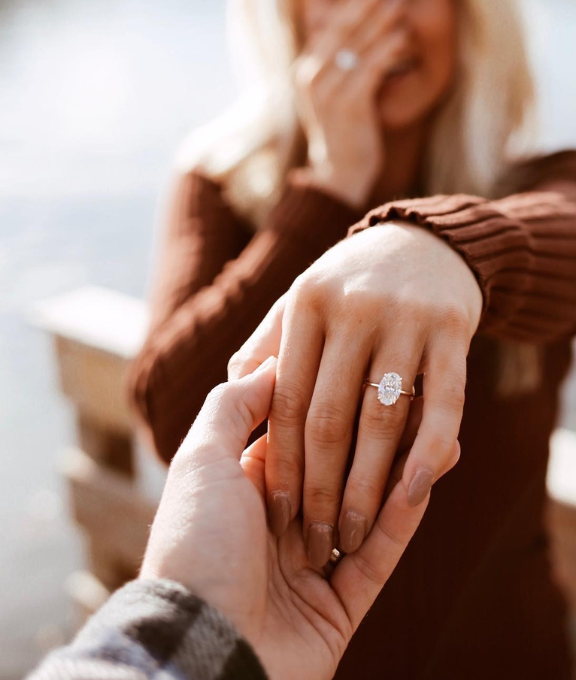


Diamonds set along the band add a touch of light from every angle. Our collection pairs brilliance with sleek, modern settings. Take a look at our rings and see what speaks to you.
Can't find the perfect diamond?
talk to an expertNo products found in this collection


Incredibly professional, thorough and frankly enjoyable experience. Blake made sure I had the absolute perfect stone, and setting. She said Yes before I even opened the box, but had there been doubt, the ring would have clinched it. Thanks GS team!!!

A diamond band engagement ring frames the center stone in a continuous ribbon of light, with accent diamonds set along the shank for heightened brilliance and dimension. From finely detailed pavé to sculptural multi-row designs, each setting is crafted to elevate both sparkle and silhouette. Round and cushion cuts amplify the radiance, while oval, pear, and marquise shapes lend a refined, elongated elegance. Every GOODSTONE ring is accompanied by complimentary lifetime resizing, polishing, and repairs, ensuring enduring beauty without compromise.
This setting lines the band with rows of tiny accent diamonds, set close together and held by small metal beads. The result is a band that sparkles along its length, making the center stone look brighter. It is one of the most popular ways to add shine beyond the center diamond.
Pavé and micro pavé differ in the size of the accent stones. Regular pavé uses small diamonds, usually about 0.01 to 0.02 carats each, and micro pavé uses even smaller stones set in tighter rows for an almost continuous sheet of sparkle. The micro version looks finer and more detailed, and it holds more stones along the band.
These rings hold up to daily wear when they are well made. The small accent stones rest close to the surface, so a hard knock is the main thing that can loosen one, and the risk grows with very active hands. A half pavé band gives you a sturdier build for that kind of wear, since the underside stays plain and takes the knocks that would otherwise reach the stones.
The stones can loosen with daily wear, but they rarely fall out when the ring is cared for and looked over once a year. The tiny metal beads that hold each stone can wear down, so a jeweler retightens them during a routine inspection before a stone works free. Catching a loose bead early is what keeps the diamond in its setting.
This ring can usually be resized, though it takes more care than a plain band. A jeweler works on the plain underside of the band to avoid disturbing the set stones, so small changes in size are easier than large ones. A fully paved band or a micro pavé setting is the hardest to resize, as the stones run all the way around.
A full pavé band carries accent stones all the way around the ring, and a half pavé band sets them only across the top half. The full version sparkles from every angle. The half keeps the underside smooth, which makes it easier to resize and more comfortable against the finger, so many people reach for it when they want daily wear to stay simple.
The band can make the center diamond look larger by surrounding it with extra brightness that runs down the shank toward the stone. The continuous line of small stones lifts the whole ring, so the center looks brighter against a band that already sparkles. The diamond keeps its measurements, and the added shine around it is what changes the impression.
A pavé band and a plain band offer different things. It adds shine along the finger and makes the center pop, but it requires more cleaning and care when resizing. A plain band gives up that extra sparkle for a setting that is simpler to clean and easier to size. The choice usually rests on how much sparkle you want to look after.
Pavé and a halo add sparkle in different places. Pavé lines the band with small diamonds that run along the finger. A halo wraps small diamonds around the center stone to frame it instead. The halo makes the center look larger from above, and the band spreads its shine along the finger. Some rings combine both.
A pavé band usually costs more than a plain band because it holds many small accent diamonds and takes more labor to set. The extra cost depends on how many stones the band carries and how fine the work is. A plain band keeps the setting cost down and directs more of the budget to the center stone.
Platinum and white gold are the usual choices for this setting. Their light color blends with the accent diamonds, and their strength holds the small beads securely. Yellow and rose gold also work, providing a warmer contrast against the stones. Platinum is the most durable for keeping tiny stones tight through years of wear.
These rings require a little more upkeep than plain settings, mostly because there is more to clean. The narrow gaps between the many small stones trap lotion and dust that a plain band never holds, so gentle cleaning is needed more often to keep the sparkle from dulling. A yearly professional visit reaches the buildup between the stones and checks the beads while it is there.
The band pairs well with almost any center shape. Round, oval, cushion, and pear centers all rest naturally above a line of small accent stones. Emerald and Asscher centers work too, where the accent line adds sparkle that the step-cut center does not throw on its own.
Clean the ring gently with warm water, a drop of mild dish soap, and a soft brush, then rinse and pat dry with a soft cloth. Avoid long soaking or hard scrubbing, since either can loosen a small stone. A yearly professional cleaning reaches the buildup between the tiny stones and checks that each one is tight.
You can, with a little extra care built in. A half pavé band suits daily wear well, with a smooth underside that resists the knocks from typing, gripping, and reaching. On very hands-on days, turning the stone inward or choosing a lower setting keeps the accents out of harm’s way.
We elevate your jewelry journey with our personal concierge service. From understanding your unique preferences to guiding you through our exquisite collections.


