



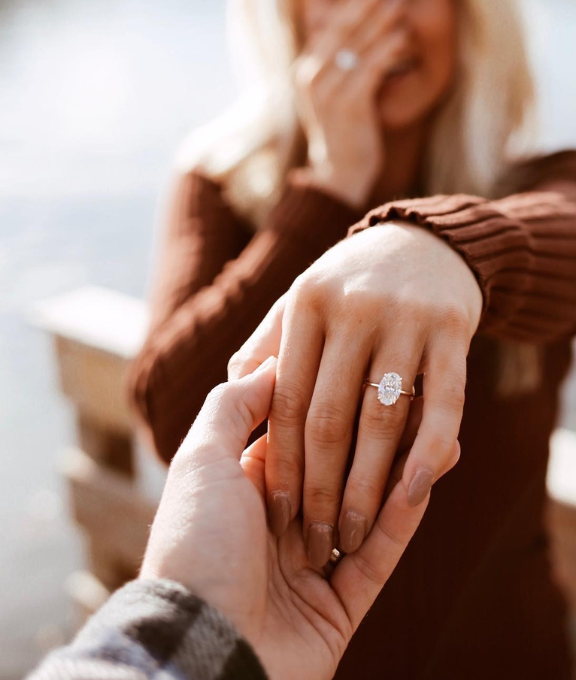


The most popular range is 1.35 to 1.45, with the broader classic range between 1.30 and 1.50. More elongated ovals at 1.45 and above create a slender look but can show more bow-tie. Rounder ovals in the 1.30 to 1.35 range appear fuller and wider.
The GOODSTONE Guide to Diamond Ratios for Elongated Shapes
Two diamonds might share the same carat weight, color, and clarity, but they can look so different once you slip them on your finger. A lot of that difference comes down to the length-to-width ratio.


What Happens When the Ratio Goes Wrong?
A low ratio on an oval can make it look almost round, while a high ratio on a marquise might stretch it so much that the tips seem delicate. With pears, if the balance isn’t right, it’s easy to notice, and once you spot it, it’s hard to ignore. No one wants to have that little feeling that something is off every time you look at your hand.
One Number, Total Clarity
The ratio changes how every elongated diamond looks on your hand and in your favorite setting. If you know what those numbers mean and how your finger size, style, and ring design come into play, it’s so much easier to find a diamond that feels just right. Each shape has its sweet spot, and we’ll help you spot it.
What Diamond Ratio Actually Means (And How to Read Yours)
The Simple Math Behind Every Elongated Diamond
The formula is length divided by width. For example, a diamond that measures 9mm long and 6mm wide has a ratio of 1.50. A ratio of 1.00 represents a perfectly square or round stone. Higher numbers increase the perceived elongation.
What Is the Length-to-Width Ratio in Diamonds?
Knowing this number makes it easier to pick a shape and setting that suits your look. The ratio, how it works, and what it does for your style are worth considering if you want a diamond that feels like you.


How to Find and Calculate a Diamond’s Ratio from Its Certificate
Most grading reports from GIA, IGI, or HRD show the stone’s measurements, but not the ratio itself. You can divide length by width to find it, or make it easy on yourself and look for retailers who display the ratio up front. We show this in our diamond search filters so that you can compare styles without any guesswork.
The Relationship Between Ratio and Cut Quality
A 1.40 ratio on an oval and a 1.40 on an emerald cut don’t look the same. The sparkly facets on an oval soften things, while the emerald’s clear lines make the shape look longer. These details aren’t always obvious on paper, especially since shapes like these don’t get an official cut grade from GIA.


Ratio by Shape: Your Quick-Reference Guide
Oval Diamond Ratios Explained
Oval diamonds are a go-to favorite for many women. Most people love ratios between 1.35 and 1.45; classic, but with a little stretch. Lower numbers give you a softer, rounder look, while higher ones make the stone look long and slim, although you might notice a bow-tie effect more. Even small changes can make a difference, so it’s worth exploring the options to see what feels best for you.
Marquise Diamond Ratios Explained
Marquise diamonds are known for their dramatic length and vintage feel. Most classic marquises fall between 1.75 and 2.25, with 2.00 being a sweet spot. Less than 1.75, they look more like a chubby oval with points; over 2.25, they can get a little skinny, and those tips need extra love. Tiny ratio changes really stand out here, so it’s worth paying attention if you love this style.
Pear Diamond Ratios Explained
Pear shapes blend the best of ovals and marquises, with a playful, feminine vibe. Most pears work beautifully between 1.45 and 1.75. The balance between the rounded end and the tip is key. If it’s off, you’ll notice right away. It’s one of those details that makes a pear either dreamy or a little awkward.


Emerald Cut Diamond Ratios Explained
Step-cut faceting affects the ratio differently than brilliant cuts. The classic range is 1.30 to 1.50, with many preferring 1.30 to 1.40. Ratios below 1.30 resemble an off-square Asscher. The open facets reveal proportional balance.
Radiant Cut Diamond Ratios Explained
Radiant cuts give you plenty of choices, from square to super elongated. Square radiants are close to 1.00, while elongated ones range from 1.20 to 1.50, or even higher if you want a really sleek look. The sparkly corners help hide imperfections, but if you go too far, you might spot a bow-tie or feel the shape looks a bit off. It’s worth trying a few on to see what you like best.


Elongated Cushion Diamond Ratios Explained
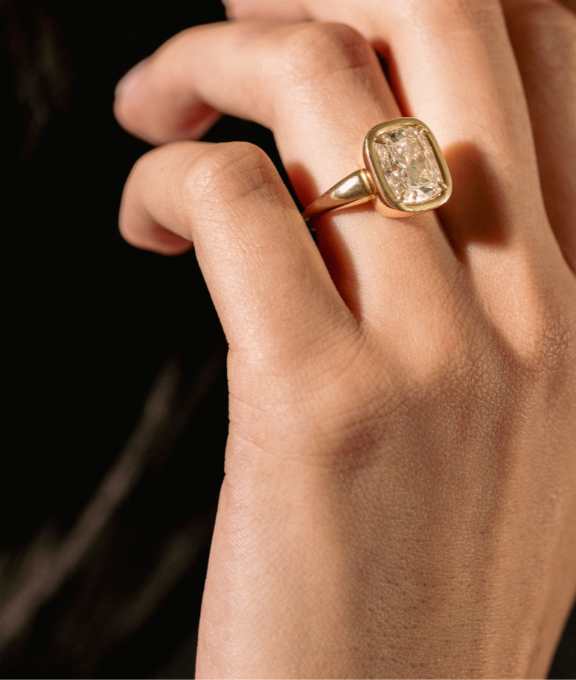
Elongated cushion cuts are for anyone who loves a little softness with their sparkle. Ratios between 1.15 and 1.30 look gently elongated; 1.30 to 1.40 feel more rectangular but still keep those pretty, rounded corners. Play with the numbers to see which one feels most “you.”
How Ratio Affects What You Actually See
What Is the Bow-Tie Effect in Elongated Diamonds?
Ovals, pears, and marquise diamonds often show a little bow-tie, a shadow across the middle. Don’t worry, it’s totally normal. Some women even find it adds character. How strong the bow-tie looks depends on the ratio and a few other design details.
If you go for a higher ratio, you’ll usually see a more noticeable bow-tie. A little shadow can add dimension, but if it’s too dark, it can steal some sparkle from the center. When you’re shopping, look at the diamond in different lights to see how the bow-tie feels to you.


How Ratio Changes the Perceived Size of a Diamond
Elongated diamonds often look bigger than rounds of the same carat, so you get more “wow” without needing more weight or budget. A higher ratio stretches that look along your finger, giving you stylish, flattering coverage. Every shape is a little different, so try on a few if you can.
Your Finger, Your Setting, Your Ratio
How Finger Shape Affects Which Diamond Ratio Looks Best
If you have long, slender fingers, you can totally rock higher ratios without the diamond feeling oversized. If your fingers are shorter or wider, a moderate ratio can add length and look super flattering without being over-the-top. The best pick is the one that makes you feel great every time you glance down at your hand.


How Setting Style Interacts with Diamond Ratio
A bezel setting wraps metal all the way around the diamond, so it can make your stone look a little shorter. For maximum length, a dainty solitaire with tiny prongs lets your diamond shine. And if you love something different, try an east-west setting. It turns the diamond on its side, totally changing the vibe. Your ring setting can really shape the whole look.
This Is Why Personalized Guidance Exists
Choosing the right ratio is all about your preferences, such as what you like, what flatters your hand, and how much bow-tie you’re happy to see. Charts are helpful, but there’s nothing like seeing the options on real hands. Our team is always here to chat and help you find your perfect match, no pressure.
What Most People Get Wrong About Diamond Ratios
Common Misconceptions About Diamond Ratios
Some people think there’s one “right” ratio for every shape, but that’s not true at all. A 1.35 oval and a 1.50 oval look and feel totally different. The best ratio is the one that fits your style and feels right for you.
Another myth is that the ratio doesn’t matter if the cut grade is high. For fancy shapes, there’s no official cut grade, so stones with the same polish and symmetry might look totally different in person.
Cut grades don’t really tell you what a diamond will look like on your finger. Certificates only show measurements, not how the ring feels when worn.
Two ovals with a 1.40 ratio can still look different, depending on their depth, table size, and facet cutting. That’s why it’s so helpful to see the diamond in person, or ask for photos and videos before you decide.
Ready to Find Your Ratio?
Take the Next Step with GOODSTONE’s Concierge Team
If you’d like some extra guidance picking your diamond, our concierge team is always happy to help. There’s no pressure, and your first consultation is completely free. Reach out to us whenever you’re ready.
Keep Exploring the Full Guide
If you like to do your own research, we’ve put together a full library of 14 easy-to-read guides on diamond ratios, perfect to browse on your own time.