

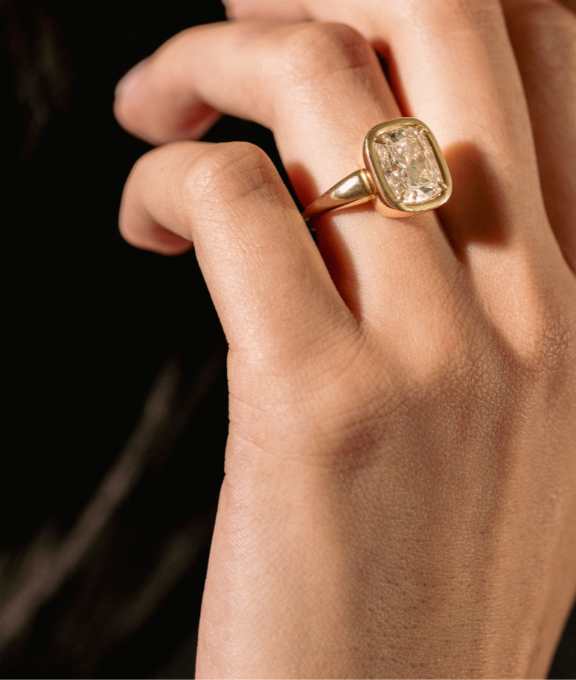
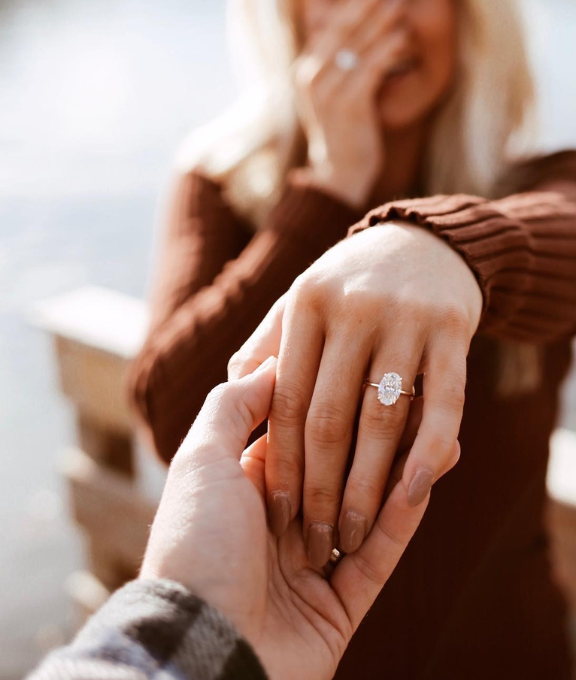


The curve of a contoured solitaire ring holds a single diamond with quiet intention. It’s minimal but memorable. Explore our collection and imagine one of these on your hand.
Can't find the perfect diamond?
talk to an expertNo products found in this collection


Our experience with Goodstone Jewelry in Austin was nothing short of exceptional. From the moment we walked in, we were struck by the beautifully curated ambiance of the space. The showroom feels both elegant and intimate, creating a warm, welcoming environment that immediately sets it apart from more traditional jewelry stores. The addition of drink service for clients elevates the entire visit, making it feel like a thoughtfully designed experience.

Elevate your moments with the Contoured Solitaire Collection, where sculpted artistry meets radiant simplicity. Each band is gracefully curved to embrace a single luminous diamond, held in place by refined prongs that allow light to dance from every angle. The seamless contour creates a natural harmony between band and stone, celebrating both strength and softness in its design. A modern classic with timeless allure, this collection is a symbol of elegance meant to be cherished for a lifetime.
A contoured solitaire is a single-diamond ring whose band curves gently along its top line rather than running straight across the finger. The center stone is held in refined prongs, while the slim curved band gives the profile a soft, rounded shape.
The difference is the top edge of the band. A standard solitaire band runs in a straight line up to the setting, while a contoured band follows a gentle curve toward the diamond. On this slimmer version, the curve stays understated, a soft shaping of a classic solitaire rather than a bold redesign.
The curve softens the line where the band meets the center stone, so the diamond looks nestled in the shape rather than perched on a flat rail. It gives a minimal solitaire a little more movement and a more considered profile from the side.
The curved band is easy to wear all day because it rests close against the finger with little bulk. It is light and narrow, so it stays low and unobtrusive while typing, gripping, and moving around.
It holds up to daily wear when made in a durable metal like platinum or 14k gold. The band is slim, so the prongs deserve the usual solitaire care, with a check every so often to confirm they stay snug.
The contour shapes the band, not the setting, so it does not add a protective wall around the diamond the way a bezel does. The stone stays held in prongs, keeping the open, bright look of a classic solitaire. If protection matters most, a bezel guards the girdle more directly.
A jeweler can resize a contoured solitaire, and the slim band makes small adjustments simple. The one thing to keep in mind is the curved top line, since a large size change requires the jeweler to maintain that curve on both sides. GOODSTONE can advise on your specific ring.
Round and oval diamonds suit a contoured solitaire because their soft outlines echo the curve of the band and settle naturally into it. Pear and marquise shapes also pair nicely, since their points draw the eye along the same gentle line. A slim curved band keeps the emphasis on the stone.
The narrow band can make the center diamond look a touch larger, since it gives the eye less metal to compare the stone against. The curve draws attention up toward the setting rather than out along the finger. How large it truly reads still comes down to the stone’s own cut and carat weight.
A matching contoured or shaped wedding band pairs most closely with a contoured solitaire, since its curve follows the same line and the two align without a gap. A straight band can still be worn alongside it, though the curved top edge may leave a small space where the two meet.
A straight wedding band may leave a small gap next to a contoured solitaire, because the curve of the engagement band does not lie flush against a flat edge. Some people are happy with that slight space, and others prefer a shaped band that nests in. GOODSTONE can show you both options.
In price, a contoured solitaire is close to a plain straight-band solitaire, since the band uses a similar amount of metal and holds a single diamond. Any difference comes from the shaping work rather than added materials. The center diamond you choose has far more effect on the final price than the curve.
The slim open band gives dirt few places to gather, so a contoured solitaire stays easy to keep clean. A soft brush with warm water and mild soap around the diamond and under the setting handles most of it, then rinse and pat dry. Have a jeweler check the prongs during a routine service.
This ring suits someone who wants something minimal with a small point of difference. It keeps the single diamond and clean lines of a classic solitaire, and the gentle curve adds a subtle, modern shape. For a wider, weightier take, the Contoured Club features a thicker band.
Get in touch with our concierge team to book a one-on-one call with us to discuss about your Engagement Ring. We will walk through the process from diamond sourcing to choosing the perfect setting.


