

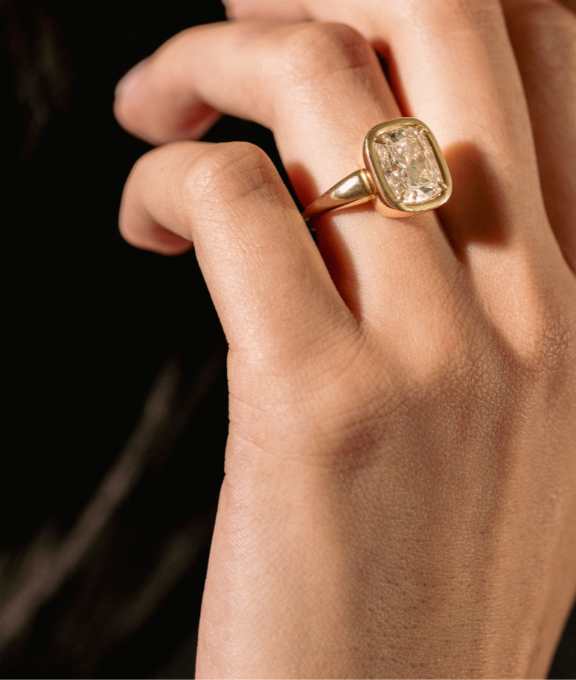
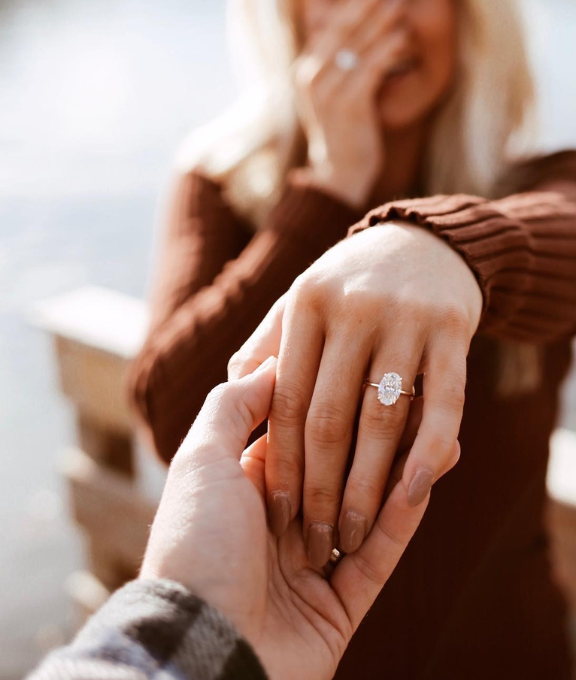


Some rings are meant to feel substantial on your hand. Our Club Ring solitaires feature a thick, tapered band and a bold bezel setting. See what speaks to you in our collection.
Can't find the perfect diamond?
talk to an expert


Monica and the Goodstone team were so helpful throughout the process of finding the perfect ring with my fiancé. They are so knowledgeable and we learned so much about quality diamonds over retail diamonds. Good stone offered exceptional service. This is now our go to jeweler that we highly recommend to our family and friends.

The Club Ring Collection embodies bold sophistication, offering a ring design that fuses contemporary style with timeless craftsmanship. At the heart of this collection is a signature thick, tapered shank that provides both durability and balance, ensuring unparalleled comfort for everyday wear. Paired with a distinctive, chunky, bathtub-style bezel case and elegant pointed prongs, these rings elevate your diamond’s brilliance while maintaining an understated, refined aesthetic.
A Club Ring solitaire pairs a bold bezel setting with a thick, tapered band designed to wear prominently on the hand. The band is what sets it apart, as it holds more metal than a standard solitaire and tapers gradually toward the back, giving the ring a heavier, more grounded presence. Above that band, a full bezel securely holds the diamond.
The band rests solid and grounded on the hand, since the extra metal gives the ring noticeable heft. It widens toward the top and narrows at the back, so it wears substantially near the diamond while staying comfortable underneath. Many people enjoy the steady, present weight of a heavier ring during daily wear.
A wider, heavier band like the Club Ring holds more metal and rests with real weight, while a standard thin solitaire stays light and delicate. The Club Ring is bolder and more substantial on the finger, and its thickness gives it a sturdier profile, whereas a thin band keeps the focus almost entirely on the stone.
The bezel setting suits an active lifestyle, and here the heavy band does much of the work. Its extra metal resists bending under daily strain, so the ring holds up to hands-on use at the gym or in the garden, while the rim keeps the diamond covered with nothing raised to snag. The one thing to note is bulk, since the thick band and bold bezel stand taller than a slim, low setting, which someone who works in tight gloves may notice.
It protects the diamond from knocks and chips by wrapping a full metal rim around its edge, which shields the girdle on every side. This all-around coverage guards the stone’s most vulnerable points. The band supports the setting underneath, so the diamond stays secure even through the bumps of everyday life.
A bold bezel covers the diamond’s edge, slightly reducing light entry, though the open face keeps the stone bright, and the wide band of metal frames the stone closely, which can add a little to its apparent size. The bezel frames the stone with weight, so it holds visual presence on the hand.
A thicker band is more durable and far less likely to bend than a thin one, since the extra metal adds strength and helps resist pressure from daily wear. A thin shank can slowly go out of round after years of wear, while the heavier one holds its shape under strain. This makes it a sturdy choice for someone who wants a ring built to endure.
The heavy band calls for a stone with some size to it, so larger, wider diamonds pair best, including round, oval, cushion, and emerald cuts. A stone with real width balances the mass of the metal, where a small one can look lost beside it. The bold bezel wraps around any of these outlines, keeping the whole ring in proportion.
The band can be resized, though the extra metal and the taper take more time and effort than a slim band. A jeweler removes or adds metal at the back, reshapes the taper to keep the ring round, and smooths the join so the seam does not show. Larger changes depend on the metal, since platinum behaves differently under heat than gold does, and the full bezel stays intact around the stone.
A wider band pairs best with a thick tapered bezel solitaire, since a matching heft keeps the two rings in proportion. A slim band can look thin beside the Club Ring’s profile. A flat or gently rounded band of similar width rests close to the tapered shank, balancing the ring’s bold look.
A wider band can make the center diamond look slightly smaller by comparison, since the heavy metal draws some attention to the ring itself. The setting balances this with a bold bezel that frames the stone and adds width. So the diamond keeps a strong presence even against the tapered band.
A heavier, wider-band solitaire like the Club Ring usually costs more than a slim solitaire, since the thick tapered band uses noticeably more metal. The added weight increases material costs, especially for gold or platinum. The center diamond still governs the final price the most, but the substantial band does add to it.
The two spots to watch are where the bezel meets the diamond and the taper of the wide shank, since grime settles into both. Work a soft brush over them in warm water with a drop of mild soap, then rinse thoroughly so nothing lingers under the rim. Drying the heavy band with a lint-free cloth keeps the metal looking its best between professional cleanings.
Its bold profile snags less than raised prongs do, since the full bezel wraps the diamond smoothly, with no claws to catch. The thick band and bold bezel rise higher and wider than a slim setting, so the ring makes more contact with fabric, though its rounded metal keeps that contact fairly smooth.
Get in touch with our concierge team to book a one-on-one call with us to discuss about your Engagement Ring. We will walk through the process from diamond sourcing to choosing the perfect setting.


