





Every Diamond Shape Explained: A Beginner’s Guide
A round diamond wastes up to 60% of the rough stone it is cut from, which is the main reason it has the highest price per carat of any shape. Shape decides how a stone handles light, how big it looks on the hand, and what you pay for that size. Picking by what everyone else chooses is a poor guide on its own, because the right outline for a given buyer depends on which trade-off best suits their taste and the hand that will wear it.
|
Shape |
Sparkle and Best-For Note |
|
Round |
Brightest of all, the safe pick for maximum sparkle |
|
Oval |
Near-round sparkle with more size on the finger |
|
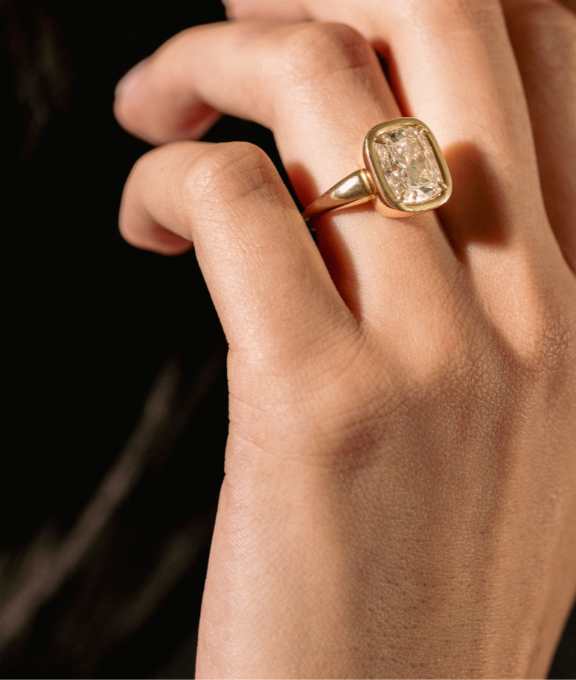
Cushion |
Soft glowing sparkle with a vintage look |
|
Princess |
Crisp bold sparkle at a lower price |
|
Radiant |
Round-grade sparkle in a square outline |
|
Pear |
Brilliant sparkle in a distinctive teardrop |
|
Marquise |
Strong sparkle and the biggest look per carat |
|
Heart |
Romantic brilliant sparkle, best above 0.50 carat |
|
Emerald |
Glassy flashes, elegance over glitter |
|
Asscher |
A livelier square take on the emerald. |
|
Old Mine |
Warm candlelight flashes with antique character. |
|
Old European |
A round antique with vintage softness |
Brilliant Cuts vs. Step Cuts
Almost every choice here traces back to one distinction, and it is the place to start. Brilliant cuts use dozens of small angled facets that break light into fine glitter, and that busy faceting also hides faint color and small inclusions well.
Round, oval, cushion, princess, radiant, pear, marquise, and heart are all brilliant cuts. Step cuts work the opposite way. Emerald and Asscher use long, flat facets set in parallel rows like a staircase, giving wide bands of light and shadow, and those open rows hide nothing.
Once you know which family a shape belongs to, you know where the money should go. A brilliant cut lets you drop a grade in clarity or color and still stay eye-clean so that you can spend on size. A step cut shows every inclusion and any warmth in the stone, which moves the budget toward higher clarity and a whiter color.

Brilliant cuts deliver lively sparkle, while step cuts offer elegant flashes of light with a refined, architectural feel.
The Round Diamond Price Premium
The plainest shape being the most expensive catches nearly everyone off guard. It comes down to waste. A finished round keeps only about 40% of the rough crystal it was cut from, while a princess can keep as much as 80%. More of the rough thrown on the cutting-room floor means a higher price for what remains, so a round costs meaningfully more per carat than a fancy shape of the same color and clarity. Choose a fancy shape, and you save between 15% and 40%, or you size up for the same money.
Elongated shapes extend that advantage further. Because a marquise, oval, or pear spreads its weight across a longer face, it looks bigger than a round of equal carat and lengthens the finger. What the round premium pays for is brilliance, while a longer fancy shape gives you more visible size for the same money.

Fancy shapes offer a beautiful alternative, often creating a larger look for the same investment as a round.
Round, Princess, Cushion, and Radiant Cuts
These are the shapes most first-time buyers picture, the round and its squared-off relatives. They share a bright, glittering brilliance and differ mostly in outline, in price, and in how their corners hold up.
The Round Brilliant
Round is the shape every other shape gets measured against. Its 58-facet design returns more light than any other cut, which is why it is the benchmark for sparkle and the safe choice when a buyer wants brilliance above all. The same faceting that makes it bright also hides color and inclusions. Save a grade on both, and the stone still looks white from the top. The only real catch is the price.
GOODSTONE places the round at the head of its engagement-ring collections, which suits a first-time buyer who wants a familiar, high-sparkle starting point.

The round brilliant remains the benchmark for light performance. Its timeless silhouette and unmatched sparkle make it one of the most sought-after diamond shapes in the world.
The Cushion Cut
The cushion earns its name from a soft, pillowy square outline with rounded corners. Its larger facets give a warm, glowing sparkle that people describe as candlelight, gentler than the sharp fire of a round or a princess cut. That softer look is a matter of taste.
The rounded corners also resist chipping better than those of a sharp-cornered stone, making it better for daily wear. The trade is that the more open facets can let a faint warmth show, which rewards a slightly better color grade.

Soft corners and glowing brilliance give the cushion cut its unmistakable charm. It's a favorite for those drawn to vintage-inspired elegance with a romantic feel.
The Princess Cut
For a square stone with real bite in its sparkle, the princess is the classic answer. Its brilliant-style faceting throws crisp, bold light and hides small flaws well, and because the cut keeps so much of the rough, it comes in well below a round of the same size.
The weakness is built into the shape. Those four sharp, pointed corners are the most fragile part of any diamond, and they chip if they catch a doorframe unprotected. A setting with V-prongs over each corner solves it.

Bold, modern, and full of brilliance, the princess cut offers striking sparkle in a clean square silhouette.
The Radiant Cut
Henry Grossbard designed the radiant in 1977 to bring round-grade fire into a cropped-corner square outline, and it remains the sparkliest shape after the round itself. Its roughly 70 facets combine a step-cut silhouette with brilliant faceting, so it hides color and inclusions like a brilliant while looking geometric like an emerald. The beveled corners are sturdy enough for an active hand.
One thing to know is that no lab assigns a cut grade to a fancy shape, and you judge the sparkle with your own eyes. A poorly cut radiant looks watery or icy, and the corners should be evenly truncated.

The radiant cut blends crisp geometry with exceptional sparkle. Its brilliant faceting and trimmed corners make it both eye-catching and practical for daily wear.
Oval, Pear, Marquise, and Heart Cuts
These four stretch a brilliant cut over a longer body for extra size and a finger-lengthening line. They also share one quirk, the bow-tie, a darker band that runs across the center where the facets stop bouncing light straight back at you.
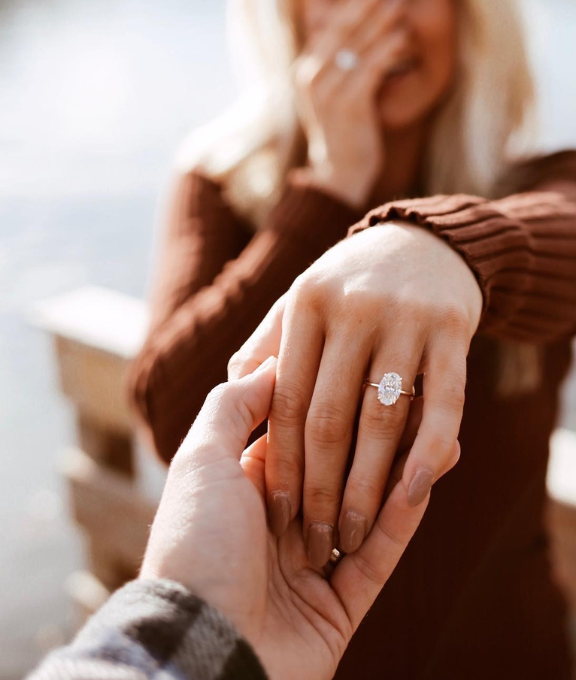
The Oval Cut
The oval has climbed to the second spot behind round, and the appeal is easy to see. It keeps almost all of a round’s brilliance while stretching over a longer face, sparkling brightly, looking larger per carat and lengthening the hand.
The bow-tie is the thing to inspect. A faint shadow appears in nearly every oval and does no harm, but a heavy black bar across the middle is a reason to keep looking. Ratios around 1.35 to 1.45 balance the light best, and much past 1.50 the shadow grows.

The oval combines near-round brilliance with a longer silhouette that flatters the hand. It's a modern favorite for those who want both sparkle and presence.
The Pear Cut
A pear is round on one end and comes to a point on the other, a teardrop that sparkles much like an oval because it shares the same brilliant faceting. Worn with the point toward the fingernail, it flatters and lengthens the finger. It also gives you something less familiar than a round, without sacrificing light. Two things need watching.
Like other elongated brilliants, it can show a bow-tie, and the fine point is fragile, so it wants a prong wrapped over the tip. Symmetry matters too. A point set even slightly off-center is easy to notice.

Elegant and unexpected, the pear cut pairs brilliant sparkle with a graceful teardrop shape. Worn point-up or point-down, it creates a look that's both timeless and unique.
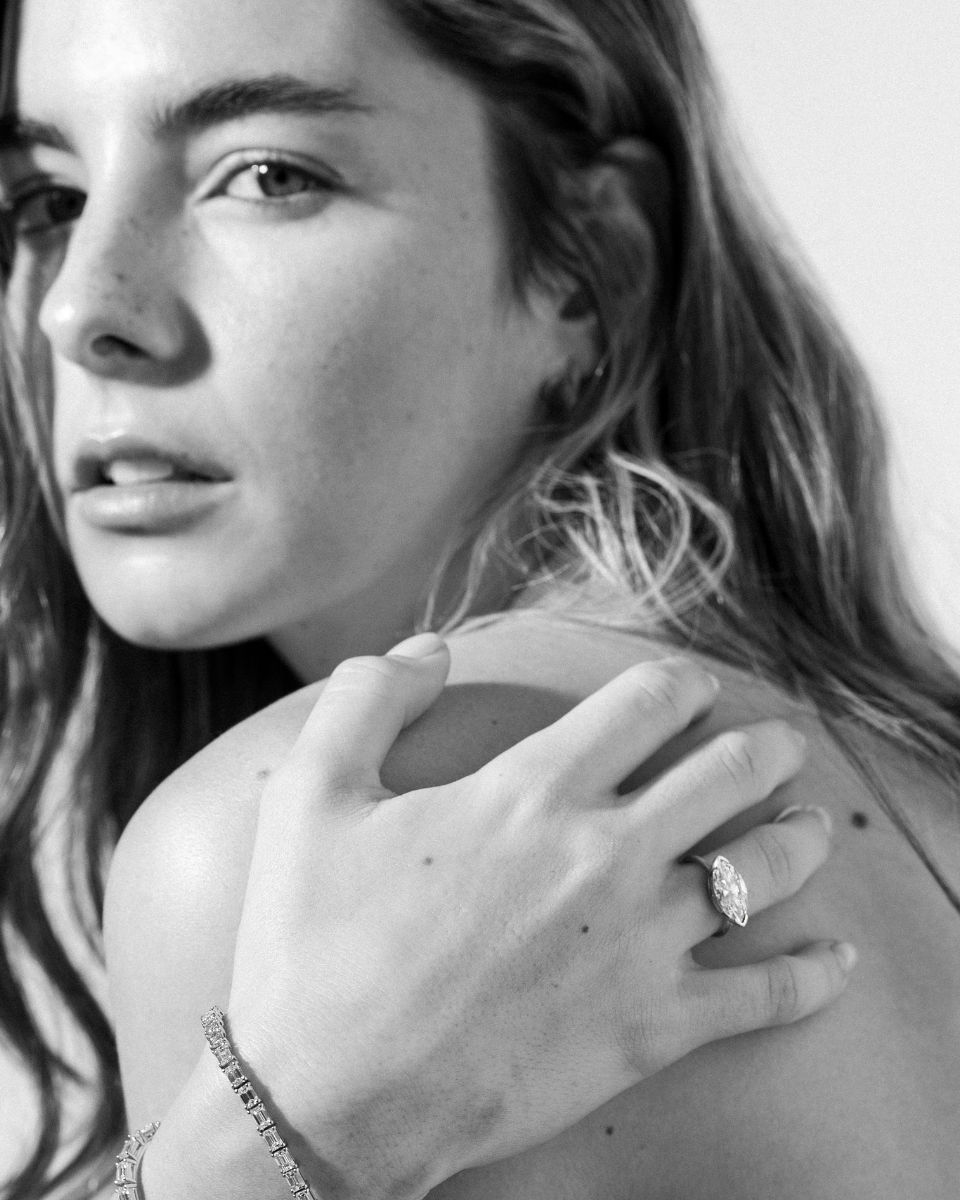
The Marquise Cut
No shape looks bigger for its weight than the marquise, an elongated boat outline tapering to a point at each end. It trades everything for length, a bold, regal look that lengthens the finger and looks far larger than its carat suggests. It comes with two cautions. It is the most bow-tie-prone shape of all, and its two sharp points chip easily unless the setting guards them. Excellent polish and symmetry matter here.

With its elongated silhouette and pointed ends, the marquise offers one of the largest visual appearances per carat.
The Heart Cut
The heart is the most openly romantic shape and the hardest to cut well. It is a brilliant-faceted stone with two rounded lobes and a defined cleft between them, and its charm depends entirely on balance. The two lobes must match, and the cleft has to be sharp and even. The shape holds its outline only above about half a carat, and a tiny heart can lose it. As with any pointed stone, the bottom tip can chip and benefits from a protective prong. It is an uncommon choice, better suited to someone who wants the shape to speak plainly than to a buyer chasing maximum sparkle.

The heart cut is one of the most symbolic diamond shapes. Carefully balanced proportions allow its romantic silhouette to shine with unmistakable character.
Emerald and Asscher Cuts
Emerald and Asscher work differently. Their long parallel facets throw slow sheets of light down the open table, a look that is architectural and calm. They also hide nothing. What you gain in elegance you pay for in the grades you cannot skimp on.
The Emerald Cut
What throws most people at the counter is that an emerald cut does not sparkle the way people expect. Its rectangular outline with cropped corners and long step facets sends out wide, dramatic flashes of light, a look that turns understated and sophisticated once you stop waiting for glitter. The open table is honest to a fault.
Every inclusion and the body color are clearly visible, which is why buyers are steered toward VS2 or VS1 clarity and a higher color grade. In return, an emerald costs roughly 35% to 40% less than a round, and its length makes it face up larger than its carat weight. Set expectations before you shop, and you’ll rarely be disappointed.

The emerald cut is admired for its clean lines and sophisticated presence. Its open facets reward exceptional craftsmanship and beautifully transparent diamonds.
The Asscher Cut
Picture an emerald cut squared off, and you have the Asscher, a step cut with cropped corners and concentric rows of facets that form a windmill pattern of crossing lines toward the center. It looks a touch livelier than an emerald, though still nowhere near a brilliant.
Its square outline faces up, slightly smaller per carat than an emerald of the same weight. The same rule applies as with any step cut, so favor higher clarity and a whiter color, and enjoy it for its geometric, Art Deco character.

With its distinctive square outline and mesmerizing step facets, the Asscher cut captures timeless Art Deco style.
Old Mine and Old European Cuts
Before electric light, diamonds were cut to glow under candle flame, and two antique shapes still hold that warmth. They will not perform like a modern round under bright bulbs, and that is the point of buying one.
The Old Mine Cut
The old mine cut is a soft, squarish outline with a small table, a high crown, and a large open culet that shows as a small window at the bottom of the stone. Cut by hand across the Georgian and Victorian eras, it gives chunky, rolling flashes of light and color, a hand-cut personality no modern stone repeats. Each one is unique, so you judge it in person, and there is no modern cut grade to lean on. What you are buying is character and history.

Every Old Mine cut diamond is one of a kind. Its chunky facets and candlelit sparkle celebrate the artistry of hand-cut diamonds from centuries past.
The Old European Cut
The old European cut is the missing link between the old mine and the modern round, a distinctly round antique with a higher crown and greater depth than the modern brilliant. Cut from the 1890s through the Art Deco years as machines began to standardize proportions, it gives warmer, wider flashes than a modern round because it was cut for candlelight.
The extra depth can make it face up slightly smaller per carat. People choose it for its round silhouette and vintage soul, accepting a gentler sparkle than a modern round as part of its appeal.

The Old European cut bridges antique charm and timeless elegance. Its warm flashes of light offer a softer, more romantic alternative to the modern round brilliant.
How to Choose the Right Diamond Shape
Once you can name the trade-offs, the choice sorts itself around the person who will wear the ring.
-
If sparkle above all is the goal and resale familiarity matters, round is the safe answer.
-
If you want that brilliance with more size on the hand, an oval or a radiant gets you close for less.
-
If elegance matters to you and you will spend on clarity and color, an emerald or asscher rewards you.
-
If character and history are the draw, an antique cut has warmth no new stone matches.
For hands that live an active life, favor rounded corners or set any point or sharp corner into a protective prong. On any budget, a fancy shape frees up 15% to 40% you can move toward size or a better grade.
GOODSTONE handcrafts this whole range at its Los Angeles workshop, from old mine and old European through the modern brilliants, and a fragile point or corner can be built into a protective setting before the ring is made. For most beginners, the deciding factor is which single weakness is easiest to live with on the hand that will wear the ring every day.
Frequently Asked Questions
How many diamond shapes are there?
There are roughly 10 to 11 mainstream shapes, including round, princess, cushion, emerald, asscher, radiant, oval, pear, marquise and heart. Antique cuts such as the old mine and old European add a few more. Most engagement rings use one of these, with round chosen far more than any other.
Which diamond shape sparkles the most?
The round brilliant sparkles the most, because its brilliant faceting returns more light than any other cut. Among fancy shapes, the radiant and the princess are the brightest. Step cuts such as emerald and asscher sparkle the least by design, favoring wide, slow flashes over fine glitter.
What is the difference between a brilliant cut and a step cut?
Brilliant cuts use many small angled facets that scatter light into glitter and hide color and inclusions. Step cuts use long parallel facets that give wide bands of light and shadow and reveal inclusions and color plainly. Round, oval, cushion, princess, radiant, pear, and marquise are brilliant cuts, while emerald and asscher are step cuts.
Which diamond shapes are the most affordable?
Fancy shapes generally cost 15% to 30% less per carat than a round of equal quality, and the gap can reach 44% at the extremes. Emerald, Asscher, and radiant are among the best values. Round is the most expensive because cutting it wastes the most rough.
Which diamond shape looks the biggest for its carat weight?
Elongated shapes look largest for their weight, stretching across a longer surface. Marquise appears biggest of all, followed by oval, pear and emerald. A round of the same carat looks smaller because more of its weight is in depth and less across the top.
What is the bow-tie effect in a diamond?
The bow-tie is a dark, bow-shaped shadow across the center of elongated brilliant cuts such as oval, pear and marquise, caused by facets that fail to bounce light back to the eye. It is an effect of cut and light, so it does not appear on the grading certificate. A faint one is normal, but a heavy black one is not.
Do all oval diamonds have a bow-tie?
Nearly every oval shows some bow-tie, and a faint one does no harm to its beauty. A heavy black bow tie is a sign to keep looking, since it means light is escaping through the center. Ratios around 1.35 to 1.45 balance the light best.
What is the difference between an emerald cut and an asscher cut?
Both are step cuts with cropped corners and the same wide, slow flashes. The emerald is rectangular and elongated, so it appears larger per carat, while the asscher is square and looks a touch livelier. Either one shows inclusions and color, and both want higher clarity and a whiter grade.
Why do emerald cut diamonds need higher clarity?
An emerald cut’s large open table and long step facets put any inclusion or tint on open display. A flaw that would hide inside a brilliant cut shows in plain view. A VS2 or VS1 clarity minimum, along with a higher color grade, keeps it looking clean.
Which diamond shapes chip most easily?
Shapes with sharp points or corners chip most easily, which means princess-cut corners and the tips of pear-, marquise-, and heart-shaped stones. A protective setting such as a V-prong shields the vulnerable point. Rounded shapes like round, oval, and cushion are the most forgiving for daily wear.
What is the difference between an old mine cut and an old European cut?
The old mine cut, from the early 1700s through the late 1800s, has a soft squarish outline and a large open culet. The old European cut, from the 1890s into the 1930s, is round with a smaller culet and is the direct bridge to the modern round brilliant. Both were cut by hand for candlelight and glow differently than a modern stone.
Which diamond shape is best for a beginner?
Round is the safest first choice, since it offers the most sparkle, hides flaws well, and holds familiar resale value. The oval is the most recommended fancy shape, offering round-grade brilliance with more size per carat. Beyond those two, the best shape is the one whose trade-off matches the wearer’s taste and budget.



Deja un comentario (todos los campos son obligatorios)