





Tulip Basket vs. Hidden Halo: What's the Difference?
Retail listings put the tulip basket and the hidden halo on the same product page as competing upgrades. The confusion starts there, because the two are not the same kind of thing. A tulip basket belongs to the head of the ring, the metalwork that grips the center stone. A hidden halo is decoration added beneath it, a row of small stones set into the gallery.
Both features change how a solitaire presents from the side, so the comparison is still worth making on the merits, and the anatomy difference explains every other difference between them.

A tulip basket and a hidden halo both bring unexpected beauty to the side profile of an engagement ring, but in entirely different ways.
What Is a Tulip Basket, and What Is a Hidden Halo?
In September 2022, a buyer posted three rings on PriceScope and asked the forum to vote between a tulip setting with a 1.16 carat lab-grown diamond and a hidden halo pave design. The two features do different jobs on the ring.
A tulip basket is a prong head in which the prongs curve upward from the base of the ring and wrap around the center stone like the petals of a tulip. On a classic solitaire head the prongs run straight up from the band. On a tulip head they curve and the curve is built into a basket beneath the stone. The metalwork itself becomes a visible design element from the side, which is the reason the style exists. The curve also gives a bench jeweler more metal to work with if the prongs ever need retipping.
The basket half of the name comes from the parent structure. A plain basket setting connects the prongs with horizontal crossbars that cradle the stone from below. The cradle leaves the sides of the stone open to light and covers the girdle edge. It also lowers the whole head relative to a tall peg head. The tulip version keeps that cradle and adds the petal curve on top of it.
A hidden halo belongs to a different category of thing entirely. It is a ring of small pave accent diamonds set into the gallery, the zone beneath the center stone's girdle, and from directly above it is invisible. The center stone is usually raised slightly so the accent ring can tuck underneath. Nothing about the head changes when one is added.
In ring anatomy, the tulip head is a named head type in the same family as peg and trellis heads, and the gallery lies below all of them. One feature is part of how the stone is secured. The other is decoration applied after the securing problem has already been solved. This is also why shoppers end up confused. Comparing the two is comparing a prong style to an accent-stone feature. Plenty of listings never say so.

A tulip basket uses gracefully curved prongs to cradle the center diamond, while a hidden halo introduces a subtle circle of sparkle beneath it without changing the ring's classic appearance from above.
How Does Each Setting Look From the Top and Side?
From straight above, a hidden halo ring is a plain solitaire, and the design's stated goal is that nothing shows from that angle. The sparkle payoff appears in profile and in motion, when the ring tilts and the accent stones catch light under the center stone. A buyer who judges the style from top-down product photos is judging the one angle where it does nothing. Top-down photos flatten the tulip basket in the same way, and its main feature is equally invisible from above. Movement reveals it, since a hand turning a steering wheel or lifting a glass puts the accent ring through hundreds of small angles in an hour.
Wearers see the side view all day. Owners on wedding forums trade profile photographs of their rings more eagerly than top-down shots, and a years-long thread exists for exactly that exchange. The admiring view from across a table is top-down, while the wearer's own view is the profile.
A tulip basket puts its effort there too, on the side. From above it shows a prong arrangement much like any solitaire, with only the petal tips visible around the stone's edge. From the side it produces an open, sculptural silhouette. The open basket admits light to the stone from several angles. The result looks deliberate from across a room.
The added metal costs a little light. Petal prongs cover slightly more of the stone than bare straight prongs, and the basket trims the stone's brilliance slightly in exchange for the cradle. Buyers give up that small amount of light for the side profile. Most who choose it consider the exchange favorable.

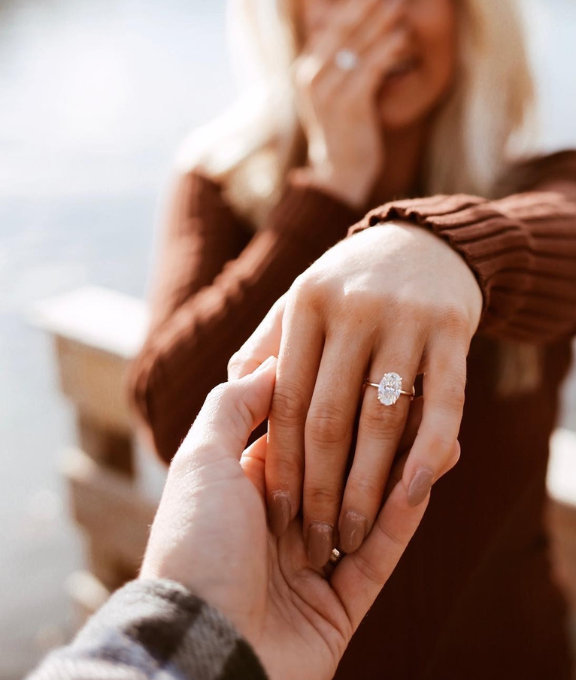
Tulip baskets create an open, petal-inspired profile, like our GOODSTONE tulip basket solitaire.
Which Setting Is More Secure and Easier to Clean?
The basket structure is the security-first option of the two. The crossbar cradle shields the girdle and the pavilion from knocks. The head rides lower on the finger than a high peg head. It snags less on clothing and hair. Basket constructions are the common recommendation for larger stones and for buyers whose hands work hard, a category that covers gardening, gym equipment, and clinical work as much as any trade. The recommendation strengthens as stones get larger, since a heavier center stone puts more force on whatever secures it during a knock. The cradle also protects the pavilion, the part of the stone most exposed in a tall head.
Despite adding no structural protection, the hidden halo has a good durability record. Complaints about stone security are rare among owners. Periodic inspection of the small prongs on the accent ring remains standard advice for any pave work. A jeweler can check the whole ring in a few minutes during a routine cleaning.
The two diverge most on cleaning, where the halo requires nearly all of the upkeep. Pave beneath the center stone traps lotion, soap residue, and everyday oils faster than an open solitaire gallery does. Among owner complaints, cleaning outranks every durability issue by a wide margin. A soft toothbrush and mild soap become part of owning the ring, and skipping the routine shows within weeks as the under-gallery stones dull. Most owners settle into a weekly soak in warm water with a drop of dish soap. A jeweler's ultrasonic clean every six months keeps the underside bright. That six-month visit is where most owners hand the under-gallery work to a professional.

A thoughtfully constructed basket provides structural support around the center stone, while a hidden halo adds decorative brilliance through delicate pavé diamonds.
Which Setting Fits Flush With a Wedding Band?
Flush fit between an engagement ring and a straight wedding band is governed by the space under the head. If the band can slide into that space without meeting metal, it rests flush. If something protrudes sideways or hangs low, the band is blocked and a gap appears between the two rings.
Because the petal prongs rise from the band and the gallery beneath them stays unobstructed, most tulip baskets leave that space open. A straight band usually pairs without any contour. Low basket variants exist, and they behave like any low head, so the generalization has exceptions at the margins.
A hidden halo at the base of the stone commonly blocks it. These settings typically require a spacer between the two rings or a wedding band contoured to pass under the accent ring. A contoured band is curved or notched to wrap around the obstruction, and it then looks incomplete when worn alone. Plenty of buyers learn all of this after the engagement ring already exists. The feature that cannot be seen from above constrains what can be worn beside it long after the purchase. Couples shopping for the engagement ring alone rarely have the band on hand, and that is when the mistake gets made.
Vendor guides contradict each other on this point. One 2026 guide says most hidden halos are designed to take a nearly flush band. Two earlier guides say hidden halos and low galleries usually prevent flush fit, and all three are describing real rings. A buyer reading two of these guides in sequence would reasonably conclude the category is unreliable. The disagreement dissolves once fit is treated as a property of the specific setting, high and open versus low or wide, rather than a property of the category as a whole.
For that reason, fit is checked with both rings in hand, viewed from the side, because product photographs and category labels do not convey that information.

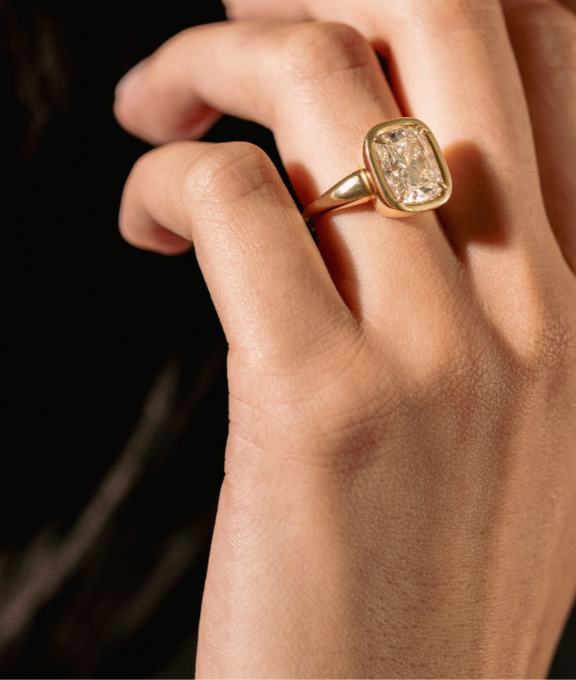
Tulip baskets often leave room for a straight wedding band, while some hidden halo designs require a contoured band or spacer to achieve a beautifully fitted pairing, as seen on our Compass Solitaire Engagement Ring with Elongated Cushion Cut Diamond with a hidden halo.
How Do the Two Settings Differ in Cost?
Retailers do not sell either feature as a separate premium tier. The hidden halo is a relatively affordable upgrade over a plain solitaire, and tulip baskets are priced as a head design choice within the same setting tiers. Custom versions of either design price by labor and metal weight before any stones enter the estimate. No retailer publishes a standard price gap between the two. The trade publishes no universal figure, so none is quoted here. Shoppers comparing prices across sellers are mostly comparing diamond quality and metal weight.
Which Setting Suits Which Buyer?
The tulip basket suits the buyer who wants a solitaire with a distinctive side profile and no added stones. The appeal is sculptural and mildly nature-referential, visible to the wearer constantly and to everyone else only when the hand turns. Ovals and rounds are the usual center stones here. The head also secures larger stones without the full coverage of a bezel, and pairs naturally with plain wedding bands.
The hidden halo suits the buyer who wants extra brilliance while the ring stays classic from across the table. The effect is restrained, a private detail more than a public one. It photographs exactly like a solitaire, which matters to buyers who want the ring's public face unchanged. The premium stays modest, with the cleaning routine described above attached, and buyers who resent maintenance should treat that routine as part of the price.
The combination earns treatment as a first-class option in its own right, because bench jewelers build the two features into one ring routinely. GOODSTONE organizes its custom design process around exactly this kind of commission, pairing curved petal prongs with pave beneath the gallery in a single ring, with each setting decision settled in consultation. A custom ring takes longer to produce than a ready-to-ship piece. A buyer working toward a fixed date needs to start earlier.
The tulip basket is the choice when the side profile and the cradle are the priority. The hidden halo is the choice when side sparkle is. Buyers who want both commission one ring that does both.

A tulip basket is ideal for someone drawn to sculptural metalwork and understated romance, while a hidden halo appeals to those who love a little unexpected sparkle.
Frequently Asked Questions
Can You Have a Tulip Basket and a Hidden Halo on the Same Ring?
The combination is common enough to exist as a named design. One independent jeweler's Stevie ring pairs open tulip prongs with a hidden halo beneath the center stone, described at the bench as a hint of sparkle with a little extra security. The two features occupy different parts of the ring, and they do not interfere with each other.
What Stones Work With a Tulip Basket?
Round and oval diamonds are the most common choices and sapphires appear regularly, with the prongs built around the specific stone and four or six prongs typical.
Is a Tulip Setting the Same as a Cathedral Setting?
No, though the terms overlap in retail listings. Some jewelers describe cathedral arches as tulip styling because the rising metal resembles petals from the side. The overlap is a documented source of confusion for buyers comparing settings online.
Does a Hidden Halo Make the Diamond Look Bigger?
It can, because the accent ring adds perceived width to the center stone in profile view, the effect a classic halo delivers from the top, now working from below.
Are Hidden Halos Hard to Clean?
More than a plain solitaire, since the small stones under the center stone trap residue, and owners have named cleaning as the main drawback in forum threads going back at least to March 2010.
Do Hidden Halos Fall Out or Lose Stones?
Stone loss is possible in any pave setting over long-term wear, and periodic prong inspection is what any jeweler will advise. One practical difference from a classic halo is that the accent stones beneath the center stone are harder to see and check at home.
Can You Get the Hidden Halo Look Without Pave?
A metal gallery design produces a similar under-stone detail with no small stones at all, and the open underside cleans easily. Owners who want the effect without the maintenance point to bezel-based gallery designs as the workaround.
Does a Hidden Halo Cost More Than a Plain Solitaire?
The premium is modest. The accent stones are small melee diamonds, which are inexpensive, and most of the added cost is the pave labor of setting them.
What Wedding Band Goes With a Tulip Basket Setting?
A straight band usually pairs with an open tulip basket, since the gallery beneath the prongs stays unobstructed. Where a basket is built low, a slim spacer ring between the engagement ring and the band is the usual fallback, and that check belongs before the band purchase.



Deja un comentario (todos los campos son obligatorios)