





What Is a Push Present? Meaning, Etiquette, and Gift Ideas
When the influencer Campbell Puckett posted a push present video, the comment section split hard. Half the replies treated the gift as an insult to the child. "You got a push present, I thought that's what the baby was," one commenter wrote. The other half defended an object that marks the work of pregnancy and delivery.
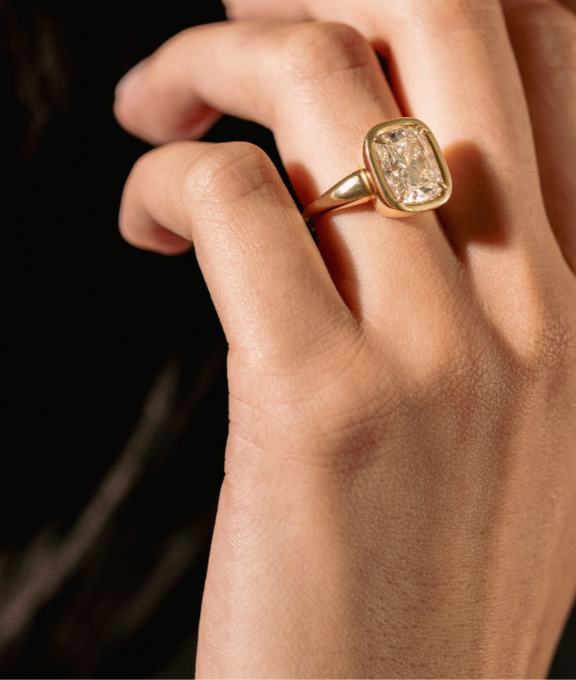
A push present is a gift given to a new mother around the birth of her child, usually by her partner. It belongs to her rather than to the baby. What the gift marks is the part worth getting right. And push presents have a huge range, which includes fine jewelry and diamonds.

A push present is a meaningful way to celebrate the arrival of a new baby while honoring the mother behind the moment.
What Exactly Counts as a Push Present?
A push present is a gift given to a new mother near the birth of her child. The giver is usually her partner. Grandparents and close friends give them as well, and some mothers buy their own. The defining feature is the recipient. The gift marks the work of pregnancy and delivery, and it belongs to one adult alone.
Where a baby shower gift serves the baby, a push present serves the mother. This distinction organizes most of the etiquette around the practice. The shower happens before the birth and stocks the nursery with equipment. The push present arrives afterward and answers a different event entirely, the months of physical work one person performed.
Jewelry dominates the category for a practical reason. A necklace or a pair of earrings survives the recovery period and the toddler years that follow it. It also returns to the day each time it is worn. Forum threads record the pattern repeatedly, with the pieces tied to one child and one day worn daily for years afterward. Pieces chosen during a period when the mother was buying nothing for herself draw the most affection in those accounts. Daily wear is the mechanism at work, since a gift that enters the morning routine repeats its message without further effort from the giver.
The practice now has commercial infrastructure behind it. Tiffany maintains a gifts section for new parents, and Malabar Gold and Diamonds runs a baby-birth gift category. A giver searching either retailer's site by occasion reaches a curated selection in one step.

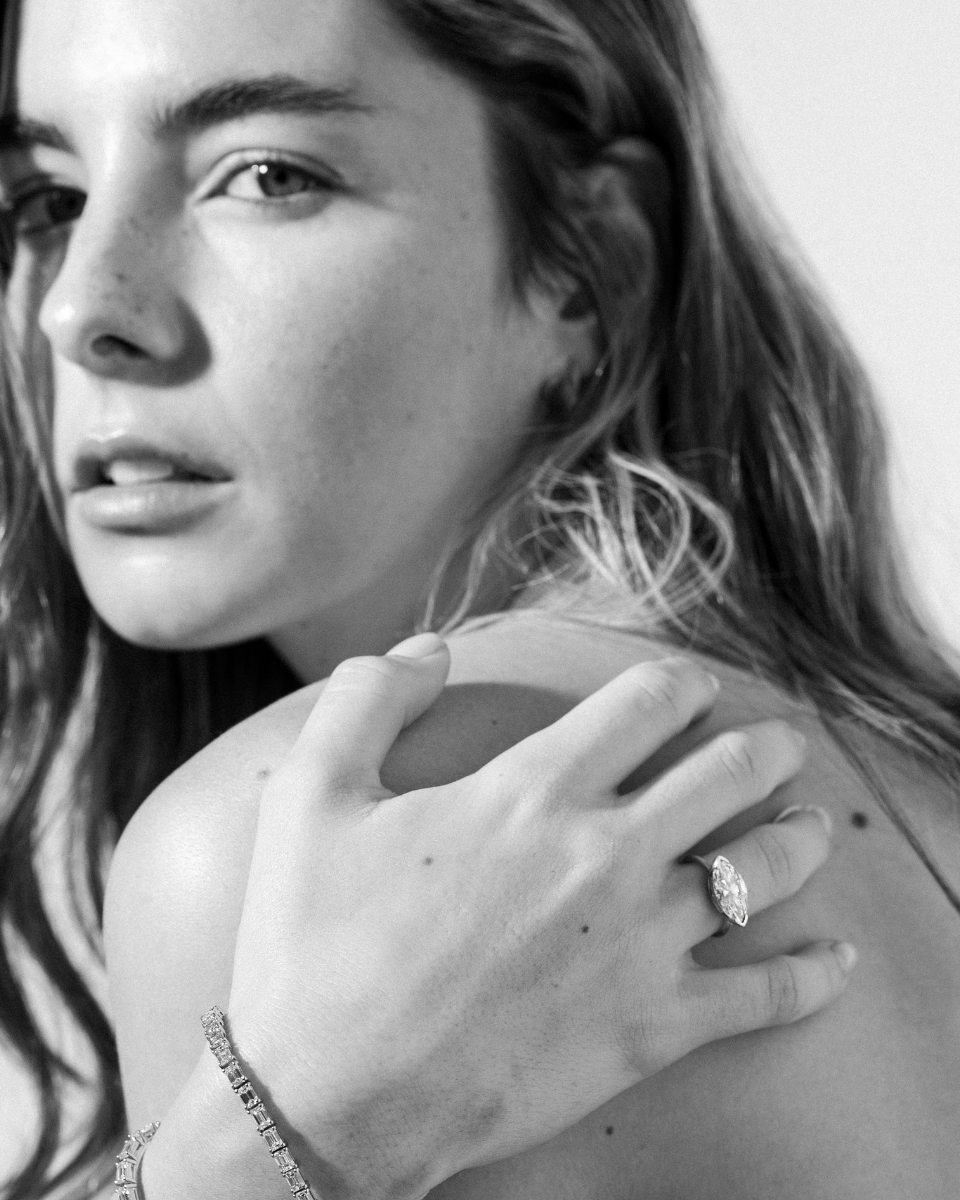
A push present is a personal gesture of appreciation for the mother, whether that takes the form of a timeless piece of jewelry, a sentimental keepsake, or something chosen entirely for her like a tennis bracelet.
Where Did the Push Present Come From?
The most repeated origin story points to Godh Bharai, an Indian ceremony in the seventh or eighth month of pregnancy. The name translates as fill the lap. The expectant mother receives gifts, fruit, and sweets, and she is released from chores for the day. Retailer guides repeat this lineage frequently. It functions as origin lore, since no primary documentation connects the ceremony to the modern Western practice.
A second claim traces the diamond push present to the mid-1930s. No originator is named. The claim appears in a single jeweler's guide and nowhere else, so it belongs in the same category of unverified history.
Documented precedent exists for the practice even where the name is absent. A social study of women and jewelry from Aalto University records husbands rewarding wives with jewelry after childbirth as an established custom. The study describes a charm-bracelet tradition in which each child added a charm. The habit predates the vocabulary by decades at minimum.
The modern Western wave dates to roughly 2010, decades after the behavior it names. Reports of six-figure gifts from entertainers turned a private custom into a searchable term, and retail guides followed within a few years.

What began as a personal gesture of love and recognition has evolved into a modern way to commemorate motherhood.
Why Do Some People Object to Push Presents?
The comment split described in the opening ran in two directions. The negative replies treated the gift as an insult to the child, and another commenter answered the video with "I feel so sorry for people who need or expect a 'push present.'" The tone goes past mild disagreement into contempt for the premise.
Defenders describe an object that marks a large change in a family's life, and they read the backlash as one more form of mother-shaming. A gift after childbirth, in this framing, acknowledges labor that the culture otherwise expects mothers to absorb without comment.
The two camps share one mistake. Each side treats the gift as a requirement, one by demanding it and the other by condemning the demand. The survey record supports neither reading. Opinion divides close to half, and a large minority of mothers say the baby is gift enough. A custom that half the audience rejects cannot function as an obligation, and a gift given freely by the other half earns a defense against the greed charge.
The cheapest version of the gift may be the strongest evidence on that point. The least expensive entries in the forum record, flowers from a husband and repeated thanks for the baby, draw the same warmth years later as the jewelry entries do. A gift that costs almost nothing also counts under the term, which suggests the object matters less than the marking.
Most etiquette guides now address the controversy directly. Several advise the giver to gauge the mother's own view of the term before buying anything.

A push present's meaning comes from the thought behind it, making a simple bouquet, an engraved keepsake, or a diamond necklace equally meaningful when chosen with intention.
When Should You Give a Push Present?
Most partners hand over the gift within 48 hours of the birth, in the hospital room or on the first night home. Some split it into a small token at the birth and a larger keepsake near the two-week mark. A smaller group gives the gift before the birth to mark the start of the family chapter. The one logistics rule that recurs across guides concerns ordering. Custom and physical gifts need lead time, because due dates are unreliable and production schedules do not move for them.
How Much Should You Spend on a Push Present?
Etiquette sets no spending threshold for this gift, and published ranges vary widely. The spread itself is the finding. One guide places most couples between $50 and $500. Another suggests $25 to $300 depending on the household, with a warning that the gift should never create debt.
The retail high end changes scale. Kwiat, a diamond house that publishes a push present guide, reports customers commonly spending $3,000 to $5,000. That figure describes buyers who walk into a high-end jeweler. It says nothing about what anyone else should spend.
A range running from $25 to $5,000 means no external answer exists for the budget. The working rule from community threads is plainer. Spend what the household absorbs without strain, and put the money into specificity rather than size. A modest pendant in the baby's birth month does more work than a generic piece at five times the price, because only the first one points at a specific child.
Guides agree on a single hard limit. The gift should not produce debt in a month that already includes hospital bills.
What Jewelry Makes a Good Push Present?
Parent-community guidance converges on one standard for the gift. Make it personal, tie it to this baby, and aim it at recovery or at memory. Jewelry dominates because it handles the memory half better than anything else, and three categories account for most of what mothers report wearing years later.
Birthstone Jewelry That Ties the Gift to One Child
Birthstone pieces are the top ask in expectant-mother forums, and the ask frequently arrives as an explicit instruction. "I straight up told my husband a really good present for future reference would be something with all our birthstones," one member wrote. The stone binds the piece to the child's birth month, which is the entire appeal. No stranger could have selected it, and no second child produces the identical piece unless the months coincide.
Custom work is one route into this category. GOODSTONE designs custom gift jewelry through direct designer consultations, working through stone and setting choices with the client in scheduled sessions. A custom piece takes weeks to make, so it fails the giver shopping days before a due date.

A birthstone transforms a beautiful piece of jewelry into something deeply personal.
Name Necklaces and Engraving That Work as Daily Wear
Mothers in forum threads describe name necklaces as low profile enough to wear every day, through the recovery window and past it. Engraved and initial pieces form the daily-wear end of the category. The piece functions as an ordinary accessory and as a record at once. That dual function explains why this category generates the most reports of gifts in daily rotation years after the birth.

Sometimes the smallest details carry the most meaning. A child's name, initials, or birth date engraved into a piece of fine jewelry creates a subtle, everyday reminder of a moment that changed everything.
Stacking Rings and Charm Bracelets That Grow With the Family
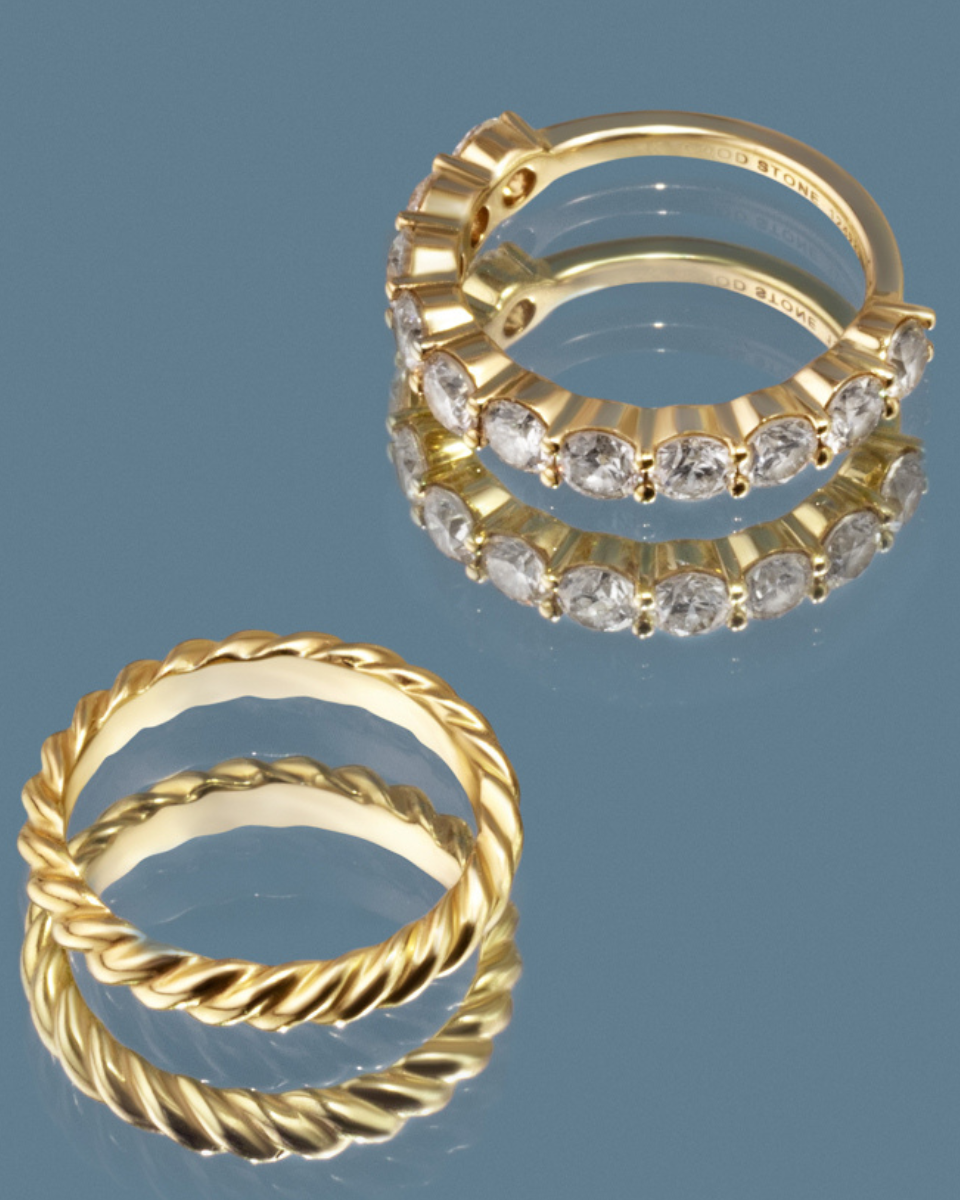
The Mexican churumbela tradition formalizes the buildable approach, a stack of bands that gains a ring per child. The gift stays unfinished on purpose. Retail stacks add an infinity ring for each new baby. Trio rings assign one band apiece to mother, father, and baby. Eternity rings join the wedding stack as a permanent third band. Link bracelets take a charm per child, and mothers in the forum record describe planning the future charms at the first purchase, with the baby's birthstone charm selected before the bracelet arrives.
The buildable formats solve a problem the single-piece formats do not. A family that grows gets a gift that grows with it, and the first purchase commits the giver to a pattern, sparing repeated invention later.

Adding a stacking ring or charm for each child creates a collection that grows alongside the family, with every new piece representing another chapter.
What Are Good Non-Jewelry Push Presents?
The non-jewelry side of the category divides into recovery gifts and memory gifts. Recovery gifts answer the weeks after delivery. Forum members describe gratitude for soft sheets and loungewear during that window, with Cozy Earth sheets and pajamas named directly. Washable silk robes and meal-delivery gift cards appear repeatedly. A recurring note in those threads is the appeal of receiving something the mother would not have chosen for herself.
Memory gifts run cheaper and quieter. Keepsake books and inscribed first libraries for the child appear in guides alongside the jewelry. A recorded first year preserves the memory as well as a pendant at a fraction of the price. These cost little and age well.
The postpartum food craving functions as its own gift category. Nine months of restrictions end in a hospital room, and mothers remember the meal. "I'm glad I'm not the only one excited about the food after delivery," one wrote. "I want a huge soda and a deli meat sandwich." Champagne appears in the guides for the same reason.
The test that covers every category above is short. The gift serves her recovery or her memory of this baby. Gifts that pass it get worn and get described fondly years later. Gifts that fail it are returned or forgotten at any price. The jewelry categories above each pass the test in a different way.

Not every meaningful push present comes in a jewelry box. Thoughtful gifts that offer comfort, preserve memories, or create a moment of rest can be just as personal during the first weeks of motherhood.
Frequently Asked Questions
Why is it called a push present?
The name references the pushing stage of labor. Because deliveries vary, the practice applies equally after C-sections, surrogacy, or adoption. The term functions as a label for the occasion.
Are push presents a real thing?
The practice predates the term. A figure repeated secondhand from a 2004 BabyCenter survey of more than 30,000 respondents puts the share of new mothers who received one at 38%. The custom became mainstream in Western culture around 2010 through celebrity coverage.
Is a push present required?
No etiquette rule requires one. Etiquette expert Pamela Holland summarizes the position as "the standard is that there is no standard," and roughly 40% of surveyed mothers said the baby itself was gift enough.
Can you buy yourself a push present?
Self-purchase is documented at both ends of the price range. Chrissy Teigen bought herself a perineal irrigation bottle after her first child, and Blac Chyna bought herself a $400,000 Rolls-Royce a month before giving birth, calling it a gift to herself for a hard year of work.
What are famous celebrity push presents?
The most cited example is the Lorraine Schwartz diamond choker Kanye West gave Kim Kardashian after their son Saint's birth in December 2015, reportedly worth around $1M. Kylie Jenner received a $1.4M Ferrari LaFerrari from Travis Scott after Stormi's birth in 2018. Jennifer Lopez received canary diamond earrings with a matching ring from Marc Anthony after the birth of their twins. Pink received a custom motorcycle from Carey Hart. All figures are media-reported, not confirmed sale prices.
What is a birthstone push present?
It is jewelry set with the stone of the baby's birth month, such as sapphire for a September baby or amethyst for February. The stone of one birth month matches one child. Rings and pendants appear in this category along with earrings.
Do push presents have to be jewelry?
Jewelry is the most durable form. No guide calls it mandatory. Forum members describe champagne, soft sheets, or luxury pajamas as gifts they valued during recovery. One mother reported receiving sushi in her hospital room and remembered it fondly.
What do you engrave on a push present?
Common engravings are the baby's name or birth date. Some pieces add initials or a short message for the mother, and some chains allow more than 40 characters, enough for several children's names on one piece.
What is a push present for dad?
The term refers to a newer and smaller practice in which partners exchange gifts after a birth, while the tradition overall centers on the mother.
When should you order a push present?
Order physical or custom gifts three to four weeks before the due date, because due dates are unreliable and custom jewelry adds production time to shipping time.



Deja un comentario (todos los campos son obligatorios)