





Carat vs Karat and Why Jewelers Use Both Words
Carat is a unit of weight for gemstones and diamonds, fixed at 200 milligrams. Karat is a measure of gold purity expressed in parts out of 24. A single ring normally carries both numbers, one describing the stone and one describing the metal.
The mix-up has a documented cost. At the 1871 Paris Exposition, 47 national carat standards were on display at once, each meaning a different weight. Both words descend from one seed, and the trade chose to standardize the weight while keeping the fraction.

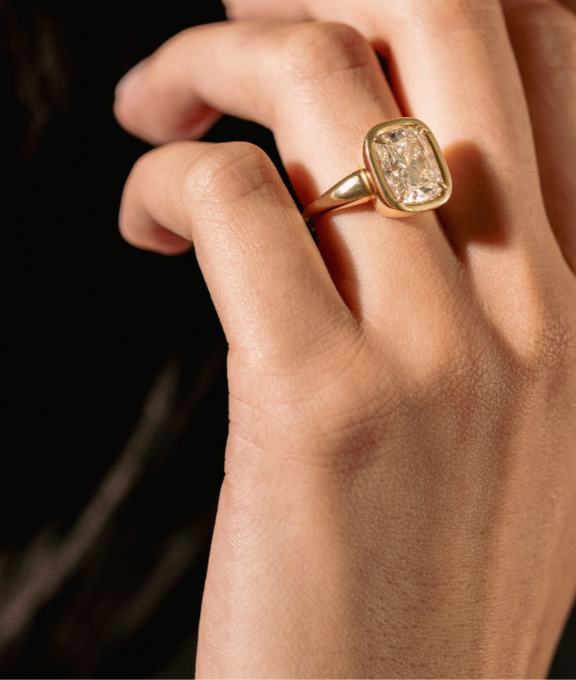
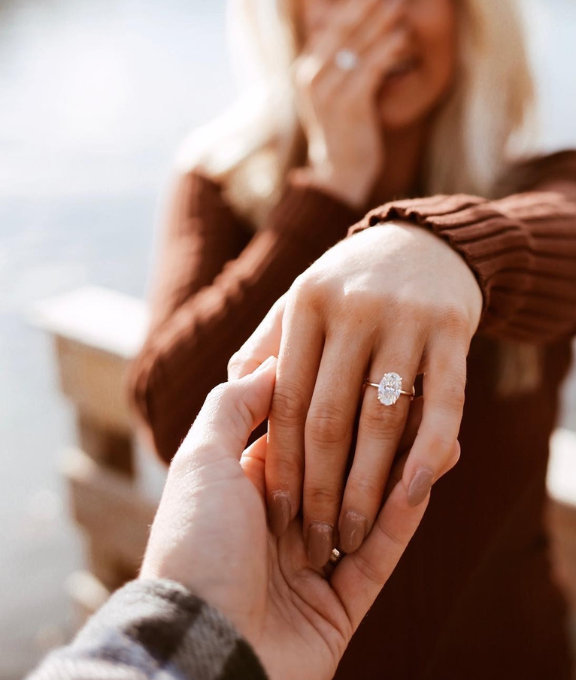
Carat and karat may sound identical, but they describe two completely different qualities in fine jewelry. One measures the weight of a diamond or gemstone, while the other reveals the purity of the gold that holds it.
What Is the Difference Between Carat and Karat?
One metric carat equals 200 milligrams, or 0.2 grams. Every gemstone in the trade, from diamonds to opals, is weighed in this unit. The abbreviation is ct, and jewelers subdivide it into 100 points for precision below one carat.
Karat records how much of a gold alloy is pure gold, counted in twenty-fourths. Pure gold is 24K. An 18K alloy contains 18 parts gold and 6 parts other metals, which works out to 75% purity. A 14K alloy is 58.3% gold. The stamp on a ring's inner band reports this fraction, never a weight.
Working jewelers use a short mnemonic. Carat describes the stone, karat describes the metal. A listing reading "14K gold with a 1 ct diamond" carries one of each. Neither number can substitute for the other. The two words are pronounced identically. The confusion happens at the counter and in speech, where spelling does no work at all.

A diamond's carat weight and a ring's gold karat are two separate measures of value. Understanding both helps you look beyond the appearance of a piece and appreciate the materials that make it.
Where Do the Words Carat and Karat Come From?
The Greek keration, meaning carob seed, is the single root of both words, a diminutive of keras, horn, named for the pod's curved form. The word traveled through Arabic as qirat and Italian as carato before entering English in 1555. Mediterranean traders used carob seeds as counterweights for gems and gold, on the belief that the seeds were remarkably uniform from one to the next.
That belief does not survive measurement. A 2006 study in the Annals of Botany weighed carob seeds from Mallorca and found variation of roughly 20 milligrams in either direction around the 200-milligram metric carat, no more uniform than dozens of other species tested. The authors argue that human selection created the reputation. Traders picked uniform-looking seeds by eye, and the picking produced the consistency the seeds themselves did not have. The study challenges the myth rather than the practice, since the weighing attacks the uniformity claim while the usage itself remains documented.
Karat with a K is the younger spelling, coined to distinguish gold purity from gem weight. American usage completed the split. The C spelling performs both jobs in Britain and Australia and across the Commonwealth.

The words carat and karat share a surprisingly rich history, tracing back to the carob seeds once used by ancient traders to weigh precious stones.
How Did the Carat Become a Standard in 1907?
Before standardization, a carat was a local opinion. The unit weighed roughly 187 milligrams in Cyprus and 216 milligrams in Livorno, with most trading cities falling somewhere between. French jewelers agreed on 205 milligrams in 1871. England fixed its carat at 205.304 milligrams in 1888. One catalog of the era records 23 distinct carat weights in use before 1907.
The cost of this arrangement appeared in famous places. The Cullinan diamond, discovered in 1905, received eight different published weights between 1905 and 1910, depending on which city's carat did the measuring. A stone of that fame could not even be described consistently. Lesser stones crossed borders with the same problem attached to every invoice.
The damage fell on ordinary transactions as much as on famous ones. A parcel weighed in Paris gained or lost value when it was reweighed in London, and every cross-border sale carried a conversion argument inside it. An appraisal could quote a figure without naming which carat stood behind it, and the buyer had no instrument for checking. Merchants who traded in two cities kept two sets of books for the same stone.
Diamond dealers pressed for the fix because recalculating at every border cost them money. On January 1, 1907, the Fourth General Conference on Weights and Measures in Paris ratified the metric carat at exactly 200 milligrams. The United States adopted it on July 1, 1913. The United Kingdom legalized it on April 1, 1914. By the 1930s the unit was universal in the gem trade. The standard came from commerce rather than science, arriving more than three centuries after the word entered English.

Before the metric carat was standardized, gemstone weights varied depending on where they were measured.
What Does Karat Mean for a Ring in Practice?
Karat is a durability and color decision before it is anything else. Pure 24K gold measures roughly 25 to 30 on the Vickers hardness scale, soft enough that bench jewelers describe denting it with a fingernail. Asked to cast 24K wedding bands in a 2007 trade-forum exchange, working smiths warned that the result would deform like a band of butter around the finger. One smith described his workaround, an 18K blank inlaid with a channel of 24K wire. After 20 years his own band showed little wear, though his wife's band had thinned slightly from her work as a potter.
The alloy metals provide the structure. Copper, silver, zinc, nickel and palladium add strength and modify color, raising the working temperature of the metal. This is why karat choice tracks geography and use. American jewelers work mostly in 14K for engagement rings meant for daily wear. Luxury houses, Cartier and Bulgari among them, default to 18K. Traditional ceremonial jewelry in India and the Middle East runs to 22K. The 24K grade belongs mostly to bullion and display pieces. In yellow gold the difference is visible, with 18K reading warmer and more saturated against 14K's lighter tone. At equal weight, an 18K piece carries roughly 28.5% more melt value than a 14K one.
Custom houses treat the karat decision as part of the design conversation. GOODSTONE builds custom engagement rings in 14K and 18K gold. Its designers present the purity-versus-hardness trade-off with sample alloys in hand during the consultation stage, before any metal is cast. The range stops at 18K. A buyer set on 22K or 24K ceremonial gold will not find it in the custom line. For a daily-wear ring the bench evidence above explains why that ceiling exists.

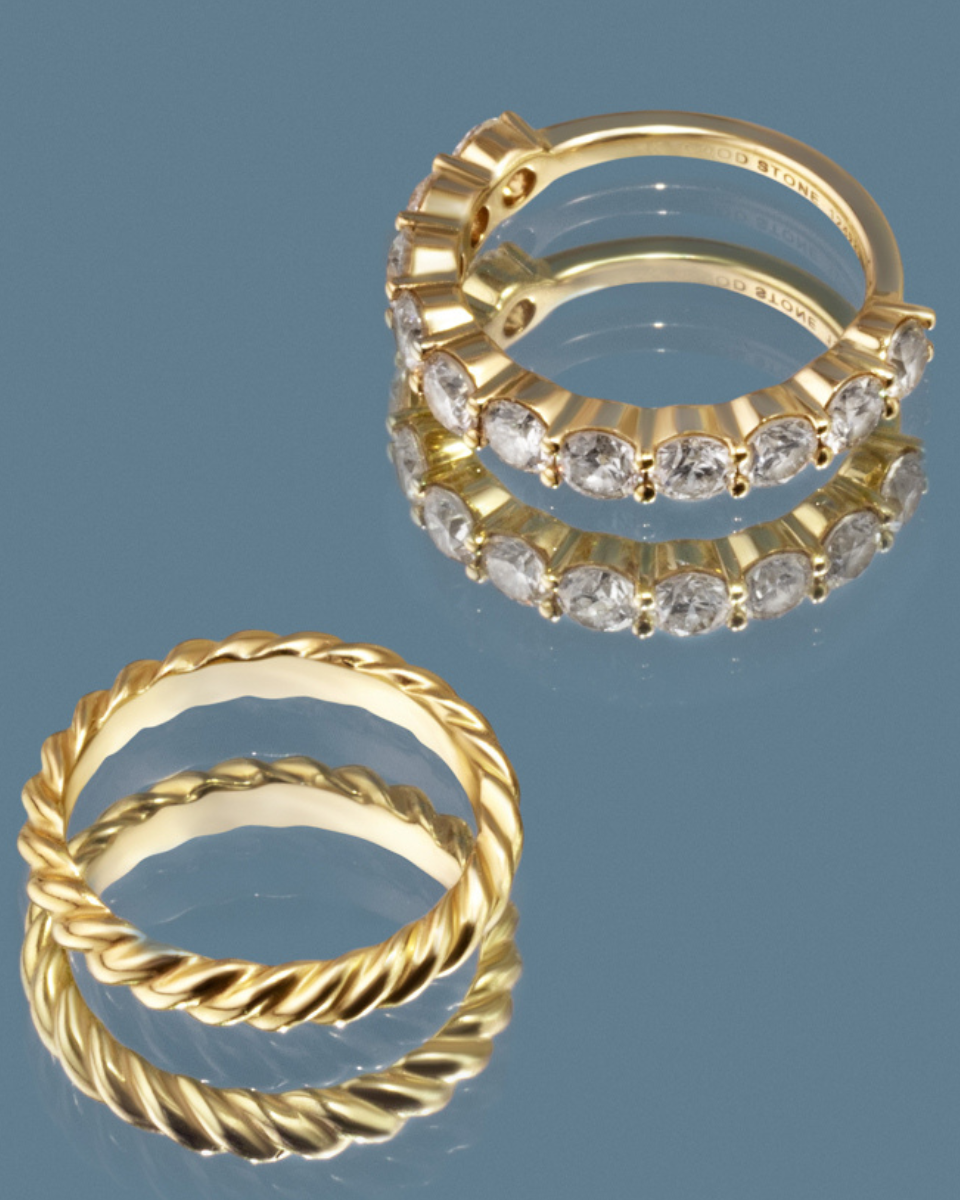
From the richer warmth of 18K yellow gold to the everyday durability of 14K, choosing the right karat is about balancing beauty, strength, and personal preference.
How Do You Read Gold Hallmark Stamps?
Two numbering systems describe gold purity. They coexist on jewelry stamps, and both report identical alloys in different notation.
Karat Stamps That Count Parts of 24
The karat system, used in the US, the UK and the Middle East, counts parts of 24. The common stamps pair each karat with its percentage, running 10K, 14K, 18K, 22K and 24K from 41.7% up to 99.9%.
American regulation allows a half-karat tolerance. A stamp reading 14K can legally describe an alloy at 13.5K. The tolerance is a reminder that the stamp claims a range. A laboratory reading is not part of the claim.
Millesimal Numbers That Count Parts Per Thousand
Continental Europe and international hallmarking use parts per thousand. The stamps run 417, 585, 750, 916 and 999, matching 10K through 24K in order. A ring stamped 750 and one stamped 18K are chemically identical, with only national convention differing between them.
European Union law requires the millesimal mark. The 1972 Vienna Hallmarking Convention recognizes finenesses from 375 up through 999. The 417 grade falls outside the convention even though the alloy complies with fineness rules.
Why Isn't a Carat a Size?
Carat measures weight while the eye measures diameter. Two diamonds of identical weight can face up at different sizes because cut proportions distribute the weight differently. A deep cut hides weight in the pavilion below the girdle. A well-proportioned cut spreads it toward the face-up diameter. Forum threads from ring buyers make the same point from the other direction. A wearer with a 0.87 ct princess cut worried her size 8 finger swallowed the stone. The consensus answer was that proportion and finger size govern perceived size more than the number does.
Density adds a second complication across gem species. A 1-carat sapphire faces up smaller than a 1-carat diamond, and a 1-carat emerald faces up larger, since the three materials differ in specific gravity. The carat figure a buyer budgeted for describes mass. Coverage comes from cut and density.
Wearers report a third effect the numbers never capture, because photographs flatten sparkle. A stone that looks modest in a picture can perform differently in the hand. PriceScope's forum vocabulary has a name for the longer arc, Diamond Shrinkage Syndrome, the sense of a center stone growing smaller as the owner habituates to it. The community's countermeasures are practical. Clean the stone, set it aside for a week, add a halo, or upgrade, and none of these changes the carat figure.
The trade prices the number anyway. Prices cluster at what dealers call magic sizes. Demand concentrates at the round marks, from 0.25 carat up through 2.00, with 1.00 as the sharpest step. The established countermove is to buy at 0.90 to 0.99 carats, where the visual difference from a one-carat stone is minor and the price difference is not. Weight is also the rarity axis, since roughly one in a thousand diamonds weighs more than a carat. A 2-carat stone of equal quality can cost three to four times a 1-carat stone.

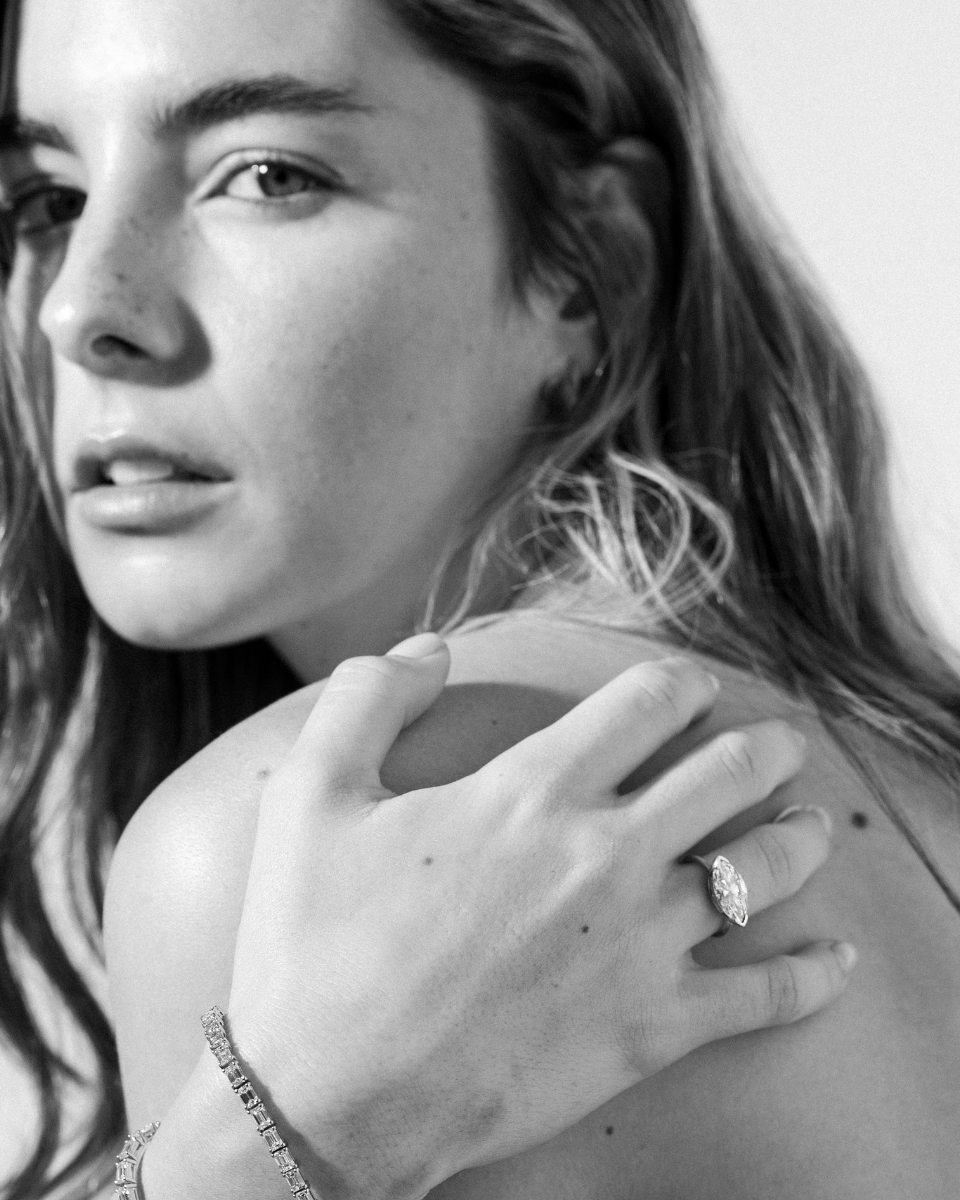
Two stones with identical carat weights can look noticeably different depending on their shape, proportions, and how that weight is distributed.
Why Do Jewelers Use Both Words?
The two words survive because they price one object through two mechanisms that never merged. Carat captures the stone's rarity per unit of weight, and karat captures the gold content per gram of metal. One carob-seed unit became both. The trade standardized the weight in 1907, and no equivalent conference ever retired the purity fraction. The confusion costs buyers real money at exactly one place, the CTW listing. Carat total weight sums every stone in a piece. A ring advertised as 2 carats total can contain one solitaire or a hundred small melee diamonds, two very different objects at widely separated values. Consumer guides give one instruction for these listings, which is to ask for the center stone's individual weight. That single question separates the solitaire from the melee parcel before any price discussion starts.

Carat and karat remain essential because they describe different parts of the same piece. Understanding the distinction makes it easier to evaluate the diamond, the metal, and the overall value of a ring with confidence.
Frequently Asked Questions
Is carat or karat used for diamonds?
Carat, always with a C. Karat applied to gemstone weight is considered incorrect usage, while the reverse, carat applied to gold fineness, survives as an accepted variant in British and Commonwealth spelling.
Is 10K gold real gold?
10K gold contains 41.7% pure gold in the alloy, and in the United States 10K is the legal minimum that can be sold as gold, while Britain sets its minimum at 9K.
Does higher karat gold mean better quality?
Higher karat means higher purity, and the hardness numbers run the other way. On the Vickers scale, 14K yellow gold measures around 150 and 18K yellow gold around 125, so the purer alloy is the softer one. The right karat depends on how the piece will be worn.
What does karat mean for gold-plated jewelry?
On plated pieces, the karat number describes only the thin surface layer. Stamps reading GP, GF, or vermeil indicate a coating over base metal or silver, while a 750 or 18K stamp indicates solid gold through the piece.
Which karat gold is best for an engagement ring?
For a ring worn daily, the trade consensus favors 14K because its higher alloy content resists scratching and keeps prongs rigid. One retailer guide, without surveyed data behind it, estimates 14K at roughly 75 to 85% of the American engagement-ring market. Buyers with sensitive skin gravitate to 18K, since its higher gold content reduces contact with nickel and other reactive alloy metals. The choice follows the wearer's habits more than any purity ranking.
Do 14K and 18K gold look different?
In yellow gold, yes, with 18K warmer and 14K paler. Rose gold inverts the intuition, because 14K rose carries more copper and appears pinker than 18K. White gold looks nearly identical in either karat until the rhodium plating wears, and the plating lasts longer on 14K.
Does carat refer to the size of a diamond?
Carat measures weight alone, and the millimeter figures expose the gap. A well-cut 1-carat round diamond faces up at about 6.5 millimeters across, while a 1-carat sapphire, a denser material, faces up closer to 6 millimeters.
Why do diamond prices jump at 1 carat?
Demand clusters at round-number weights. A 1.02 ct stone can cost more than a visually similar 0.96 ct stone, and the visible difference between the pair comes to a few tenths of a millimeter. Guides aimed at buyers put the below-threshold saving at 10 to 20%.
Is carat spelled with a C or K for gold?
In the US, gold purity takes the K spelling and gem weight takes the C. In the UK and Australia, carat covers both jobs, so a British listing reading "18ct gold" describes purity, and American buyers routinely misread it as a stone weight.
What does CTW mean on a ring?
CTW is carat total weight, the summed weight of every diamond in the piece. The center stone's own weight is a separate figure, and the arithmetic gap between the two is large. In one consumer-education example, 100 two-point melee diamonds total 2.00 CTW, matching a single 2-carat solitaire in weight while costing around $1,200 against $25,000 or more for the solitaire. Those figures date to 2014 pricing, and the ratio has stayed directionally intact since.



Deja un comentario (todos los campos son obligatorios)