

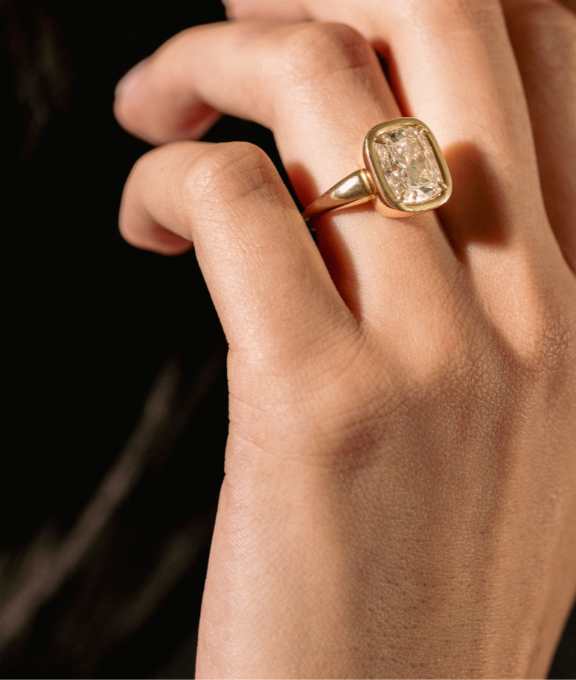
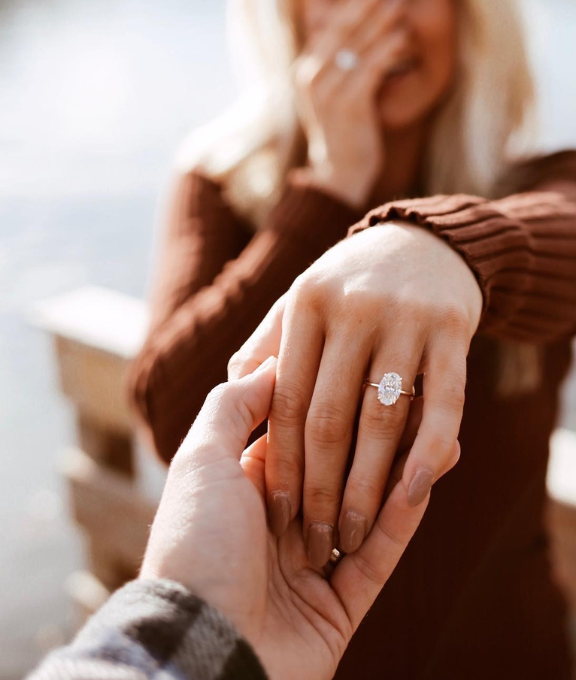


A thin band and a single stone can hold more meaning than you might expect. Our simple solitaire rings keep the focus where it belongs. Take a look and find the one for you.
Can't find the perfect diamond?
talk to an expert
Get a bespoke design from
GOODSTONE that'll last a lifetime.


Truly an amazing and simple experience. They worked with me to give my fiancé exactly what she wanted and worked with me every step of the way. Highly recommend

We believe in the beauty of simplicity. Our Thin and Simple solitaire engagement ring collection showcases the enduring appeal of minimalist design, where the focus remains on the brilliance of the center stone. Each ring is thoughtfully crafted with a delicate band that enhances the stone's natural beauty, creating a look that is both refined and effortlessly sophisticated.
Our collection is designed to suit every style, offering a variety of band materials, from classic yellow gold to sleek platinum. Whether you prefer a round brilliant diamond, an oval cut, or another unique shape, each ring can be customized to reflect your personality and story. Perfect for those who value understated luxury, these solitaire rings make a profound statement: that less is truly more.
A thin, simple solitaire engagement ring holds one center stone on a slim, unadorned band, with no accent stones or detailing. The narrow band focuses attention on the diamond and gives the ring a light, minimalist look that many people find dainty and easy to wear.
A band becomes too thin when it can no longer hold the center stone securely or maintain its round shape during daily wear. Most slim solitaire bands are around 1.3 to 1.7mm, which stays sturdy while keeping the delicate look you want. Below that range, the metal grows fragile, so weigh the width you like against your stone size before settling on a number.
Yes, for everyday wear, a thin band is fine with a bit of normal attention. It is not as stout as a wider band, so a once-a-year look from a jeweler catches any loosening before it becomes a problem. Keep it off during rough jobs and clean it gently to see it through years of use.
A thin band can bend if it takes a hard hit or heavy pressure, though it rarely breaks under normal wear. With less metal than a wider band, the shank gives more easily and can warp out of round after a firm knock. A jeweler can usually reshape a bent band, so the risk is a change of form rather than a break.
A thin solitaire uses a narrower band, usually around 1.3 to 1.7mm, while a standard one runs wider and carries more metal. The narrower band looks more delicate and makes the center stone appear larger. A standard band is a little sturdier and gives a more substantial presence.
Yes, a jeweler can resize a thin band, but a very narrow one gives them less metal to work with. Small changes are fine, but big jumps in size are harder and sometimes require adding a support bar inside the shank. It is worth asking what your band allows before you buy.
A thin band makes the diamond look bigger by contrast. With so little metal flanking it, the stone has more bare finger around it and takes up more of your view, so it comes across as larger. Its size on paper does not change, only how big it looks on the hand.
A plain thin band sets no rules about the stone, so it works with round, oval, cushion, emerald, or pear without fuss. The narrow metal keeps out of the way of any outline, which leaves the decision to your own taste rather than the setting. A larger or elongated stone shows off plainly against the slim band.
A thin wedding band pairs well with a thin solitaire, since matching the widths keeps the pair balanced on the hand. There is no shoulder detailing on a plain band to get in the way, so a straight wedding band butts right up against it with no fitted cut called for. GOODSTONE can match a wedding band to your ring so that the two form a single, even line.
For an active day, a thin band asks for a little thought, since a solid hit can bend the slim shank out of round. Take it off for heavy lifting, gardening, or gym work, and it stays true. People who are hard on their hands often prefer a wider band that puts more metal between the stone and whatever it hits.
A soft brush and a bowl of lukewarm soapy water handle most of the upkeep, working around the stone and under the setting to lift everyday film. Rinse the ring and pat it dry with a lint-free cloth, taking care not to bend the slim band. A yearly look from a jeweler catches any loosening and keeps the plain shank sound.
It often costs less than a wider or more detailed one, since a slim plain band uses less metal and has no accent stones. The band is a small part of the bill, since the center diamond carries most of the cost, so choosing a slim one frees up more of your budget for the stone.
A thin band can hold a larger carat diamond, though the setting needs enough support for the weight. Under a heavy stone, a narrow shank gives a little, shifting more of the work to the head and base. A slightly wider band, or extra bracing under the setting, keeps a big stone steady.
GOODSTONE recommends a band width based on your stone size, metal, and daily wear rather than a single fixed number. Slim solitaire bands generally run around 1.3 to 1.7mm and stay durable with normal care. For the sturdiest fit under a large stone or busy hands, ask for guidance.
Get in touch with our concierge team to book a one-on-one call with us to discuss about your Engagement Ring. We will walk through the process from diamond sourcing to choosing the perfect setting.


