





Diamond Cut Grades Explained: From Excellent to Poor
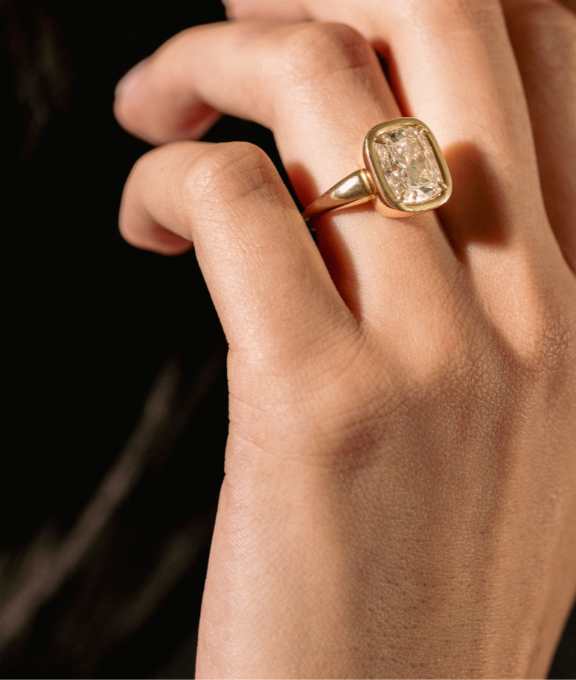
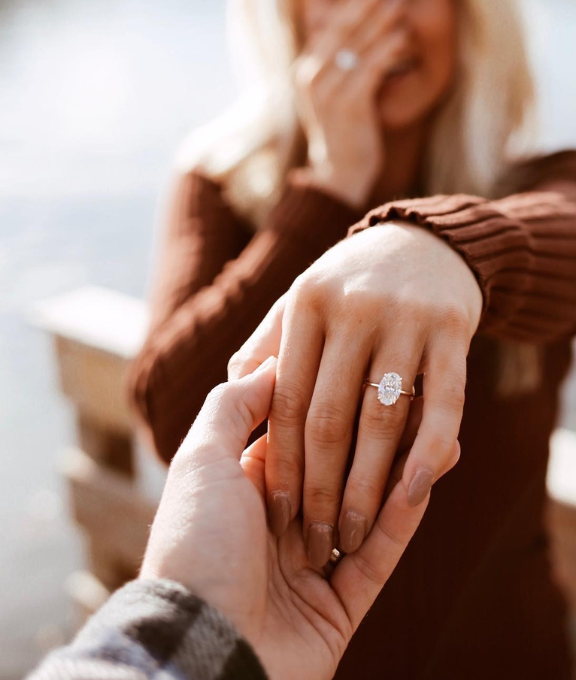
At about 1 carat, a Very Good cut and an Excellent cut look the same in your hand, or on your ring, whether it's a solitaire or a chunky burnished ring. Yet the Very Good stone costs 10 to 15% less. Among the 4Cs, the cut grade is the one measure that decides how much light a diamond returns and how alive it looks face up. The grades are Excellent, Very Good, Good, Fair, then Poor, and where a stone falls on that scale tells you more about its sparkle and your budget than any other line on the report.
|
Grade |
What It Means / Buy? |
|
Excellent |
Top light return, brightest and liveliest. The safe default for a round if the budget allows. |
|
Very Good |
Returns about 90% of the brilliance and looks like Excellent to the naked eye near 1 carat, for 10 to 15% less. The value buy. |
|
Good |
A visible step down in brightness, still lively in smaller sizes. Buy only to stretch a tight budget. |
|
Fair |
Noticeably dimmer, with some light escaping from the stone. Skip for a center stone. |
|
Poor |
Dull and lifeless from heavy light leak. Avoid. |
What the Cut Grade Measures
The cut grade looks like a single word on a report, but it compresses seven separate measurements into that word. Three describe how the stone looks face up. Brightness is the white light returning to your eye. Fire adds the flashes of color, and scintillation is the play of sparkle and dark as the diamond moves.
Two more come from the design, the weight held back for beauty and the durability of the proportions. The last pair, polish and symmetry, comes from the craftsmanship of the cutting itself. All of it resolves into one label.
Cut has been graded this way only since 2005, and only for the standard round brilliant. The top grade is Excellent on the word scale and Ideal, or 0, on a numeric system that ran from 0 to 10 and now issues an Ideal report through the main lab. Whichever name you meet, it points at the same top of the range.
One word doing the work of seven measurements is why the cut grade is the single most useful spec to shop by. The catch is that one word cannot separate two well-cut stones, and Excellent shows that limit most plainly.

A diamond's cut is about far more than its shape. Light return, craftsmanship, and proportions all work together to create the brilliance you see with the naked eye.
Cut Grades From Excellent to Poor
Excellent Cut
An Excellent round returns roughly 90 to 95% of the light that enters it, and it looks the brightest and liveliest of the grades. It is the grade most buyers reach for first, and for a round brilliant it makes a sound default when the budget allows. The band is wide, though.
Buyers who compare cut closely ask for a light-return image before they trust the word, since two Excellent stones can perform differently in person. The grade gets you into the best-performing group without, on its own, handing you the liveliest stone in it.

An Excellent cut is designed to maximize sparkle and light return.
Very Good Cut
Set an Excellent and a Very Good round side by side near a carat, then move them through fluorescent light, overcast sky, and direct sun. Most eyes cannot separate the two. A Very Good round returns close to 90% of the brilliance of an Excellent one and looks the same to the naked eye near a carat, for about 10 to 15% less. On a round, this is the smart place to land. The money saved moves straight into carat weight or color, where you notice it.

A Very Good cut delivers exceptional brilliance while offering outstanding value.
Good Cut
A Good cut is where you start to register the drop. Brightness eases off, the pattern of light and dark loses some contrast, and the stone looks a touch flatter next to a higher grade under the same light. It still has life, especially in smaller sizes where the shortfall is less noticeable, and it is roughly 25% below Excellent at the same carat, color, and clarity.
As a center stone, it makes sense mainly when a tight budget needs the room. For side stones and smaller accents, where nobody studies the light return, it is an easy call.

A Good cut can still create a beautiful diamond, especially in smaller sizes or accent stones.
Fair Cut
By the Fair grade, the proportions are off enough that the stone leaks light out the sides and bottom. The face turns dull and heavy, with noticeably less sparkle. A Fair cut can still hold a place where the diamond plays a supporting role, though, as the stone someone looks at every day, it gives up too much of the reason to own a diamond, and a center stone should not drop this far.

As proportions move further from ideal, more light escapes the diamond instead of returning to your eye.
Poor Cut
With a Poor cut, buyers describe a familiar letdown, with a big, tidy-looking stone that does nothing in the light, showing none of the flash or movement a lively stone gives back. Proportions and symmetry are off enough that most of the light escapes the stone. Even a large, clean diamond turns dull and lifeless. High clarity cannot rescue it, since the fault is in how the stone bends light, and no other strength on the report redeems the grade.
Cut Grading for Fancy Shapes
Grading Limited to Round Brilliants
The five-grade scale exists for one shape. The main labs assign an overall cut grade only to the standard round brilliant, because a round has a settled facet pattern that a single standard can measure. Ovals, pears, marquises, emeralds, cushions and the rest behave too differently from one another for one rule to cover them all.
Their reports still list polish and symmetry, the finish grades, but the line most buyers want, the overall cut grade, is not printed. The reassurance a round shopper gets from the word Excellent has no equivalent on a fancy-shape report.

Fancy shapes rely on proportion, symmetry, and real-world performance rather than a single label on a grading report.
The Triple Excellent Label
Triple Excellent, sometimes written 3EX or XXX, means a round brilliant earned Excellent on all three of cut, polish, and symmetry. It is jeweler shorthand that buyers and sellers assemble, with the labs scoring those three categories separately. A stone can hold an Excellent overall cut grade with Very Good polish or Very Good symmetry, a finish difference that shows only under 10× magnification.
Chasing three Excellents can cost more without changing what you see. And because fancy shapes get no cut grade at all, they cannot be Triple Excellent, whatever a listing implies.

Triple Excellent sounds impressive, but it doesn't always create a visible difference.
How to Judge Cut Without a Grade
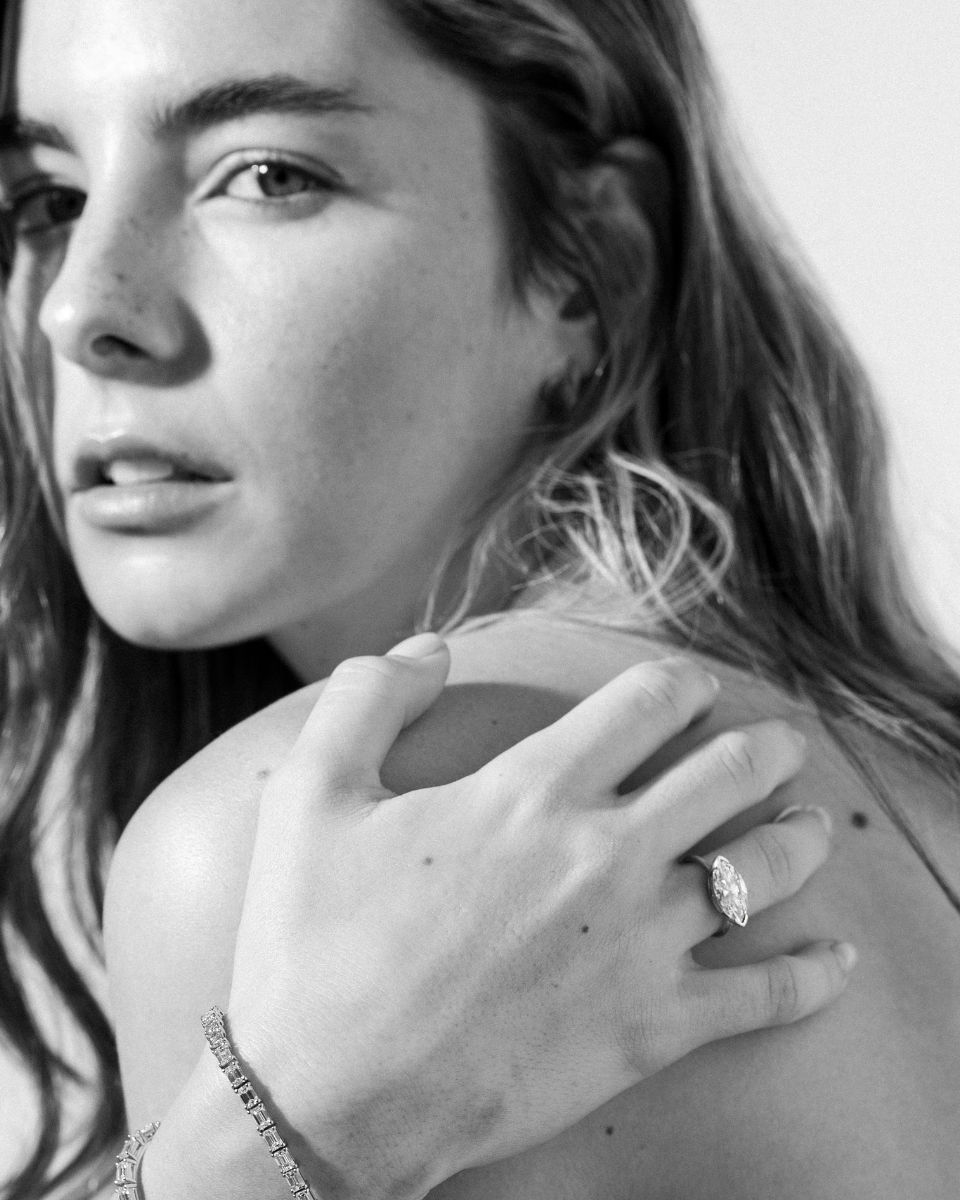
With no grade to lean on, judging a fancy shape falls to you and the footage. Start with the length-to-width ratio for the look you want, roughly 1.75 to 2.25 to 1 on a marquise and about 1.50 to 1.75 to 1 on a pear, then read the depth and table percentages and the symmetry grade.
Numbers alone miss the thing that decides a fancy stone, the bow-tie, a dark band across the center that appears from the way the facets return light. A flat certificate photo hides it. The shadow appears when the stone moves in everyday light, which is why so many oval buyers only see it after the ring arrives. A subtle bow-tie is normal. A heavy one is a real flaw, and no ratio on paper will warn you about it.
GOODSTONE, a custom house that works across every shape, points oval buyers toward a depth of roughly 62 to 66% to keep the stone bright while holding that shadow down, and recommends judging the stone on video before buying. For any fancy shape, the footage tells you what the report cannot.

For fancy shapes like oval, pear, and marquise, seeing the diamond in motion is often more valuable than reading numbers on a certificate.
Choosing a Cut Grade by Shape
For a round brilliant, the choice narrows to two. Use Excellent or Ideal when you want the top of the range and can afford it. Otherwise, Very Good is the pick, and the saving belongs in carat or color. Below Very Good, the eye catches the drop, so a round center stone is best kept at Very Good or above.
For a fancy shape, there is no grade to settle it, so the call is yours. It rests on ratio, depth, table percentages, symmetry, and, above all, the video.
A shape with no printed cut grade is exactly the case a shape-fluent designer is built for, and GOODSTONE matches a cut to each outline so an oval or pear is chosen based on how it behaves in motion. Cut is the one measure worth prioritizing for sparkle, though how you buy it changes with the stone in front of you.

Every diamond shape performs differently. The best choice depends on balancing cut quality, proportions, and the unique way each shape interacts with light.
Frequently Asked Questions
What are the diamond cut grades?
Cut is graded on a five-grade scale, from best to worst: Excellent, Very Good, Good, Fair, then Poor. The scale has been in use since 2005 and applies only to the standard round brilliant. Fancy shapes are not given an overall cut grade.
What is the best diamond cut grade?
Excellent is the top grade on the word scale, and Ideal, or 0, is the top on the numeric scale. Either one describes a round brilliant with the strongest brightness, fire, and scintillation. For a round, this is the highest light return you can buy.
Is Very Good cut worth it, or should you pay for Excellent?
A Very Good round returns close to 90% of the brilliance of an Excellent one and looks nearly identical to the naked eye at about 1 carat, while costing 10 to 15% less. It is the better value for a daily-wear round. The savings are usually better spent on carat weight or color.
Can you tell the difference between Excellent and Very Good cut?
In most lighting, the difference is hard to see with the naked eye, especially in smaller stones. It becomes easier to spot under bright, direct light, though even then many buyers cannot pick the higher grade in a side-by-side test. At around a carat, the two look the same in everyday wear.
What does a Poor cut grade mean?
A Poor cut has proportions and symmetry off enough that light leaks out the sides and bottom of the stone. It looks dull and lifeless, missing the brightness and sparkle of a well-cut diamond. Even at high clarity, it can look flat.
Why do fancy-shaped diamonds not have a cut grade?
Fancy shapes vary too much in facet pattern and light behavior for a single standard to grade them, so an overall cut grade is not assigned. Their reports show only polish and symmetry. Buyers judge cut from proportions and video.
How do you judge cut quality on an oval or pear if there is no cut grade?
Look at the length-to-width ratio, depth, table percentages, and symmetry grade. Then study real photos or video. Footage reveals issues that numbers miss, above all the bow-tie, a dark band across the center of elongated shapes. A subtle bow-tie is fine, while a heavy one signals a weaker cut.
What is a Triple Excellent diamond?
A Triple Excellent, or 3EX, is a round brilliant with Excellent grades in all three of cut, polish, and symmetry. It is an industry shorthand, since the three categories are scored separately and buyers add them up. Fancy shapes do not receive a cut grade, so they cannot be Triple Excellent.
Do polish and symmetry have to be Excellent for an Excellent cut?
No. A diamond can hold an Excellent overall cut grade with Very Good polish or Very Good symmetry, because the difference in finish is usually visible only under 10× magnification. Paying up for all three Excellents rarely changes what the naked eye sees.
How much more does an Excellent cut cost than Very Good?
About 10 to 15% more at equal carat, color, and clarity. For a 1-carat G VS2 round, that is roughly $5,800 for Excellent, compared to about $5,000 for Very Good. Good cut is lower still, near $4,400 on the same stone.
What components make up the cut grade?
The cut grade is built from seven measurements. Brightness, fire, and scintillation cover face-up appearance, while weight ratio and durability cover the design, and polish and symmetry cover the craftsmanship. The lab weighs all seven into the single grade printed on the report.
Should you avoid Good, Fair, and Poor cut grades?
For a round center stone, most buyers are advised to stay at Very Good or above, where brightness and symmetry hold up. Good can work on a tight budget or for side stones, but Fair and Poor lose enough light that the diamond looks noticeably dull. Below Very Good, the eye starts to notice.



Leave a comment (all fields required)