





Can I Use My Grandmother’s Diamond in a New Setting?
A grandmother’s ring often spends years in a drawer, too worn to wear safely or too far from your own taste to put on. The good news is that the diamond, whether it's an oval or an emerald inside, can almost always be moved into a new setting, because the stone is the durable part and the metal is what wears out. Resetting it is usually the most sentimental and the most affordable redesign. The harder part comes in deciding what to keep.

An heirloom diamond can begin a new chapter without losing its history. Resetting a family stone allows its story to continue in a design that reflects the next generation.
The Durable Part of an Heirloom Ring
When a ring has been worn for 50 or 60 years, the setting around the diamond has usually absorbed most of the wear. Prongs thin, gold wears down, and the metal that once held everything firmly starts to give. The diamond itself is often largely unchanged because of its exceptional hardness. A reset preserves the part that holds the memory and rebuilds the part that wore out around it.
Keeping the original stone is also where the savings live. The diamond is the single most expensive part of any engagement ring, and in a reset, you already own it. The cost becomes the new setting and the labor, not a new center stone, which is why a redesign built around a family diamond usually costs a fraction of buying new. For a lot of people, that math is what turns a vague wish into a real plan.

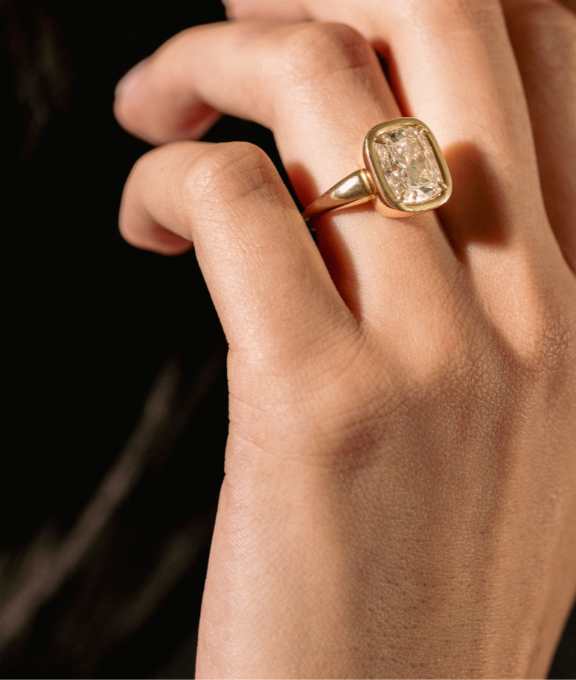
Time often wears down the setting long before it affects the diamond itself. A new setting, like a bezel or claw prongs, protects the stone while preserving the memories it carries.
Inside the Jeweler’s Inspection
Before anyone designs anything, the stone is honestly assessed. The work starts with cleaning, often in an ultrasonic bath, because decades of skin oil and storage grime hide the surface. A diamond that has sat in a drawer can look cloudy and come back startlingly bright after twenty minutes, and only then can it be inspected properly.
The inspection itself is looking for trouble the metal has been hiding. Under magnification, a jeweler checks for chips at the girdle, hairline cracks, abrasions, and feathers that were invisible while the stone sat in its old prongs. This matters most for old stones, because a chip under a prong is exactly the kind of thing you want found before the stone is moved, not after.
Once the piece is apart, the diamond and any accent stones are measured and scanned so a new setting can be engineered to their exact dimensions. For custom work, that becomes a 3D model you approve before any metal is cast.
If the diamond never had a modern lab report or the paperwork is long-lost, this is the moment to send the loose stone for a fresh gemological report and an updated appraisal. You want the stone documented and insured before it leaves your hands, and that step is worth insisting on no matter how small the piece.

Every heirloom begins with a careful evaluation. Cleaning and inspection reveal the true condition of the diamond before any redesign decisions are made.
Antique Cuts in Modern Settings
If the diamond is an old cut, it will look a little different from a modern one, and that is usually a feature worth protecting. Old mine-cut stones have a soft, squarish outline and a large, open culet at the center. Old European cuts are rounder, with chunkier facets that catch light in a warmer way than the precise round brilliants cut now.
Both work well in modern designs, from a clean solitaire to a three-stone band, and a good designer builds the setting to flatter the cut rather than force it to look modern. This is the kind of work GOODSTONE takes on, shaping a fresh setting around an heirloom cut rather than recutting the stone to suit a trend.
There is one technical caution worth knowing. Old mine cuts in particular often have exceptionally thin girdles; the narrow edge where the top and bottom of the stone meet, and a thin girdle chips more easily. A reset for one of these stones should be designed to protect that edge, which is why bezels and well-built prong baskets are favored for antique cuts.
Recutting is a separate decision, and for a sentimental stone it is usually the wrong one. A full recut of an old cut into a modern brilliant can remove 15% to 40% of the carat weight and strips away the character that marks it as old. Unless there is real damage to be rescued, the better choice is to leave an antique cut as is and let the new setting do the updating.

Thoughtful settings celebrate unique antique cut proportions rather than trying to disguise them.
Deciding What to Keep
This is the part that takes the most thought, and it has little to do with the diamond’s grade. A reset can keep as much or as little of the original ring as you want, and the choice is usually made element by element rather than all at once.
A few of the pieces worth weighing:
-
The center stone, kept as the centerpiece while only the dated metal is replaced. This is the redesign most families choose, and the one that carries the most of her forward.
-
The small accent diamonds, which can be lifted into a new halo, set as side stones, or saved for a separate piece like a wedding band or a pendant.
-
The engraving, dates, and initials, which a jeweler can often retain or rework into the new design.
-
The original gold or platinum, which can be melted down and either credited toward the new ring or worked into the setting itself.
Some rings should be left alone. A 1940s platinum band engraved with a couple’s engagement date can be too historically whole to touch, and the right answer there is to wear it as it is. The wear itself is sometimes the point, and more than one person has described the little imperfections as the reason the ring still matters rather than a flaw to polish out.
The worry that comes up most is the fear that resetting is disrespectful, and it usually is not. Making a ring wearable again, so it lives on a hand instead of in a drawer, is its own kind of respect. The one thing worth doing first is talking with the person who gave it to you, because the giver sometimes has an attachment to the original look that you would not guess, and that conversation is far easier before the metal is changed than after.
The Redesign Process and Its Costs
Once the keep-or-change decisions are made, the redesign itself is fairly contained. A simple reset into a ready-made setting can be completed in a few days, while a fully custom design built around the stone takes 3 to 12 weeks, depending on complexity.
All-in professional resets usually range from $500 to $2,500, with the new setting priced separately. Because the diamond is already yours, the total still sits well below that of a comparable new ring. Worn antique prongs usually need rebuilding as part of the job, which is the line item that surprises first-timers, so it is worth asking about up front.
We treat heirloom resets as designs built around the stone already in your hands, fitting for a maker that began with a single custom ring. The work runs one-on-one with a designer rather than across a case of ready-made inventory. Therefore, a client chooses the new setting, reviews sketches and a 3D rendering before any metal is cast, and follows the piece to final production.
Sitting down to talk through the redesign asks for nothing up front. Only after a client approves the estimate does the $500 deposit apply, and it is credited toward the final total rather than added as a fee, which lets the keep-or-change choices happen without any money on the line.

Once the design is finalized, the transformation begins. Every step is planned around preserving the original stone while creating a setting built for decades of future wear.
The Starting Point for an Heirloom Redesign
How a redesign turns out is decided before a jeweler ever touches the ring. Get the stone cleaned, inspected, and insured so it is protected and you know exactly what you are working with. Then have the conversation at home with the mother, aunt, or grandparent the ring came through, so the people attached to it are part of the choice rather than surprised by it.
Only after that does the design question, solitaire or three-stone, platinum or gold, become the easy part. Resets that move through cleaning, conversation, and then design usually land where people hoped, as a way to keep someone close rather than to part with the last thing they left behind. The ring leaves the drawer and goes back on a hand, which is the whole point of doing the work.

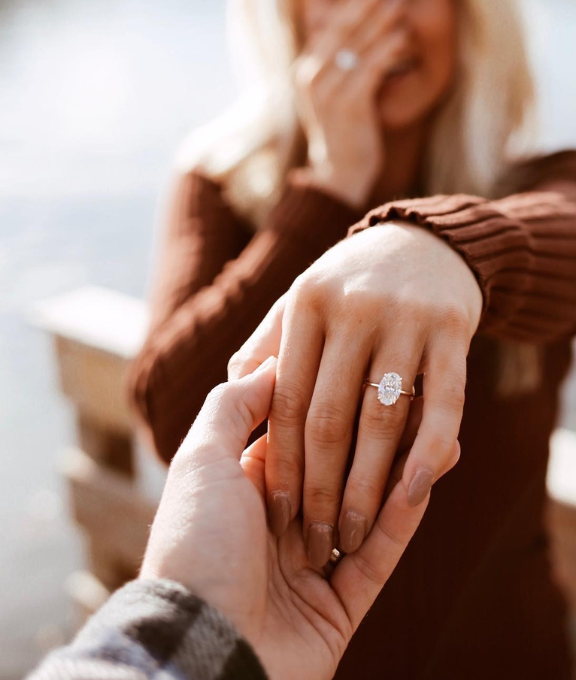
The best heirloom redesigns begin with thoughtful conversations long before production starts. Understanding the sentimental value behind the ring helps guide every design decision.
Frequently Asked Questions
Can you put an old diamond in a new setting?
Yes. Old diamonds, including antique cuts, are routinely reset into modern settings ranging from solitaires to three-stone designs in gold or platinum. A jeweler inspects the stone first to confirm it is safe to move. The diamond is the reusable part, so most of the original ring’s value goes straight into the new design.
How much does it cost to reset a diamond in a new setting?
All-in professional resets generally run $500 to $2,500, with labor around $50 to $100 plus roughly $20 to $40 per rebuilt prong. The new setting itself is priced separately, from a few hundred dollars for ready-made up into custom territory. Because you already own the center stone, the total usually lands well below a comparable new ring.
Is it safe to reset an old diamond?
Generally yes. Diamonds are the lowest-risk stone to remove because of their hardness, though a worn antique setting can break during removal and a stone with an existing chip needs careful handling. A professional inspects the stone before proceeding and uses specialized tools to minimize risk.
How do you remove a diamond from an old setting?
A jeweler gently straightens any crooked prongs, then carefully lifts the stone out using specialized tools before working the metal. Removing the stone first, rather than forcing the setting, is what protects it. The old gold or platinum can then be melted down and reused.
Should I recut my grandmother’s old diamond?
Usually not, if the stone is sentimental and undamaged. A full recut of an old mine or old European cut can remove 15% to 40% of the carat weight and erases the antique character that makes it special. A light repolish to remove a small chip is a much smaller loss and is sometimes worth it.
How long does it take to reset a diamond ring?
A basic reset can take a few days to about three weeks. A fully custom design built around the stone takes roughly 3 to 12 weeks, depending on complexity and material availability. Building in a little buffer is wise if the ring is tied to a date.
Do I need an appraisal before resetting an inherited diamond?
It is strongly advised. Having the stone appraised and insured before any work means it is documented and covered while it is out of your hands. Insurance appraisals run roughly $100 to $200 per piece, and you will want a fresh appraisal afterward because the new setting changes the documented value.
Can you reuse the small accent diamonds from an heirloom ring?
Yes. The small melee stones can be lifted into a new halo, set as side stones, or saved for a separate piece such as a wedding band, earrings, or a pendant. Reusing them lets more of the original ring survive into the new design.
Is it disrespectful to reset a grandmother’s ring?
It is generally not seen that way. Making a ring wearable for a new generation is widely regarded as an honor rather than a dishonor. It is worth talking with the family member who passed it down first, since they may be attached to the original look.
Does resetting a diamond lower its value?
Resetting the stone alone does not lower the diamond’s value. A fresh appraisal afterward updates the documented value, which often rises with a new setting. Recutting is different, because it removes weight from the stone.
Can I keep the gold from my grandmother’s old ring?
Yes. The original gold or platinum can be melted down and either credited toward the cost of the new ring or incorporated into the new setting. Some owners like keeping a small piece of the original metal in the redesign for continuity.




Leave a comment (all fields required)