





How Finger Shape Affects Which Diamond Ratio Looks Best
Many people begin their diamond search by considering carat weight or cut grade. However, another factor that influences how a diamond looks is often overlooked, and it relates to the wearer rather than the stone itself.
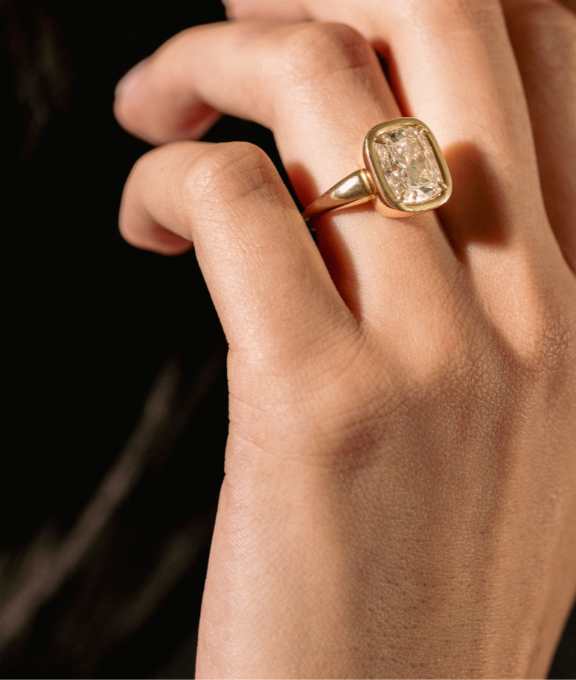
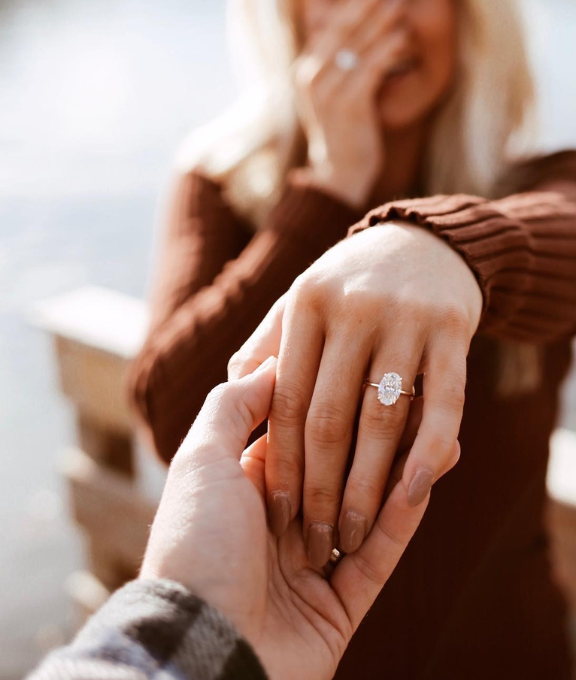
The physical proportions of the hand wearing the ring affect how a diamond appears once worn. Two people can wear the same 1.5-carat oval, but the diamond will appear differently depending on finger length, width, and overall hand size.
The ratio listed on a diamond’s specification sheet influences how it appears on the hand. Considering how this proportion relates to finger shape and size helps make the selection process easier.

Most diamond shoppers focus on the stone itself, but the hand wearing the ring is just as important a variable.
What Length-to-Width Ratio Actually Tells You
The length-to-width ratio is calculated by dividing a diamond’s length by its width.
A ratio of 1.00 indicates a perfectly square or round stone. Any number above 1.00 means the diamond is longer than it is wide, and higher ratios create a more elongated appearance on the finger.
Each diamond shape tends to fall within a common range of ratios.
|
Diamond Shape |
Typical Ratio Range |
Visual Effect |
|
Oval |
1.30-1.50 |
Balanced, elongated oval appearance. |
|
Emerald |
1.30-1.45 |
Classic rectangular emerald cut. |
|
Marquise |
1.85-2.10 |
Long, narrow shape with pronounced points. |
|
Princess |
1.00-1.04 |
Nearly square profile. |
|
Pear |
1.40-1.70 |
Teardrop shape with noticeable elongation. |
These ranges represent common proportions, but the best ratio for a diamond should also take into account the proportions of the finger it is worn on.
Short or Wide Fingers
If the fingers are on the shorter or wider side, pushing toward the upper end of a shape’s ratio range works well. A 1.50 oval, for instance, stretches along the finger and creates a visual lengthening effect. Marquise cuts in the 2.0 to 2.1 range do the same thing with even more coverage. Pear shapes closer to 1.70 also pull the eye lengthwise.
Oval diamonds spread carat weight across the top of the stone, making them appear larger compared to round diamonds of the same carat weight. According to the Gemological Institute of America (GIA), an oval diamond can look approximately 10% to 15% larger than a round diamond of equal weight.
A 1-carat round usually measures about 6.5mm in diameter, while a 1-carat oval typically measures around 7.7mm by 5.7mm.
Marquise diamonds have the largest face-up surface area among common diamond shapes relative to carat weight, appearing about 15% larger than a comparable round diamond, according to GIA data.

For shorter or wider fingers, pushing toward the upper end of a shape's ratio range creates a visual lengthening effect that works in the wearer's favor.
Long or Narrow Fingers
For longer, slimmer fingers, you often want to add some width and balance rather than stretch things further. Lower ratios accomplish this. An oval at 1.30 will appear rounder and sit more compactly on the finger.
A cushion cut around 1.15 to 1.20 offers soft edges with a near-square footprint. Princess cuts at 1.00 to 1.04, and Asscher cuts near 1.00 give a grounded, centered look that pairs nicely with narrower hands.
Step cuts such as emerald and Asscher diamonds have become popular for their geometric lines and reflective facets, which emphasize clarity. In these diamonds, inclusions are more noticeable due to the large, open facets.

Longer, slimmer fingers often benefit from lower ratios that add visual width and balance rather than further elongating the hand.
The Bow-Tie Factor in Elongated Shapes
Something to watch for with ovals, pears, and marquise diamonds is the bow-tie effect. This is a dark shadow running across the center of the stone, and every oval has some degree of it.
Longer ratios tend to make the bow-tie effect more noticeable, so reviewing photos and videos of specific stones is helpful. A well-cut diamond will minimize the bow-tie and maintain sparkle.

Ovals, pears, and marquise diamonds all carry some degree of bow-tie effect and longer ratios tend to make it more pronounced.
How Band Width Plays Into All of This
|
Band Width |
Best For |
Visual Effect |
|
1.8-2.0 mm |
Petite hands or shorter fingers |
Creates a slimmer look and makes the center stone appear larger. |
|
2.0-4.0 mm |
Most hands |
Balanced proportions with the center stone. |
|
Above 4.0 mm |
Larger hands or thicker fingers |
Adds presence but may require sizing the ring up by about half a size. |
A thin band with an elongated diamond can make shorter fingers appear longer. For longer fingers, a wider band with a lower-ratio stone can create a balanced appearance.
Setting Choices That Complement Finger Proportions
A halo adds about 1 to 2mm of visible spread, which can be helpful for petite hands or smaller carat weights. Cathedral settings with swept shoulders elevate the center stone, adding height and visual impact.
East-west settings, where the diamond sits horizontally, complement wider fingers and have become popular in recent years. Hidden halos have also become more common, appearing on about 18% of engagement rings, according to The Knot.

Halos add one to two millimeters of visible spread, while cathedral settings add height and visual impact by elevating the center stone.
How to Choose the Right Diamond Ratio for Your Finger
A diamond typically covers about 40% to 50% of the width of the finger for a balanced appearance. On a size 6 finger, which measures approximately 16.5mm across, a 1-carat round at 6.5mm covers about 40% of the width, while a 1.5-carat stone at 7.4mm covers closer to 45%.
These numbers give you a starting point, but the ratio is what fine-tunes everything. Two ovals at the same carat weight can feel very different on the hand if one is a 1.30 and the other is a 1.50. So when you are comparing stones, think about the finger that will wear it.
The ratio number on the specification sheet gives valuable information about how the ring will appear once worn.



Leave a comment (all fields required)