





The Best Settings for Oval Diamonds and Why They Work
Oval diamonds draw attention with their elongated silhouette and the way they catch light across the finger. The diamond’s appearance, however, is only part of the overall design.
The setting changes how the stone performs, how large it appears, and how well it resists wear over time. A setting that complements the oval’s proportions enhances its appearance and durability.
Selecting the right setting means matching the frame to the oval’s needs for light, security, and proportion.
According to The Knot’s Real Wedding Study, oval diamonds accounted for 23% of all engagement rings purchased in 2023. By 2025, that figure climbed to 33%. Ovals often appear larger than rounds of the same carat weight, and their shape can create a flattering look on many hands.
When cut well, they retain fire and brilliance comparable to a round brilliant, making them a strong option for buyers who want visual impact without the premium round cuts typically command.
With that kind of demand, the range of available settings has expanded considerably. Here are the most common options for an oval center stone, along with what to keep in mind for each.

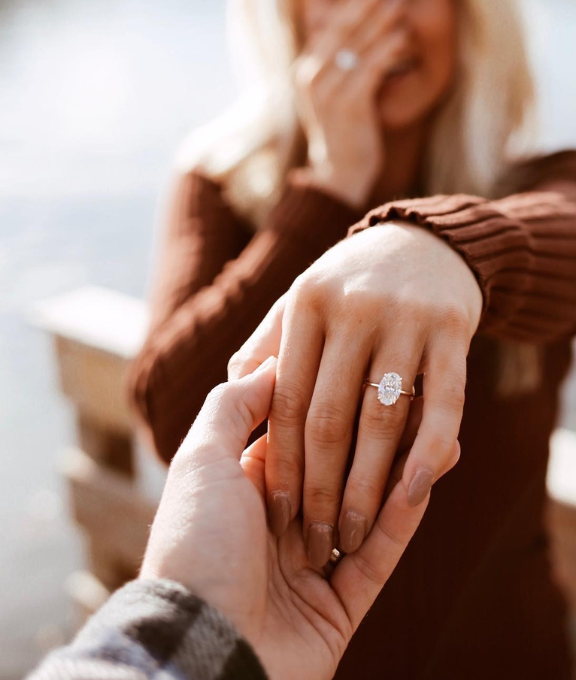
An oval diamond's elongated silhouette and light performance are only part of the equation, the setting determines how well it performs, how large it appears, and how it holds up over time, as you can see on our Club Ring Solitaire Engagement Ring With an Oval Cut Diamond.
The Solitaire Setting
Solitaires account for about 40.3% of all engagement ring designs sold in 2025, and when you see one done right with an oval, you understand why. Nothing is competing with the stone. No side diamonds pulling your eye. No extra metal obscuring the outline. The oval sits on its own and does its job.
Prong count is an important consideration:
- 4 prongs: Expose more of the diamond’s surface, allowing more light in and giving the stone a larger visual footprint.
- 6 prongs: Add security, especially for the oval’s pointed ends, but create a slightly busier look.
The GIA recommends maintaining a careful balance; reducing prong size or number too much increases the risk of the diamond coming loose over time.
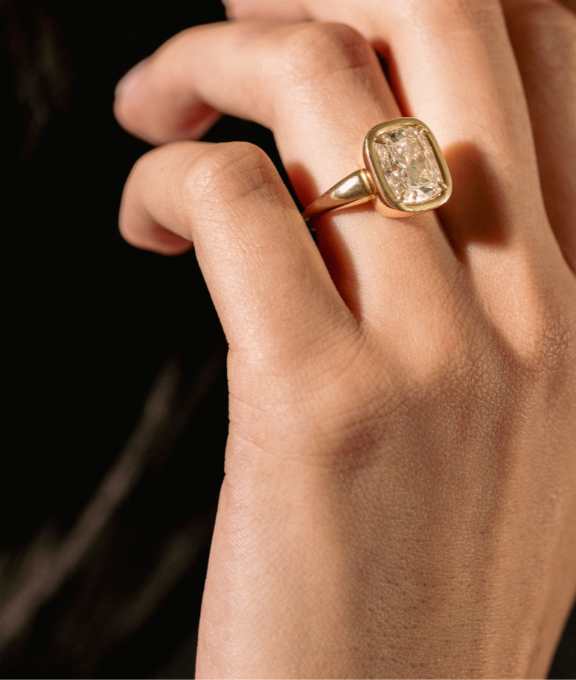
GOODSTONE’s East West Half Bezel Solitaire is a modern take on this category, with metal flanking the stone on each side instead of traditional prongs. It keeps the open, minimal feel of a solitaire while adding a different visual texture.

A solitaire puts the oval entirely on its own, with nothing competing for attention, as you can see on our Thin + Simple Solitaire Engagement Ring With Oval Cut Diamond.
The Halo Setting
A halo surrounds the center stone with a ring of smaller diamonds, and on an oval, this does two things well. It follows the stone’s outline to reinforce its shape, and it adds perceived size without increasing the center diamond’s carat weight. For budget-conscious buyers who want the ring to appear larger on the hand, a halo is an effective option.

For buyers who want the ring to appear larger on the hand, it's one of the most effective tools available.
Hidden Halos
A newer variation places a circle of small diamonds underneath the center stone rather than around it. From the top, the ring looks like a clean solitaire. From the side, you see the added sparkle. This is a useful compromise for someone who likes the idea of extra brilliance but prefers a minimal profile when looking down at their hand.

A hidden halo places accent diamonds beneath the center stone rather than around it, so the ring reads as a clean solitaire from above while revealing sparkle from the side.
The Bezel Setting
Bezel settings wrap a continuous metal rim around the diamond’s perimeter. For ovals, this is a strong choice for a few reasons. The thin metal band protects the diamond’s edges, which matters for people who work with their hands or prefer low-maintenance jewelry. According to the GIA, bezel settings offer excellent protection and a sleek, modern look that pairs well with the soft curves of an oval.
Stylistically, bezels create a very clean line. No prongs are interrupting the profile, and the metal frame gives the ring an architectural quality that reads as contemporary without being flashy.

A bezel wraps a continuous metal rim around the diamond's perimeter, protecting the oval's edges and creating a clean, architectural profile with no prongs to interrupt the outline.
The 3-Stone Setting
Adding side stones to an oval center allows for creative pairings:
- Half-moon side stones: Echo the oval’s curves and create a smooth, continuous line across the finger.
- Tapered baguettes or trapezoid cuts: Introduce geometric contrast and a more structured look.
The GIA notes that oval diamonds pair well with a variety of side stones for 3-stone or 5-stone configurations. Your choice of flanking stones changes the ring's personality fairly dramatically, so this setting tends to work best for buyers who already have a strong sense of the overall look they want.

The 3-stone setting works best for buyers who already have a clear sense of the overall aesthetic they're after, since the flanking stone choice shapes the entire composition.
The East-West Orientation
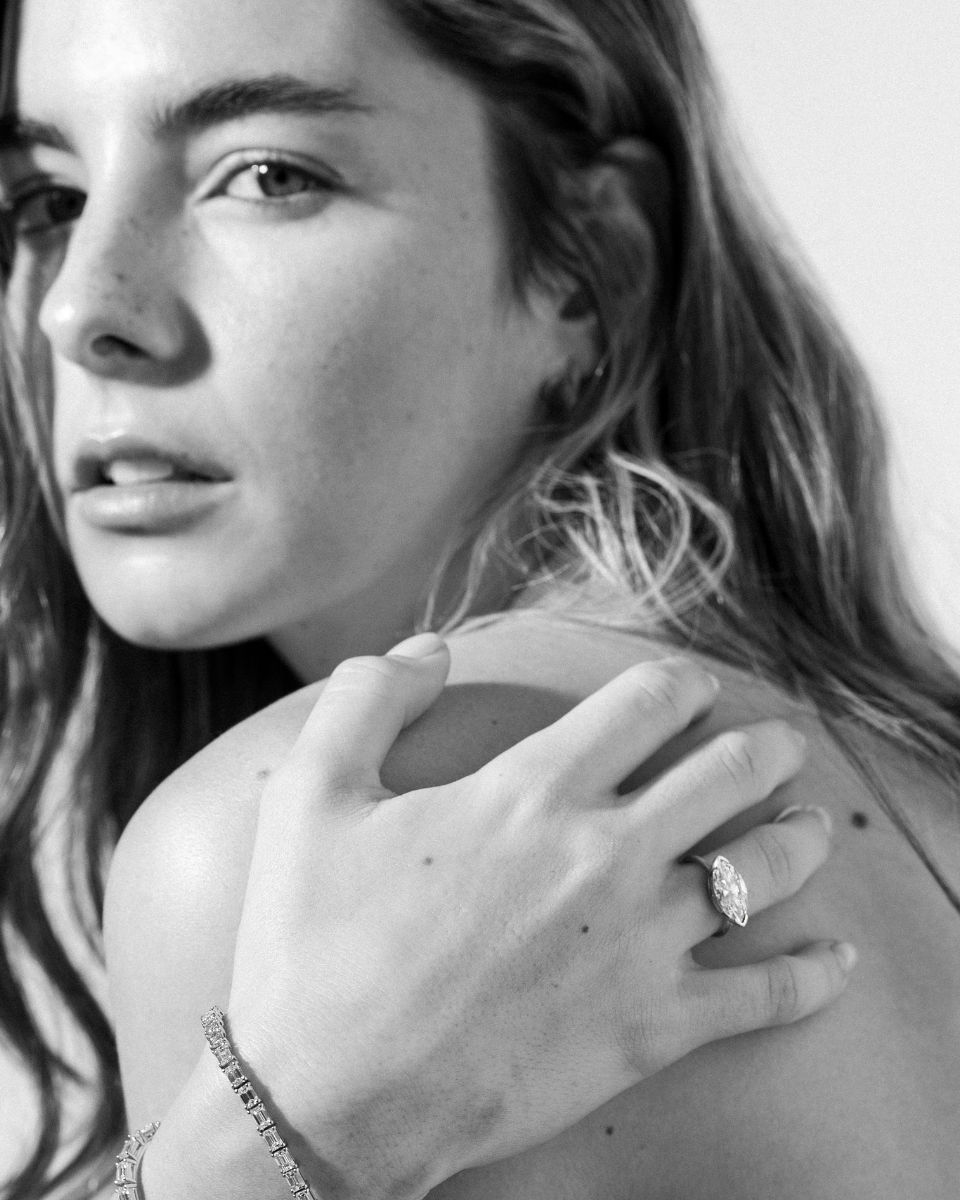
Setting an oval horizontally across the finger instead of vertically has become one of the most talked-about design choices heading into 2026. The stone sits wider on the hand, and because it breaks the expected vertical orientation, it reads as a deliberate style decision rather than a traditional engagement ring.
Celebrity rings have fueled interest here. Zendaya’s east-west engagement ring reportedly triggered a spike in search traffic for the style. According to the GIA, east-west settings work particularly well in minimalist or bezel-set designs, making even modestly sized diamonds appear larger and more distinctive on the hand.

East-west settings work especially well in minimalist or bezel-set designs, where the stone's elongated form reads as a considered style.
Understanding the Bow-Tie Effect
Most oval diamonds show some degree of bow tie, a shadowy area running across the center of the stone. It happens because light moves differently through elongated shapes, and its visibility depends on cut quality, symmetry, and proportions.
No setting can remove it entirely, but settings that maximize light entry, such as elevated prong solitaires or open-gallery designs, can reduce its visibility by increasing the stone’s overall brilliance.

Most oval diamonds show some degree of bow-tie and while no setting eliminates it entirely, elevated prong solitaires and open-gallery designs can reduce its visibility by maximizing the stone's overall light intake.
Proportions and Metal Pairings
The GIA recommends oval diamonds with a length-to-width ratio between 1.30:1 and 1.50:1 for the most balanced look. Ratios in the 1.30:1 to 1.40:1 range tend to flatter a wide range of hand types and work well in most settings. Staying within this range also tends to minimize the bow-tie effect, while ovals above 1.50:1 may show it more prominently.
Metal choice affects how the diamond’s color appears:
- White gold or platinum: Pairs well with higher color grades and gives a cooler, crisper appearance.
- Yellow and rose gold: Add warmth and can benefit diamonds with slightly lower color grades, as the warm metal masks faint body color rather than highlighting it.
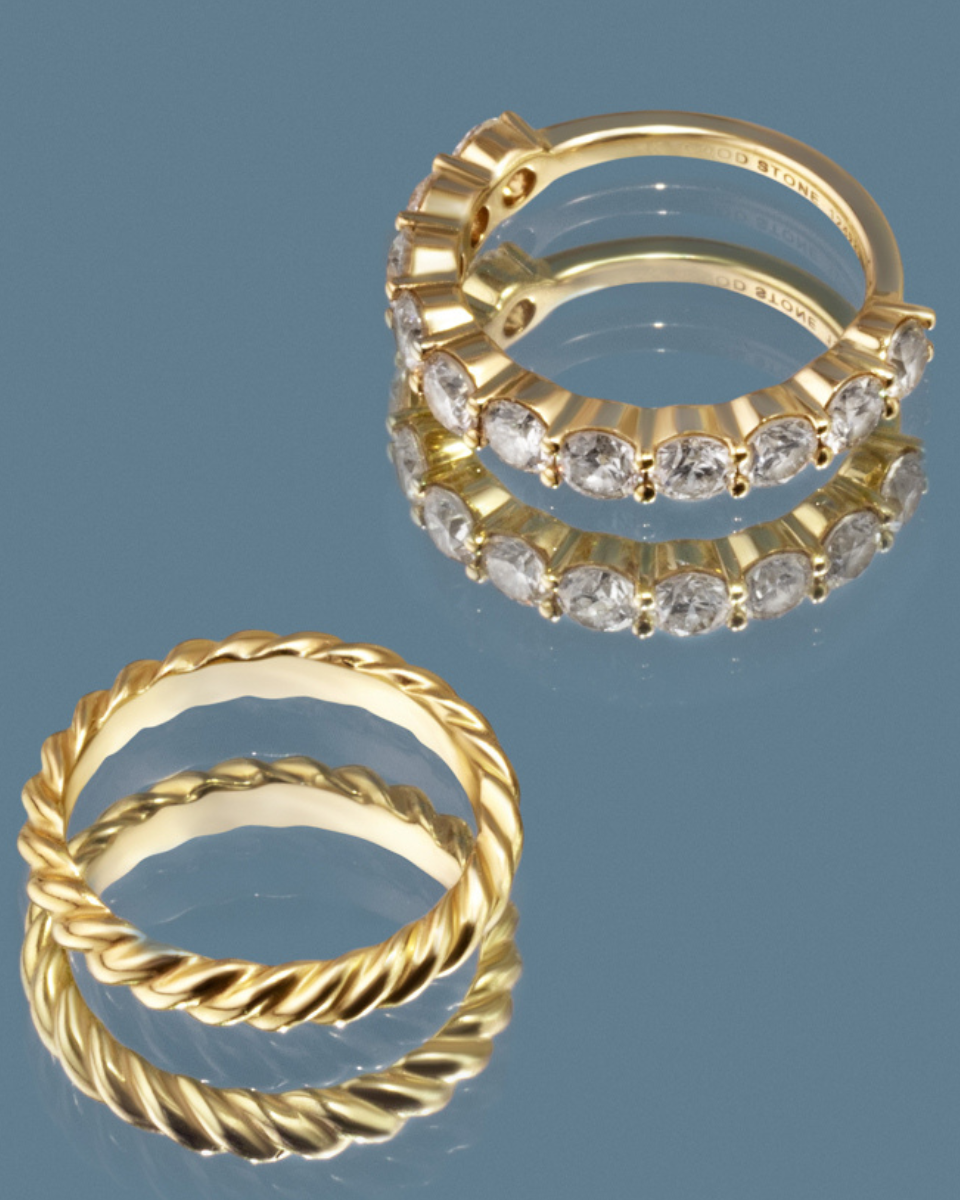
Wedding Band Pairing
Wedding band fit varies by setting:
- Low-profile settings: Often sit flush with flat or rounded bands, with no gap.
- Halo and cluster styles: Typically require a contoured or curved band that follows the center stone’s outline.
Consider the band pairing before you commit to a setting, as it affects how the ring stacks and feels on your hand.

Thinking through your band pairing before committing to a setting avoids a mismatch that's expensive and time-consuming to fix after the fact.
What to Keep in Mind for 2026
Customization and mixed metals are becoming standard requests rather than exceptions. Two-tone settings, where yellow gold meets platinum or rose gold, and platinum or rose gold accents frame white diamonds, allow buyers to blend warm and cool tones in a single ring. This kind of pairing works well with ovals because the contrasting metals can draw attention to the stone’s elongated form.
Sustainability has also become a real purchasing factor. Lab-grown diamonds offer comparable brilliance at a more accessible price point, and a growing number of buyers are asking about sourcing.
We work with recycled gold and platinum, source diamonds and gemstones from traceable suppliers, and handcraft every ring with a team of generational artisans in Los Angeles. We offer both natural and lab-grown diamonds, and every piece comes with a lifetime warranty, complimentary resizing, and ongoing care.
Finding the Right Fit
The ideal setting for an oval diamond depends on your ring preferences, desired maintenance, and the look you want to achieve.
- Solitaire: Keeps the design simple and focuses attention on the stone.
- Halo: Adds perceived size and sparkle.
- Bezel: Offers protection and a modern style.
- 3-stone: Introduces depth and contrast.
- East-west orientation: Creates a distinct look.
Each of these settings affects the oval’s proportions differently, and the right choice comes down to how well it fits the rest of your life.



Leave a comment (all fields required)