





How to Choose a Setting for a Radiant Cut Diamond
Radiant-cut diamonds are known for combining strong geometric lines with lively sparkle, making the setting choice especially important. The way the stone is framed will influence how much brilliance it shows, how large it appears, and how secure it feels in daily wear.
The cut itself was introduced by Henry Grossbard in 1977, designed to merge the structured look of an emerald cut with the light performance of a round diamond. By using 70 facets in a square or rectangular shape, the radiant cut reflects light from multiple angles while maintaining a refined outline.
Choosing the right setting comes down to how you want the diamond to look, how it will fit into your routine, and how you want it to sit on your finger.

The radiant cut's combination of geometric lines and brilliant-style sparkle makes setting choice particularly consequential, as you can see on our Thin + Simple Solitaire Engagement Ring With Elongated Radiant Cut Diamond.
Start With the Ratio
Before you look at a single setting, you need to know what kind of radiant you are working with. A length-to-width ratio between 1.00 and 1.05 produces a square radiant cut, while a ratio between 1.20 and 1.40 creates a rectangular, elongated appearance. Many opt for a ratio of around 1.15 to achieve a slightly elongated effect without a fully rectangular shape.
Certain settings work especially well with specific proportions. A square radiant is typically balanced and compact in a solitaire or 4-prong setting. An elongated radiant is often chosen for a 3-stone design, a bezel, or a solitaire with a wider profile, emphasizing its length. We offer settings designed to highlight elongated radiant cuts.

Before evaluating any setting, knowing whether you're working with a square or elongated radiant narrows the options considerably.
The Solitaire Route
A solitaire setting features a single diamond and a band, offering a minimalist style. The band width and prong count allow for customization while keeping the design simple.
A slender band can make the diamond appear larger by minimizing visible metal. A 4-prong setting also increases light entry, enhancing the radiant cut’s visual appeal.
Our Thin + Simple Solitaire serves as a reference. The minimal band allows the diamond to stand out, and the prong setting maximizes light flow through the stone.

A solitaire keeps the focus entirely on the radiant cut, with band width and prong count as the main variables for customization.
Bezel and Half Bezel Settings
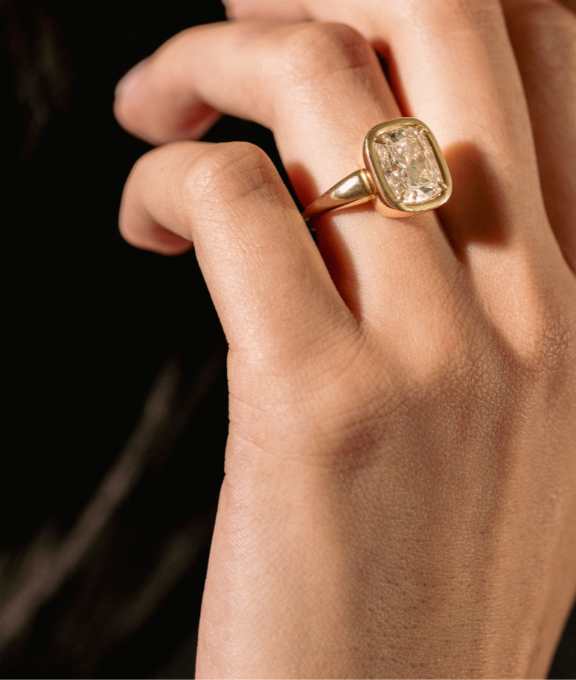
A bezel setting surrounds the diamond with a metal rim for added security. While it allows slightly less light to enter than a prong setting, it still provides protection and a modern appearance.
A half bezel wraps metal around two sides of the diamond, leaving the other sides open. This approach maintains a contemporary look and allows more light to enhance the stone's sparkle.
We offer both a North-South Half Bezel Solitaire and a Finest Half Bezel with an east-west elongated radiant, demonstrating how orientation affects the setting's appearance.

A full bezel wraps the radiant in a continuous metal rim for maximum protection and a clean, modern profile, while a half bezel leaves two sides open to allow more light in and maintain the stone's sparkle.
East-West Orientation
Placing a radiant cut horizontally so it sits across the finger creates the effect of a larger stone. This method works best with elongated rectangular shapes; square stones may appear disproportionate when set this way.

Turning an elongated radiant cut horizontally across the finger creates the appearance of a larger stone with a distinctive, contemporary feel.
3-Stone Settings
A 3-stone setting features a radiant cut center stone with two side stones. Baguettes provide a symmetrical look, while shield-shaped side stones add visual emphasis. Three radiant cuts can also be used for a consistent display of brilliance.
Our 3-Stone Engagement Ring with Shield Side Stones complements an elongated radiant as the center stone.
Hidden Halo
A hidden halo features small diamonds beneath the center stone and around its base, adding subtle sparkle and enhancing brilliance while keeping the top view simple. This setting is suitable for those seeking a solitaire appearance with extra brightness.
How Metal and Color Grade Work Together
Radiant cuts often display body color more than round brilliants, especially near the corners, due to the facet arrangement. For a bright, white appearance, a color grade of G or higher is typically recommended. Grades below G may reveal warmer tones.
Warmer tones are common and can complement yellow or rose gold settings. Color grades H, I, or J may blend well with these metal tones and can be a cost-effective option. Gemological sources note that an H grade is near-colorless on the GIA scale, balancing price and appearance.

Radiant cuts can show body color near the corners due to their facet arrangement, making color grade a more consequential choice than it would be in a round brilliant.
Clarity and the Radiant Cut’s Advantage
The GIA does not assign a cut grade to radiant cuts, but the brilliant facet pattern can help conceal minor inclusions. A VS2 clarity grade is often chosen for an eye-clean appearance, while a well-graded SI1 may also appear clean to the unaided eye and offer cost savings.

The radiant cut's brilliant facet pattern helps conceal minor inclusions, making VS2 a reliable starting point for an eye-clean appearance.
What the Trends Say
Bezel settings and substantial gold bands are prominent in trend coverage for 2025 and 2026. Media outlets such as The Zoe Report highlight the popularity of thicker, sculptural bands. Dua Lipa’s engagement ring, designed by Callum Turner, features a radiant diamond set on a thick gold band and is reportedly valued at approximately $32,000.
National Jeweler reports that her ring incorporates several current trends, including a thick band, bezel setting, solitaire style, and yellow gold.
Candice King’s engagement ring features a 5-carat radiant flanked by baguettes in a 3-stone setting. In both cases, the settings suit the proportions of the center stones.
Making It Your Own
GOODSTONE handcrafts each ring in Los Angeles, assigning a dedicated designer to guide each project. The process follows three steps:
- Choose a setting
- Choose a diamond
- Complete the ring
Most custom pieces are completed within 4 to 6 weeks. We use 100% recycled precious metals, re-refined to meet the quality of newly mined materials, and the process uses 95% less energy. Each custom piece includes a lifetime warranty covering repairs, resizing, prong checks, and cleaning.
The ideal setting for a radiant cut diamond aligns with your lifestyle and personal preferences. While trends and guidance can help, the ultimate decision is individual.



Leave a comment (all fields required)