





How to Choose the Two Stones for a Toi et Moi Ring
A toi et moi pairing holds together when the two stones balance by eye in face-up size, color, and sparkle, and it goes wrong when carat weight gets treated as if it settles size. Two pear-shaped stones set point to point resolve into a soft heart when you look straight down at the hand. Choosing the pair is a sequence of small decisions, opening with matched or contrasting shapes, then working through size and color before orientation and the setting draw two stones into one ring.

The best toi et moi pairings feel balanced without needing to match.
Matched or Contrasting Stones
The first fork sets the tone for everything after it. Two stones of the same shape look symmetrical and calm, a pair that stays balanced across the center of the band. Two different shapes look modern and personality-forward, where the interest is in the difference.
Neither choice is more correct. A matched pair looks settled and even, while a contrasting pair lets each stone hold its own character. Settle this fork first, since it decides which of the pairings below is on the table.

Matching shapes create an elegant sense of symmetry, while contrasting stones give each side of the ring its own personality.
The Best Two-Stone Pairings
Certain combinations recur because they balance well in the hand, and the faceting family matters as much as the outline. Pairing two brilliant-cut stones or two step-cut stones keeps the sparkle character consistent even when the shapes differ.
Two Matched Pears
The classic matched pairing. Set point to point or curve to curve, two pears form a heart-like silhouette viewed straight on, symmetrical without being formal. The look depends on getting the two stones to echo each other, matched in cut and carefully angled. A close match looks intentional. When one pear is cut a little differently from its partner, the eye catches that gap before anything else.

Two pear-shaped stones create a soft, romantic pairing that can become almost heart-like when angled toward one another.
Pear and Oval
An oval beside a pear is the contrast couples ask for now. The oval’s rounded body and the pear’s single point pair comfortably together, both elongated, and the asymmetry looks flowing and organic. Both belong to the brilliant-cut family, which keeps their sparkle alike even as their outlines differ. Couples who want contrast without a hard edge land here.

A pear and oval share an elongated silhouette and brilliant sparkle while bringing just enough difference in shape.
Round and Pear
A round beside a pear balances a compact, symmetrical stone against one with movement and a point. The round holds steady while the pear leans toward it, giving the pair a gentle sense of motion. It works when one partner wants something traditional, and the other wants a stone with more shape, meeting the two tastes in the middle.

Pairing a round with a pear brings classic symmetry together with a more expressive silhouette.
Emerald and Pear
The boldest of these pairings sets an emerald cut against a pear. The emerald brings long, straight step-cut lines and a slower, glassy flash, and the pear adds a soft point and movement against those hard edges. The two stones are meant to disagree in light. This is the pairing for a ring with a strong, architectural personality.

An emerald and pear are designed to contrast, pairing long architectural step cuts with softer brilliant sparkle.
Marquise and Pear
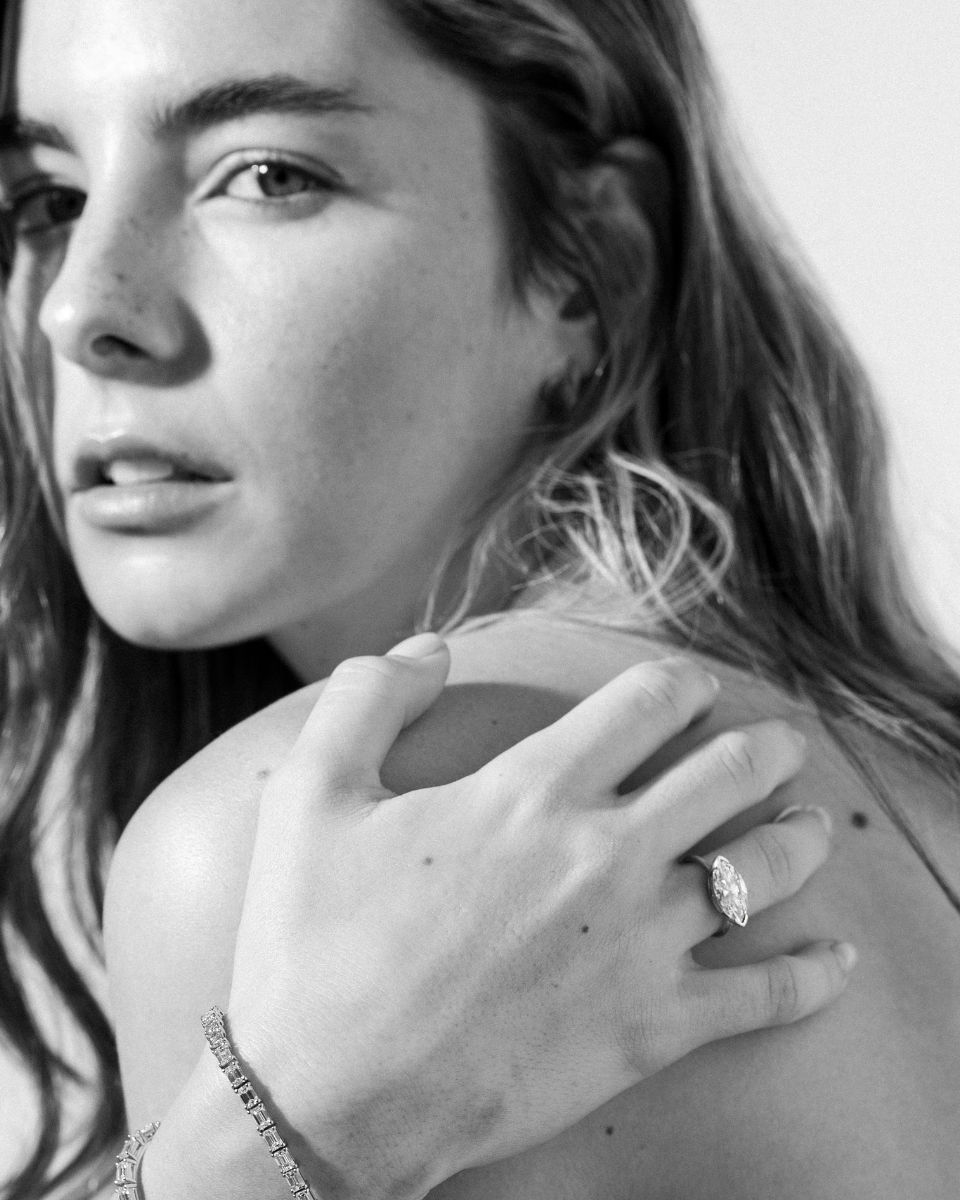
A marquise pairs naturally with another pointed shape. Against a pear, the two points can face outward for an open, elongated line. Against a princess cut, the marquise’s soft points meet the square’s crisp corners for a sharper contrast. Pointed shapes create a ring-like length on the finger, which many people want in a two-stone design.

Pointed silhouettes give a toi et moi an elongated, directional look across the finger.
A Diamond and One Colored Gemstone
A diamond paired with one colored gemstone is the modern classic. The diamond is the harder stone, and the colored gemstone supplies the personal meaning, often a birthstone or a favorite color. A sapphire, ruby, or emerald brings saturated color a diamond cannot. This pairing also has the most symbolic significance, since the second stone can represent a person, a month, or a memory.

Pairing a diamond with a colored gemstone turns contrast into something personal.
Balancing the Size of Two Stones
The mistake that catches the most people is treating the two carat weights as if they were the same size. Carat weight measures mass, not the size the eye sees. Elongated shapes such as pear, marquise, or oval spread wider face-up than a round or a cushion of the same weight, so a 1.0ct round beside a 1.0ct pear will look like the pear is winning.
Balance the two stones by face-up area, which usually means slightly unequal carats for an equal look. A 1.0ct round next to a roughly 0.85ct pear looks balanced. A rule of thumb keeps the two within about 0.3ct, a guardrail against a gap that looks accidental. Graduated sizing, where one stone is deliberately larger, is its own style and can be lovely, though a dramatic split like 2.0ct beside 0.5ct usually looks like a mistake.
How to Match Color and Sparkle
Two stones set millimeters apart hold each other to a higher standard than a solitaire ever faces. The reference stone is right there, and any gap in color, clarity, or sparkle shows.
The Side-by-Side Color Gap
Two diamonds do not need identical grading reports, but they should look cohesive in person. A small color-grade difference is invisible when each stone stands alone and obvious the moment the two share one band, one looking faintly warmer beside its partner. The same goes for clarity and cut. Matching by eye, in person, is what settles it, since paper cannot show how two stones will look touching.

A small difference in color can disappear in two separate diamonds and become obvious once they're touching.
Sparkle and Hardness with a Colored Gemstone
A diamond and a colored gemstone will not sparkle the same, and it helps to know that before the ring is made. A diamond returns more light than a sapphire or an emerald beside it, so as the hand moves, you get a bright flash on one side and a deeper, steadier color on the other.
People expecting two matching sparkles are often caught off guard, while those who wanted contrast usually love the effect. Hardness is the other daily-wear question. Diamond and sapphire or ruby both handle everyday wear, while an emerald is softer and more included, better suited to a ring that takes fewer knocks.
Matching two stones by eye is the part of the process that benefits most from a designer at the table. GOODSTONE offers a dedicated Toi et Moi Series and builds these rings to order, and the two stones can be chosen and adjusted side by side before anything is set.
The designers will pair a candidate pair and swap one out until the color, clarity, and sparkle match as a set. For a decision this dependent on how two stones look touching, seeing them together first takes out most of the guesswork.
A colored gemstone isn't meant to imitate a diamond's sparkle. Its deeper, steadier color creates part of the contrast, while its durability helps determine how the finished ring should be set and worn.
How to Orient the Two Stones
The angle at which the two stones sit changes the message the ring sends. Pointed shapes are set either pointing away from each other, the open look, or toward each other, the kiss. Two pears angled toward each other lean into each other for the most openly romantic look.
Pointed away, the same two stones each stand on their own and come across as more contemporary. This is an emotional choice as much as a visual one, union on one side and two people standing together on the other. The open look has grown more popular in recent seasons.
Choosing a Setting for a Toi et Moi Ring
The setting is where two separate stones become one ring. The right construction can make a mismatched pair look like a set.
Bypass and Bezel Constructions
The bypass setting is the signature toi et moi construction. The band splits, and its two ends curve past each other, each holding one stone, and the ring appears to wrap around itself, the stones leaning together. It is the most romantic of the constructions.
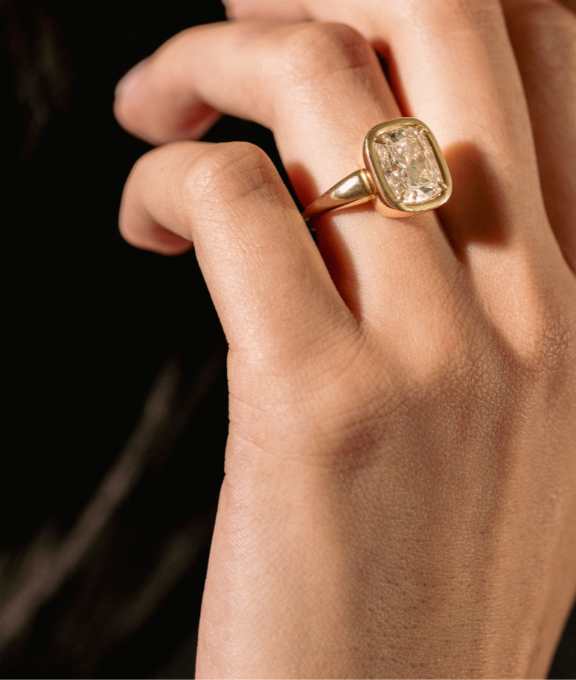
A bezel setting takes the opposite approach, wrapping a thin metal rim fully around each stone. It protects the stones best and gives the ring a modern, low-profile look, and it can equalize two different shapes by framing them in matching metal, which helps a contrasting pair hold together as one design.

A bypass setting lets the stones curve naturally toward one another, while a bezel gives each its own clean metal frame.
Metal Tone as the Bridge
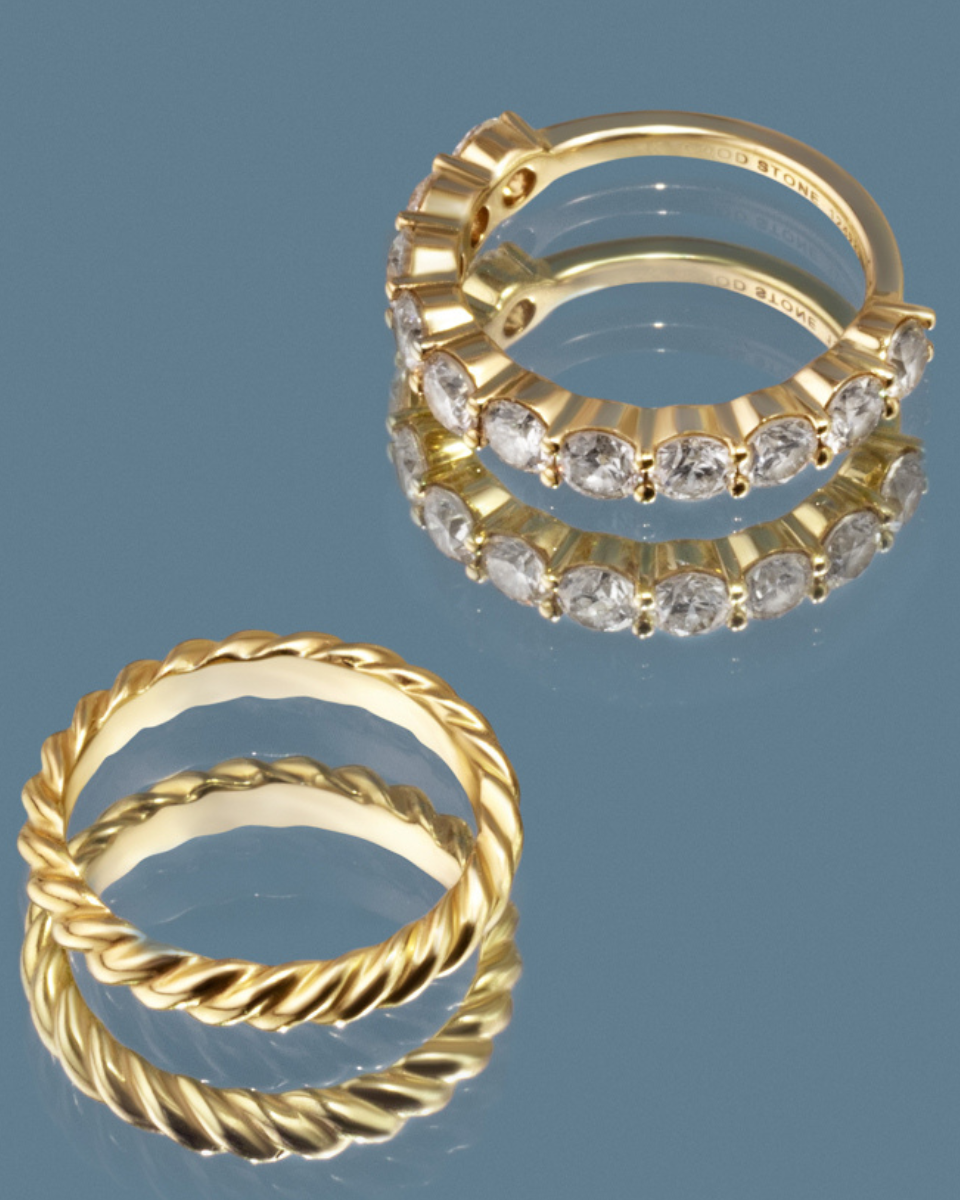
Metal color is an easy way to bridge the two stones, and it pays to choose it for the pair. Yellow gold warms and brings together a diamond-and-colored-stone pairing especially well. White gold and platinum keep a two-diamond pair looking cool and matched. A pave band set between the stones adds sparkle and ties them into a single line, and a twist band adds a sense of movement that reinforces the two-becoming-one idea.
Two-stone settings also have more prongs and metalwork than a solitaire, so they collect more debris and offer more points to inspect, which is a reason to favor a lower-profile mount and periodic prong checks on a ring worn every day.

Metal can become the visual thread connecting two very different stones. Warm gold softens contrast, while white metals keep diamonds crisp and bright, helping the entire pairing read as one considered design.
Splitting the Budget Between Two Stones
A two-stone ring asks more of a budget than a solitaire, funding two focal stones at once. The math has a quirk that works in your favor. Two smaller stones of the same combined carat weight usually cost less than one large stone of that weight, since large single diamonds come with a size premium.
Lab-grown diamonds are the usual lever here. They make it easier and cheaper to source two closely matched stones, the same thing that solves the one-stone-outshines-the-other problem, and they let a pair reach a higher carat within budget. Mixing tiers is the other route.
Pairing one natural diamond with one lab-grown stone or a colored gemstone lowers the total cost while keeping a natural focal stone in the ring. Two natural diamonds is the most expensive path of the three.

Choosing smaller individual stones, lab-grown diamonds, or mixing diamond and gemstone types can leave more room to prioritize the qualities that matter most.
Frequently Asked Questions
What two stones go together in a toi et moi ring?
Almost any pairing can work, but a few routes recur. Two matched shapes, such as two pears or two ovals, look symmetrical. A flowing contrast, such as pear and oval or round and pear, looks organic. An emerald beside a pear makes the boldest statement. Many people also pair a diamond with one colored gemstone. Choose by the personality you want the ring to have.
Should the two stones in a toi et moi ring be the same shape or different?
Both work, and the choice tracks taste. Matched shapes look symmetrical and settled, while contrasting shapes look modern and lean on the difference for interest. Decide this first, since it narrows every choice that follows.
Do the two stones in a toi et moi ring have to be the same size?
No. The two stones should occupy roughly equal face-up area, not equal carat weight, since elongated shapes cover more finger per carat than rounder ones. Deliberately graduated sizes are also a valid style, as long as the difference looks intentional.
What is the most popular toi et moi ring combination?
In 2026, complementary shapes lead. Pear beside oval and two matched pears are the most requested, with round beside pear or marquise close behind. The open look, where pointed stones angle away from each other, has grown more popular than the inward-facing kiss.
Can you mix a diamond and a colored gemstone in a toi et moi ring?
Yes, it is the modern-classic version of the ring. The diamond serves as the harder stone, and the colored gemstone conveys personal meaning, often a birthstone or a favorite color. Expect the two to sparkle differently, since a diamond returns more light than a sapphire, ruby, or emerald beside it.
How do you keep one stone from outshining the other in a toi et moi ring?
Match the two stones closely in color and clarity, and keep their cut alike so neither looks warmer or duller than its partner. Pair within the same faceting family, two brilliant cuts or two step cuts, so they sparkle in the same way. Matching by eye in person matters most, since a small color gap only shows when the two stones are together.
Do a diamond and a sapphire sparkle the same in a toi et moi ring?
No. A diamond and a colored gemstone have different optical properties, so the diamond returns more light, while the gemstone shows a deeper, steadier color. The two are meant to look different. If you want two matching sparkles, a colorless diamond paired with a colored lab-grown diamond keeps the sparkle identical and changes only the hue.
Which way should the stones point in a toi et moi ring?
Pointed shapes are set either pointing away from each other, the open look, or toward each other, the kiss. The open orientation is the more popular choice in 2026 and comes across as modern, while the inward kiss produces a heart silhouette and looks more romantic. The same two stones send a different message depending on the angle.
What is the best setting for a toi et moi ring?
The bypass setting, where the band splits and curves past itself to hold each stone, is the signature style and the most romantic. A bezel offers the most protection and can make two different shapes look like a matched set by framing them in the same metal. A lower-profile mount is the safer choice for a ring worn every day.
Are toi et moi rings durable for everyday wear?
They can be, with the right setting. Two-stone rings have more prongs and metalwork than a solitaire, and pointed stones on tall mounts can catch on a sleeve or in hair. A lower-profile or bezel setting and periodic prong checks keep the stones secure, since the asymmetric layout can loosen prongs if a stone is knocked.
How do you split the budget between the two stones in a toi et moi ring?
Keep the two stones balanced in size and quality, so neither looks like an afterthought. Lab-grown diamonds make it easier and cheaper to source a closely matched pair, and they allow the pair to reach a higher carat weight within a budget. Mixing one natural diamond with a lab-grown stone or a colored gemstone lowers the total while keeping a natural focal stone.



Leave a comment (all fields required)