


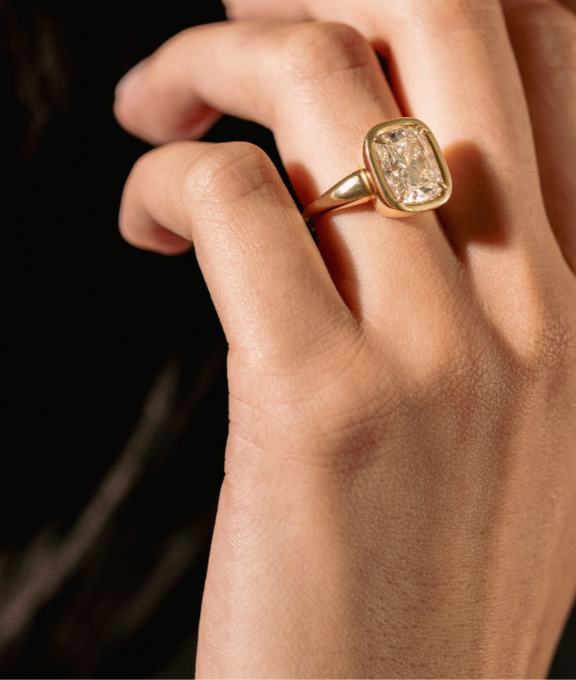


Engagement Ring Appraisal: Cost and Process
In August 2019 a buyer posted to PriceScope with a problem. Her ring, a cushion diamond in a hand-forged platinum halo from a custom maker, had cost between $17,500 and $19,000. The appraisal came back at $13,000, below the price of the center stone alone. The cause was paperwork. The appraiser had used a form already outdated in 1975 and named neither vendor in the report.
Most engagement ring appraisals cost $50 to $150 and take under two hours. What the document says, and who writes it, governs what a claim pays.

An engagement ring appraisal does more than assign a dollar value to a beautiful piece of jewelry. It documents the diamond, setting, and craftsmanship behind the ring, helping protect its value for years to come.
What Is an Appraisal, and What Is It Not?
A lab grading report and an appraisal answer different questions. The grading report, issued by a lab such as GIA, AGS, or IGI, records the stone's 4Cs and measurements, plus fluorescence and a report number. It assigns no dollar value to anything. An appraisal does the opposite job, pricing the complete piece, stone and setting and workmanship included. Buyers who treat the grading report as a valuation arrive at the insurer with no usable document.
The value on an appraisal also has a type, and the type matters more than the number. Most appraisals written in the United States are insurance replacement appraisals. The figure on one is retail replacement value, the cost of buying a comparable new piece from a store that sells that kind of jewelry. That figure runs above what the ring would bring if sold, sometimes far above it. A resale or fair-market appraisal is a separate document, ordered for estates, divorce settlements, or secondhand sales. Insurers drive most of the demand for these documents, which is how replacement value became the default type.
A reader who treats that figure as what the ring is worth has misread the document. The check takes ten seconds. The report states its purpose and value type near the signature block.

A diamond grading report tells you about the stone, while an appraisal evaluates the complete ring.
What Does a Ring Appraisal Cost?
Published ranges from across the trade converge on $50 to $150 for a standard engagement ring, with $75 to $100 the most common quote. Simple gold bands fall at the low end. Rings with multiple stones or antique construction move the fee toward $200, and large center stones do the same. Even complex custom work rarely takes an appraisal past a few hundred dollars. Appraisers bill either a flat fee per piece or an hourly rate, with hourly rates running between $50 and $150. Flat fees dominate for single rings. Hourly billing appears more often for estates and large groups.
One fee structure ends the interview. No legitimate appraiser charges a percentage of the appraised value. The arrangement pays the appraiser more for a higher number, which is an incentive to inflate. USPAP and the codes of every major credentialing body prohibit it. A quote framed as a percentage means the conversation is over and the next appraiser on the list gets a call.
Free appraisals exist in two forms. Many retailers include a complimentary insurance appraisal with a qualifying purchase, and some insurers waive the fee when a policy is bought. Even so, the document needs the full contents described in the next section.
A new ring starts from the seller's document, checked for completeness before it goes to the insurer. An inherited or antique piece has no seller document, so the work goes to an independent appraiser paid a flat fee.

A professional engagement ring appraisal is a relatively small investment in protecting something meaningful.
How Does the Appraisal Process Work?
The appointment follows a fixed sequence. The appraiser cleans the piece first, since grime hides chips and wear. Measurements follow. Stone dimensions come off a gauge, the metal is tested for purity, and the whole piece is weighed. Then comes the description, a written record of the piece in enough detail that a stranger could reproduce it. Photographs close the examination. Every angle of the piece is documented, and on custom work that includes close shots of stamps and maker's marks.
How long the examination runs depends on the complexity of the piece. A plain band can take 30 minutes. Most engagement rings take one to two hours. Antique pieces and unusual stones can run to several days, and large groups take longer. Some appraisers work while the client watches, by appointment. The owner who watches learns where the prongs have worn and where the stone has loosened, information worth having regardless of value.
Bring the purchase receipt and any lab grading reports to the appointment, along with prior appraisals if they exist. The appraiser references the lab report and verifies the stone independently anyway. Prior documents speed the work and give the appraiser a baseline for condition.
A complete written report identifies the vendors, records the measurements, description, and photographs from the examination, and states its purpose and value type near the signature block.
A report missing several of these items is a form letter with a number on it. Insurers accept such documents at intake and dispute them at claim time, which is the worst sequence for the owner. The price difference between a thin report and a complete one is small. The completed report goes to the insurer with the policy application, and the scheduled value comes from its contents.

Every appraisal begins with a careful examination of the ring, from its center stone and metal purity to the smallest details of its setting.
Who Should Appraise Your Ring?
Appraiser is not a legally protected title in most jurisdictions. Anyone can print the business card. Verification falls on the client, and the verification is a short list of designations. A GIA Graduate Gemologist, an AGS Certified Gemologist Appraiser, an ASA Master Gemologist Appraiser, or a NAJA certified member has documented training behind the title. Membership directories maintained by these organizations are searchable and free.
Independence matters as much as training. A jeweler who sells jewelry has a conflict when appraising it, and the conflict works in both directions. A lowball figure can precede an offer to buy the piece cheaply, while an inflated figure flatters the store that made the sale. An independent appraiser sells nothing. The wait for one runs longer, and for a custom or designer piece that trade favors independence anyway.
The interview is short, and the answers are either immediate or evasive.
A credentialed appraiser answers each question without checking anything. Note the answers and compare them against the membership directories before booking.

Choosing a qualified professional helps ensure that the ring is evaluated accurately, with its materials, craftsmanship, and unique details properly represented.
What If the Appraisal Comes Back Wrong?
The PriceScope case resolved through documentation. The thread drew a retired appraiser trained at GIA in 1975, who diagnosed the report in one pass. An appraisal exists to identify the piece precisely enough that it can be replaced in kind. A form naming neither vendor fails that purpose, whatever number it prints at the bottom. The corrections amount to paperwork. Bring the receipts back and request a revised report. The revised report names the vendors and prices the actual setting, with a macro photograph of the maker's mark on the shank included. Community practice puts a corrected figure at purchase price plus 10 to 15%. The retired appraiser's verdict on the form itself was that it had been outdated when she trained, decades before the buyer received it.
The opposite error costs money more slowly. Appraisals at 1.5 to 2 times the purchase price over-insure the ring, and premiums follow the appraised figure every renewal year. The working target is purchase price plus 10 to 20%, enough to absorb inflation between reappraisals. An appraisal far above that target works against the owner at every renewal.
Custom pieces make the documentation problem sharper, since a generic description of custom work prices it as a cheaper piece on paper. GOODSTONE supports appraisal documentation for its custom pieces, with the maker identified in the paperwork that accompanies the ring. The coverage stops at GOODSTONE's own work. Older or third-party pieces in the same jewelry box require an independent appraiser.
When the corrected number still comes in low, the appraiser corrects the document. The revised report goes to the insurer with a request to update the scheduled value.

An appraisal should reflect the actual ring you own, not a generic version of it.
How Do Appraisals Work With Insurance?
Standard homeowners and renters policies include a single-item limit for jewelry plus a deductible, and an engagement ring under such a policy is mostly uninsured. Coverage that pays requires a scheduled rider on the home policy or a dedicated jewelry policy. Both require an appraisal to set the insured figure.
The same appraisal document performs differently under the two policy types. Agreed value coverage pays the scheduled amount without negotiation. A like-kind replacement policy lets the insurer choose the replacement. Forum users on like-kind policies describe fighting adjusters over custom settings replaced with generic equivalents. Users with agreed value describe a check and no argument. An accurate document on a like-kind policy can be argued down. A scheduled rider itemizes the piece on the policy itself, so the insurer has already recorded what exists and what it was valued at before any loss occurs.

From the center diamond to the custom setting, detailed documentation helps establish what would need to be replaced if the ring were lost, stolen, or damaged.
How Often Should You Reappraise a Ring?
Insurers and appraisers recommend a fresh appraisal every two to three years, since metal and stone prices move. The advice applies with extra force to lab-grown diamonds, where prices dropped by more than half between 2020 and 2026 and a 2021 appraisal can over-insure the ring by a wide margin. An outdated appraisal on a mined-diamond piece errs the other way and can leave the owner under-covered after a strong market run. The renewal notice is a workable reminder. When the policy renews, check the date on the appraisal and book accordingly.
Frequently Asked Questions
How much does an engagement ring appraisal cost?
Most appraisals run $50 to $150, with $75 to $100 typical for a standard solitaire. Appraisers pricing multi-piece estates sometimes quote per item with a reduced rate after the first piece, so ask about per-piece pricing when appraising several rings at once.
Is an appraisal the same as a diamond certificate?
They are separate documents. A grading report from GIA, AGS, or IGI records a stone's characteristics and assigns no value. The grading labs themselves do not perform appraisals.
How long does a ring appraisal take?
The examination runs 30 minutes for a simple band and one to two hours for most engagement rings. The written report is separate. Many appraisers deliver it days after the appointment, so ask about report turnaround when booking.
Can I get a free ring appraisal?
Free appraisals exist in two situations. Many retailers include a complimentary insurance appraisal with a qualifying purchase. Some insurers waive the fee when a policy is bought. Ask what the free document contains, since some complimentary appraisals are brief insurance letters in place of full reports.
Where can I get a ring appraised?
A jewelry store with a certified gemologist on staff can do the work, as can an independent appraisal firm or an online appraisal service. For anything custom or antique, the independent firm remains the safer route.
How often should you get your ring appraised?
Every two to three years for most pieces, and sooner when the insurer requires an updated appraisal on a fixed schedule as a policy condition.
Do lab-grown diamond rings need appraisals?
Lab-grown diamonds share the physical properties of mined diamonds and are insured the same way. The report should state the stone's lab-grown origin, since origin affects replacement cost.
What if my appraisal comes in lower than what I paid?
Go back to the appraiser with the purchase receipts and ask for a corrected report that names the vendors and photographs the maker's marks. For a brand-new purchase, ask the insurer about insuring on the bill of sale. Many insurers accept it in place of an appraisal when stone and setting appear on one receipt.
Should an appraiser charge a percentage of the ring's value?
Percentage fees are prohibited under USPAP and the codes of the major credentialing bodies because they reward inflated valuations, and the IRS refuses appraisals billed as a percentage of value.



Leave a comment (all fields required)