





Why Your Diamond Shape Should Dictate Your Setting Style
Most people begin by choosing a diamond they love and only later think about the ring. That order feels intuitive, but it can overlook factors that become important once the ring is worn every day.
The shape of your diamond directly affects how well a setting protects it, how light travels through the stone, and how comfortable the ring feels over time. A round brilliant and an emerald cut interact with light differently, and they also face different risks depending on where their edges and corners sit.
Choosing a setting that works with your diamond’s geometry rather than competing with it is one of the most practical decisions you can make during the process.

Most people choose a diamond first and think about the setting second, but the shape of your stone has direct implications for how well a setting protects it, how light moves through it, and how comfortable it feels over years of daily wear.
Round Brilliants and Prong Solitaires
About 75% of diamonds sold are round, based on data from the Gemological Institute of America. The round brilliant cut features 58 facets arranged to enhance brightness and sparkle, contributing to its longstanding popularity.
Its symmetrical profile suits almost any setting. Prong solitaires are a popular choice because the prongs secure the stone and allow more light to enter.
- 3 to 6 metal tines hold the girdle, providing little obstruction.
- The round shape requires no special corner protection.
- A round brilliant in a prong solitaire offers a classic, understated look and maximizes sparkle.

A prong solitaire is the most popular pairing because it secures the stone with minimal obstruction, as seen on our stunning Compass Solitaire Engagement Ring with Round Cut Diamond.
Step Cuts Need a Different Approach
Emerald and Asscher cuts use a step-cut faceting pattern, creating long, rectangular facets parallel to the stone’s crown and pavilion. This style produces a subtle gleam instead of the intense brilliance associated with round cuts. Step cuts also show the diamond’s body color more readily, making clarity and color important considerations.
Pairing step-cut shapes with a halo setting can add shimmer to the overall ring. Small diamonds surrounding the main stone increase brightness and can make the center diamond appear larger.
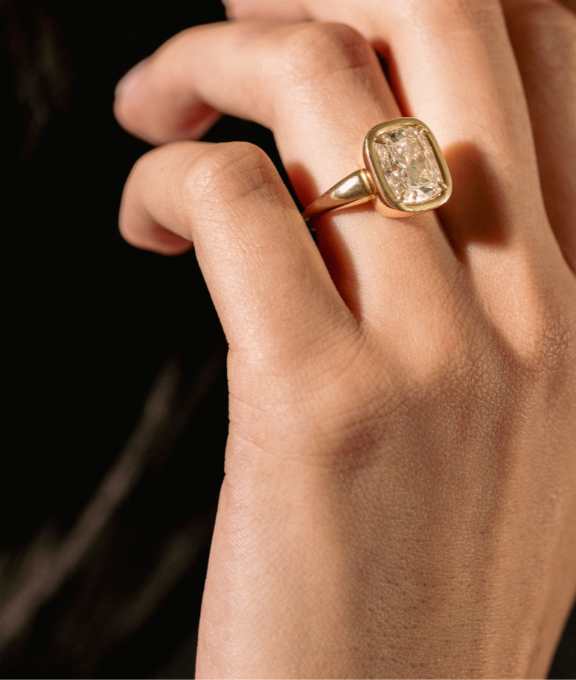
GOODSTONE’s Penumbra collection includes a bezel-framed emerald-cut ring with a hidden halo beneath the center stone. This design adds sparkle without interfering with the lines of the step-cut.

Pairing a step cut diamond with a halo or bezel adds brightness to the overall ring without disrupting the clean, linear geometry that defines the step-cut aesthetic, like on our Finest Bezel Set Engagement Ring With Emerald Cut Diamond.
Radiant Cuts and Their Unique Flexibility
Radiant-cut diamonds account for roughly 2% of the market. Yet, they occupy an interesting position because they combine the rectangular outline of an emerald cut with pavilion faceting similar to that of a brilliant cut.
Henry Grossbard created this cut in the late 1970s with that exact intention. The result is a stone with more facets than most other shapes, producing intense brilliance from a non-round profile. The cropped corners also reduce the risk of chipping during setting and daily wear.
This combination of durability and light performance means radiants work well in solitaires, bezels, and even east-west orientations. We carry east-west half-bezel solitaires with elongated radiant-cut diamonds. These rings place the stone horizontally across the finger for a more contemporary look.

Radiant diamonds' cropped corners reduce chipping risk during setting and daily wear, making it one of the more versatile fancy shapes.
Protecting Pointed Shapes
Princess cuts, marquise, pear, and heart shapes have pointed tips or sharp corners, which are closer to cleavage planes in the diamond’s structure. According to the Gemological Institute of America, corners aligned with these planes are more prone to chipping from impact.
Princess Cuts
For princess cuts, the GIA recommends:
- V-shaped prongs: At each corner
- Split prongs: Two prongs at each corner
- Full bezel: Surrounds the entire stone
These options protect the vulnerable points and help keep the diamond secure.
Marquise and Pear Shapes
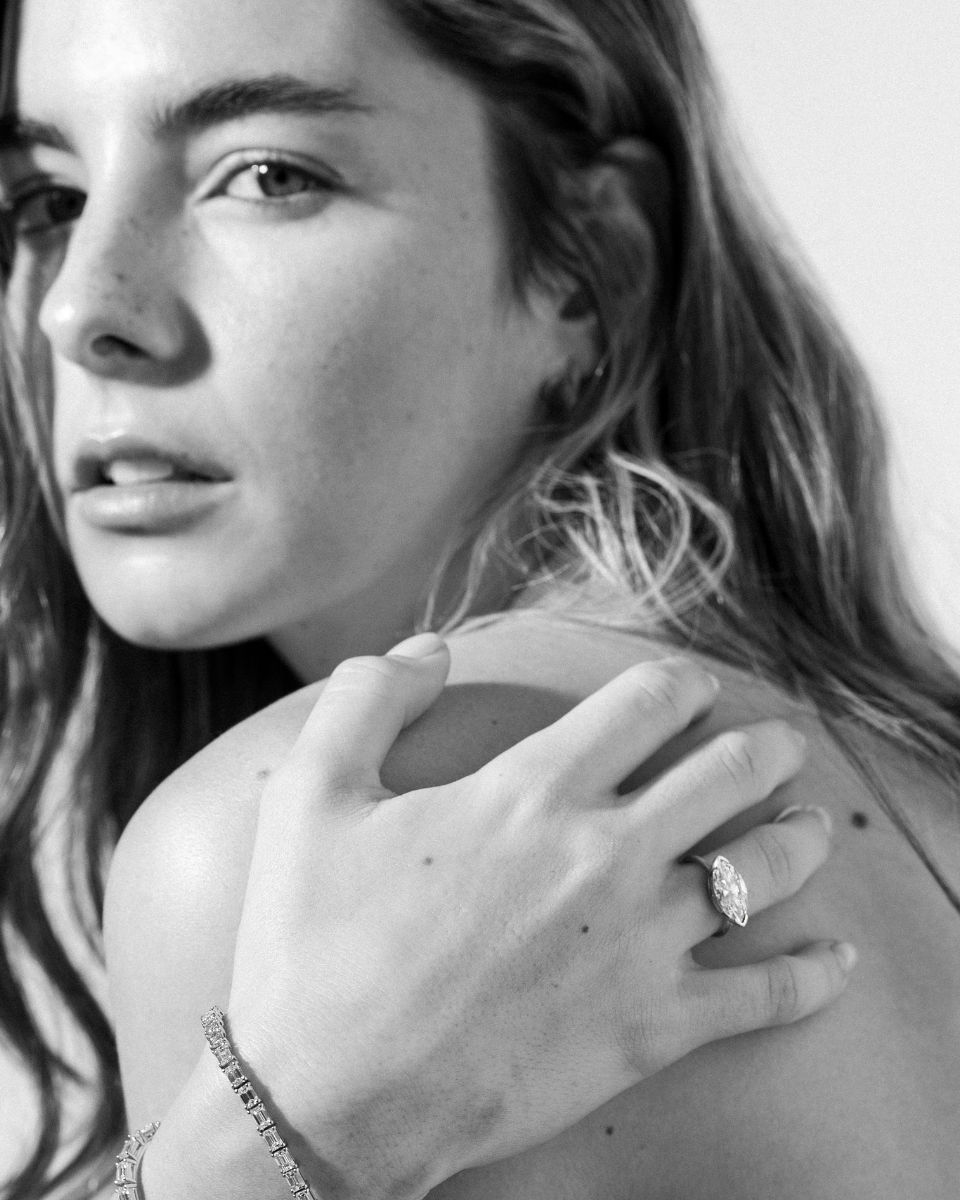
V-shaped prongs at each tip also protect marquise and pear diamonds from chipping while keeping the shape visible. The International Gem Society notes that V-shaped prongs are a preferred option for pear, marquise, and heart shapes.
Halo settings can work with marquise diamonds, as the border of smaller stones softens the tips and adds brightness.

Halo settings are also a strong pairing for marquise and pear cuts, softening the tips with surrounding stones while adding brightness to the overall design.
Ovals and Their Versatility
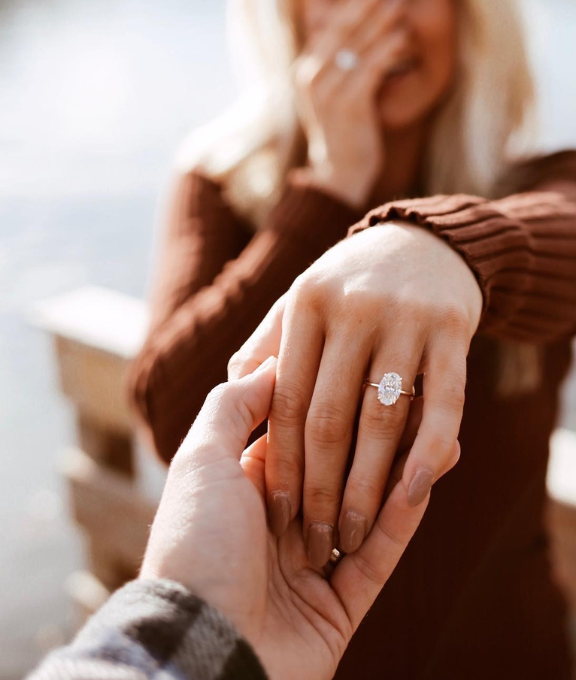
Oval diamonds pair well with many setting types since they have no sharp corners. The curved profile suits both modern and traditional styles.
A bezel setting wraps the stone in a thin band of metal, helping to protect the edges for those with active routines.
Prong settings allow more light to enter the stone, highlighting the oval’s elongated form. A halo can emphasize the shape and increase perceived size.
Our Penumbra Bezel Hidden Halo for ovals provides bezel protection and hidden halo sparkle. The ring maintains a low profile from above, while the hidden row of diamonds catches light from the side.

Oval diamonds have no sharp corners or vulnerable points, giving them broad setting compatibility across both modern and traditional styles.
Cushion Cuts and Rounded Corners
Cushion cuts have soft, rounded corners, reducing the risk of chipping compared to princess cuts. These shapes work well in prong solitaires, halos, and three-stone settings, without needing extra corner protection. The rounded form also suits vintage-style settings with curved metalwork.

Cushion cuts have rounded profiles that work particularly well with vintage-inspired settings that feature curved metalwork and ornate detailing.
Lifestyle and Durability
Daily routines can influence setting choices. For those who work with their hands, exercise often, or may bump a ring against surfaces, a bezel setting offers protection by covering the ring's edges. Channel settings also enhance the durability of side stones and accent diamonds.
We recommend bezel or channel settings for those with active routines. Halo or pavé settings are suitable for anyone who prefers maximum sparkle and a higher-profile ring.

For anyone who works with their hands or leads an active lifestyle, a bezel or channel setting offers meaningful protection.
Metal Matters, Too
Your choice of metal affects both the setting and the diamond’s appearance. The GIA notes that warm metals can make a warm-toned diamond appear more colorless, while white gold and platinum may accentuate yellow or brown tones. Platinum is the most durable option, followed by 14k gold.
We use durable alloys of gold and platinum throughout our collection and source recycled gold and conflict-free diamonds to help reduce environmental impact.
Choosing a Setting That Matches Your Diamond Shape
Each diamond shape has unique strengths and vulnerabilities. Round brilliants suit nearly any setting.
- Step cuts pair well with halos or bezels that add brightness
- Radiants adapt well to several styles due to their cropped corners and high facet count
- Pointed shapes require specific corner protection.
The setting does more than provide decoration. It influences durability, light performance, and long-term comfort.
Focusing on a diamond’s geometry when selecting a setting helps ensure the ring performs well and maintains its appearance.



Leave a comment (all fields required)