





Which Settings Work Best for Emerald Cut Diamonds, and Which to Avoid
Most diamond cuts aim to scatter light in all directions. The emerald cut does something different. It holds light in long, flat planes, drawing your eye into the stone rather than bouncing it straight back.
That character is what makes the emerald cut so distinctive, and it also makes the choice of setting especially important. The wrong setting competes with the geometry, while the right one lets the stone take visual priority.
Knowing the difference can help you avoid overspending on the wrong design and choose a ring that actually looks the way you imagined.

The right setting works with the cut's geometry; the wrong one competes with it.
What Makes the Emerald Cut Different
An emerald-cut diamond typically has 57 facets arranged in a step-cut pattern, with a rectangular shape and clipped corners. Instead of the scattered sparkle seen in round brilliants, the step cuts create broad flashes of light and shadow that move in parallel lines across the stone.
The open table and long, linear facets have implications for the choice of setting. The setting should align with the cut’s straight lines. Because the large table reveals more of the stone’s interior, clarity and color are more apparent.
These ranges tend to work well for emerald cuts in most settings:
- VS2 clarity grade or higher: Keeps the stone looking clean to the eye.
- G to H color range: Pairs well with white gold or platinum.
- H or I color grades: Suitable for yellow or rose gold, as the metal’s warmth complements these tones.
Emerald cuts often cost 15% to 25% less than comparable round cuts, making more budget available for the setting.
Solitaire Prong Settings
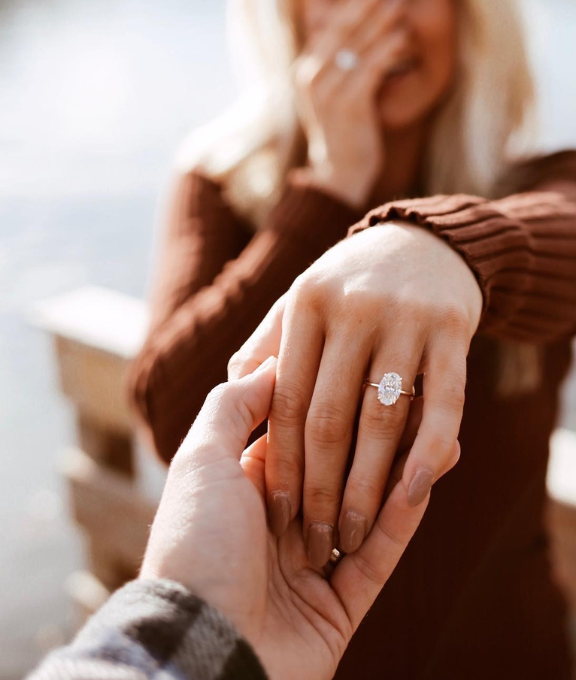
A 4-prong solitaire is one of the most straightforward ways to set an emerald cut. The prongs hold the clipped corners firmly and leave the rest of the stone exposed, allowing light to enter from all sides. Flat prongs work especially well here because they sit flush against the straight edges without adding visual clutter.
For larger stones, stepping up to 6 or 8 prongs adds security. A stone above 2 carats can put enough weight on 4 prongs that a caught sleeve or an accidental knock becomes a real concern.
GOODSTONE offers several solitaire designs for emerald cuts, including the North South Solitaire and Compass Solitaire. These designs keep the band minimal and highlight the step-cut faceting.

A four-prong solitaire is one of the cleanest ways to set an emerald cut, the prongs hold the clipped corners firmly while leaving the rest of the stone fully exposed to light.
Bezel Settings
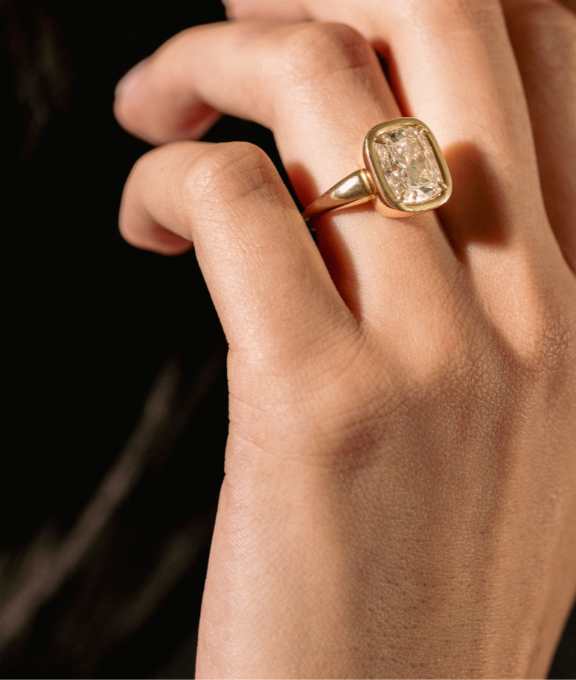
A bezel is a thin metal rim that wraps around the diamond’s perimeter, holding it in place without prongs. This makes the ring lower profile and more resistant to everyday wear, which is a practical advantage for anyone who works with their hands.
The trade-off is that a full bezel reduces the amount of light reaching the stone from the sides, which can make the diamond appear slightly smaller. A tapered or partial bezel addresses both of those concerns by leaving portions of the stone exposed while still protecting the corners.
Our Finest Tapered Bezel uses this approach, framing the rectangular silhouette without completely enclosing it.
Bezel settings are in demand for 2026. 100 Layer Cake featured a GOODSTONE bezel set engagement ring, describing bezel settings as a new standard of subtle luxury. Who What Wear noted that bezels add texture and appeal to those seeking settings compatible with an active lifestyle.

A bezel wraps the diamond in a thin metal rim that lowers the ring's profile and provides meaningful protection for active wearers, without the snagging risk of exposed prongs.
Halo Settings
A halo setting surrounds the center stone with smaller diamonds. This adds the sparkle that step cuts typically do not produce, making the center stone appear larger. The outer edge of the halo becomes the visual boundary, allowing a smaller center stone to have a substantial presence.
Halos also provide a protective buffer around the diamond. The surrounding accent stones absorb most impacts unless there is a direct hit to the center.

A halo adds the kind of scattered sparkle that step cuts don't naturally produce, making the center stone appear larger.
Three-Stone Settings
Pairing an emerald center with side stones produces a balanced, horizontal composition that works with the cut’s rectangular proportions. Baguette or tapered baguette side stones are a natural match here because they share the same step-cut facet style. Tapered baguettes, wider where they meet the center diamond and narrower where they meet the band, create a smooth visual transition.
Our 3-Stone with Trapezoid Side Diamonds pairs the emerald center with complementary step-cut stones for visual harmony. Grace Kelly’s 10.48-carat Cartier ring in 1956 used a similar design, which has influenced the rings of Amal Clooney, Beyoncé, Anne Hathaway, and others.

Baguette or tapered baguette side stones are a natural pairing for an emerald center.
Cathedral Settings
Cathedral settings use metal arches from the band to support the stone, adding height and allowing light to reach the diamond from multiple angles. These settings work with both solitaire and 3-stone designs, giving the emerald cut more presence without needing a larger stone.

Cathedral settings use arched metal supports from the band to elevate the center stone.
Pavé Band Settings
A pavé band with small diamonds adds sparkle while keeping attention on the center emerald-cut. The accent stones catch light and contrast with the broad flashes of the step-cut center. Our Pavé Engagement Ring Series for emerald cuts follows this principle.

A pavé band introduces continuous sparkle along the sides of the ring that contrasts beautifully with the broad, measured flashes of the step-cut center.
East-West Orientation
Setting the emerald cut horizontally creates a modern, minimalist look. This orientation offers greater finger coverage and can make the diamond appear larger than its carat weight suggests.
This orientation has become popular for 2026. Zendaya’s east-west engagement ring, revealed at the 2025 Golden Globes, helped bring the style mainstream. Natural Diamonds noted that setting elongated cuts, like emeralds, horizontally gives a classic stone a modern look.
Our east-west emerald cut collection includes the Dual Lasso Engagement Ring, which features sculptural bands that intertwine around the horizontally set center stone.

Setting an emerald cut horizontally creates a modern, minimalist look with greater finger coverage and a perceived size advantage over the traditional vertical orientation.
Split-Shank Settings
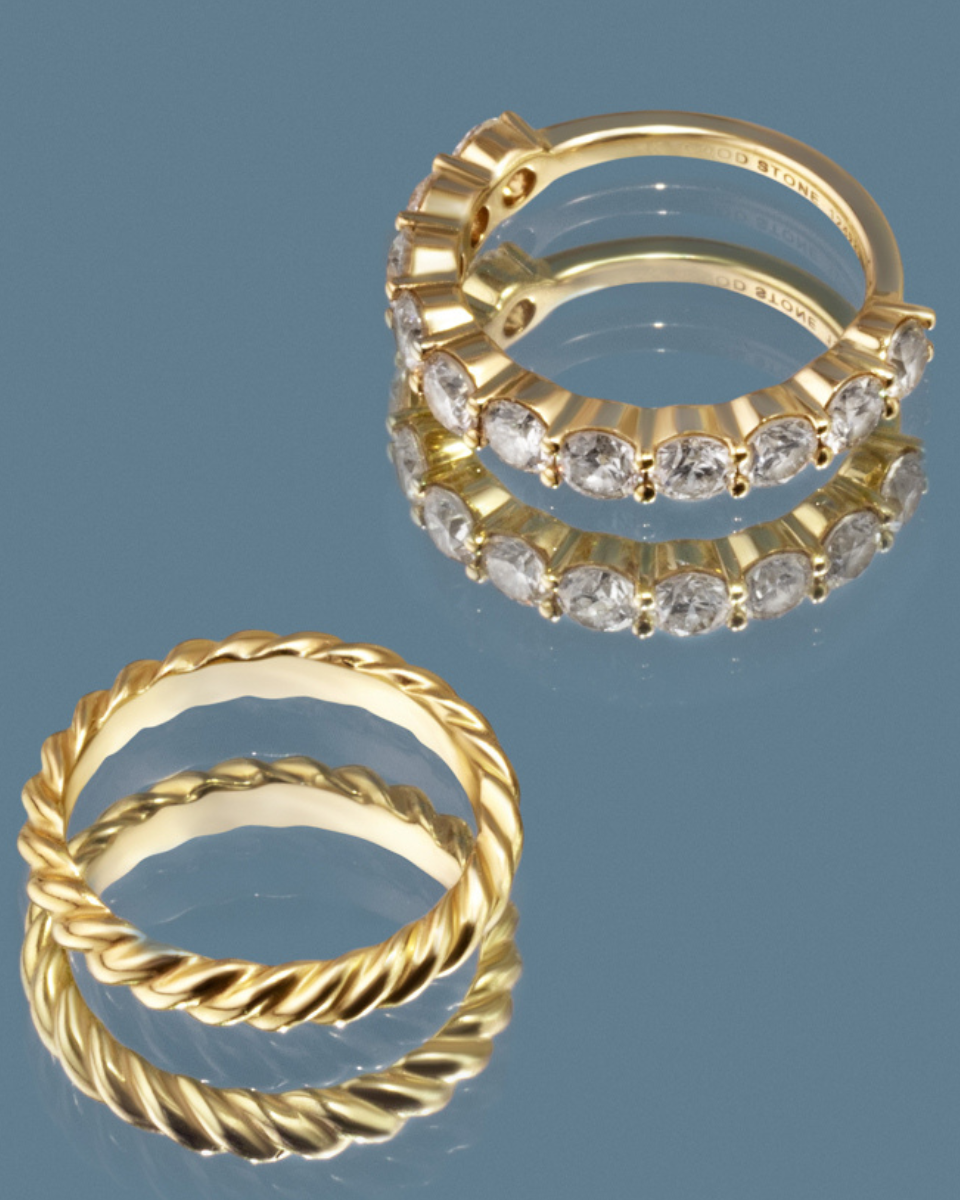
A split shank divides the band into two channels as it approaches the stone, connecting at the top and bottom corners. This creates a small gap between the stone and the band that draws the eye and flatters the finger. Adding pavé diamonds along the split shank introduces extra sparkle without overwhelming the center stone’s geometry.
Settings to Approach with Caution
Tension Settings
Tension settings hold the diamond in place with pressure from the band. While the look is modern and minimal, the mechanics can cause concern for emerald cuts. The clipped corners of an emerald cut are more vulnerable to chipping, and a tension setting that grips those points increases the risk.
Repairs to tension settings are generally more complex than those for prong or bezel designs. Consult a gemologist about how the pressure will be distributed before selecting this style.
Overly Ornate Cluster Settings
Cluster designs with randomly arranged accent stones can work with brilliant cuts because the scattered sparkle of both the center stone and the surrounding stones speaks the same visual language.
Emerald cuts create broad flashes from their step-cut facets. A busy cluster of accent stones can distract from the emerald cut's clean lines. Simpler accent arrangements, such as a single halo or symmetrical side stones, better support the cut.
Full Bezel Enclosures
A full bezel that wraps around the stone can reduce its perceived size and limit light entry from the sides. For those prioritizing protection, a partial or tapered bezel preserves security benefits while keeping more of the diamond visible. Our Finest Tapered Bezel follows this approach.

A full bezel that completely encircles the stone limits light entry from the sides and can make the diamond appear smaller than it is.
Metal Choice
Platinum and white gold enhance the step-cut’s clean appearance and can make the stone look slightly larger because the prongs or bezel blend with the diamond’s white tones. Rose gold softens the straight edges of the emerald cut and adds warmth, though the stone may appear slightly warmer.
Yellow gold lets you comfortably select I or J color grades, as the warm metal makes any faint body color look intentional.
All of our rings are handcrafted in Los Angeles by a team of generational artisans using durable gold and platinum alloys. Each ring includes a lifetime warranty for repairs, resizing, cleaning, inspection, and prong checks. Both natural mined and lab-grown diamonds are available in the emerald-cut collection, and only Excellent Cut grade diamonds are offered.

Platinum and white gold enhance the emerald cut's precise. Yellow gold opens the door to I or J color grades without any visual penalty.
Choosing the Right Setting for an Emerald Cut Diamond
The emerald cut rewards restraint. Settings that maintain clean lines, protect the clipped corners, and let light move freely through the open table will bring out what makes this cut worth choosing in the first place.
A 4-prong solitaire keeps things simple. A tapered bezel adds protection without sacrificing visibility. A 3-stone with step-cut side stones honors the geometry. And an east-west orientation puts a modern spin on a long-standing cut.
The most suitable setting depends on daily routine, taste, and protection requirements. The concierge service is available to guide clients through different designs or to build a custom piece from the ground up.
Each ring is bespoke, with no pre-made inventory. The setting is built around the chosen stone and client preferences from the start.




Leave a comment (all fields required)