





Why Oval Diamonds Look Bigger & How to Pick One That Sparkles
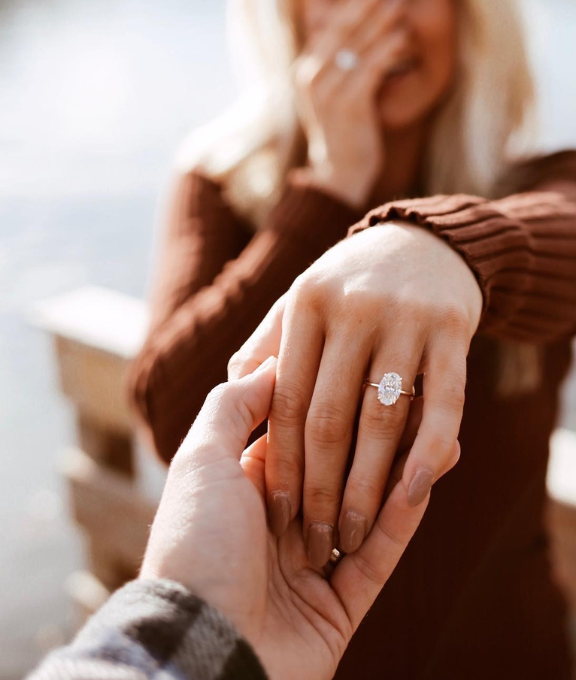
When you place an oval diamond next to a round diamond of the same carat weight, something interesting happens. The oval appears larger.
The elongated shape creates about 10% more surface area than a round-cut of similar weight, making the stone look bigger when viewed from above.
But here's where things get more complex. Two oval diamonds with identical carat weights can look completely different in size. One might appear noticeably larger than the other, even though they weigh exactly the same.
The secret lies in how the diamond distributes its weight. Some ovals hide carats in their depth, where you can't see them. Others spread their weight across the top surface, maximizing what's visible when the ring is on your finger.
This difference can mean one 1.50 carat oval measures 8.90 x 6.50 mm while another of the same weight appears smaller because excess depth steals from its face-up appearance.

Not all ovals are created equal. How a diamond carries its weight affects how large it looks on your finger.
The Surface Area Advantage
Oval diamonds display their carat weight more efficiently than rounds. The elongated shape pushes weight toward the top of the stone rather than hiding it in the pavilion below. According to industry analysis, this creates approximately 10% more visible surface area compared to round diamonds. When you're wearing the ring, this translates to a stone that looks larger on your hand.
The millimeter measurements tell the real story. A 0.9 carat oval with optimal proportions can actually look bigger than a poorly cut 1 carat oval. Diamond Screener research shows that well-proportioned diamonds measure about 3% bigger on average for the same carat weight compared to poorly proportioned ones.
At GOODSTONE, we focus on these measurements rather than carat weight alone, because what matters is how the diamond looks when you're wearing it.

Oval diamonds show more surface area than rounds, which is why they often look larger on the hand.
Understanding the Bow Tie Effect
Every oval diamond contains a characteristic that won't appear on any certificate: the bow tie effect. This shadowing across the center of the stone occurs to some degree in most oval diamonds. You can only assess it through visual inspection, as certification reports from laboratories don't address it.
The bow tie forms because of how light travels through an oval's unique facet pattern. The narrow ends of the oval produce strong light return due to concentrated facets in a small area. The middle section, however, has different geometry.
According to gemological findings, your own head and shoulders block some light as you look at the diamond, creating areas of contrast that appear as a darkened shape across the center. The closer your face gets to the diamond, the more pronounced this effect becomes.

That shadow across the center? It’s called the bow tie effect, and it comes down to light performance.
Why Bow Ties Happen
The pavilion facet arrangement determines bow tie intensity. Ovals can have 4 main, 6 main, or two versions of 8 main pavilion facet patterns. More facets in the middle area mean more light gets reflected back, reducing the bow tie appearance. Poor proportions, whether too shallow or too deep, increase the likelihood of a pronounced bow tie.
We recommend evaluating bow ties through 360-degree videos that show the diamond from every angle. While the lighting stays constant, different viewing angles reveal how prominent the effect really is.

Facet structure matters. The right pavilion pattern can minimize bow tie and maximize brilliance.
The Perfect Length to Width Ratio
The ratio between an oval's length and width changes everything about its appearance on your hand. GIA research indicates most people prefer ratios between 1.30:1 and 1.50:1. Ratios from 1.30:1 to 1.40:1 create a gently elongated look that works well for most fingers and setting styles. Ratios from 1.41:1 to 1.50:1 produce longer ovals that create a slimming effect on the finger, though they may show more pronounced bow ties.
A 2009 GIA study presented oval images to 19 trade professionals and 25 consumers. Both groups preferred narrower, more elongated shapes than what was commonly being submitted to laboratories at the time. This finding reveals something important: market inventory doesn't always match buyer preferences.

The right oval ratio can slim the finger and elevate the entire setting.
Depth and Table Percentages That Matter
For maximum brilliance with minimal bow tie effect, depth percentage should fall between 58% to 62%, with table percentage between 53% to 63%. These ranges balance light performance with visual spread. Diamond cutters often prefer depths of 60% to 64% and tables of 56% to 62%, but tighter parameters generally produce better results.
Visual spread explains why these numbers matter so much. A shallower diamond distributes carats horizontally rather than vertically, creating a larger face-up appearance. But go too shallow, and light leaks through the bottom. Too deep, and you're paying for carat weight you can't see. Some diamonds with 63% to 64% depth were cut to increase yield from rough material rather than optimize appearance, sacrificing visual size for retained weight.

Visible size comes from cut, not carat weight alone.
Symmetry and Polish Grades
Since fancy shapes like ovals don't receive official cut grades from major laboratories, symmetry and polish grades become your primary quality indicators. GIA evaluates symmetry from Excellent to Poor. For ovals, Excellent or Very Good symmetry ensures balanced appearance and even light distribution. Well-aligned facets reduce dark areas and improve overall brilliance.
These grades matter because every oval cuts differently. Unlike rounds, which follow standardized proportions, ovals vary dramatically in their facet arrangements and angles. GOODSTONE recommends focusing on Excellent or Very Good grades for both symmetry and polish to ensure crisp facet junctions and refined finish.

Excellent or Very Good symmetry keeps an oval balanced, bright, and visually refined.
The Price Advantage of Ovals
Oval diamonds offer remarkable value compared to rounds. 2025 pricing data shows ovals cost 2% to 10% less than round diamonds, despite appearing larger. Some market analysis indicates savings of 10% to 30% for comparable quality. Lab-grown oval diamonds typically cost 15% to 25% less than equivalent rounds.
Real pricing demonstrates this value clearly. Natural 1 carat ovals range from around $1,544 to $10,580, with an average of $4,556 according to StoneAlgo data. PriceScope indicates lower color and clarity ovals might start near $4,600, while high-quality stones reach $8,300 or more. Across all quality levels, ovals consistently provide better visual impact per dollar than rounds.

Ovals consistently deliver better size-for-value compared to round diamonds.
How Poor Cuts Hide Weight
Diamond cutters sometimes prioritize retaining weight from rough material over optimizing appearance. When depth percentages climb too high, light passes through incorrectly, and the diamond looks smaller despite its carat weight. Two 2.00 carat ovals can appear dramatically different in size because one maximizes face-up area while the other hides weight in its pavilion.
This explains why millimeter measurements matter more than carat weight. A diamond measuring 0.7mm longer than another of identical weight provides more finger coverage and visual presence. At GOODSTONE, we help clients understand these proportions to maximize value rather than chasing higher carat weights that don't translate to better appearance.

Some carats are hidden. Face-up size is what matters on your finger.
Evaluating Ovals Beyond the Certificate
Selecting an oval requires looking past paper specifications to actual visual performance. Certificates for ovals don't indicate how the diamond will actually look. Virtually identical diamonds on paper can show dramatically different visual appeal. Most ovals are cut to poor proportions that compromise light return.
We recommend viewing diamonds under various lighting conditions. Natural light shows how the diamond sparkles outdoors. Soft indoor lighting reveals light distribution patterns. Direct spotlighting exaggerates shadows, making bow ties more visible. This comprehensive approach shows exactly how your oval will perform throughout daily wear, from office fluorescents to candlelit evenings.

Ovals have to be seen to be understood.
Making Your Selection Count
Understanding these technical factors lets you select diamonds based on visual impact rather than certificate numbers alone. Since fancy shapes receive no official cut grades, you must evaluate proportions, symmetry, bow tie severity, and light performance through careful visual inspection.
The right oval diamond combines optimal proportions with minimal bow tie effect, creating a stone that looks larger than its carat weight suggests while maintaining brilliant light performance.
By focusing on millimeter measurements, depth percentages, and visual spread rather than carat weight alone, you'll find an oval that delivers maximum presence on your finger and exceptional value for your investment.



Dejar un comentario