





Catedral de la firma
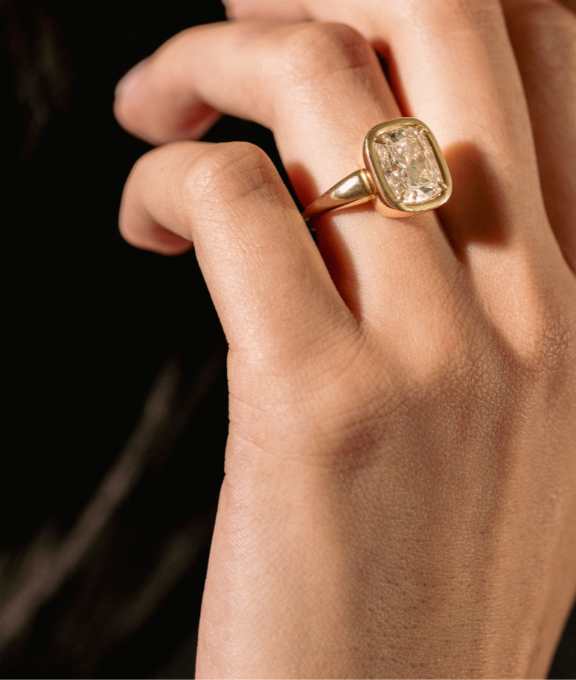
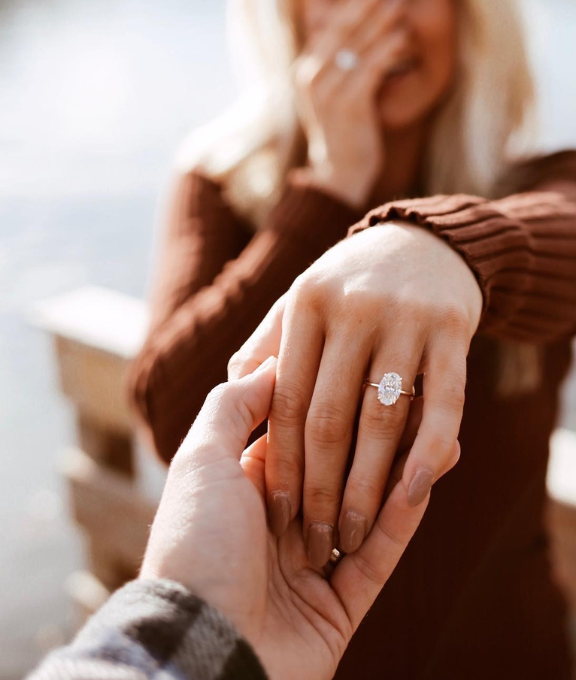
A cathedral setting raises your stone and lets light pour in from all sides. Our Signature collection pairs that look with double claw prongs. Browse and see what draws you in.
Catedral de la firma (17)
DIAMOND SHAPE


- $1,500+
- $1-$500
- $501-$1,500
- Alianza de boda baguette
- Alianza de boda con corte Asscher
- Alianza de boda con corte de mina antigua
- Alianza de boda con diamantes de colores
- Alianza de boda de corte trilliant
- Alianza de boda de talla esmeralda
- Alianza de boda en forma de corazón
- Alianza de boda en forma de pera
- Alianzas de boda
- Alianzas de boda anchas
- Alianzas de boda antiguas con corte europeo
- Alianzas de boda con corte cojín
- Alianzas de boda con diamantes amarillo canario
- Alianzas de boda con esmeralda verde
- Alianzas de boda con piedras preciosas de colores
- Alianzas de boda con zafiro
- Alianzas de boda con zafiro rosa
- Alianzas de boda de aguamarina
- Alianzas de boda de corte marquesa
- Alianzas de boda de corte ovalado
- Alianzas de boda de corte radiante
- Alianzas de boda de corte redondo
- Alianzas de boda de metal
- Alianzas de boda de rubí rojo
- Alianzas de boda finas y apilables
- Alianzas de boda gruesas y atrevidas
- Alianzas de boda y anillos de compromiso negros
- Alianzas de boda únicas
- Anillo de compromiso cultivado en laboratorio con talla esmeralda
- Anillo de compromiso de diamantes cultivados en laboratorio
- Anillo de compromiso de diamantes cultivados en laboratorio ovalados
- Anillo de diamantes cultivados en laboratorio de tres piedras
- Anillo de diamantes cultivados en laboratorio en forma de pera
- Anillo de diamantes radiantes cultivados en laboratorio
- Anillo de eternidad cultivado en laboratorio
- Anillo solitario de diamantes cultivados en laboratorio
- Anillos con inicial del club
- Anillos de compromiso
- Anillos de compromiso antiguos con talla europea
- Anillos de compromiso bruñidos
- Anillos de compromiso con corte de mina antigua
- Anillos de compromiso con esmeralda verde
- Anillos de compromiso con halo
- Anillos de compromiso con lazo
- Anillos de compromiso con solitario brújula
- Anillos de compromiso con talla Asscher
- Anillos de compromiso con talla cojín
- Anillos de compromiso con talla de pera
- Anillos de compromiso cruzados
- Anillos de compromiso de canal grueso
- Anillos de compromiso de diamantes amarillos
- Anillos de compromiso de doble vuelta
- Anillos de compromiso de talla esmeralda
- Anillos de compromiso de talla marquesa
- Anillos de compromiso de talla ovalada
- Anillos de compromiso de talla princesa
- Anillos de compromiso de talla radiante
- Anillos de compromiso de talla radiante cuadrados
- Anillos de compromiso de talla redonda
- Anillos de compromiso de tendencia
- Anillos de compromiso de tres piedras
- Anillos de compromiso de tres piedras con piedras laterales de escudo
- Anillos de compromiso de zafiro
- Anillos de compromiso en racimo de zafiro azul
- Anillos de compromiso horizontales Este Oeste
- Anillos de compromiso listos para enviar
- Anillos de fuego estelar
- Anillos de hombre
- Anillos de racimo exclusivos
- Anillos fundidos
- Anillos gruesos
- Anillos meñique
- Anillos Solitarios
- Apiladores y juegos
- Archivo de anillos de compromiso a medida
- Archivo de joyería a medida
- Aretes de diamantes
- banda de diamantes
- Bandas de cigarros de acordeón
- Bandas de diamantes de múltiples formas
- Bandas de eternidad con piedras preciosas de colores
- Bandas de piedras preciosas
- Bandas de puntas compartidas
- Best Diamond Earrings
- Best Engagement Rings
- Best Necklaces
- Best Wedding Bands
- Bezel Set Diamond Huggies
- BIENES
- Big Stud Energy
- Boleto alto
- Button Back Studs
- Cadena + colgante de diamantes acoplable
- Cadenas de oro
- Carolyn Bessette Edit
- Catedral de la firma
- Cathedral Engagement Rings
- Channel Set
- Chunky & Bold Engagement Rings
- Chunky Signet Ring
- Cigar Rings
- Cinco anillos de piedra
- cita nocturna
- Club contorneado
- Clásicos de otoño
- Colección de botones en la espalda
- Colección de clubes
- Colección de microgarras
- Colección fundida
- Colección Lazo
- Colgante clásico de diamantes acoplable
- Colgante de diamantes acoplable con doble bisel
- Colgantes con botones en la parte posterior
- Colgantes de diamantes acoplables
- Colgantes de diamantes acoplables al club
- Collares con colgante de diamantes
- Collares con colgante de diamantes de medio bisel
- Collares con colgante de diamantes en bisel
- Collares de diamantes
- Collares de diamantes cultivados en laboratorio
- Collares de tenis
- Collares de tenis cultivados en laboratorio
- Colored Gems
- Compass Tapered Butter Knife Solitaire Engagement Ring Series
- Compass-Set Eternity Band Collection
- Compass-Set Tapered Wedding Band
- Conjunto de bisel
- Conjunto de bisel Alianzas de boda
- Conjunto de bisel Pavé Filo con filo cuchillo Colgantes de diamantes acoplables
- Conjunto de bisel Penumbra Anillos de compromiso
- Conjunto de bisel Serie Halo
- Conjunto de canales
- Conjunto de canales Alianzas de boda
- Conjunto de canales Anillos de compromiso
- Contoured Pavé Wrap Engagement Ring Series
- Contoured Wedding Bands
- diamantes
- Domed Solitaire Engagement
- Double Row Penumbra Bezel
- Double Row Solitaire Collection
- Dual Lasso
- Easter Collection
- Ecléctico
- El mejor anillo de compromiso con solitario acanalado
- El mejor anillo de compromiso cónico
- El mejor solitario de medio bisel
- Engagement Rings
- Entrantes
- Esenciales cotidianos
- Espectaculares
- Estilos de anillos de compromiso exclusivos
- Estilos de verano
- Exclusivo del Black Friday 2025
- Favoritos de Insta
- Fine Jewelry - Featured
- Finest Engagement Rings Full Collection
- Floating Huggie Collection
- For Him
- Gargantillas de diamantes
- Gold Bands
- GOODSTONE Stylist Favorites
- Halo de vástago dividido
- Huggie & Hoop Earrings
- Inspiración vintage.
- Joyería fina con diamantes en forma de corazón
- Joyería grabada y personalizada
- Knife Edge Drop Earrings
- Lasso Drop Earrings
- Lasso Huggies
- Lazo clásico
- Lazo grueso
- Listo para enviar - Joyería fina
- Los mejores anillos de compromiso con banda para puros
- Los mejores anillos de compromiso con brújula
- Los mejores anillos de compromiso con solitario
- Los mejores solitarios con bisel cónico
- Los mejores solitarios con juego de bisel
- Los más vendidos
- Low Profile Wedding Bands
- Medio bisel
- Medio bisel de doble fila
- Menos de $1,500
- Menos de $1000
- Menos de $3500
- Menos de $800
- Molten Bezel Stud Collection
- Mom Who Does It All
- Mother's Day Collection
- New Engagement Ring - Featured
- Nueva joyería fina
- Nuevos anillos de compromiso
- Oro Amarillo
- Oro Blanco + Platino
- Oro rosa
- Pavé de firma
- Pendientes
- Pendientes colgantes
- Pendientes con botón trasero
- Pendientes de club
- Pendientes de diamantes
- Pendientes de diamantes cultivados en laboratorio
- Pendientes fundidos
- Pendientes Huggie
- Pendientes Lazo
- Pequeño lazo
- Piedras de colores
- Piezas exclusivas
- Piezas llamativas
- Piezas únicas
- Pila destacada
- Pila destacada
- Pila destacada
- Pila destacada
- Pila No. 6
- Pila No. 7
- Pila No. 8
- Pila número 1
- Pila número 2
- Pila número 3
- Pila número 4
- Pulsera del club
- Pulsera Lazo
- Pulseras de cadena
- Pulseras de diamantes
- Pulseras de tenis
- Pulseras de tenis cultivadas en laboratorio
- Puños de oreja
- Ready To Ship
- Regalos de aniversario para ella
- Regalos de cumpleaños para ella
- Regalos de graduación para ella
- Regalos de San Valentín para ella
- Regalos para ella
- Regalos para él
- Ridged Band Knot Engagement Ring Collection
- salida nocturna
- Serie apilable
- Serie Aurora Pavé
- Serie Cenit
- Serie de bandas de eternidad
- Serie de garras
- Serie de solitario de vástago dividido
- Serie de solitario delgada y simple
- Serie de vástago de cresta vintage
- Serie Laurel
- Serie Loto
- Serie Nova
- Serie Pavé con espacio de doble hilera
- Serie Pavé de Triple Fila
- Serie Pila No. 5
- Serie Solitario Creciente
- Serie Toi y Moi
- Serie translunar
- Serie tríada
- Show de baúles 11/02/2026
- Single Club Bracelet
- Single Stone Bracelets
- Solitario Bisel Catedral
- Solitario con botón trasero
- Solitario contorneado
- Solitario ondulado
- Solitarios con cuchillo de mantequilla
- Solitarios de anillo de club
- Solitarios de medio bisel
- Solitarios Iris
- Split Shank Bezel Engagement Ring Series
- Split Shank Engagement Ring
- Split Shank Half Bezel Engagement Ring Series
- Tendencia
- The Classics
- The Cool Mom
- The Floating Engagement Ring Collection
- The Generational Gift
- The Sentimentalist
- The Tennis Series
- The Upgrade
- Three Stone Bezel Diamond Drop Earrings
- Three Stone Engagement Ring with Kite Side Stones
- To Me, From Me
- Toda la joyería fina
- Todas las bandas de metal
- Todas las pulseras
- Todo personalizado
- Todos los anillos
- Todos los collares
- Todos los estilos
- Toi y Moi
- Tres piedras con piedras laterales de pera
- Tulip Cathedral Solitaire Rings
- Vacaciones
- Vástago triple de doble halo
- Wedding Bands for Marquise Engagement Ring
Can't find the perfect diamond?
talk to an expert


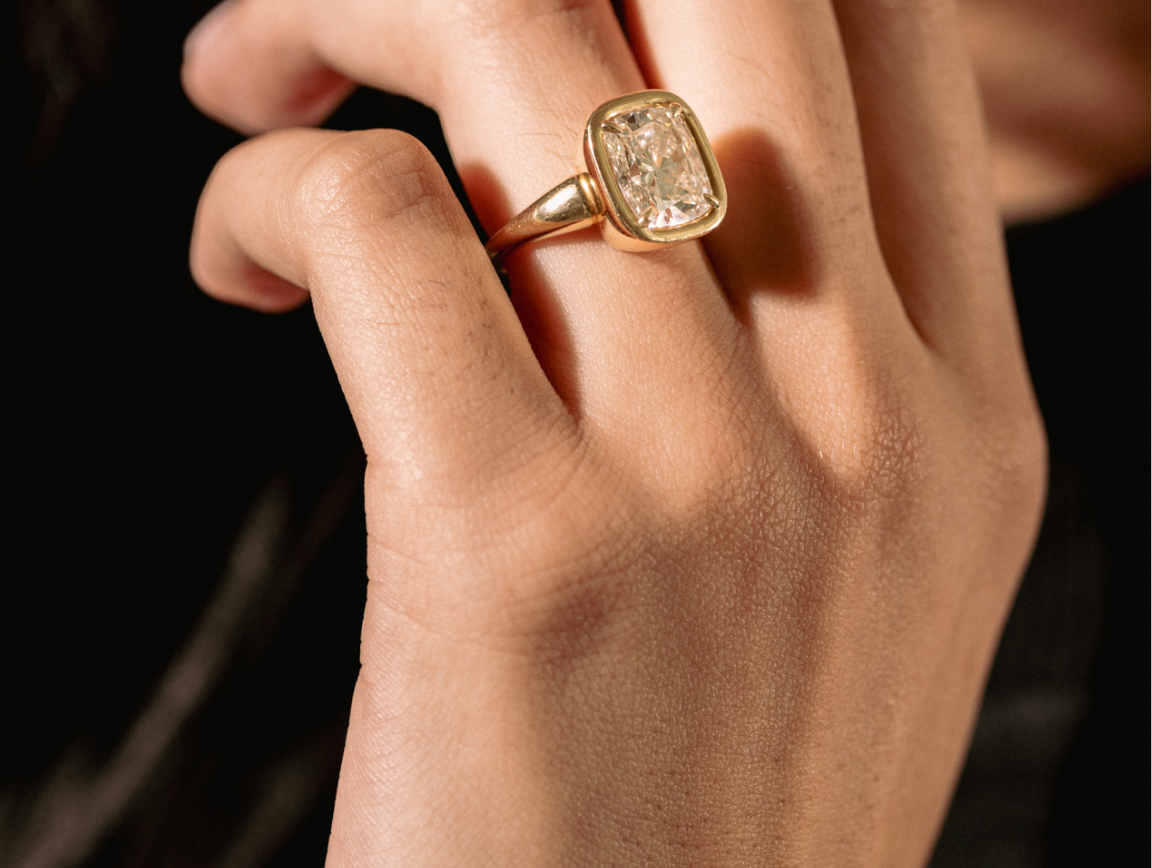
Get a bespoke design from
GOODSTONE that'll last a lifetime.


AS SEEN ON YOU


I had an amazing experience with Kayla at Goodstone. The team took the time really listen and understand our vision, and I came out of the whole process feeling confident that I was buying real quality. They were transparent about pricing and customization, and the whole process felt very easy. Everything turned out beautifully and my fiancée couldn’t be happier.

Anillo de compromiso con solitario fino y simple con diamante alargado de talla radiante
SHOP NOW


Cathedral Engagement Rings
A cathedral engagement ring is a celebration of timeless elegance and architectural beauty. Inspired by the sweeping arches of classic cathedrals, this design elevates the center stone with graceful curves that rise from the band, showcasing its brilliance from every angle. The minimalistic band is perfectly complemented by double claw prongs, a detail that enhances the center stone's presence while providing optimal security.
This versatile design accommodates various stone shapes, allowing you to personalize your ring to reflect your unique style. The Signature Cathedral is more than just a ring—it’s a statement of refined sophistication, blending modern minimalism with traditional craftsmanship to create a piece that will never go out of style.
Frequently Asked Questions
What is a cathedral setting on an engagement ring?
A cathedral setting has arched metal shoulders that rise from the band and sweep up to meet and support the center stone. The name comes from the graceful arches you see in cathedral architecture. The stone stays prong-held, and the arches lift it above the finger for a raised, framed look.
What makes the Signature Cathedral different from a standard cathedral setting?
The Signature Cathedral is GOODSTONE’s premium version of the cathedral setting, so the arched shoulders and prong-held center follow the same core structure you find in any cathedral ring. The differences lie in the finishing, the proportions, and the metalwork of that arch, which vary from one ring to the next.
How does a cathedral solitaire differ from a plain prong solitaire?
A cathedral solitaire adds arched metal shoulders that rise to cradle the center stone, while a plain prong solitaire leaves the stone above an unadorned band with nothing bridging the gap. The arches add height and side detail and lend extra support to the head.
Do cathedral settings snag or catch on clothing and hair?
The setting can catch on clothing and hair because the arched shoulders and raised head create more contours than a low, plain band. The prongs and the lifted stone give the fabric something to grab. Keeping the ring clean and having the prongs checked helps, and many wearers gradually adjust to the profile.
Does the arched design make the diamond look bigger or sit higher?
The arched design lifts the diamond higher on the finger, which can give the stone more presence from the side. The arches draw the eye upward toward the center and frame it, making the diamond appear slightly more prominent. That extra height comes from the setting rather than any change to the stone itself.
Do the raised shoulders protect the prongs and diamond from impact?
The raised shoulders add some metal alongside the head, which can help shield the diamond’s prongs and girdle from side knocks. The stone still rests up in prongs rather than inside a full frame, so the protection is partial. A bezel setting guards the edges more completely.
Is a cathedral setting good for an everyday, active lifestyle?
For everyday wear, a cathedral setting holds up fine, though the raised head and arched shoulders ride higher than a flat solitaire and offer more places to catch. For hands-on work, you might remove it, and the prongs benefit from periodic checks. Many wearers find the height comfortable once the ring settles into daily habit.
What diamond shapes look best in a cathedral setting?
The sweep of the arches gives an elongated stone somewhere to rise, so oval and emerald cuts draw a graceful line up through the setting. Round, cushion, and princess diamonds also fit well, each held above the finger where the shoulders lift and frame it. How a given stone pairs with the arches comes down to its outline and size, which are easiest to judge with the stone in the setting.
Can a cathedral solitaire be resized?
A cathedral solitaire can be resized in most cases, since resizing happens at the bottom of the band away from the arched shoulders and the head. A jeweler adds or removes metal at the base, leaving the arches untouched. The workable range depends on the metal and the width of the arch above.
Does a cathedral setting collect more dirt and need more cleaning?
A cathedral setting collects more dirt because the arched shoulders and the space beneath the raised stone create crevices where lotion, soap, and dust gather. Reaching a soft brush under the arches and around the prongs with warm, soapy water clears those hollows that a rinse cannot. A jeweler’s cleaning once or twice a year gets at what the brush leaves and keeps the metalwork open to the light.
What wedding band pairs with a cathedral solitaire, and will it sit flush?
A straight band is the simplest pairing, and it suits the look when you want the two rings to form one line. The catch is that the arches can hold the shoulders slightly away from a straight band, so it does not always meet the ring at the center. A notched band, cut to seat against the base of each arch, tucks in more closely and is the safer choice when a tight pairing matters most. GOODSTONE can fit a band to a specific cathedral profile.
Is a cathedral setting more expensive than a plain solitaire?
It usually costs a little more than a plain prong solitaire because the arched shoulders take extra metal and more detailed fabrication. How much more you pay turns on the metal, the width of the arches, and the stone. A jeweler can give you a side-by-side figure against a plain solitaire.
Does the higher profile make the ring less comfortable to wear?
The higher profile can take a short adjustment, since the stone and arches rest above the finger rather than close to it. Many wearers find the ring comfortable once it settles in, and the raised head keeps the diamond off surfaces. Trying the profile in person helps you gauge the fit.
Will a straight wedding band leave a gap next to a cathedral ring?
The gap comes from the arches themselves. As the shoulders rise toward the stone, they curve away from a straight band, so a small opening can appear where the two rings meet near the center. A band curved to follow that same rise closes the space and seats against the ring.
Get in touch with our concierge team to book a one-on-one call with us to discuss about your Engagement Ring. We will walk through the process from diamond sourcing to choosing the perfect setting.