





Anillos de compromiso antiguos con talla europea
Los anillos de compromiso de talla antigua europea presentan facetas redondas de inspiración antigua con un fuego profundo y un encanto vintage, creando una apariencia arraigada en la historia. Descubre diseños con carácter.
Anillos de compromiso antiguos con talla europea (36)
style setting


- $1,500+
- $1-$500
- $501-$1,500
- Alianza de boda baguette
- Alianza de boda con corte Asscher
- Alianza de boda con corte de mina antigua
- Alianza de boda con diamantes de colores
- Alianza de boda de corte trilliant
- Alianza de boda de talla esmeralda
- Alianza de boda en forma de corazón
- Alianza de boda en forma de pera
- Alianzas de boda
- Alianzas de boda anchas
- Alianzas de boda antiguas con corte europeo
- Alianzas de boda con corte cojín
- Alianzas de boda con diamantes amarillo canario
- Alianzas de boda con esmeralda verde
- Alianzas de boda con piedras preciosas de colores
- Alianzas de boda con zafiro
- Alianzas de boda con zafiro rosa
- Alianzas de boda de aguamarina
- Alianzas de boda de corte marquesa
- Alianzas de boda de corte ovalado
- Alianzas de boda de corte radiante
- Alianzas de boda de corte redondo
- Alianzas de boda de metal
- Alianzas de boda de rubí rojo
- Alianzas de boda finas y apilables
- Alianzas de boda gruesas y atrevidas
- Alianzas de boda y anillos de compromiso negros
- Alianzas de boda únicas
- Anillo de compromiso cultivado en laboratorio con talla esmeralda
- Anillo de compromiso de diamantes cultivados en laboratorio
- Anillo de compromiso de diamantes cultivados en laboratorio ovalados
- Anillo de diamantes cultivados en laboratorio de tres piedras
- Anillo de diamantes cultivados en laboratorio en forma de pera
- Anillo de diamantes radiantes cultivados en laboratorio
- Anillo de eternidad cultivado en laboratorio
- Anillo solitario de diamantes cultivados en laboratorio
- Anillos con inicial del club
- Anillos de compromiso
- Anillos de compromiso antiguos con talla europea
- Anillos de compromiso bruñidos
- Anillos de compromiso con corte de mina antigua
- Anillos de compromiso con esmeralda verde
- Anillos de compromiso con halo
- Anillos de compromiso con lazo
- Anillos de compromiso con solitario brújula
- Anillos de compromiso con talla Asscher
- Anillos de compromiso con talla cojín
- Anillos de compromiso con talla de pera
- Anillos de compromiso cruzados
- Anillos de compromiso de canal grueso
- Anillos de compromiso de diamantes amarillos
- Anillos de compromiso de doble vuelta
- Anillos de compromiso de talla esmeralda
- Anillos de compromiso de talla marquesa
- Anillos de compromiso de talla ovalada
- Anillos de compromiso de talla princesa
- Anillos de compromiso de talla radiante
- Anillos de compromiso de talla radiante cuadrados
- Anillos de compromiso de talla redonda
- Anillos de compromiso de tendencia
- Anillos de compromiso de tres piedras
- Anillos de compromiso de tres piedras con piedras laterales de escudo
- Anillos de compromiso de zafiro
- Anillos de compromiso en racimo de zafiro azul
- Anillos de compromiso horizontales Este Oeste
- Anillos de compromiso listos para enviar
- Anillos de fuego estelar
- Anillos de hombre
- Anillos de racimo exclusivos
- Anillos fundidos
- Anillos gruesos
- Anillos meñique
- Anillos Solitarios
- Apiladores y juegos
- Archivo de anillos de compromiso a medida
- Archivo de joyería a medida
- Aretes de diamantes
- banda de diamantes
- Bandas de cigarros de acordeón
- Bandas de diamantes de múltiples formas
- Bandas de eternidad con piedras preciosas de colores
- Bandas de piedras preciosas
- Bandas de puntas compartidas
- Best Diamond Earrings
- Best Engagement Rings
- Best Necklaces
- Best Wedding Bands
- BIENES
- Big Stud Energy
- Boleto alto
- Button Back Studs
- Cadena + colgante de diamantes acoplable
- Cadenas de oro
- Carolyn Bessette Edit
- Catedral de la firma
- Cathedral Engagement Rings
- Chunky & Bold Engagement Rings
- Chunky Signet Ring
- Cigar Rings
- Cinco anillos de piedra
- cita nocturna
- Club contorneado
- Clásicos de otoño
- Colección de botones en la espalda
- Colección de clubes
- Colección de microgarras
- Colección fundida
- Colección Lazo
- Colgante clásico de diamantes acoplable
- Colgante de diamantes acoplable con doble bisel
- Colgantes con botones en la parte posterior
- Colgantes de diamantes acoplables
- Colgantes de diamantes acoplables al club
- Collares con colgante de diamantes
- Collares con colgante de diamantes de medio bisel
- Collares con colgante de diamantes en bisel
- Collares de diamantes
- Collares de diamantes cultivados en laboratorio
- Collares de tenis
- Collares de tenis cultivados en laboratorio
- Colored Gems
- Compass Tapered Butter Knife Solitaire Engagement Ring Series
- Compass-Set Eternity Band Collection
- Compass-Set Tapered Wedding Band
- Conjunto de bisel
- Conjunto de bisel Alianzas de boda
- Conjunto de bisel Pavé Filo con filo cuchillo Colgantes de diamantes acoplables
- Conjunto de bisel Penumbra Anillos de compromiso
- Conjunto de bisel Serie Halo
- Conjunto de canales
- Conjunto de canales Alianzas de boda
- Conjunto de canales Anillos de compromiso
- Contoured Pavé Wrap Engagement Ring Series
- Contoured Wedding Bands
- diamantes
- Domed Solitaire Engagement
- Double Row Penumbra Bezel
- Double Row Solitaire Collection
- Dual Lasso
- Easter Collection
- Ecléctico
- El mejor anillo de compromiso con solitario acanalado
- El mejor anillo de compromiso cónico
- El mejor solitario de medio bisel
- Engagement Rings
- Entrantes
- Esenciales cotidianos
- Espectaculares
- Estilos de anillos de compromiso exclusivos
- Estilos de verano
- Exclusivo del Black Friday 2025
- Favoritos de Insta
- Fine Jewelry - Featured
- Finest Engagement Rings Full Collection
- Floating Huggie Collection
- For Him
- Gargantillas de diamantes
- Gold Bands
- Halo de vástago dividido
- Huggie & Hoop Earrings
- Inspiración vintage.
- Joyería fina con diamantes en forma de corazón
- Joyería grabada y personalizada
- Knife Edge Drop Earrings
- Lasso Drop Earrings
- Lasso Huggies
- Lazo clásico
- Lazo grueso
- Listo para enviar - Joyería fina
- Los mejores anillos de compromiso con banda para puros
- Los mejores anillos de compromiso con brújula
- Los mejores anillos de compromiso con solitario
- Los mejores solitarios con bisel cónico
- Los mejores solitarios con juego de bisel
- Los más vendidos
- Low Profile Wedding Bands
- Medio bisel
- Medio bisel de doble fila
- Menos de $1,500
- Menos de $1000
- Menos de $3500
- Menos de $800
- Molten Bezel Stud Collection
- Mom Who Does It All
- Mother's Day Collection
- New Engagement Ring - Featured
- Nueva joyería fina
- Nuevos anillos de compromiso
- Oro Amarillo
- Oro Blanco + Platino
- Oro rosa
- Pavé de firma
- Pendientes
- Pendientes colgantes
- Pendientes con botón trasero
- Pendientes de club
- Pendientes de diamantes
- Pendientes de diamantes cultivados en laboratorio
- Pendientes fundidos
- Pendientes Huggie
- Pendientes Lazo
- Pequeño lazo
- Piedras de colores
- Piezas exclusivas
- Piezas llamativas
- Piezas únicas
- Pila destacada
- Pila destacada
- Pila destacada
- Pila destacada
- Pila No. 6
- Pila No. 7
- Pila No. 8
- Pila número 1
- Pila número 2
- Pila número 3
- Pila número 4
- Pulsera del club
- Pulsera Lazo
- Pulseras de cadena
- Pulseras de diamantes
- Pulseras de tenis
- Pulseras de tenis cultivadas en laboratorio
- Puños de oreja
- Ready To Ship
- Regalos de aniversario para ella
- Regalos de cumpleaños para ella
- Regalos de graduación para ella
- Regalos de San Valentín para ella
- Regalos para ella
- Regalos para él
- Ridged Band Knot Engagement Ring Collection
- salida nocturna
- Serie apilable
- Serie Aurora Pavé
- Serie Cenit
- Serie de bandas de eternidad
- Serie de garras
- Serie de solitario de vástago dividido
- Serie de solitario delgada y simple
- Serie de vástago de cresta vintage
- Serie Laurel
- Serie Loto
- Serie Nova
- Serie Pavé con espacio de doble hilera
- Serie Pavé de Triple Fila
- Serie Pila No. 5
- Serie Solitario Creciente
- Serie Toi y Moi
- Serie translunar
- Serie tríada
- Show de baúles 11/02/2026
- Single Club Bracelet
- Single Stone Bracelets
- Solitario Bisel Catedral
- Solitario con botón trasero
- Solitario contorneado
- Solitario ondulado
- Solitarios con cuchillo de mantequilla
- Solitarios de anillo de club
- Solitarios de medio bisel
- Solitarios Iris
- Split Shank Bezel Engagement Ring Series
- Split Shank Engagement Ring
- Split Shank Half Bezel Engagement Ring Series
- Tendencia
- The Classics
- The Cool Mom
- The Floating Engagement Ring Collection
- The Generational Gift
- The Sentimentalist
- The Tennis Series
- The Upgrade
- Three Stone Engagement Ring with Kite Side Stones
- To Me, From Me
- Toda la joyería fina
- Todas las bandas de metal
- Todas las pulseras
- Todo personalizado
- Todos los anillos
- Todos los collares
- Todos los estilos
- Toi y Moi
- Tres piedras con piedras laterales de pera
- Tulip Cathedral Solitaire Rings
- Vacaciones
- Vástago triple de doble halo
- Wedding Bands for Marquise Engagement Ring
Can't find the perfect diamond?
talk to an expert


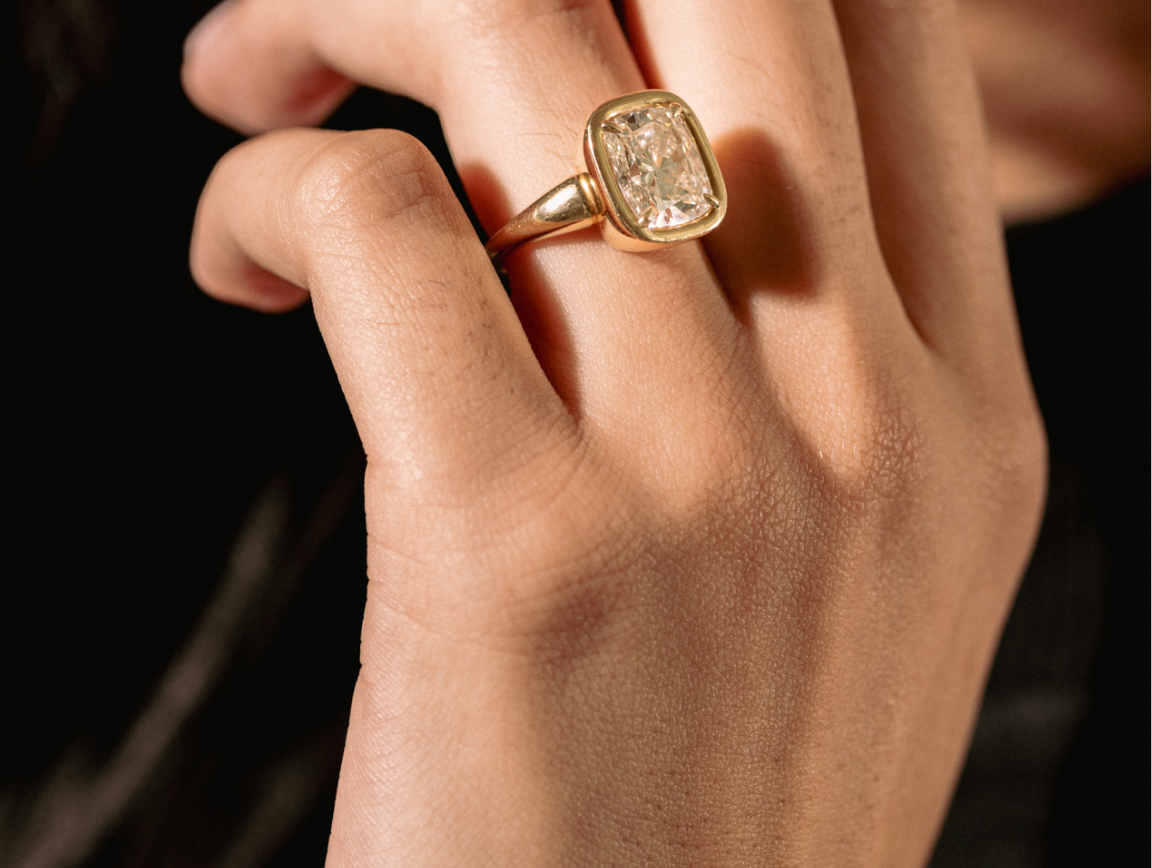
Get a bespoke design from
GOODSTONE that'll last a lifetime.


AS SEEN ON YOU


Amazing experience, we couldn’t be happier with the engagement ring. This company is great and I will definitely go back to them for any other jewelry!

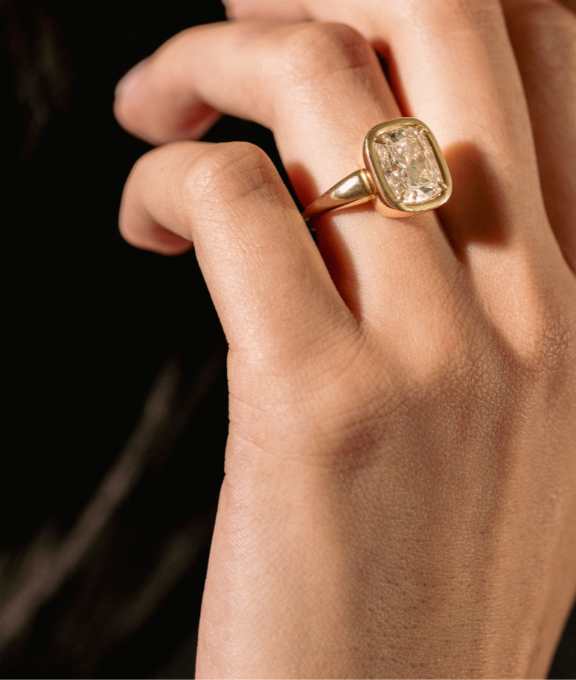
Anillo de compromiso con solitario bruñido y diamante de talla euro antigua
SHOP NOW


Old Euro Cut Engagement Rings
Vintage Natural and Lab-Grown Old Europeans
Old European cuts are available in this collection in both vintage natural and lab-grown form, making the cut’s antique character accessible to buyers seeking either historical authenticity or a more budget-friendly alternative.
Bezel, Three-Stone, Halo, and Cigar Band Stocked
Available settings include bezel, three-stone with kite sides, halo, and cigar band designs in 14k gold, 18k gold, and platinum. Pricing starts at $1,925 for a solitaire setting.
Crafted at the Los Angeles Workshop in Recycled Gold
Each ring is crafted at our Los Angeles workshop in recycled gold before being shipped overnight and fully insured. An adult signature is required upon delivery.
Free 30-Day Returns and Full Care Coverage Included
Every ready-to-ship old European cut ring includes free 30-day returns and a lifetime warranty covering resizing, polishing, prong tightening, and replacement of small accent stones.


Compare the Old European Cut to Other Engagement Ring Cuts
Old European Cut vs. Asscher Cut Engagement Ring
The old European cut produces broader, softer flashes of light from its hand-cut faceting, while the Asscher’s concentric step facets create a more geometric pattern of reflections. The Asscher is a square step cut with cropped corners and a structured appearance. Both cuts have strong vintage appeal, though the Asscher’s open facets typically require a higher clarity grade at the same budget.
Old European Cut vs. Cushion Cut Engagement Ring
A cushion cut can provide some of the antique character associated with older diamonds while maintaining a more contemporary appearance. The old European preserves the chunky facet pattern and broader flashes of light found in historical diamond cuts. Buyers seeking a closer connection to antique diamond design often prefer an old European, while those who want a softer blend of vintage and modern elements may gravitate toward a cushion.
Old European Cut vs. Emerald Cut Engagement Ring
An emerald cut is a long rectangle with step-cut facets that run in parallel lines, producing broad flashes of light as the hand moves. The old European uses brilliant-style facets on a round outline, creating a softer, more dispersed pattern of sparkle. The practical distinction is clarity, since the emerald’s open facets leave inclusions more visible while the old European’s brilliant faceting helps mask them.
Old European Cut vs. Marquise Cut Engagement Ring
The marquise has an elongated outline with pointed ends that create greater visual spread across the finger. The old European remains round, with broader and softer flashes of light from its antique-style faceting. Buyers seeking length and a more directional silhouette often prefer a marquise, while those drawn to historical diamond cuts may gravitate toward an old European.
Old European Cut vs. Old Mine Cut Engagement Ring
The old European is a round antique cut whose open culet and high crown produce broader, slower flashes of light than a modern round brilliant. The old mine is squarer, with a cushion-like outline that covers more finger area at a given weight, and it predates the old European by several decades. Both are historic diamond cuts, though the old mine is generally rarer on today’s market.
Old European Cut vs. Pear Cut Engagement Ring
A pear-cut diamond has an asymmetrical teardrop silhouette with one rounded end and one pointed tip, creating a very different appearance from an old European cut. The old European remains round and symmetrical, with antique-style faceting that produces broader, softer flashes of light. Buyers seeking an elongated silhouette may prefer a pear, while those drawn to historical diamond cuts often gravitate toward an old European.
Old European Cut vs. Princess Cut Engagement Ring
A princess cut is almost the opposite of an old European cut. It is square, sharp-cornered, and highly geometric, and the old European is round and hand-cut. The old European produces broader, softer flashes of light, while the princess emphasizes brightness through angular brilliant faceting. The old European leans toward antique character, while the princess reflects a more modern design language.
Old European Cut vs Radiant Cut Engagement Ring
Radiant cuts use cropped corners and dense brilliant faceting to maximize brightness and sparkle. Old Europeans are round and hand-cut, producing broader, softer flashes of light from their antique-style faceting. The radiant reflects a more contemporary design approach, while the old European preserves the character of a historical diamond cut.
Old European Cut vs Round Cut Engagement Ring
The old European is the antique predecessor of the modern round brilliant, recognizable by its higher crown, smaller table, and visible culet at the center of the stone. A modern round modifies those features to maximize brightness and light return. The old European produces broader, softer flashes of light that reflect its historical faceting style, while the modern round emphasizes brilliance and scintillation.


"We don't believe in one right answer when it comes to diamonds. Lab-grown or natural stone to finished pieces, what matters is that you walk away with something exceptional. That's always been our standard."
- Blake Asaad, founder
Frequently Asked Questions
What is an old European cut diamond?
An old European-cut diamond is the predecessor of the modern round brilliant. The cut has 58 facets arranged in a round outline, a small table of roughly 53% of the diamond’s diameter, a high crown, a deep pavilion, and a large open culet visible at the center of the stone. It was the dominant round diamond cut from the 1890s through the 1930s. Old Europeans were hand-cut on treadle-powered lathes, and the bruting machines of the late 1800s helped make their round shape possible.
Why is the culet visible from above in an old European cut diamond?
The visible culet is one of the defining features of an old European-cut diamond. Viewed through the table, it appears as a small circle at the center of the stone. Unlike a modern round brilliant, which tapers to a point at the base, an old European ends in a large flat facet known as an open culet. The open culet, developed as part of the cut’s historical design, remains the quickest way to identify an old European at a glance.
Are old European cut diamonds available as lab-grown stones?
Yes. GOODSTONE offers lab-grown old European-cut diamonds alongside natural vintage stones. A lab-grown old European follows the same 58-facet pattern as the historical cut, including the high crown, small table, and open culet that define its appearance. Lab-grown diamonds have the same chemistry and crystal structure as mined diamonds and are graded using the same standards. They also make the cut available at a lower price point.
Do old European-cut diamonds sparkle better in low light than modern cuts?
Old European-cut diamonds are often appreciated in low-light settings because their larger facets produce broad flashes of light. The cut developed during an era of candlelight, gas lamps, and early electric lighting, all of which were dimmer and warmer than modern fixtures. Under low light, an old European displays a different fire pattern than a modern round brilliant, while a modern round typically produces more overall brilliance in bright light.
What is the best setting style for an old European cut engagement ring: bezel, solitaire, or vintage-inspired?
Any of the three works well with an old European-cut diamond. A bezel provides additional protection and complements the historical character of many antique stones. A solitaire with thin claw prongs places the focus on the cut itself, while a vintage-inspired mounting with milgrain, engraving, or filigree echoes the craftsmanship of the period. The right choice depends on whether protection, simplicity, or historical styling is the priority.
Are old European cut diamonds a smart value compared to modern round brilliants?
The value depends on which type of old European cut you are considering. Genuine antique stones often command a rarity premium of 10 to 25% over comparable modern round brilliants, while modern recuts are typically priced closer to standard rounds. Lab-grown old Europeans are the most accessible option and can cost 20 to 80% less than comparable natural diamonds at the same color and clarity grades.
From which era do most antique European-cut diamonds date: Victorian, Edwardian, or Art Deco?
Most antique old European-cut diamonds date from the 1890s through the 1930s. The cut spans the late Victorian era, the Edwardian period, and the early years of Art Deco. It emerged after late-19th-century advances in diamond cutting made a more consistent round outline possible. Following the introduction of Tolkowsky’s cutting proportions in 1919, the old European gradually gave way to the modern round brilliant and largely disappeared from production by the late 1930s.
Can I find an old European-cut diamond over 2 carats without overpaying?
Large antique old European-cut diamonds are difficult to find because stones above 2 carats are relatively scarce and often command significant premiums. Supply continues to shrink as some antique diamonds are recut into modern rounds. Lab-grown old Europeans are far more attainable at larger sizes and cost substantially less than comparable antique stones, making them the most accessible option for buyers seeking a 2-carat-plus old European cut.
What color grade should I expect in an antique old European cut diamond?
Antique old European-cut diamonds typically fall between I and N color, with warmer tones becoming more noticeable toward the lower end of that range. Many antique stones grade in the J-K range and display light champagne or pale warm hues. Those warmer tones often pair naturally with the yellow-gold and rose-gold mountings common during the period. Lab-grown old Europeans are widely available in higher color grades such as D through G.
What clarity grade is normal in an antique old European cut diamond?
SI to I is the clarity range most commonly found in antique old European-cut diamonds. Eye-clean stones can be found in VS clarity and in many SI1 or SI2 diamonds, while I-grade stones are more likely to show inclusions without magnification. Lab-grown old Europeans are commonly available in VS and VVS clarities because higher clarity grades are easier to achieve in a controlled growth environment.
Are old European-cut diamonds GIA-certified, or do they come with appraisals?
Both, depending on the stone. GIA grades old European-cut diamonds using the same 4Cs framework applied to modern cuts, and many antique and lab-grown examples carry current GIA reports. A GIA report describes the diamond's characteristics but does not assign market value. For that reason, antique stones are often accompanied by independent appraisals that can address value, provenance, and historical context.
Old European cut vs. transitional cut diamond: how are they different?
Transitional-cut diamonds date from the 1920s through the 1940s and bridge the gap between the old European cut and the modern round brilliant. Compared with an old European, a transitional cut has a lower crown, a larger table, and a smaller culet that is often closed entirely. Symmetry is generally more precise than in earlier hand-cut diamonds. Its light performance falls between the broader flashes of an old European and the brighter scintillation of a modern round brilliant. Transitional cuts are sometimes referred to as Early American Cuts.
Which metal flatters an old European-cut engagement ring the most?
No single metal is best for an old European-cut diamond. Yellow and rose gold complement the warmer body color often found in antique stones and reflect the character of many historical settings. Platinum and white gold were also widely used during the Edwardian and Art Deco periods and provide a brighter contrast against the diamond. The right choice depends on the stone’s color and the style of the finished ring.
How does an old European cut engagement ring pair with a wedding band?
Old European-cut engagement rings pair well with straight wedding bands, particularly when the goal is to keep the focus on the antique center stone. Curved or contoured bands may be a better fit for engagement rings with a wider setting or prominent side stones. For a more vintage look, bands with milgrain detailing or hand engraving can complement the cut’s historical character.
Why does an old European cut diamond face up smaller than a modern round?
Antique cutters often retained more weight in the stone, leaving old European-cut diamonds with high crowns and deep pavilions. Modern round brilliants distribute more weight across the face-up of the diamond, creating a larger appearance at the same carat weight. As a result, an old European typically looks smaller from above while appearing deeper and more dimensional in profile.
What does a high crown and small table mean in an old European cut diamond?
A high crown and a small table are two defining features of an old European-cut diamond. The crown, which sits above the girdle, typically measures around 40 to 45 degrees and creates more vertical depth, helping produce the broad flashes of fire associated with the cut. The table, or top facet, is usually about 53% of the diamond’s diameter, compared with roughly 54 to 58% on a modern round brilliant. The smaller table reveals more of the crown facet pattern and contributes to the distinctive appearance of an old European cut.
How do I tell a real antique old European cut diamond from a recut modern stone?
Real antique old European-cut diamonds often show signs of hand craftsmanship, including slight variations in symmetry, uneven facet shapes, softened facet junctions, and wear along the girdle that develops over decades of use. Modern recuts and lab-grown old Europeans typically display more precise symmetry, sharper facet junctions, and cleaner girdles. Provenance records, grading reports, and dealer documentation can help establish a stone's age and origin. Working with a reputable antique-diamond specialist is one of the most reliable ways to verify authenticity.
Does an old European cut diamond hold or gain value?
Rarity premiums exist in the antique old European-cut market because supply continues to shrink. No new antique stones are being produced, and some existing examples are recut into modern rounds. Well-documented stones may appreciate in value, although this is never guaranteed. Lab-grown old Europeans follow the resale patterns of other lab-grown diamonds, while modern recuts trade more like contemporary round brilliants.
Get in touch with our concierge team to book a one-on-one call with us to discuss about your Engagement Ring. We will walk through the process from diamond sourcing to choosing the perfect setting.