


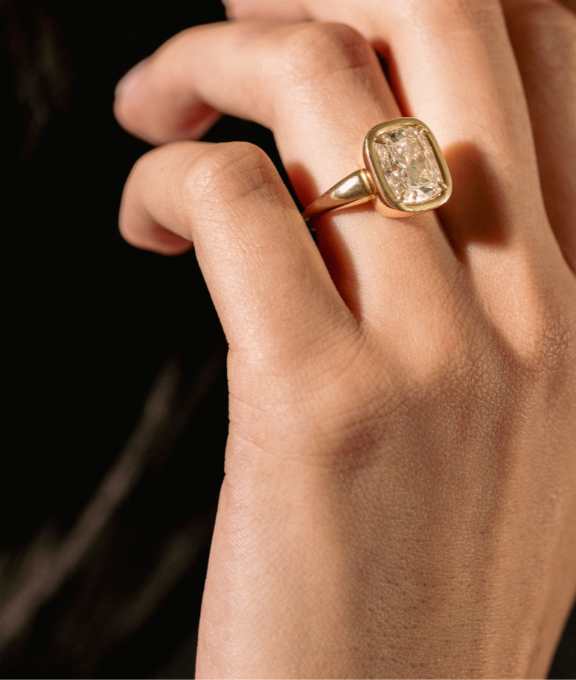

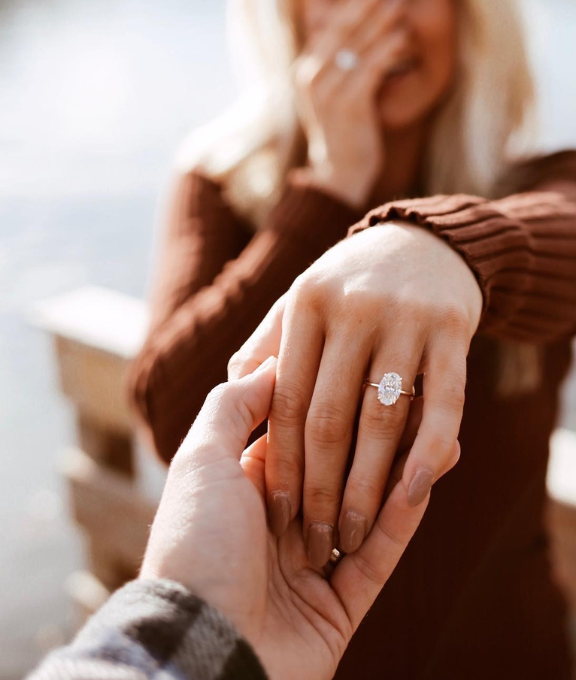


Anillos de compromiso de talla ovalada
Los anillos de compromiso de talla ovalada ofrecen un brillo radiante y curvas elegantes con un perfil suave y alargado y un estilo atemporal. Algunos estilos están disponibles en nuestro estudio o listos para enviar.
Anillos de compromiso de talla ovalada (98)
Style Setting


- $1,500+
- $1-$500
- $501-$1,500
- Alianza de boda baguette
- Alianza de boda con corte Asscher
- Alianza de boda con corte de mina antigua
- Alianza de boda con diamantes de colores
- Alianza de boda de corte trilliant
- Alianza de boda de talla esmeralda
- Alianza de boda en forma de corazón
- Alianza de boda en forma de pera
- Alianzas de boda
- Alianzas de boda anchas
- Alianzas de boda antiguas con corte europeo
- Alianzas de boda con corte cojín
- Alianzas de boda con diamantes amarillo canario
- Alianzas de boda con esmeralda verde
- Alianzas de boda con piedras preciosas de colores
- Alianzas de boda con zafiro
- Alianzas de boda con zafiro rosa
- Alianzas de boda de aguamarina
- Alianzas de boda de corte marquesa
- Alianzas de boda de corte ovalado
- Alianzas de boda de corte radiante
- Alianzas de boda de corte redondo
- Alianzas de boda de metal
- Alianzas de boda de rubí rojo
- Alianzas de boda finas y apilables
- Alianzas de boda gruesas y atrevidas
- Alianzas de boda y anillos de compromiso negros
- Alianzas de boda únicas
- Anillo de compromiso cultivado en laboratorio con talla esmeralda
- Anillo de compromiso de diamantes cultivados en laboratorio
- Anillo de compromiso de diamantes cultivados en laboratorio ovalados
- Anillo de diamantes cultivados en laboratorio de tres piedras
- Anillo de diamantes cultivados en laboratorio en forma de pera
- Anillo de diamantes radiantes cultivados en laboratorio
- Anillo de eternidad cultivado en laboratorio
- Anillo solitario de diamantes cultivados en laboratorio
- Anillos con inicial del club
- Anillos de compromiso
- Anillos de compromiso antiguos con talla europea
- Anillos de compromiso bruñidos
- Anillos de compromiso con corte de mina antigua
- Anillos de compromiso con esmeralda verde
- Anillos de compromiso con halo
- Anillos de compromiso con lazo
- Anillos de compromiso con solitario brújula
- Anillos de compromiso con talla Asscher
- Anillos de compromiso con talla cojín
- Anillos de compromiso con talla de pera
- Anillos de compromiso cruzados
- Anillos de compromiso de canal grueso
- Anillos de compromiso de diamantes amarillos
- Anillos de compromiso de doble vuelta
- Anillos de compromiso de talla esmeralda
- Anillos de compromiso de talla marquesa
- Anillos de compromiso de talla ovalada
- Anillos de compromiso de talla princesa
- Anillos de compromiso de talla radiante
- Anillos de compromiso de talla radiante cuadrados
- Anillos de compromiso de talla redonda
- Anillos de compromiso de tendencia
- Anillos de compromiso de tres piedras
- Anillos de compromiso de tres piedras con piedras laterales de escudo
- Anillos de compromiso de zafiro
- Anillos de compromiso en racimo de zafiro azul
- Anillos de compromiso horizontales Este Oeste
- Anillos de compromiso listos para enviar
- Anillos de fuego estelar
- Anillos de hombre
- Anillos de racimo exclusivos
- Anillos fundidos
- Anillos gruesos
- Anillos meñique
- Anillos Solitarios
- Apiladores y juegos
- Archivo de anillos de compromiso a medida
- Archivo de joyería a medida
- Aretes de diamantes
- banda de diamantes
- Bandas de cigarros de acordeón
- Bandas de diamantes de múltiples formas
- Bandas de eternidad con piedras preciosas de colores
- Bandas de piedras preciosas
- Bandas de puntas compartidas
- Best Diamond Earrings
- Best Engagement Rings
- Best Necklaces
- Best Wedding Bands
- BIENES
- Big Stud Energy
- Boleto alto
- Button Back Studs
- Cadena + colgante de diamantes acoplable
- Cadenas de oro
- Carolyn Bessette Edit
- Catedral de la firma
- Cathedral Engagement Rings
- Chunky & Bold Engagement Rings
- Chunky Signet Ring
- Cigar Rings
- Cinco anillos de piedra
- cita nocturna
- Club contorneado
- Clásicos de otoño
- Colección de botones en la espalda
- Colección de clubes
- Colección de microgarras
- Colección fundida
- Colección Lazo
- Colgante clásico de diamantes acoplable
- Colgante de diamantes acoplable con doble bisel
- Colgantes con botones en la parte posterior
- Colgantes de diamantes acoplables
- Colgantes de diamantes acoplables al club
- Collares con colgante de diamantes
- Collares con colgante de diamantes de medio bisel
- Collares con colgante de diamantes en bisel
- Collares de diamantes
- Collares de diamantes cultivados en laboratorio
- Collares de tenis
- Collares de tenis cultivados en laboratorio
- Colored Gems
- Compass Tapered Butter Knife Solitaire Engagement Ring Series
- Compass-Set Eternity Band Collection
- Compass-Set Tapered Wedding Band
- Conjunto de bisel
- Conjunto de bisel Alianzas de boda
- Conjunto de bisel Pavé Filo con filo cuchillo Colgantes de diamantes acoplables
- Conjunto de bisel Penumbra Anillos de compromiso
- Conjunto de bisel Serie Halo
- Conjunto de canales
- Conjunto de canales Alianzas de boda
- Conjunto de canales Anillos de compromiso
- Contoured Pavé Wrap Engagement Ring Series
- Contoured Wedding Bands
- diamantes
- Domed Solitaire Engagement
- Double Row Penumbra Bezel
- Double Row Solitaire Collection
- Dual Lasso
- Easter Collection
- Ecléctico
- El mejor anillo de compromiso con solitario acanalado
- El mejor anillo de compromiso cónico
- El mejor solitario de medio bisel
- Engagement Rings
- Entrantes
- Esenciales cotidianos
- Espectaculares
- Estilos de anillos de compromiso exclusivos
- Estilos de verano
- Exclusivo del Black Friday 2025
- Favoritos de Insta
- Fine Jewelry - Featured
- Finest Engagement Rings Full Collection
- Floating Huggie Collection
- For Him
- Gargantillas de diamantes
- Gold Bands
- Halo de vástago dividido
- Huggie & Hoop Earrings
- Inspiración vintage.
- Joyería fina con diamantes en forma de corazón
- Joyería grabada y personalizada
- Knife Edge Drop Earrings
- Lasso Drop Earrings
- Lasso Huggies
- Lazo clásico
- Lazo grueso
- Listo para enviar - Joyería fina
- Los mejores anillos de compromiso con banda para puros
- Los mejores anillos de compromiso con brújula
- Los mejores anillos de compromiso con solitario
- Los mejores solitarios con bisel cónico
- Los mejores solitarios con juego de bisel
- Los más vendidos
- Low Profile Wedding Bands
- Medio bisel
- Medio bisel de doble fila
- Menos de $1,500
- Menos de $1000
- Menos de $3500
- Menos de $800
- Molten Bezel Stud Collection
- Mom Who Does It All
- Mother's Day Collection
- New Engagement Ring - Featured
- Nueva joyería fina
- Nuevos anillos de compromiso
- Oro Amarillo
- Oro Blanco + Platino
- Oro rosa
- Pavé de firma
- Pendientes
- Pendientes colgantes
- Pendientes con botón trasero
- Pendientes de club
- Pendientes de diamantes
- Pendientes de diamantes cultivados en laboratorio
- Pendientes fundidos
- Pendientes Huggie
- Pendientes Lazo
- Pequeño lazo
- Piedras de colores
- Piezas exclusivas
- Piezas llamativas
- Piezas únicas
- Pila destacada
- Pila destacada
- Pila destacada
- Pila destacada
- Pila No. 6
- Pila No. 7
- Pila No. 8
- Pila número 1
- Pila número 2
- Pila número 3
- Pila número 4
- Pulsera del club
- Pulsera Lazo
- Pulseras de cadena
- Pulseras de diamantes
- Pulseras de tenis
- Pulseras de tenis cultivadas en laboratorio
- Puños de oreja
- Ready To Ship
- Regalos de aniversario para ella
- Regalos de cumpleaños para ella
- Regalos de graduación para ella
- Regalos de San Valentín para ella
- Regalos para ella
- Regalos para él
- Ridged Band Knot Engagement Ring Collection
- salida nocturna
- Serie apilable
- Serie Aurora Pavé
- Serie Cenit
- Serie de bandas de eternidad
- Serie de garras
- Serie de solitario de vástago dividido
- Serie de solitario delgada y simple
- Serie de vástago de cresta vintage
- Serie Laurel
- Serie Loto
- Serie Nova
- Serie Pavé con espacio de doble hilera
- Serie Pavé de Triple Fila
- Serie Pila No. 5
- Serie Solitario Creciente
- Serie Toi y Moi
- Serie translunar
- Serie tríada
- Show de baúles 11/02/2026
- Single Club Bracelet
- Single Stone Bracelets
- Solitario Bisel Catedral
- Solitario con botón trasero
- Solitario contorneado
- Solitario ondulado
- Solitarios con cuchillo de mantequilla
- Solitarios de anillo de club
- Solitarios de medio bisel
- Solitarios Iris
- Split Shank Bezel Engagement Ring Series
- Split Shank Engagement Ring
- Split Shank Half Bezel Engagement Ring Series
- Tendencia
- The Classics
- The Cool Mom
- The Floating Engagement Ring Collection
- The Generational Gift
- The Sentimentalist
- The Tennis Series
- The Upgrade
- Three Stone Engagement Ring with Kite Side Stones
- To Me, From Me
- Toda la joyería fina
- Todas las bandas de metal
- Todas las pulseras
- Todo personalizado
- Todos los anillos
- Todos los collares
- Todos los estilos
- Toi y Moi
- Tres piedras con piedras laterales de pera
- Tulip Cathedral Solitaire Rings
- Vacaciones
- Vástago triple de doble halo
- Wedding Bands for Marquise Engagement Ring
Can't find the perfect diamond?
talk to an expert


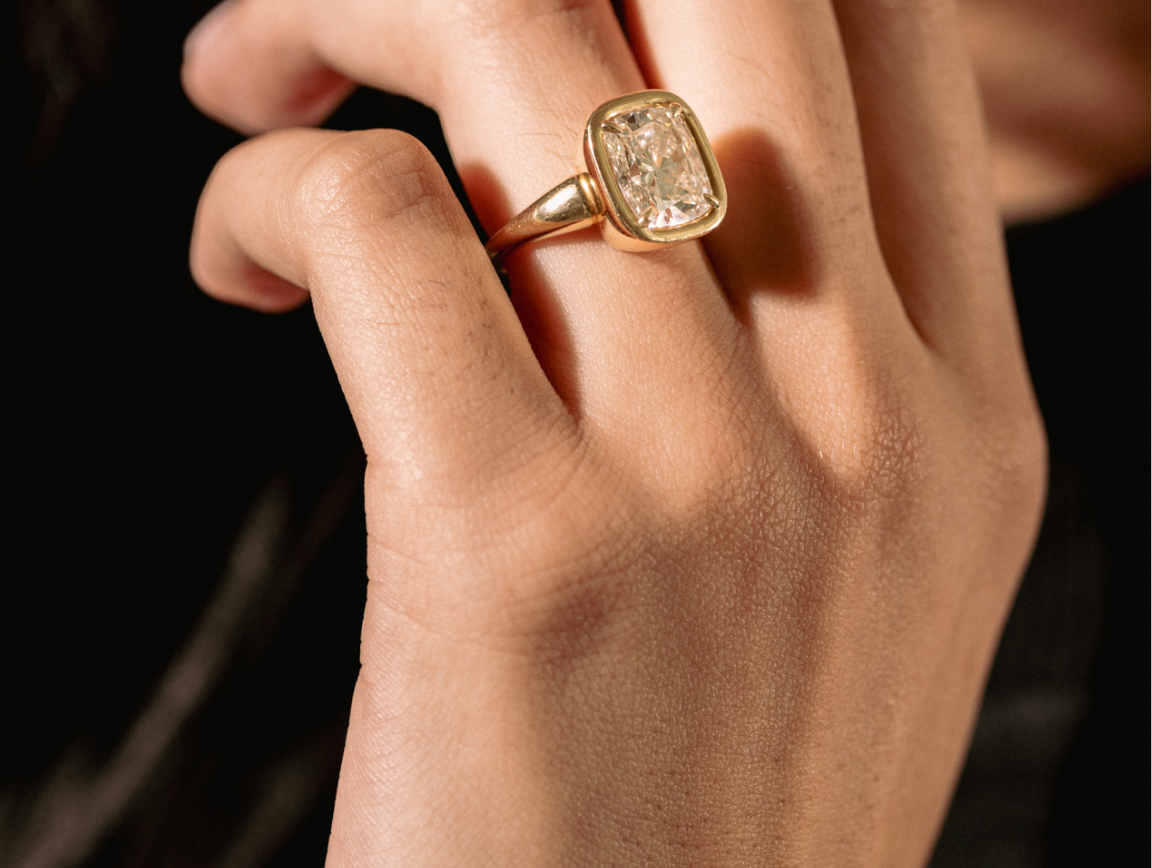
Get a bespoke design from
GOODSTONE that'll last a lifetime.


AS SEEN ON YOU


10/10 would recommend. My girlfriend and I started our custom ring design and had it completed in just a few months. Quality and accuracy is of the most importance so they didn’t stop until it was to our liking!

Anillo de compromiso Iris con un diamante de talla ovalada
SHOP NOW


Why Choose GOODSTONE for an Oval Cut Engagement Ring
Cut Quality Vetted Before the Ring Ships
Every oval in the collection is graded for an Excellent Cut equivalent, with bowtie and light return reviewed on 360 degree video before the stone is set into any ring shown here.
Solitaire, Halo, Three Stone, and East West in Stock
Oval rings ship in solitaire, hidden halo, three stone, and east west settings across 14k gold, 18k gold, and platinum, so the choice on shape and budget stays in your own hands.
Both Lab Grown and Natural Ovals in Stock
Both lab grown and natural ovals sit in the collection, with 2 to 4 carat lab stones in regular rotation alongside natural sourcing across every setting on the page here.
Bowtie Zone Polish Free for the Ring Life
A brilliant facet polish refresh comes free for the life of every oval ring, so the sparkle at the bowtie zone stays sharp year after year, alongside prong tightening and resize work.


Compare the Oval Cut to Other Engagement Ring Cuts
Oval Cut vs Asscher Cut Engagement Ring
The oval reads soft, elongated, and universally flattering, which is one reason it has held second place behind the round in engagement ring demand for over a decade. An asscher takes the opposite position with square step facets and a hall-of-mirrors effect that rewards a design eye and daily cleaning. The oval works for almost any hand and hides inclusions across the belly, where the asscher shows every mark.
Oval Cut vs Cushion Cut Engagement Ring
An oval and a cushion share the same soft-cornered instinct, with no sharp edges and no vulnerable tips to worry about. The oval lengthens the finger where the cushion sits balanced across it, and the oval faces up 5 to 10% larger than a round of equal carat while the cushion runs close to round in footprint. Buyers who want lengthening choose oval. Buyers who want a pillowy antique warmth choose cushion.
Oval Cut vs Emerald Cut Engagement Ring
Both cuts lengthen the finger through different vocabularies. An oval is a modified brilliant with 57 or 58 facets that scatter light into an all-over sparkle. An emerald uses long step facets that flash in slabs. The oval forgives inclusions and lower color grades. The emerald exposes both. Ovals suit the buyer who wants elongation without the smudge maintenance. Emeralds suit the buyer who wants clean architectural lines and the daily wipe that comes with them.
Oval Cut vs Marquise Cut Engagement Ring
Both cuts elongate, but the oval does it without the two vulnerable pointed tips that define the marquise. An oval faces up 5 to 10% larger than a round of equal carat and reads soft on the finger. A marquise stretches further and reads theatrical, mid-revival, with tips that catch on knit sleeves and demand V-tip prong protection. Ovals wear easier day to day. Marquises make more of a statement across a dinner table.
Oval Cut vs Old European Cut Engagement Ring
Both cuts hold a rounded silhouette, but the old european takes it back to hand-cut antique proportions with a high crown, small table, and visible culet through the middle. An oval reads modern and universally flattering, one of the most requested shapes of the past decade. An old european reads antique and rewards low light, glowing at dinner where the modern oval performs bright under kitchen fluorescents.
Oval Cut vs Old Mine Cut Engagement Ring
The oval reads modern classic and lengthens the finger through a symmetric ellipse. An old mine reads antique and pillowy, its squarish cushion outline hand-cut in an era before electricity to spread wider than its carat suggests. Buyers who want a modern low-maintenance stone with bright sparkle choose the oval. Buyers who want the visual weight and low-light glow of a real antique choose the old mine. Both suit almost any wardrobe.
Oval Cut vs Pear Cut Engagement Ring
An oval and a pear both elongate the finger, but the oval does it symmetrically while the pear commits to asymmetry with one rounded shoulder and one V-tip point. Ovals wear easier day to day because no tip catches on knits or hair. Pears photograph more theatrically and carry a fashion-forward look. Both face up larger than a round of equal carat, and both cost roughly 20 to 30% less per carat than round.
Oval Cut vs Princess Cut Engagement Ring
An oval reads soft, elongated, and universally flattering. A princess reads sharp, square, and unmistakably early 2000s, with 90-degree corners that catch on sweaters and shorten the visual line of the finger. Ovals face up larger than a princess at equal carat and lengthen almost any hand. Princess cuts hold onto their traditional look, which is either nostalgic or dated depending on how strongly the mall-jeweler era of that decade lands with the buyer.
Oval Cut vs Radiant Cut Engagement Ring
An oval and an elongated radiant both lengthen the finger, but the oval does it with a soft ellipse and no corners while the radiant does it with a squared silhouette and cropped corners. Ovals read modern classic and universally flattering. Radiants read modern glamour, with brighter faceting and the late-90s Hollywood associations that come with the cut. Ovals wear more neutrally day to day. Radiants push a more overtly styled look on the hand.
Oval Cut vs Round Cut Engagement Ring
The round is the neutral classic, the shape that has defined engagement rings for over a century. The oval takes the same brilliant faceting and stretches it into an ellipse that lengthens the finger and faces up 5 to 10% larger at equal carat. Ovals also cost 20 to 30% less per carat than round because they retain more of the raw diamond during cutting. Rounds win on universal recognition. Ovals win on presence per dollar.


"We don't believe in one right answer when it comes to diamonds. Lab-grown or natural stone to finished pieces, what matters is that you walk away with something exceptional. That's always been our standard."
- Blake Asaad, founder
Frequently Asked Questions
What is an oval cut diamond?
An oval cut diamond is a brilliant cut diamond shaped as an elongated ellipse with a faceting pattern adapted from the round brilliant. The cut typically has 57 or 58 facets arranged to return light evenly across the longer outline of the stone. The modern oval was refined by Lazare Kaplan in the 1950s and has stayed popular since. The shape reads softer than a marquise or pear, holds no sharp points, and looks larger on the finger per carat than a round of the same carat weight.
Does an oval cut engagement ring look bigger than a round of the same carat?
Yes. An oval cut diamond looks roughly 5 to 10% larger than a round brilliant of the same carat weight. The elongated shape spreads the surface area further across the finger, so the stone reads bigger from above. A 1 carat oval often looks closer in face up size to a 1.1 or 1.2 carat round. Two ovals at the same weight can still differ. Cut depth, length to width ratio, and how the diamond sits in its setting all affect how big it actually appears on the hand.
What is the bowtie effect in oval cut diamonds, and how do I avoid it?
The bowtie is a dark shadow shaped like a bow tie that runs across the middle of an oval diamond when light leaks through the facets instead of reflecting back to the eye. Every oval has some bowtie because of how the shape angles light. The question is how visible it is. Ask to see the diamond in a 360 degree video under normal lighting rather than a still photo. A faint, even bowtie reads as natural contrast. A heavy, opaque one stays dark and dulls the sparkle of the ring.
What is the ideal length to width ratio for an oval cut engagement ring?
Most jewelers consider 1.35 to 1.50 the ideal length to width range for an oval cut engagement ring, with 1.40 sitting at the classic middle. Ratios closer to 1.30 look rounder and shorter on the finger. Ratios past 1.55 read more elongated and start to feel like a marquise. The right one is the one you actually like in video and in person. Compare two ovals side by side on the product pages, one near 1.35 and one near 1.50, before you commit to a final shape.
Does an oval cut diamond make the finger look longer?
Yes. An oval cut diamond lengthens the look of the finger because the eye follows the long axis of the stone and adds a vertical line where the ring sits. Fingers that read short or wide tend to look more tapered with an oval than with a round of the same carat. The effect is stronger with higher length to width ratios near 1.50 than with rounder ovals near 1.30. A simple four prong solitaire amplifies the lengthening because the prongs do not break the line.
Is an oval cut diamond cheaper per carat than a round?
Yes. An oval cut diamond typically costs about 20 to 30% less per carat than a round brilliant of the same color, clarity, and quality. Rounds command the highest price because they require the most rough diamond to cut and have the strongest market demand. Ovals retain a similar brilliant facet pattern while wasting less rough, which lowers the cost. The savings let you size up at the same budget or improve color and clarity. The same gap holds for lab grown ovals compared with lab grown rounds.
What is the best setting for an oval cut engagement ring: solitaire, hidden halo, three stone, or east west?
It depends on what you want the ring to do. A solitaire shows off the shape and the elongating effect of an oval most clearly and reads as the most classic of the four. A hidden halo adds discreet sparkle and a touch of size without changing the silhouette. A three stone setting frames the oval with side stones and reads more traditional. An east west solitaire turns the oval sideways for a modern look. Try all four on the product page videos before deciding, since each changes how the stone reads on the hand.
Will an oval cut diamond ring snag on clothing in daily wear?
An oval cut diamond ring snags less than a marquise or pear because it has no sharp points. The risk depends mostly on the setting, not the stone shape itself. Tall four prong settings catch on sweaters and hair the most. Low profile or hidden halo settings sit closer to the finger and snag rarely. A bezel setting wraps metal around the stone and removes the risk almost entirely. If you wear gloves at work or have long hair, filter the collection to lower profile and bezel set options before choosing.
How does sparkle in an oval cut diamond compare to a round brilliant?
A round brilliant has more raw sparkle than an oval cut diamond because the round facet structure returns the most light back to the eye. An oval is a modified brilliant cut, so it sparkles brightly with a different rhythm. Rounds flash evenly across the face. Ovals show longer flashes that move as the hand moves. To most eyes the sparkle reads similar from a few feet away. Up close, a well cut oval can look almost as lively as a round while showing off its longer shape on the finger.
Lab grown oval cut diamond vs natural oval: which is the smarter buy?
For most buyers the smarter buy is a lab grown oval. Lab grown ovals share the identical chemistry, light return, and certification as natural stones, and they cost 60 to 80% less for the same size and quality. Natural ovals carry geological origin and tend to hold resale value better, which matters if resale is a real goal. Lab grown becomes the stronger choice if you want a larger stone, higher color, or higher clarity at the same budget. Both are stocked across the oval collection at GOODSTONE.
What color grade should I target in an oval cut diamond (G, H, I)?
Most buyers target a G or H color grade in an oval cut diamond. Both fall in the near colorless range and face up bright white in white gold, platinum, and yellow gold settings. I color is a smart pick for yellow gold or rose gold rings because the warm metal masks the faint tint. Ovals can show slightly more color at the pointed ends than rounds, so if you are sensitive to color or buying over 1.5 carats, it helps to lean toward G rather than I.
What clarity grade is safe in an oval cut diamond without visible inclusions?
VS1 and VS2 are the safest clarity grades for an oval cut diamond and stay eye clean from a normal viewing distance. SI1 can also work when the inclusion sits near the edge of the stone where prongs cover it, but ovals show inclusions in the middle more readily than rounds because of how light moves across the elongated shape. Ask to see the diamond on a 360 degree video and check the center of the stone first. VS clarity removes the guesswork at a modest premium over SI.
How do I judge cut quality in an oval cut diamond when there is no GIA Excellent grade?
GIA does not grade fancy shapes including ovals with an Excellent cut rating, so judging cut takes a few specifics. Look at length to width ratio in the 1.35 to 1.50 range, depth between 58 and 62%, table between 53 and 63%, and polish and symmetry graded Excellent or Very Good. Then watch the diamond in a 360 degree video for bowtie severity and even light return across the surface. A stone that performs well on all five points reads well cut even without the formal label.
What metal flatters an oval engagement ring most: platinum, white gold, yellow gold, or rose gold?
It depends on the color of the diamond and what the wearer prefers on the hand. Platinum and white gold flatter colorless and near colorless ovals in the D to H range because the cool metal lets the stone read bright white. Yellow gold suits warmer ovals in the I to K range because the metal masks faint color and brings warmth to the setting. Rose gold reads softer and works with most color grades when the wearer wants a romantic tone. A mixed metal ring lets you wear both finishes.
How does an oval cut engagement ring pair with a curved wedding band?
A curved or contoured wedding band is the most natural pairing for an oval cut engagement ring because the gentle arc follows the curve of the oval and lets the two rings sit flush against each other. A straight band can leave a small visible gap at the side of the engagement ring, depending on the setting height. Some buyers like that gap and choose a straight band on purpose. If you want the rings to read as one continuous line, ask the designer to shape the band against the engagement ring.
Can I set an oval cut diamond east west, and how does it change the look?
Yes. An oval cut diamond can be set east west, with the long axis running across the finger rather than pointing toward the knuckle. The setting reads modern and contemporary, makes the ring look wider on the hand than longer, and shows off the oval shape from a fresh angle. East west pairs well with low profile bezel or half bezel settings and stacks cleanly with bands. Some wearers find it easier to live with under gloves because the stone sits lower across the finger.
What carat weight makes an oval cut diamond ring look proportional on an average finger?
A 1.5 to 2 carat oval cut diamond reads proportional on an average finger in size 5 to 7 and fills the finger from edge to edge without looking oversized. A 1 carat oval works well for wearers who prefer a daintier ring or have smaller fingers. A 2.5 to 3 carat oval reads bold and modern and stays comfortable as long as the setting profile stays low. Try the ring on at the Austin showroom or watch the on-hand video on the product page before deciding, since the same carat looks different finger to finger.
What is the best oval halo engagement ring style: hidden halo, classic halo, or floating halo?
A hidden halo is the most popular oval halo style right now because the ring of small diamonds sits underneath the center stone and adds sparkle without changing the silhouette from above. A classic halo wraps the small diamonds around the oval and makes the stone look about half a carat larger. A floating halo separates the halo slightly from the center stone for a lifted, modern look. Hidden suits a clean profile, classic suits buyers who want maximum size, and floating suits a contemporary aesthetic.
How do I clean and care for an oval cut diamond ring in a prong setting?
Clean an oval cut diamond ring in a prong setting every two to four weeks with warm water, a drop of mild dish soap, and a soft toothbrush, then rinse and pat dry with a lint free cloth. Avoid harsh chemicals, ultrasonic cleaners on older stones, and impact at the pointed ends, since the tips of an oval are the most exposed part of the stone. Have a jeweler check the prongs once a year for tightness. GOODSTONE includes free prong tightening and polishing under the lifetime warranty.
Does an oval cut diamond hold resale value compared to a round?
A round brilliant diamond holds resale value better than an oval cut diamond because rounds have the strongest secondary market demand and the most standardized grading. An oval typically resells for about 20 to 30% of its retail price, similar to other fancy shapes. Lab grown ovals hold even less resale value because the lab grown market is still maturing. If resale matters most, a natural round is the safer choice. If you plan to keep the ring and love the shape, the oval is the better fit.
Get in touch with our concierge team to book a one-on-one call with us to discuss about your Engagement Ring. We will walk through the process from diamond sourcing to choosing the perfect setting.