


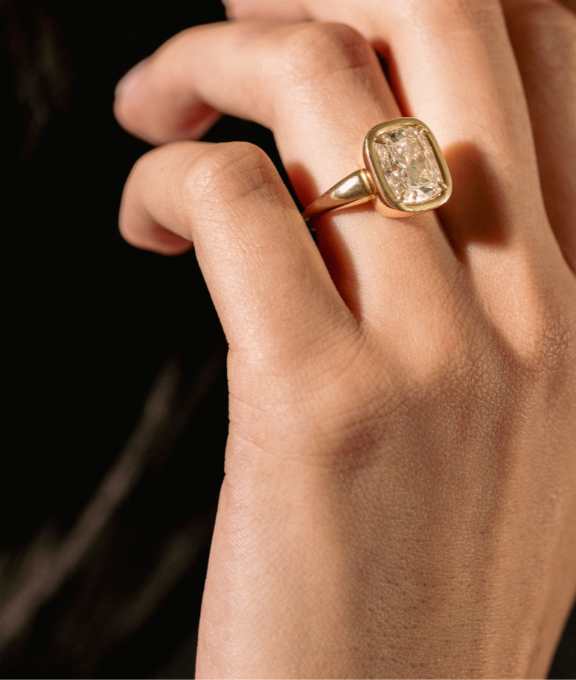



What Is a Cushion Cut Diamond?
A cushion cut diamond is recognized by its pillow-like shape. At GoodStone, we often see people pick this diamond because it mixes soft corners with strong sparkle. It is a favorite for engagement rings and many kinds of fine jewelry. There is a balance to this stone: it has an old-world look but shows light in ways that fit with newer styles.

History and Origin
The cushion cut’s story began in the nineteenth century. Jewelers at that time needed to make the most of their rough diamonds. By leaving rounded corners and using fewer facets, they could keep more carat weight than sharper shapes allowed. Its early name was the “old mine cut.” Back then, each diamond was shaped by hand, so no two were exactly alike. People wanted stones that looked bright under candlelight.
Cutting methods improved as years passed. Around the turn of the twentieth century, jewelers started using new tools and patterns. The result was the modern cushion cut. What you see today at GoodStone is the next step in that story. Our diamonds offer bigger facets that use light in more advanced ways. The shape can be square or slightly rectangular, with corners that are soft and rounded.

How Cushion Cut Differs from Other Shapes
Round brilliant diamonds are the most common, but cushion cuts feel quite different. Cushion cuts do not have sharp points or edges. Their gentle outline is less likely to chip during daily wear. Compared to shapes like princess cuts or emerald cuts, a cushion cut feels softer and less severe.
Cushion cuts are not all the same. They come in two main forms: classic and modified. The classic cushion cut has large, chunky facets. These stones give light a soft, glowing quality, often described as candlelit. Modified cushion cuts use extra, irregular facets. These smaller facets break up the light in more directions. One popular style is called the “crushed ice” cushion. This cut scatters light in all directions and looks very sparkly in both natural and artificial lighting.

Main Features
The standard cushion cut diamond has 58 facets. Modified versions can have more facets, which increases light return. At GoodStone, you can choose between several cushion cut styles. Some people prefer the larger, bold flashes of light from a classic cushion. Others like the scattered look from a crushed ice pattern. Both options give a different kind of shine, and both can be appreciated in different settings.
These stones come in many shapes. Key measurements to keep in mind are the length-to-width ratio, depth, and table. The length-to-width ratio decides if the diamond looks square, nearly square, or rectangular. If you want a cushion that looks perfectly square, pick one with a ratio from 1.00 to 1.08. Above 1.10, the stone will look more rectangular. Elongated cushion cuts, those with a length-to-width ratio from 1.10 to 1.25, have become more sought after for rings. They cover more of the finger, which many find elegant.
Proportions affect both the look and the way light moves through the stone. The ideal total depth is between 60 and 68 percent of the diamond’s width. The table, which is the flat top surface, should be between 57 and 65 percent. If a stone falls outside these ranges, it may look small for its carat size or may lose some brilliance.
The corners of a cushion cut diamond are rounded, which adds to its strength. Sharp points are prone to damage, but a cushion cut’s smooth shape reduces this risk. This is practical for anyone who plans to wear the ring every day.

Color and Clarity in Cushion Cuts
Cushion cuts retain more color than other cuts. This feature is useful if you want a colored diamond, as the shape can bring out softer shades that might be lost in round stones. On the other hand, if you are aiming for a colorless cushion cut, look for stones graded H color or above. Colors in lower categories may show warmer, yellow tones, especially because the open table makes it easy to see into the diamond’s body.
Clarity grading is another factor. The cushion shape, with its large flat top, shows inclusions more than some cuts. If you want a stone with no imperfections seen by the naked eye, pick one that is graded VS or higher. This is especially true for larger stones or those used in rings that will be viewed up close.
Price and Value
At GoodStone, price plays a big role when people choose cushion cuts. On average, cushion cuts cost less per carat than round brilliants. A well-cut one carat cushion may cost about $2,997. The same grade in a round brilliant may be $4,041 or even higher. The lower price for cushion cuts means you can often afford a bigger stone or one with better color and clarity for the same budget.
Cushion cut diamonds also hold their value well. Their classic profile keeps them in demand. The market for fancy cuts, including cushion shapes, has grown over the past decade. With both the traditional and modern look mixed into one stone, they remain a practical option for wedding and statement rings at GoodStone.
Vocabulary and Terms
You may hear several terms when looking at cushion cuts. Classic cushion, modified cushion, chunky cushion, and crushed ice all describe the way a diamond is faceted. Classic cuts use larger, regular facets that look “blocky” and create broad flashes of light. Modified styles have more facets, which means smaller flashes, often compared in the trade to crushed ice or sugar.
No standard cut grade exists for cushion cut diamonds. Laboratories like GIA give cut grades to round diamonds, but not to cushion cuts. This puts more responsibility on GoodStone’s team to help you judge quality. It also means you should look at symmetry, polish, depth, and table measurements, these all affect how the diamond appears in real life.
Shape and Setting Options
Cushion cut diamonds work well in many types of jewelry designs. Their soft square or rectangular outline pairs with classic solitaire settings or more ornate halos. For those who want a vintage-inspired look, halo settings with rows of smaller diamonds can give the illusion of a bigger center stone and add more visual light. At GoodStone, we also see requests for three-stone rings and settings with hidden halos, tiny rings of diamonds placed under the main stone to provide sparkle from every angle.
Modern preferences have shifted toward thin, minimal prongs that let more light reach the diamond. This supports the strength of the cushion cut. The smooth corners resist chips much better than sharp-edged stones, so a GoodStone cushion cut can hold up to everyday use.
Color Nuance and Visual Appeal
One complexity with cushion cuts comes from how color shows through the stone. The facet design can make color pool in the center or gather more near the corners, especially in larger stones or those with off-rectangular shapes. For this reason, it is helpful to view the diamond in several lighting conditions. GoodStone recommends examining your stone from different angles, in daylight as well as under indoor lighting, to decide if the color works for you.
Grading and Buying Tips
Choosing a cushion cut diamond takes some care. With round diamonds, the GIA gives a cut grade, which helps guide the buyer. In cushion cuts, this is missing. Here, you must depend on depth, table, symmetry, and polish. These features have a direct impact on how your diamond looks and sparkles. At GoodStone, our expert staff can supply these key measurements and answer questions about these grades and what they mean for you.
Lab-grown cushion cuts also play a role in the market, including here at GoodStone. These stones are nearly identical to natural diamonds in visual appearance and durability. The main difference is the source, and sometimes small patterns seen only under strong magnification. For those seeking a larger or clearer stone without spending above a key price point, lab-grown cushion cuts can be a practical choice.
Market Trends at GoodStone
At GoodStone, interest in elongated cushion cuts and hidden halo settings has grown each year. People want rings that appear large on the hand, and cushion cuts offer that while keeping a comfortable, welcoming profile. Our custom jewelry requests often involve specific preferences for shape, ratio, and the setting style. This personal connection is part of what makes cushion cuts so loved here.
How to Choose
When you choose a cushion cut diamond, focus on the most important traits for your taste. If shape matters most, decide if you want a square or rectangular look. Length-to-width ratio is your guide. If you care about how the stone reflects light, choose between a classic or crushed ice style. Proportions, table, depth, corners, will impact the face-up appearance. Always check for color and clarity, since the cut can reveal both more than other shapes. Durability will be on your side due to the rounded edges.
Settings at GoodStone can be tailored to your stone. Whether it is a classic solitaire or a busy halo, cushion cuts hold their own. The style you choose can either amplify the stone’s presence or allow the subtleties of your diamond to shine quietly.

Closing Thoughts
A cushion cut diamond is rooted in tradition and shaped for comfort and brilliance. It has a softness in outline, yet a strength in design, due to its rounded corners and classic faceting. At GoodStone, it remains a mainstay for those who want beauty that feels personal and quietly elegant. Each stone offers different color, shape, and brightness, and each buyer can find a cushion cut that matches their idea of beauty.
Focus on the features that matter to you, ratio, shape, sparkle, and quality. Do not be afraid to ask questions and to view your choices in person. GoodStone is here to help guide you with facts, measurements, and genuine support for your search. The cushion cut, in all its forms, remains a premier option for marking a promise or celebrating a milestone, with a style that endures from generation to generation.



Dejar un comentario