





Active Lifestyle? The Best Ring Settings for Climbers, Nurses, and Hands-On Jobs
You work with your hands every day. Maybe you're a nurse pulling long shifts at the hospital. Perhaps you spend weekends climbing rock faces. Or you work in construction, manufacturing, or another field where your hands take a beating. You want an engagement ring, but you're worried. Will it catch on equipment? Will it break? Will you lose the stone?
These concerns are real. The wrong ring can become a safety hazard or a constant source of stress. But the right one? You'll barely think about it, even during your toughest days.

Designed for real hands, real work, and real life.
Why Your Job Matters When Choosing a Ring
Sarah is a pediatric nurse. She bought a traditional solitaire ring with tall prongs. Within three months, she'd torn through dozens of gloves. The prongs caught on everything. She started leaving her ring at home during shifts. That wasn't what she wanted.
Mike climbs every weekend. His first ring had a raised setting that scraped against rock holds. After nearly losing the diamond on a climb, he switched to something different. Now he climbs without worry.
These stories repeat across professions. The solution is choosing designs that work with your life, not against it.

Choose a ring that supports your life, not one that slows it down.
Settings That Actually Work
Bezel Settings Lead the Pack
A bezel setting wraps metal completely around your stone. Think of it as armor for your diamond. The stone sits protected inside a metal frame, with no prongs to catch or bend.
Climbers prefer bezels because they create a smooth surface. No sharp edges means no snagging on rope or rock. Nurses find them practical, too. Gloves slide on and off without catching. The stone stays secure even after years of handwashing and sanitizer use.
The metal rim does more than protect. It makes the ring easier to clean. Bacteria and dirt have fewer places to hide compared to prong settings. For healthcare workers following strict hygiene protocols, this matters.

The perfect nurse friendly bezel setting seen on a Penumbra Bezel Set Engagement Ring With Elongated Radiant Cut.
Flush Settings Sit Even Lower
In a flush setting, the stone sits level with the band itself. The metal surrounds the stone, but everything stays flat. Your finger feels almost like you're wearing a plain band.
This design works well for people who wear gloves constantly. Emergency room doctors choose flush settings. So do food service workers and lab technicians. The smooth surface means gloves won't tear. Equipment won't catch.
Some people worry that flush settings look less elegant. But modern designs prove otherwise. Jewelers now create flush settings with artistic metalwork around the stone. You get safety without sacrificing style.

Flat, secure, and designed for hands that never stop moving, the Burnished Solitaire Engagement Ring with Emerald Cut Diamond is great for those who are active.
Channel Settings for Multiple Stones
Want several stones instead of one? Channel settings place stones in a row between two metal walls. The walls protect the stones from side impacts.
Dental hygienists often choose channel settings. The design stays low while still allowing multiple diamonds. Construction workers like them, too. The stones stay protected even when handling rough materials.
One downside exists. Dirt can accumulate between the stones if you work with dusty or grimy materials. Regular cleaning becomes more important with this style.

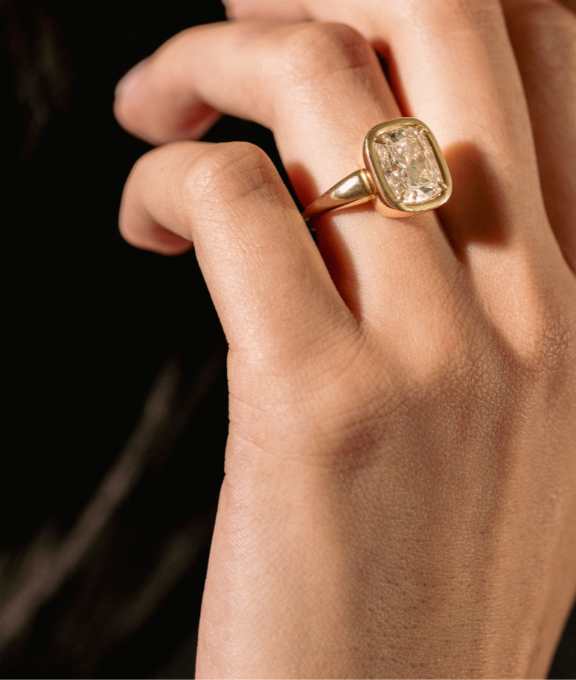
Multiple stones, protected by design, look at this beautiful Chunky Channel Set Engagement Ring with Elongated Cushion Cut Diamond.
Why Traditional Prongs Often Fail
Prong settings remain popular for good reason. They show off the stone beautifully. Light enters from all angles. But for active professions, problems arise quickly.
Prongs bend. They catch on clothing, equipment, and gloves. Over time, they loosen. A loose prong means a lost stone. For someone working with their hands daily, checking prongs becomes a constant worry.
Some jewelers create low-profile prong settings specifically for active wearers. These sit closer to the band. Four prongs offer more security than six, oddly enough. Six thin prongs bend more easily than four sturdy ones. Still, even low prongs present more risk than bezel or flush designs.

Low-profile prongs help, but they still can’t match bezel-level security.
Metals That Handle Real Work
Platinum Tops the Durability Chart
Platinum weighs more than gold, but that density brings strength. The metal resists bending better than any gold alloy. Scratches happen, but platinum doesn't lose metal when scratched. It simply displaces.
For nurses, platinum offers another benefit. It's naturally hypoallergenic. Frequent handwashing and sanitizer use can trigger skin reactions with some metals. Platinum won't cause these problems.
The metal does develop a patina over time. Some people polish it away. Others like the worn look. It tells a story of daily wear and real life.

Scratch-resistant, skin-safe, and undeniably strong.
Titanium Brings Lightweight Strength
Titanium weighs less than steel but offers similar strength. Rock climbers often choose titanium because the lightweight doesn't affect grip or movement. The metal resists corrosion from sweat and chalk.
Manufacturing workers appreciate titanium's scratch resistance. The metal maintains its appearance despite rough conditions. It won't bend under normal pressure either.
One limitation exists with titanium. Resizing requires special equipment that not all jewelers have. Choose your size carefully from the start.
Tungsten Offers Maximum Hardness
Tungsten ranks as the hardest jewelry metal available. Scratching tungsten requires diamond-level hardness. For mechanics and woodworkers, this means their ring looks new even after years of work.
But hardness creates brittleness. Tungsten can shatter under extreme pressure rather than bend. For jobs involving potential crushing hazards, this becomes a safety feature. The ring breaks away instead of crushing your finger. For other jobs, shattering might mean replacing the entire ring.
Gold Alloys Balance Tradition and Function
Many people want gold despite its softness. The solution lies in choosing the right alloy. Fourteen-karat gold contains more strengthening metals than eighteen-karat. It handles daily wear better while still looking like traditional gold.
White gold offers similar durability to yellow gold at the same karat level. Rose gold, with its copper content, actually provides slightly more durability than yellow or white gold.
Skip twenty-two or twenty-four karat gold entirely. These purities bend too easily for active wear. Save them for special occasion jewelry instead.
Emerging Metals Worth Considering
Black zirconium started in the aerospace industry. Now jewelers use it for rings that need extreme durability. The metal starts silver, then transforms to black through heating. Scratches reveal silver underneath, creating a unique worn pattern over time.
Stainless steel might seem unusual for engagement rings. But surgical-grade steel offers excellent durability at a lower cost. Some couples choose steel temporarily while saving for their preferred metal. Others stick with it permanently.
Choosing Stones That Last
Diamonds earn their reputation through hardness. At 10 on the Mohs scale, only another diamond can scratch them. This hardness makes diamonds ideal for daily wear in tough conditions.
Lab-grown diamonds offer identical hardness to mined diamonds. They cost less, too. For couples prioritizing durability over origin, lab diamonds make sense.
Sapphires rate 9 on the Mohs scale. They handle daily wear well, though not quite as well as diamonds. Blue sapphires are common, but the stones come in nearly every color. White sapphires offer a diamond-like appearance at a lower cost.
Avoid soft stones entirely. Opals, pearls, and emeralds won't survive active lifestyles. They scratch, chip, and break under conditions that diamonds barely notice.

For hands-on lifestyles, stick to stones that won’t crack under pressure.
Real Safety Concerns You Should Know
Healthcare Settings Have Strict Rules
Hospitals often restrict jewelry for safety reasons. Rings can tear gloves during critical procedures. They harbor bacteria even after washing. Some units ban stones entirely, allowing only smooth bands.
The CDC recommends against wearing rings with raised settings in clinical environments. Many nurses wear simple bands during shifts, keeping their engagement rings for days off. Others choose rings specifically designed to meet hospital guidelines.
If you work in healthcare, check your facility's specific policies. Rules vary between hospitals and departments. Operating room staff face stricter requirements than administrative staff.

In healthcare, safety comes first — even for your jewelry.
Industrial Jobs Present Different Risks
Manufacturing and construction work create crushing and catching hazards. A ring caught in machinery can cause severe injury. Ring avulsion, where the ring pulls skin and tissue off the finger, remains a real risk.
Some workers remove rings entirely during work hours. Others choose silicone bands that break under pressure. If you keep wearing metal, ensure your ring fits properly. Too loose means catching hazards. Too tight prevents emergency removal.
Electricians face additional concerns. Metal rings conduct electricity. Even low-voltage shocks become dangerous with a conductive ring. Non-conductive materials or no ring at all become the safe choice.

Some jobs are tough on hands — and even tougher on rings.
Outdoor Activities Need Special Consideration
Rock climbing puts unique stress on rings. The constant gripping and releasing can loosen settings. Chalk builds up in crevices. Rings can catch in cracks, potentially causing injury.
Many climbers remove rings while climbing, wearing them only between climbs. Others choose completely smooth designs that won't catch. GoodStone offers several styles that climbers have tested and approved for regular wear.
Swimmers should know that chlorine affects metals over time. It can weaken prongs and cause discoloration. Salt water causes different but equally problematic reactions. Remove rings before swimming or choose metals specifically resistant to chemical damage.

From rock walls to ocean waves, your ring should fit your lifestyle.
Keeping Your Ring in Good Shape
Clean your ring weekly if you work in healthcare. Use warm water and mild soap. A soft toothbrush reaches into crevices without scratching. Avoid harsh chemicals that might damage the metal or loosen stones.
For outdoor workers, remove chalk and dirt buildup promptly. These substances can dull stones and corrode metal over time. Pay special attention to the areas where the stone meets the setting.
Schedule professional inspections every six months. A jeweler checks for loose stones, worn prongs, and metal fatigue. Catching problems early prevents losing stones or damaging the ring beyond repair.
Your work exposes your ring to unusual stress. Monthly self-checks help too. Gently tap the ring near your ear. A rattling sound means something's loose. Run your fingernail along the prongs. If they catch or feel sharp, they might be lifting.

Clean, inspect, repeat — your ring will thank you.
Comfort Features That Matter Daily
Wide bands distribute pressure better than thin ones. If you grip tools or equipment regularly, a wider band prevents the ring from digging into your finger. The extra metal also resists bending and warping.
Comfort-fit bands have rounded interiors. The curve means less pinching and easier removal when fingers swell. Nurses working long shifts appreciate this feature. So do people working in hot environments where their hands swell regularly.
The finish affects daily wear, too. Matte or brushed finishes hide scratches better than high polish. They also provide a slightly better grip, which is helpful when wearing gloves. Polished rings look beautiful but show every mark.
Consider how the ring sits between your fingers, too. Some designs have squared edges that can irritate adjacent fingers during repetitive motion. Rounded edges prevent this problem.

Comfort starts with the band — width, fit, and finish all matter.
Making Your Final Decision
Start by honestly assessing your daily activities. How often do you wear gloves? Do you work with chemicals? How much impact do your hands take? Your answers guide your choices.
Visit jewelers who work with active professionals. They'll have specific recommendations based on your job. GoodStone regularly helps nurses, construction workers, and outdoor enthusiasts find appropriate rings. The staff knows which designs hold up under real-world conditions.
Try on different styles before deciding. Wear them for several minutes. Move your hands as you would at work. Does anything catch? Does the ring feel secure? Small annoyances in the store become major problems after months of wear.
Consider having two rings. Some people wear a simple band at work and their engagement ring during off hours. This protects the engagement ring while still wearing a symbol of commitment daily.
Budget for the right ring, not the cheapest option. A well-made bezel setting in platinum costs more initially but needs fewer repairs. A poorly made prong setting might lose stones repeatedly, costing more in the long term.
Think about your career trajectory, too. Will your job become more or less hands-on over time? A ring that works for your current position should also work for reasonable career changes.

Your lifestyle comes first. Your ring should match it with lasting comfort and strength.
Your Ring, Your Life
Your profession shapes your daily routine. Your ring should fit into that routine seamlessly. The right setting protects your stone. The right metal handles your work environment. The right design keeps you safe while looking beautiful.
You don't need to sacrifice style for practicality. Modern jewelry design offers both. Whether you're saving lives in an emergency room, building homes, or conquering mountains, a ring exists that works with your lifestyle.
Take time finding that ring. Ask questions about durability and maintenance. Share your concerns with jewelers who take them seriously. Your ring will be with you through thousands of work days. Make sure it's ready for every single one.
The perfect ring for an active professional is about finding what works for your specific situation. When you find that ring, you'll know. It'll feel right on your finger during your toughest work day and your happiest celebration.



Dejar un comentario