





How Much Should You Spend on an Engagement Ring in 2026?
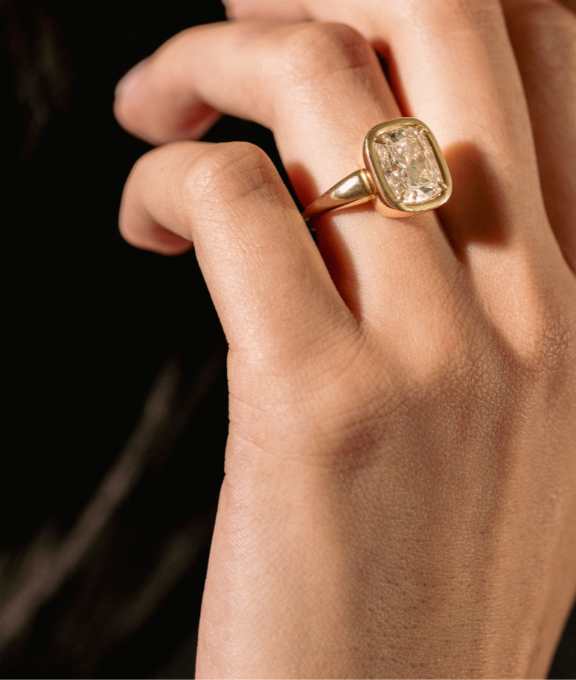
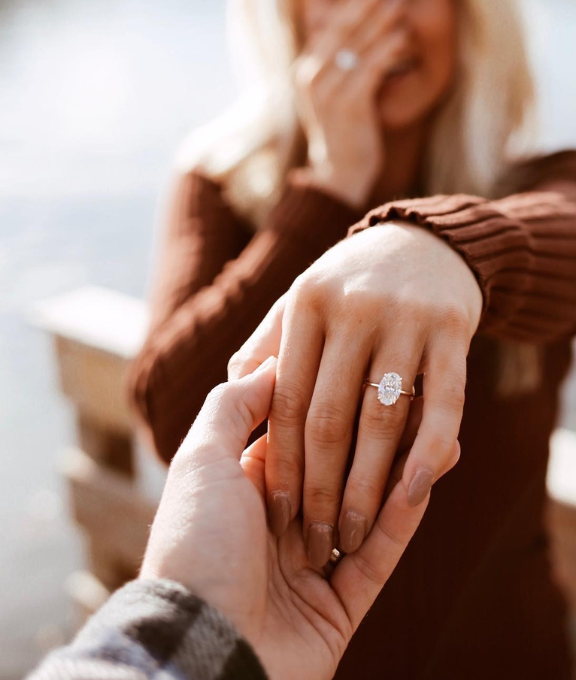
There is no amount you are supposed to spend on an engagement ring. The familiar “three months’ salary” line was written by a diamond company’s ad agency in the last century to sell more diamonds, not handed down as any rule. Real budgets are far below it. The US average is around $5,200, most people spend under $6,000, and a third spend under $3,000, whether it's for an oval cut solitaire or an east west cushion cut ring. The number that fits you is the one you can pay in cash, and a few smart choices stretch it further than any salary multiple ever could.

The best budget is one that reflects your priorities, your finances, and the life you want to build together.
The Origin of the Three Months’ Salary Rule
It helps to know that the rule you are measuring yourself against was invented to sell you something. In the 1930s, the diamond company De Beers, working through its ad agency, set out to grow diamond sales, and the months-of-salary guideline was one of the tools it used. It started at one month’s salary, climbed to two by the 1980s, and later reached three. Each step was a marketing decision, not a budgeting one.
The same campaign produced the line “A Diamond Is Forever,” written in 1947. Before any of this, diamond engagement rings were not even the norm. On the eve of World War II, only about 10% of engagement rings featured a diamond, compared with roughly 80% by the end of the century.
The rule is fading now, though unevenly. In a 2026 survey, only 24% of married or engaged people had spent three months’ salary, and the share who followed it was highest among Gen Z at 40%, not among the oldest buyers. So the pressure to hit a salary multiple is real, but it has nothing to do with tradition or etiquette. It is an old advertisement, nothing more.

One of the most famous engagement ring rules was created by marketers, not financial advisors.
Real Spending in 2026
Set against that myth, the real numbers are reassuring. The average US engagement ring is about $5,200, and most people spend well under that headline. Nearly two-thirds spend less than $6,000, and a third spend under $3,000. At the other end, only about 8% spend between $10,000 and $15,000, and roughly 5% go higher.
Different trackers report somewhat different averages depending on method, with some appraisal-based sources citing $6,500 or more. Still, every credible source agrees the typical buyer is nowhere near three months’ pay.
Spending varies with income and location. Mid-Atlantic states average around $6,900, among the highest, while Midwest states are closer to $4,900. The pattern follows local income more than anything else. There is also a wide gap between what people say a ring should cost and what they spend, with stated ideals often running thousands above what people really spend, which is the salary myth still tugging at expectations.

Actual engagement ring budgets look very different from popular myths. Most buyers spend far less than the numbers often discussed online.
The Lab-Grown Effect on Budgets
The biggest reason average spend has drifted down is the move to lab-grown diamonds. By 2025, a majority of engagement rings, around 61%, had a lab-grown center stone, up sharply from a few years earlier. The reason is plain in the price. Set the two finished rings beside each other, and the 2025 averages land near $4,300 for a lab-grown ring against about $7,000 for a natural one, noticeably higher, roughly 60% more.
As a loose stone, a 1-carat lab-grown ran $1,000 or less at retail, compared with roughly $4,200 for a natural stone, and the lab figure has kept sliding as production capacity has grown.
For the same budget, a lab-grown diamond buys a noticeably larger or finer stone, which is why average stone sizes have grown even as average spend has fallen. One caveat is worth noting. Because lab-grown prices continue to fall, these stones have weak resale and trade-in value, so a lab-grown diamond is a choice for the ring itself, not for resale. It is worth knowing your partner’s view, but many buyers now treat lab-grown as the default value pick.

Lab-grown diamonds have transformed the engagement ring market. Buyers are often choosing larger stones while spending significantly less overall.
Making the Budget Go Further
Whatever number you settle on, how you allocate it matters more than the number itself. A well-spent $4,000 ring can outshine a poorly spent $8,000 one. The choice rarely arrives as a spreadsheet. It often happens at a counter, with a designer turning two stones under the light while you decide where the money should land, and the budget shifts a little each time you say which one you would rather wear every day.
Cut as the First Priority
Protect the cut before anything else. It is what makes a diamond sparkle, and it is the one quality to guard. An excellent or ideal cut drives brilliance, can make a stone look larger than its weight, and visually softens minor color or clarity differences. If you trade anything away to stay in budget, do not let it be the cut.
Where to Save Without Losing Sparkle
The other three of the four Cs have comfortable value sweet spots:
-
Color: Near-colorless grades from G to J look white once set, at a fraction of the cost of the top D, E, and F grades.
-
Clarity: An eye-clean SI1 or SI2 stone looks identical to a flawless one without magnification.
-
Carat: Prices jump at the round numbers, so a stone a hair under, like 0.97 or 1.47 carats, costs less and looks the same on the hand. Elongated cuts like oval or pear can also look larger than a round of equal weight.
The setting is the last lever. A solitaire in 14k gold costs less than a halo or pavé-heavy design in platinum, and that is a deliberate trade-off, since the setting is also where the design’s character comes through. The mistake worth avoiding, and the one that costs the most, is choosing a stone first and forcing a setting to work around it. Designing the stone and setting together heads off the kind of mismatch that drives a lot of returns.
Spending Without the Pressure
If the number stresses you, it helps to see where the pressure is coming from. In a 2026 survey, 51% felt pressure to spend big from society at large and 49% from social media, while only 35% felt it from their partner. Nearly two-thirds said rings have become a financial burden, and 74% said they would rather start married life debt-free than have a pricey ring. The audience pushing you toward a higher number is mostly strangers, while the one person you are buying for would usually prefer you spend less.
That points to a plain rule on financing. Most financial guidance is to avoid going into debt for a ring, to save in cash first, and, if you do finance, to use the lowest-interest option and pay it off before any promotional period ends. Splitting the cost is also becoming increasingly common, with most women in a late-2025 report willing to contribute to their own rings.
Letting the budget lead is easier when a single source offers both lab-grown and natural diamonds, as GOODSTONE does. On the custom side, a designer works one-on-one with the client to balance the budget between the stone and the setting, which is the central trade-off in this decision.
Pricing that trade-off incurs no upfront cost, since the opening consultation carries no deposit. The $500 that applies once an estimate is approved is credited toward the final ring, so the money put down early still buys diamond.

Many buyers feel pressure from social media, advertising, and outside expectations. In reality, the people who matter most often place far less importance on the final number.
Setting a Number You Can Live With
The most useful budget is the one you set on purpose before any ring is in front of you. Pick an amount you can pay in cash and would not regret, with the salary formula and the social feed left out of the math.
Put cut at the top, lean on lab-grown if you want more stone for the money, and treat the stone and setting as one decision so the two stay in proportion. Once set, stick to that number. The buyers happiest with their choice usually spent on purpose, not at the top of their range.

A ring budget works best when it is chosen intentionally before shopping begins. Deciding on a number in advance helps keep emotions and outside pressure from influencing the decision.
Frequently Asked Questions
How much should you spend on an engagement ring?
There is no required amount. Spend what you can pay in cash without taking on debt. The US average is about $5,200, but nearly two-thirds of buyers spend under $6,000 and a third spend under $3,000, so a comfortable number is well within the norm.
Is the three months’ salary rule real?
No. It came from De Beers diamond-industry advertising in the 20th century, starting at one month’s salary in the 1930s and climbing to three. It was designed to drive spending, not handed down as any tradition or etiquette. Only about a quarter of couples follow it today.
What is the average cost of an engagement ring in 2026?
The US average is around $5,200, while some appraisal-based trackers report $6,500 or more, depending on the method used. A blended 2026 figure is lower, near $4,600, as lab-grown stones pull the average down while stone sizes rise. Most buyers spend below the headline number.
How much is a 1 carat engagement ring?
A 1-carat lab-grown diamond averaged around $1,000 or less at retail in 2025, while a comparable 1-carat natural diamond averaged roughly $4,200. The final ring price then depends on the setting, metal, and any side stones. The type of stone you pick moves the number more than anything else.
Are lab-grown diamonds cheaper than natural diamonds?
Considerably. A lab-grown diamond ring averaged about $4,300 in 2025, while a natural-diamond ring sat near $7,000, about 1.5 times as much. The same budget can often buy a larger or higher-quality lab-grown stone.
Do lab-grown diamonds hold their value?
Not really. With retail prices still soft, a lab-grown stone resells for little, so it makes sense as a ring to wear rather than an asset to recoup. A natural diamond keeps a larger share if resale weighs on you, though no diamond ring returns more than a slice of what you paid.
What should I prioritize in an engagement ring, cut or carat?
Prioritize cut first. An excellent or ideal cut enhances the brilliance that makes a stone look alive and can make the diamond appear larger than its weight. Carat is the lever to flex last, after cut, color, and clarity are where you want them.
How can I make an engagement ring look bigger on a budget?
Choose an excellent cut, a near-colorless color grade from G to J, an eye-clean SI1 or SI2 clarity, and a carat weight a hair under a round number, such as 0.97 or 1.47. An elongated cut such as oval or pear, or a halo setting, also adds visual size for the money.
Should I finance an engagement ring?
Most financial experts advise against it and recommend saving cash first. If you do finance, use the lowest-interest option, such as a 0% introductory-rate card, and pay it off before the promotional period ends to avoid interest. Going into debt for a ring is the outcome most couples say they would rather avoid.
Is $5,000 a good budget for an engagement ring?
Yes. $5,000 is right around the national average and is enough for a well-cut 1- to 2-carat lab-grown center stone in a quality setting, or a smaller natural stone. How you allocate it across cut, color, clarity, and the setting matters more than the total.
Who pays for the engagement ring?
Traditionally, the proposer pays, but couples now split the cost as often as not. A late-2025 report found nearly 71% of women willing to contribute to their own ring.



Deja un comentario (todos los campos son obligatorios)