





Which Diamond Shapes Show Color (Yellow Tint) the Most?
A diamond’s shape decides how much of its body color reaches the viewer, and the gap between shapes is wide. Step cuts lay the center of the stone open and let any yellow read straight through, while a round brilliant breaks light into so many small flashes that the same warmth disappears. A round can therefore sit a full grade or two below a step cut, like an emerald, and still face up as white as the step cut. Pick the shape first, then match the color grade to its forgivingness.

The shape of a diamond does more than define its silhouette. It also determines how much body color you'll see.
Step Cuts and Body Color
A wide, flat table with long parallel facets gives body color nowhere to hide, so the step cuts reveal more of it than any other family of cuts.
The Open Table
Emerald and Asscher cuts use long, straight facets that run in parallel rows toward the center, cut to sweep light across the stone in broad flashes rather than break it into sparkle. The wide, flat table leaves the body color in plain view down the center of the stone. With no restless sparkle to hold the attention, any warmth in the stone reads straight through.
A K-color emerald cut looks openly warm for that reason, while the same grade in a busier silhouette might have passed for near-colorless. The color grade matters more for a step cut than for a round shape, because a step cut passes back every bit of tone it is given.

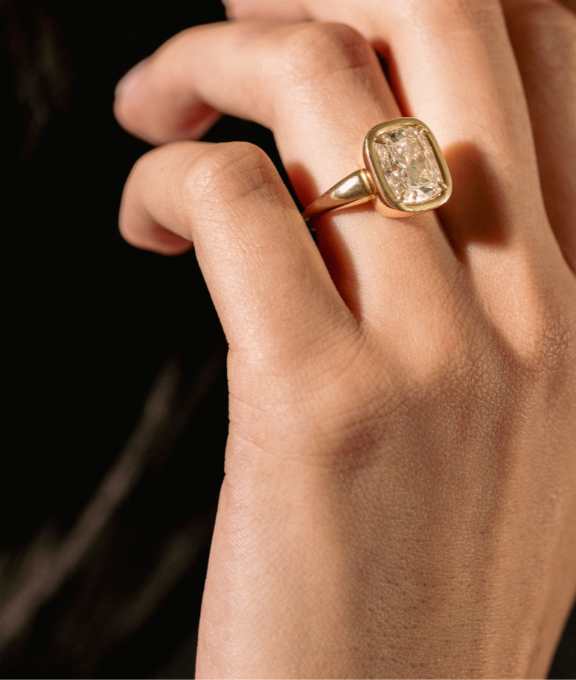
The broad, open table of an emerald or Asscher cut creates a striking window into the diamond. It's a beautiful feature that rewards higher color grades with an effortlessly bright appearance, like in this beautiful Finest Compass Solitaire Engagement Ring with Emerald Cut Diamond.
Asscher vs. Emerald
Between the two step cuts, the Asscher gives up color a touch more readily than the emerald. Its square outline and converging facets funnel any body tone inward, concentrating it toward the middle of the stone, the first place a viewer looks. An emerald cut spreads its warmth differently, letting color gather along the long facet corridors down the stone’s length and settle into the stepped corners.
In a warmer emerald cut, the effect turns soft and buttery, a honeyed glow pooling in those corridors that can pass for a deliberate vintage look rather than a flaw. That is the trade-off with a step cut. Whatever body color the stone has will show plainly to the buyer.

Although both are step cuts, Asscher and emerald diamonds' unique facet patterns create distinct personalities while highlighting the beauty of antique-inspired design.
The Middle Group of Elongated Brilliants
Between the step cuts and the round brilliant is a middle group that shows some color without broadcasting it. These are the brilliant and modified-brilliant cuts with stretched or softened outlines. They break up enough light to disguise part of a stone’s warmth, but their geometry leaves a few places where tone still gathers.
-
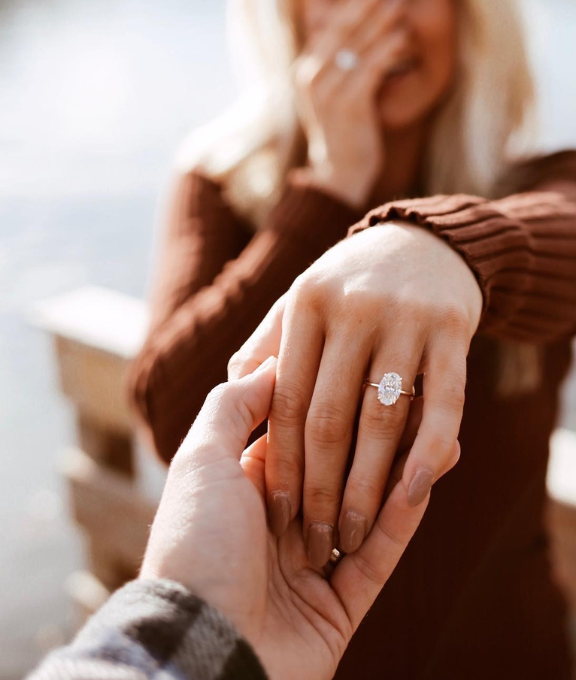
Oval: The stretched outline opens a wide face-up area where warmth spreads across the center, and the faint bow-tie shadow typical of ovals can deepen the effect.
-
Pear: The single-pointed tip concentrates the warm tone to one spot, so color gathers at the point while the rounded end stays brighter.
-
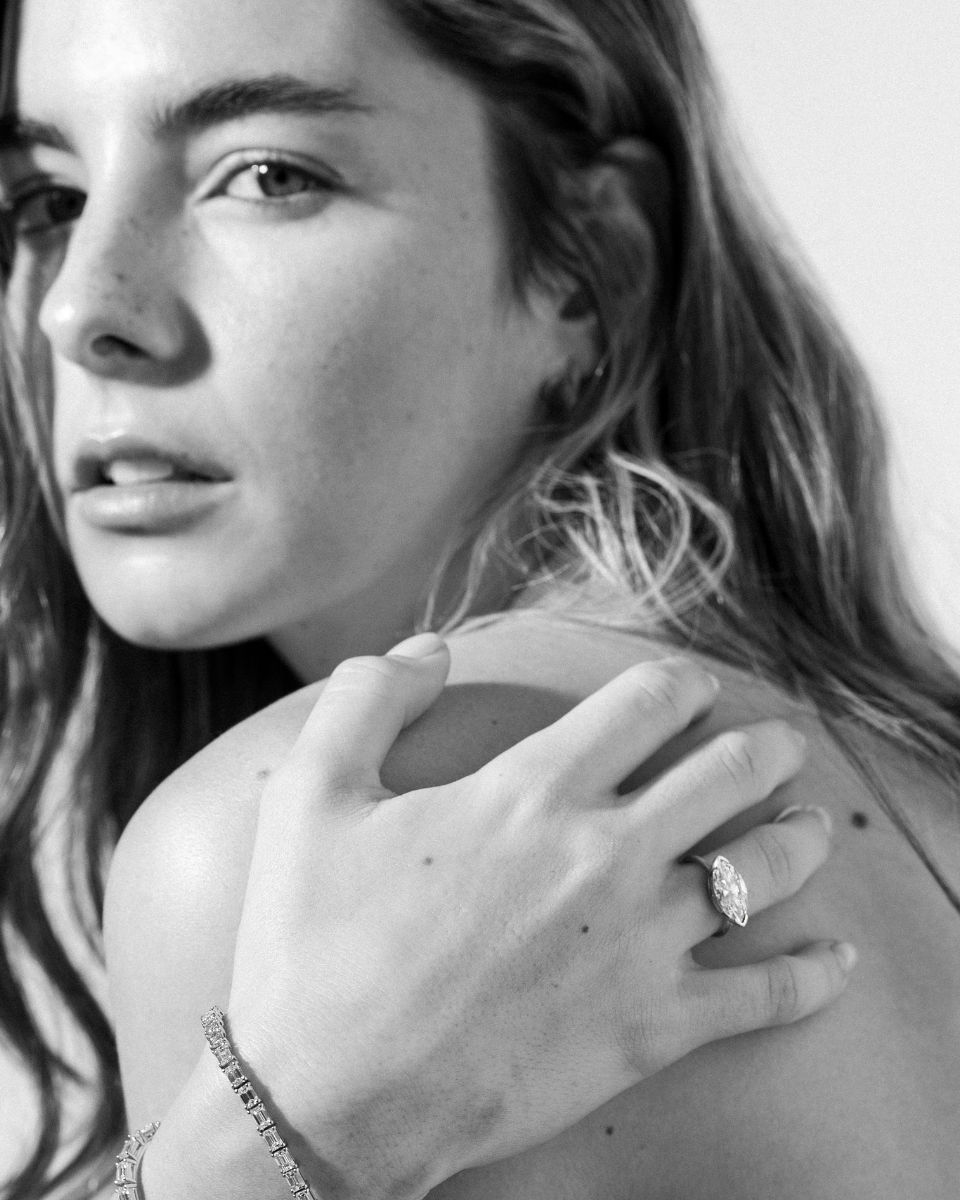
Marquise: Two points give warmth two places to collect, and the shape usually shows the same bow-tie shadow down the middle.
-
Cushion and radiant: Denser, sparklier facet patterns put these nearest the forgiving edge of the middle, blurring color better than the elongated cuts and holding a near-colorless look a grade lower.
None of these reveal color the way a step cut does, and none hide it as completely as a round. They give a buyer room to trade a grade for size, or to lean into warmth on purpose, so long as the choice is made with the outline’s soft spot in mind.

Oval, pear, marquise, cushion, and radiant cuts strike a beautiful balance between sparkle and softness.
How the Round Brilliant Masks Color
The round brilliant hides body color better than any other shape, the same trait that lets it forgive so much elsewhere. Its 57 to 58 facets throw light off in every direction, and that constant sparkle hides the tone underneath.
A faint yellow that would read plainly through an emerald table gets lost in the motion. This is why a round can drop to an H or I color and still face up white in a white metal setting, a full grade or two below what a step cut needs to look the same. That same busy faceting lets a round tolerate a wider range of color grades than any rival silhouette.

The round brilliant remains the most forgiving diamond shape when it comes to body color.
Carat Size and Visible Color
The larger the stone, the more obvious its color. A bigger diamond gives body tone more room to register. A slight warmth invisible in a 0.80-carat stone can be plain in a 2-carat stone of the identical grade, and the same tone deepens again as the stone climbs toward 3 or 4 carats. Size and shape stack on top of each other.
A large emerald cut is the most color-revealing combination a buyer can choose, with the open table and the extra size working in the same direction. Many buyers size up in color grade as the carats climb, reaching for the colorless grades once a stone grows past a couple of carats.

As diamonds grow larger, body color becomes easier to see. Balancing carat weight with the appropriate color grade helps maintain a bright, balanced appearance.
The Role of Metal Color
Metal is the one variable a buyer fully controls after the stone is chosen, and it can move a diamond’s apparent color by as much as a grade or two. The setting rests against the stone and lends its own color to what a buyer sees.
White Gold and Platinum
White gold and platinum give a near-colorless diamond an icy brightness and make any warmth in the stone more apparent by contrast. A colorless white surrounding a faintly yellow stone throws the tint into relief. These metals suit the higher color grades, roughly D through H, where there is little warmth left for them to expose.
Pair a white metal with a warmer step cut or a large stone and the setting works against you, sharpening the exact color you were hoping to play down.
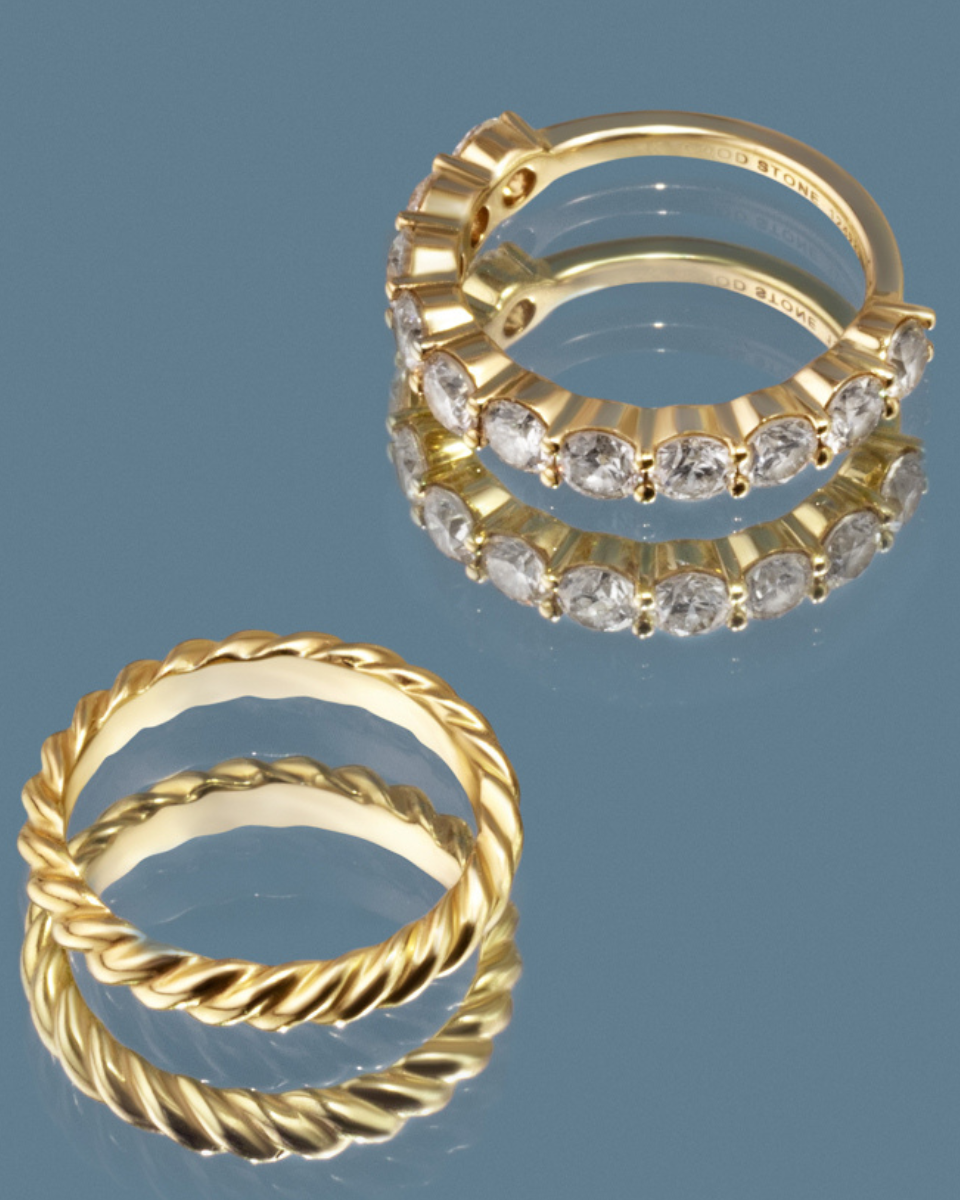
Yellow gold does the opposite. Its warmth blends with a stone’s yellow tone so the two stop competing, masking the tint and making a lower color grade look white by comparison. It flatters diamonds down into the I to M range that would look openly warm in platinum. Rose gold works the same way to a gentler degree, softening warmth without erasing it.
A step cut or a large diamond that needed a high grade to hold in platinum can drop a grade or two in yellow or rose gold and still look right. Many buyers pair lower color with pear, oval, and emerald cuts in warm metal on purpose.

White metals emphasize crisp, icy brilliance while naturally highlighting any warmth within the diamond.
What Color Grade to Buy by Shape
Once the shape and size are set and the metal is chosen, the grade guidance follows a steady pattern. Each shape has a practical floor in white metal, below which warmth starts to read to the naked eye, and each floor drops when the setting turns to yellow or rose gold.
-
Round brilliant: H or I holds a white face-up in white metal, the most forgiving target of the group.
-
Cushion and radiant: H is the practical floor in white metal, with room to drop to J or K in yellow or rose gold.
-
Oval, pear, and marquise: H or above keeps the elongated brilliants looking white in white metal, since the broad faces and points show more than a round.
-
Emerald and Asscher: G or above is the floor in white metal. An I or lower step cut will openly show warmth, while G or better rarely reads tinted to the eye.
-
Large step cuts: Size and shape both amplify color here, and a big emerald or Asscher often warrants F to H, a grade higher than a small one, to stay white in a white setting.
How forgiving the stone is depends on its outline, and the grade is chosen to match it. The metal then decides how much slack the buyer gets on both ends. A round asks the least of the color grade while a step cut asks the most, with everything else in between. Shape, color grade, and metal work against one another, and settling them one at a time is how a buyer ends up with a stone that looks warmer at home than it did in the case.
GOODSTONE weighs shape, size, and metal together, matching a warmer emerald to yellow gold and an icy round to platinum by the color each stone carries. Seeing a step cut in person, away from bright display lighting, is the last check. Warm store light turns every stone darker, and a step cut shows that change first.

Matching shape, size, and metal together creates a ring that feels balanced, intentional, and beautiful from every angle.
Frequently Asked Questions
Which diamond shapes show color the most?
Step cuts show the most. The emerald and Asscher cuts use long, open facets and a wide, flat table that let body color read straight through. Elongated brilliants like oval, pear, and marquise come next, gathering warmth across their broad faces and at their points.
Which diamond shape hides yellow color best?
The round brilliant. Its 57 to 58 facets scatter light so thoroughly that the sparkle keeps the eye off the stone’s underlying tone. A round can hold an H or I color and still face up white, a grade or two lower than a step cut of the same apparent whiteness.
Do Asscher cut diamonds show color more than emerald cuts?
Slightly, yes. The Asscher’s square outline and converging facets funnel body color toward the center of the stone, where the eye settles first. An emerald cut lets color gather along its long corridors instead, so both reveal warmth, with the Asscher concentrating it a little more.
What color grade is best for an emerald cut diamond?
G or above is the practical floor in white metal for a near-colorless look. An I or lower emerald cut will openly show warmth, while G or better rarely reads tinted to the naked eye. In yellow or rose gold, you can accept a slightly lower grade.
What color grade is best for a round diamond?
Round brilliants are the most forgiving shape for color, so an H or I usually still reads white in a white metal setting. The busy faceting hides a faint tint that a step cut would reveal, allowing a buyer to spend less on color and more on size or cut.
What is the best color grade for a cushion cut diamond?
H is the balance point for cushions in white metal. Because the facet pattern softens color better than an elongated cut, you can drop to J or K when the ring is set in yellow or rose gold without the warmth looking like a flaw.
Does a bigger diamond show more color?
The larger the stone, the more obvious its body color, because size gives tone more room to register. A warmth invisible at 0.80 carat can be plain at 2 carats of the same grade, so many buyers size up in color grade for larger stones.
Does yellow gold hide a diamond’s yellow tint?
Yellow gold’s warmth blends with the stone’s yellow tone, preventing them from competing, masking the tint, and making a lower color grade look white by comparison. It suits grades in the I-M range that would look warm in platinum.
Does white gold or platinum make a diamond look more yellow?
They make any warmth more obvious. A colorless white metal gives the stone an icy brightness and throws a faint tint into relief, so these settings suit the higher grades, roughly D through H. A warmer stone will look better in yellow or rose gold.
Why does my emerald cut look warmer in person than in photos?
Lighting and metal both change how color reads. Warm, intense store light turns every stone darker and warmer, and a step cut reveals that change more than a brilliant, so that an emerald can look different at home than under display lights. Seeing the stone in person, in neutral light, is the reliable check.
Are lower color diamonds ever a good choice in fancy shapes?
Yes. Many buyers pair lower color with pear, oval, or emerald cuts in yellow or rose gold on purpose, treating the soft, warm glow as a vintage look rather than a defect. The warmth that a white metal would expose becomes part of the design in a warm setting.



Deja un comentario (todos los campos son obligatorios)