





A Simple Guide to Elongated Old Mine Cut Diamonds
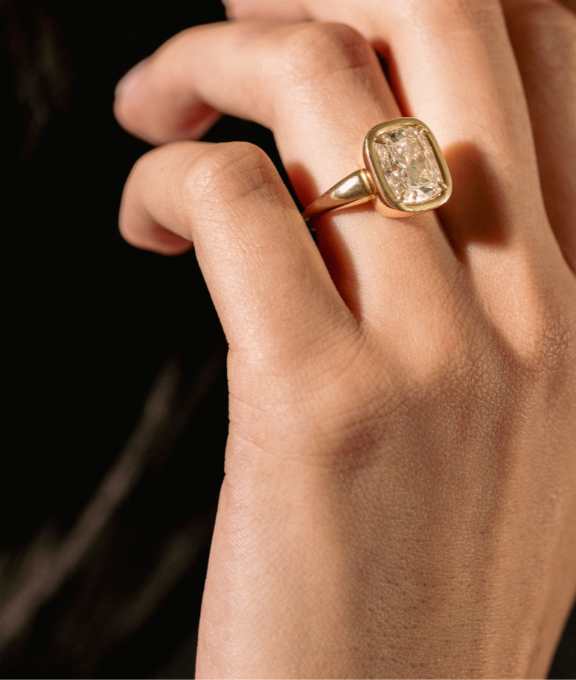
An elongated old mine-cut diamond is an antique-style cushion-shaped diamond with a rectangular outline. It retains the high crown, small table, large open culet, and 58 hand-cut facets that defined diamond cutting from roughly the early 1700s through the late 1800s.
If that name sounds familiar, you may have heard it referring to Taylor Swift’s August 2025 engagement ring. It features an elongated old mine-cut estimated at 8 to 10 carats, sending a wave of curiosity toward a cut that has been quietly admired by antique collectors for generations.
The rest of this guide walks through what makes the cut what it is, where the elongated version fits into the wider family of antique diamonds, how it behaves under light, and what to look at before you buy one.

The elongated old mine cut is an antique-style cushion diamond with a rectangular outline, hand-cut proportions, and a character shaped by centuries of candlelit craftsmanship.
The Elongated Old Mine Cut, Defined
The elongated old mine cut is an antique diamond set into a soft rectangle, with the same hand-cut character as a classic old mine cut. According to the GIA 4Cs guide, an old mine cut has 58 facets, a smaller table than a modern brilliant, a higher crown, a deeper pavilion, and a noticeably large culet at the bottom, often visible through the table when you view the stone from above.
The “elongated” part refers to the outline. A traditional old mine is square with rounded corners, whereas an elongated one is longer than it is wide. The faceting pattern, chunky proportions, and candlelight-era character remain the same. What changes is the silhouette, which lengthens the stone’s appearance on a finger and gives it a softer, pillow-shaped rectangular look.
You will sometimes see the term “antique elongated cushion,” especially for stones that came out of jewelry made in the late 1800s. The labels overlap because the cut family overlaps. If a cushion-shaped antique stone has a small table, a high crown, and a large open culet, dealers will usually call it an old mine. If the same stone is recut with a tighter table and a smaller culet, it might be sold as an antique cushion. The label depends on what the stone shows in the hand and what the seller can document about its history.
Most hear the term “elongated old mine cut” through a single piece rather than through the full antique catalog, which is fine. The cut is easier to learn through one stone you can return to than through a chart of facet counts. If you keep a few visual anchors in mind, namely the rectangular outline, the small table, visible culet, and soft frosted girdle, you can easily pick an elongated old mine out of a tray of antique stones.

An elongated old mine cut shares all the hallmarks of a classic old mine with the addition of a rectangular silhouette that lengthens the stone's appearance on the finger.
The Origins of the Old Mine Cut
The old mine cut originated in European workshops between the early 18th and late 19th centuries, before electric lighting and mechanical cutting tools were available. GIA notes that the term came into common use in the late 1800s, when African diamond production began to overtake the Brazilian and Indian mines that had been the main source for the previous two centuries. Stones from those earlier “old mines” carried a recognizable squarish outline, and the name attached to the cut.
Cutters of the period worked by hand and by eye, often by candlelight. They followed the natural octahedral shape of the rough crystal, which is why old mines have a soft, squarish or rectangular silhouette. They had no laser saws, computer modeling, or symmetry scanners. Two old mines from the same era, even from the same workshop, rarely look identical, which is why collectors now cherish them.
The cut represents the heart of Georgian and Victorian jewelry. If you find a diamond ring, brooch, or pendant from those eras and the stone still has its original cut, there is a strong chance it’s an old mine. Many were recut into round brilliants during the 20th century to meet modern symmetry standards, which is one reason intact antique old-mine stones seem rarer every year.
What Makes the Cut “Elongated”
An elongated old mine is defined by its length-to-width ratio, which is well above 1.00 for a perfect square. Most fall between 1.20 and 1.30 for a soft, pillowy elongation, while ratios of 1.40 to 1.50 are more dramatic and rectangular. Swift’s August 2025 ring, designed by Travis Kelce in collaboration with Kindred Lubeck of Artifex Fine Jewelry, has been reported by Sotheby’s at a ratio close to 1.40, which is why it looks so long on her hand.
The reason the elongated proportion gets so much attention is because of how the eye reads the finger. A rectangular stone draws the eye along its length, giving the finger a slightly extended look. It also makes the diamond appear larger than a round or perfectly square stone of the same carat weight, since the upward-facing surface area is spread along a longer axis. People who find traditional cushions too compact prefer the elongated version for that reason.
Antique elongated old mines are rare, with a 2026 Farmonaut trends review estimating that they account for less than 3% of vintage diamonds on today’s market. That limited supply led modern cutters to produce new natural and lab-grown stones in elongated old-mine styles, allowing buyers to pursue the same look without relying on the antique market. GOODSTONE also offers custom versions for clients seeking a specific length-to-width ratio.
The rarity of elongated old mine cuts comes down to how early cutters worked with rough crystals. Their priority was preserving as much carat weight as possible, and most pieces of rough did not naturally lend themselves to long rectangular outlines.
When a crystal suggested an elongated form, cutters usually followed it, but square stones emerged from the bench more often than rectangular ones. Later recutting waves of the 20th century further reduced the surviving population, as many old mine cuts were reshaped into round brilliants. Today, antique old mines remain scarce enough that dealers often know one another’s inventory by name.

The elongated version is defined by a length-to-width ratio above 1.00, typically between 1.20 and 1.40, producing a soft rectangular silhouette.
How an Elongated Old Mine Catches Light
An elongated old mine sparkles in slow, broad flashes rather than the quick pinpoint scintillation of a modern round brilliant. Dealers often describe the effect as “chunky fire” because the stone uses fewer, larger facets that return light in broader pieces, creating a warmer and slower glow. VRAI’s diamond guide compares the optical character to candlelit shimmer, which suits the lighting these cuts were originally designed to handle.
The candlelight pedigree matters. Early cutters worked under candles, oil lamps, and gas lamps, so the diamonds had to gather and return soft, low-angle light. To achieve that effect, they used high crowns, small tables, deep pavilions, and broad facets.
That design approach still shows itself today. In a candlelit restaurant or dim interior, an old mine cut produces the warm, broad flashes these stones were designed to emphasize. Under bright studio lighting, the same stone appears quieter than a modern brilliant cut, with fewer but larger flashes of light.
The elongated outline does not change the cut’s optical character; it changes the canvas where the light moves. Reflections trace a longer path along the stone’s length, giving the appearance of a soft, rolling glow as the hand moves. Some buyers find this more flattering than the rapid sparkle of a modern oval or elongated cushion brilliant. It is a quieter look, with a heavier presence.
Color appears differently in an old mine than in a modern brilliant. The high crown and small table keep light inside the stone longer before returning it to the eye, which can warm a slightly tinted diamond and make a lower color grade look richer than the report suggests. Buyers who would never consider a K color in a modern brilliant often choose one in an old mine for that reason. The proportions and color work complement each other.

Old mine cuts return light in slow, broad flashes rather than the rapid pinpoint scintillation of a modern brilliant.
Old Mine vs. Old European vs. Modern Cushion
These cuts get confused with one another, and it helps to place the elongated old mine in context. The old mine, old European, and modern cushion are part of the same family, with the old mine at the root.
The old European is the round counterpart of the old mine. Both are antique, use 58 facets, and are optimized for low-light rooms; the difference lies in their outlines. Old Europeans have a smaller culet than old mines. Andria Barbone Jewelry’s antique cut guide states that they dominated the Art Deco period from the late 1910s to the 1930s.
The modern cushion cut is a descendant of the old mine cut. As cutting tools improved through the 20th century, cutters added facets, tightened symmetry, reduced or eliminated the visible culet, and adjusted proportions for electric light. A modern cushion has 64 or more facets, no visible culet, and a polished girdle rather than a frosted bruted one. It looks softer than a round brilliant and sharper than an old mine.
An elongated old mine sits between the two in character, combining the rectangular outline of a modern cushion together with an antique facet pattern. Place a modern elongated cushion beside an elongated old mine, and the modern stone will appear brighter and more uniform, while the old mine will show a warmer light, broader flashes, and greater individuality.
What to Check Before Buying
Before buying an elongated old mine, read the GIA report carefully and look at the stone in person under several light sources. GIA grades old mines for color, clarity, and carat, noting the culet size and girdle finish, but does not assign a cut grade because modern proportion guidelines were not designed for antique cutting.
When viewing the stone, hold it face-up and check for the eye-visible culet at the center. A small dark dot or octagon through the table is the signature of an authentic old mine cut. Run your eye around the girdle, and if it appears frosted, the stone was likely hand-shaped. A polished or faceted girdle points to a more recent recut, and while neither is wrong, the two carry different histories and price expectations.
The stone’s origin matters as well, since authentic loose old mines come from estate sales, antique jewelry, auction houses, and stones recovered during recutting projects, according to a 2026 market report by Farmonaut. To meet demand beyond what the antique market can supply, modern cutters now produce new old-mine-style stones from natural and lab-grown rough. Both approaches have a place, but they differ in price and sentimental value. A reputable seller should identify what you are viewing and explain where the stone originated.
For an elongated proportion, ask for the length-to-width ratio in writing. Anything between 1.20 and 1.30 reads as softly elongated, while ratios above 1.35 appear more rectangular. Ratios at 1.40 and above create the dramatic look often associated with celebrity rings. Try the ratio on your own hand before committing, as the same proportions can look very different depending on finger length and hand shape.
Old mine cuts are usually priced below similarly sized modern brilliants on a per-carat basis, especially in lower-color and lower-clarity grades, because they were shaped before modern precision standards. PriceScope tracks old mine pricing as a separate category for that reason. Vintage demand narrowed the gap in 2024, while elongated proportions and documented origins introduced their own premiums. A large, well-cut antique elongated old mine with a strong report now falls into the same price range as a modern stone of similar size.
A few practical questions can help anchor the decision:
-
How will the stone be set?
-
A bezel or a half-bezel is gentler on the antique facet edges, while a high-set basket leaves the culet more exposed.
-
Does the setting protect the visible culet area from chipping?
-
What color metal works with the slightly warm flash that an old mine returns?
-
Yellow and rose gold harmonize with old mine warmth and fire, while platinum can make a slightly tinted stone appear whiter.
-
How does the stone sit on a hand at rest, without movement, studio light, or jewelry-case spotlights?
Old mine cuts were shaped by cutters who paid close attention, and they reward similar attention from the buyer. Bright showroom lighting will not reveal how the stone behaves in a kitchen at dusk or across a candlelit dinner table. Ask to see it in those conditions if possible, and take your time before deciding.

Before buying an elongated old mine, read the GIA report carefully and view the stone in person under multiple light sources, including low ambient light, which is where these cuts were designed to perform.
Frequently Asked Questions
What is the difference between an old mine and an old European cut?
An old mine cut has a soft square or rectangular cushion outline and a larger culet, while an old European cut is round with a smaller culet. Both are antique cuts with 58 facets, designed for candlelight, but their outlines immediately set them apart. If the stone is round, it is an old European cut. If it has a cushion-like or elongated outline, it is an old mine.
What is the difference between an old mine and a cushion cut?
The modern cushion cut descends from the old mine, but modern versions use more precise symmetry, a smaller or absent culet, and proportions designed for electric light. The old mine-cut features 58 hand-cut facets, a smaller table, a higher crown, and a larger open culet. Modern cushions appear brighter and more uniform, while old mines produce warmer light with broader, slower flashes.
How can I identify an old mine-cut diamond?
Look for a soft square or rectangular outline with rounded corners, a smaller table than a modern brilliant, a higher crown, an eye-visible culet at the center when viewed from above, and a frosted or bruted girdle rather than a polished one. According to Estate Diamond Jewelry, the culet is often visible without a loupe, helping distinguish an antique cut from a modern stone.
Are old mine-cut diamonds graded by the GIA?
GIA grades old mine-cut diamonds for color, clarity, and carat, and notes culet size and girdle finish, but does not assign a grade on the report. The 4Cs guide explains that modern cut grading adheres to modern proportion guidelines, which would unfairly penalize antique cuts.
How much does an old mine-cut diamond cost?
Old mine-cut diamonds are usually priced below modern brilliants of similar size and quality on a per-carat basis, particularly in lower color and clarity grades. Vintage demand narrowed that gap after 2024, while stones with documented origins, larger carat weights, or rare elongated proportions introduced premiums of their own. PriceScope tracks old mine pricing as a separate category to more accurately reflect the antique market.
Are new old mine-cut diamonds being made today?
Yes. Modern cutters polish new natural and lab-grown rough into old-mine and elongated old-mine styles to satisfy demand beyond what the antique market can supply. These newly cut stones replicate the high crown, small table, large culet, and chunky facet pattern of antique old mines, often with cleaner symmetry and consistency. A reputable jeweler should explain whether a stone is antique or newly cut, as the distinction affects price and origin, even when the stones appear visually similar.



Deja un comentario (todos los campos son obligatorios)