


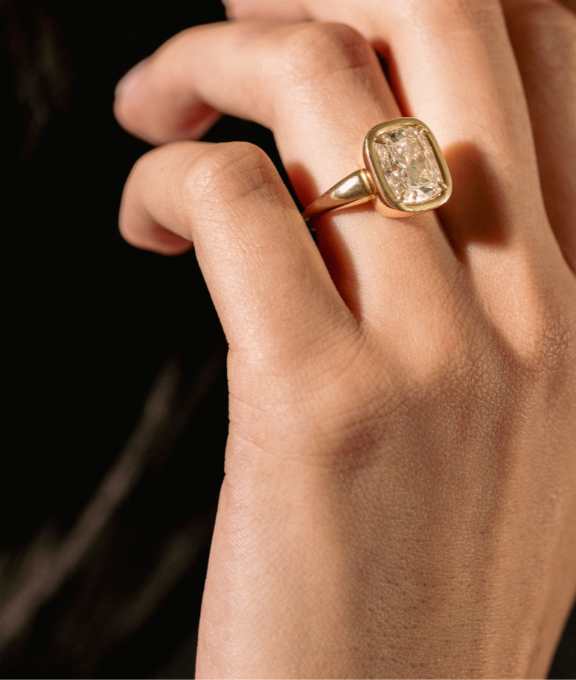




Which Diamond Shapes Hide Everyday Smudges Best?
By the end of an ordinary Tuesday, a ring can lose the hard, glassy sparkle it had that morning and go soft and faintly gray, all from a thin film of skin oil settling across the facets. How quickly you notice that haze depends on your cut more than on the diamond itself. Many-faceted brilliant cuts, like round diamonds, throw light so widely that they hide a day's worth of film, while flat, open step cuts, like emeralds, show every fingerprint. The busier your hands stay through the day, the more that busy field of facets works in your favor.

Choosing a shape with busier faceting helps disguise fingerprints, lotion, and oil between cleanings.
The Cause of a Dull, Cloudy Look
Diamond is lipophilic, which is a plain way of saying it attracts oil. Skin oil is the main culprit, and it rarely travels alone. Hand lotion and sunscreen add to the greasy layer, and so does dish soap whenever it touches the stone, and that coating blocks light from passing into the diamond and returning cleanly. The stone looks cloudy or a little dead, even though it is usually spotless underneath and perfectly sound.
Most of that grime settles where you cannot see it, on the pavilion facets beneath the setting, sending light back up through the top. People scrub the table and see no change, then give up, sure the fire is gone for good. The film builds faster than most owners expect, often within a few days of normal wear, which is why a ring that looked crisp on the jeweler’s counter can look dull at home by the weekend. A soak in warm, soapy water lifts it and brings the sparkle back, so cloudiness is almost always dirt.

Diamonds naturally attract oil, which is why everyday products like lotion and sunscreen can make a clean stone look cloudy.
Brilliant Cuts for Hands-On Wear
If your hands are in everything, a brilliant cut buys you the most forgiveness between cleanings. Cooks and gardeners, parents wiping small faces, anyone reaching for lotion or sanitizer through the day, all of them coat a stone with film fast. The cut that hides it best is the one with the most facets throwing light in the most directions.
The round brilliant is the standard. Its 57 to 58 facets, arranged for maximum light return, disguise a thin film well. Your eye takes in a busy field of tiny flashes rather than one continuous surface, so a little grease dulls the overall sparkle without ever announcing itself as a smudge. Radiant cuts go further, with roughly 70 facets that break light into even smaller pieces. Cushion cuts, at about 58 facets, give wider, softer flashes that still mask film better than any flat cut, though in larger blocks of light.
The payoff shows up at the end of a long day. A round or radiant can move through a full day of cooking and hand-washing and still look alive under the kitchen light, because its sparkle covers for the oil until your weekly cleaning catches up. For someone who refuses to baby a ring, that everyday forgiveness is what counts. That margin between cleanings is what leads so many people with hands-on lives to a round or radiant.

Brilliant cuts are the most forgiving choice for active hands. Round, radiant, and cushion shapes break light into enough flashes that a little everyday buildup is far less noticeable.
Best Shapes If You Rarely Clean Your Ring
A step cut rewards a different kind of wearer, the one whose hands stay relatively clean and who does not mind a quick daily wipe. Emerald and Asscher cuts trade busy sparkle for long, open flashes and a wide flat table, and that architectural look is the whole appeal. The same flat surface that makes them elegant also shows a fingerprint the instant you leave one, because there is no busy sparkle to break up the light and hide it.
An emerald cut is a rectangular step cut with a broad table and rows of parallel facets, roughly 57 in all. Lay a fingertip on it or brush it against a cheek with sunscreen on, and the smudge shows immediately across that open plane. The Asscher looks the same in a square silhouette. Owners of both learn quickly that the crisp geometry they fell for needs a soft cloth kept nearby.
For a low-contact wearer with a desk job and a habit of taking the ring off before lotion or cooking, that open face costs very little. A 10-second wipe most evenings keeps an emerald looking like glass, a fair exchange for someone who prefers the architectural look, accepting that it will show a smudge.

Emerald and Asscher cuts offer a beautifully crisp, architectural look, but their open facets reveal smudges more easily. They reward wearers who do not mind a quick wipe at the end of the day.
Settings and Everyday Cleanup
The cut decides how visible a film looks. Getting it clean again is the setting’s part. Two identical stones can age very differently between cleanings depending on how the metal holds them.
Prong settings are open and high, the easiest to rinse and brush, with water and bristles reaching the stone from every side. The tradeoff is that the exposed diamond gets dirty faster, and the little claws create pockets where lotion and sanitizer collect and harden.
Bezel settings address the top-side problem with a smooth metal rim around the stone, leaving fewer crevices to catch grime. That same rim can hold oil behind the metal and at the seam where it meets the diamond, which takes a targeted cleaning to reach.
Underneath matters as much as the outline. An open gallery, meaning open space below the stone, lets water and a brush get to the pavilion where most film collects, and the ring rinses clean without much effort. A closed or tight gallery, or a halo-and-pavé design with many small stones and metal seams, gives grime more places to lodge and fewer ways out. A tight setting traps grit between the girdle and the metal that no home cleaning seems to touch.
Cut and setting both drive upkeep, and it helps to choose them together. GOODSTONE builds every cut discussed here in both open prong and bezel styles, from a forgiving round, cushion, or radiant to a crisp emerald or Asscher, with its designers weighing those cleaning tradeoffs with a buyer before any stone is set.

The diamond shape determines how visible grime looks, while the setting determines how easy it is to remove. Open galleries and accessible settings make routine cleaning much simpler.
How Often to Clean a Diamond Ring
A daily-worn diamond does best on a weekly home cleaning, or every two weeks at the least. Soak the ring for 20 to 40 minutes in warm water with a few drops of dish soap, work a soft toothbrush gently around and under the stone, then rinse and dry with a lint-free cloth. The step people skip is the one that counts, tilting the ring to brush up under the prongs and across the pavilion where the film settles. Scrub only the top, and the film underneath keeps a ring looking flat.
Warm, soapy water is safe for any diamond, regardless of cut. Ultrasonic and steam machines suit most diamonds too, though colored or treated gemstones, including emeralds, can be harmed by them, so the gentle soak stays the reliable default. Every 6 months or so, a professional cleaning and inspection catches loose prongs and reaches grime that home tools miss.
What you do before the film forms matters even more. A few daily habits slow buildup more than any cleaning schedule can:
-
Take the ring off before applying hand lotion, sunscreen, or foundation.
-
Remove it for cooking, kneading dough, and washing dishes.
-
Keep it off during a workout, when sweat and sanitizer collect fast.
-
Give the stone a quick wipe with a soft cloth at the end of the day.
Oil and diamond will always attract each other, but a matched cut and a reachable setting change how often you notice it. Choose a cut for your hands, pair it with a setting you can clean without a fight, and keep a light weekly rhythm to keep the ring as bright as the day you first slid it on.

A simple weekly cleaning keeps most daily-worn diamonds bright and lively. Paying attention to the underside of the stone is just as important as polishing the surface you can see.
Frequently Asked Questions
Which diamond shape hides dirt and smudges best?
The round brilliant hides everyday film best. Its 57 to 58 facets scatter light in many directions and mask a thin oily coating. Radiant and cushion cuts, both brilliant-faceted, also disguise film well. Any cut with lots of small facets keeps looking good longer between cleanings.
What diamond shape shows fingerprints the most?
Step cuts show fingerprints, smudges, and water spots the fastest. Emerald and Asscher cuts have large, flat facets and a wide, open table, so the surface stays glassy, with no busy sparkle to hide a mark. A single touch shows on that flat plane right away.
Why does my diamond look cloudy by the end of the day?
A thin film of skin oil, lotion, soap, and sunscreen builds up on the facets and blocks light from returning, so the stone looks dull. It is dirt, not damage. A soak in warm soapy water washes it off and brings the sparkle back.
Do emerald cut diamonds get dirty faster?
They do not necessarily attract more dirt than other cuts. Their open, flat surface makes the same film far more visible. They look dirty sooner and need more frequent wiping. Owners often keep a soft cloth close by for this reason.
Does the number of facets affect how dirty a diamond looks?
Yes. More small facets, as on a round brilliant at about 58 or a radiant at roughly 70, scatter light and disguise a film. Fewer large facets, as on emerald and Asscher step cuts, reveal it. Facet count is the main reason two equally dirty stones can look so different.
Where does the dirt collect on a diamond ring?
Most of the film settles on the pavilion facets underneath the stone and in the setting’s under-stone gap. That is why cleaning only the top leaves a ring looking flat. Tilting the ring and brushing up beneath the prongs reaches the grime that matters.
Which is easier to keep clean, a prong or bezel setting?
A prong setting gets dirty faster but is easy to rinse and brush, since water reaches the stone from every side. A bezel setting stays cleaner on top but can trap oil behind the rim. Neither is maintenance-free, so the better choice depends on how you like to clean.
Does hand lotion ruin diamond sparkle?
Lotion leaves a greasy coating over the facets that dulls the stone until you clean it off. It does not cause lasting harm. Applying lotion after you take the ring off or cleaning a little more often helps prevent buildup.
How often should I clean my diamond engagement ring?
For a ring worn daily, clean it at home about once a week, or every two weeks at the least, with warm water and a few drops of dish soap. Have it professionally cleaned and inspected roughly every 6 months. Frequent light cleaning beats occasional deep scrubbing.
Can I put my diamond ring in an ultrasonic cleaner?
Diamonds themselves tolerate ultrasonic cleaning. Colored or treated stones, including emeralds, can be damaged by vibration, so check what else is in the setting first. Warm soapy water with a soft brush is the safe method for any ring at home.
Why did my ring look brighter in the store than at home?
Store diamonds are freshly cleaned and brightly lit, so they show their full sparkle. After a few days of wear, an oily film builds up and dulls the light the stone returns. A warm soapy soak restores the brightness you saw on the counter.




Deja un comentario (todos los campos son obligatorios)