





5 Easy Steps for Buying an Engagement Ring
Buying an engagement ring can put you on a fixed deadline before you know how long each decision takes. Shopping together or planning a surprise changes parts of the process, but either way, knowing what to handle first can prevent avoidable delays. Sourcing the stone and getting the finished ring onto the right finger both take time. A set order of decisions gives you more room to compare your options without rushing the ring you’ll ultimately choose.
Step 1: Know What You’re Looking For

Personal taste and ring size are two separate problems, and knowing what someone actually likes solves only one. Guessing at style risks a ring no one ends up wearing. That information comes from a few different places, depending on the situation.
-
Can you ask about ring preferences directly? Ask outright, or try rings on together and talk through styles.
-
What if you already know something about their taste? Recall styles they’ve mentioned or saved before, even in passing.
-
Have they saved any ring ideas? A folder of screenshots or a shared Pinterest board can show which styles they prefer.
-
Can their existing jewelry offer any clues? A stone shape or metal tone that repeats across what they already wear can point to an established preference.
A jeweler can measure a finger directly and get an exact size in minutes. If you don’t have an exact size, ask how much the setting can be adjusted before ordering. If the size needs to stay a secret, a jeweler may be able to estimate it from a ring the wearer already owns.
Step 2: Set a Budget and Learn What It Buys

Settling on a number before browsing is easy to skip, and skipping it is how a budget disappears before you’ve picked anything. The idea that a ring should cost a set number of months’ salary traces back to a decades-old diamond ad campaign. A number that fits your own finances is worth more than an old slogan.
The same budget buys very different rings depending on the stone and setting chosen.
-
Is $1,500 enough to get started? It can cover a lab-grown or vintage-inspired stone under half a carat, usually in a simple pavé or solitaire setting.
-
What opens up between $1,500 and $4,000? A natural diamond near half a carat, or a larger lab-grown stone, with more setting options.
-
What changes between $4,000 and $8,000? This range can include a natural stone at or above a full carat, or a larger lab-grown stone in a more detailed setting.
-
What can a budget above $8,000 cover? Larger natural stones or fully custom design work.
If financing puts the ring you want within reach, look at the total repayment cost before deciding what fits your budget. A 0% introductory rate paid off in months costs nothing extra. A multi-year loan with interest attached can cost more than the ring’s original price.
Step 3: Choose the Center Stone and Verify It

The center stone is where a report matters more than a description. Two rings that sound identical on paper can look very different side by side.
-
Why is cut worth prioritizing? Cut measures how well the stone is proportioned to reflect light. A poor cut can make the stone look dull regardless of the other three grades.
-
What does the color grade mean? Color is graded from D (colorless) to Z (visibly tinted). G to I can appear colorless to the eye depending on the setting, while costing less than D to F.
-
What should you know about clarity? Clarity is graded from Flawless to Included based on visible inclusions. VS2 to SI1 is usually eye-clean while costing less than higher grades.
-
How does carat affect a stone’s size? Carat measures weight, while cut affects how large a stone appears at that weight. A stone at 0.90 carats often costs noticeably less than one at 1.00, despite a small difference in visible size.
If two stones with the same grades carry different prices, the report may not explain the difference by itself. Cut quality can vary within a single grade, with a Very Good stone falling closer to Ideal or Good. Seeing the stones side by side can help you decide if the more expensive one earns its higher price.
Clarity follows the same logic. A stone graded SI1 with an inclusion that can be concealed by the setting may look cleaner than a VS2 with a visible inclusion, even though the SI1 grades lower on paper. Asking a jeweler if a stone is eye-clean, meaning no inclusions visible without magnification, gets past the letter grade to what shows once the ring is on a finger.
Before paying for the stone, look up the report number on the grading lab’s site and make sure the details match the paperwork. A mismatch needs an explanation before you go any further.
Lab-grown and natural diamonds are chemically identical. Grading reports identify whether a diamond is natural or lab-grown and assess its quality using the same core characteristics. Price is where they diverge. If future resale matters to you, consider it when comparing natural and lab-grown diamonds, since their secondary-market values can differ.
Step 4: Choose the Setting, Metal, and Size

The right setting and metal partly depend on how the ring will be worn. Frequent contact with hard surfaces or snag-prone materials can make durability more important, while the correct size keeps the finished ring comfortable and secure.
-
What’s the trade-off with a prong setting? Thin metal claws, usually four or six, hold the stone in place. They leave more of the stone exposed and can catch on fabric.
-
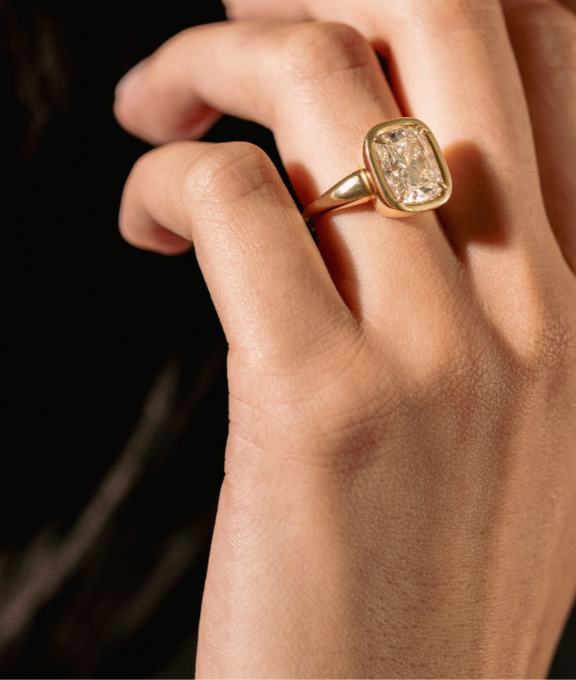
Does a bezel setting offer more protection? A rim of metal wraps around the stone’s edge, protecting more of it while also covering more of the stone.
-
How does a halo change the way a stone looks? Small stones form a ring around the center stone, making it look larger. The additional stones also mean more prongs to maintain.
-
Is a three-stone setting harder to maintain? A center stone pairs with two smaller stones beside it, adding coverage across the finger and more stones to maintain.
Platinum and white gold can look similar when new, but their maintenance differs. White gold is typically rhodium-plated for a bright white finish, and that plating wears over time. Platinum is naturally white and doesn’t need rhodium plating, though its surface develops a patina with wear.
If you’d rather avoid periodic replating, platinum may justify its higher upfront cost. White gold can cost less initially if occasional maintenance doesn’t bother you.
Ring size can wait until you choose the setting, but don’t leave it to guesswork. A jeweler can measure the finger directly if the person who’ll wear the ring is available. If you don’t have an exact measurement, ask what resizing options the chosen setting allows before ordering. Designs with stones around the entire band can leave much less room for adjustment later.
Step 5: Decide Where to Buy and When to Order

Where you buy a ring affects what happens if something goes wrong after the purchase.
Shopping online can open up a wider selection without requiring a showroom visit. The trade-off is that you may have to buy without seeing the stone in person, and a return means shipping an expensive item back.
A chain jeweler gives you a physical store to return to if the ring needs attention later. That convenience may come at a higher price for comparable quality.
With an independent jeweler, you may be able to work with the same person or shop from the initial purchase through later repairs.
A custom piece starts with the design before the final price is set. GOODSTONE offers both ready-to-ship rings and a fully custom design process. A custom estimate carries no deposit until it’s approved. The $500 charged then is credited toward the final ring.
If you need the ring by a specific date, work backward from it before deciding which route to take. Ready-to-ship rings can arrive within days, while resizing or custom work may require weeks for sourcing and finishing. Leave room beyond the jeweler’s estimate so an unexpected delay doesn’t put the date at risk.
Check the return policy before buying, especially if you’re deciding on a deadline. A generous return window gives you time to reconsider a choice that doesn’t work once the ring arrives.
Protecting the Ring After Purchase

Once the ring is ready, you still need to get it where it’s going safely.
Arranging insurance before the ring leaves the jeweler ensures coverage is already in place while the ring is being carried or stored.
A grading report and an appraisal serve different purposes. The grading report describes the stone and its quality, while an appraisal assigns the ring a dollar value for insurance. An insurer may ask for the appraisal because it provides the value needed to determine coverage.
Not every ring stays hidden until a specific moment, but any ring being carried before it’s worn deserves some basic precautions. If you’re flying with it, keep it in your carry-on rather than checked luggage. A plain pouch can also be more discreet than a branded ring box.



Deja un comentario (todos los campos son obligatorios)