





The Cleanest, Most Symmetrical Diamond Shapes
The diamond shapes that look cleanest come down to a short list. The most orderly outlines are the round brilliant and the two step cuts, Asscher and Emerald. Cushion is symmetric but soft, and the elongated and pointed profiles can look immaculate or lopsided depending on how carefully the cutter worked. Symmetry itself means two separate things at once, and keeping them apart answers most questions here, starting with why fewer than 1% of round diamonds reach hearts-and-arrows precision. This layout shows eight arrows from the top and eight hearts through the bottom.

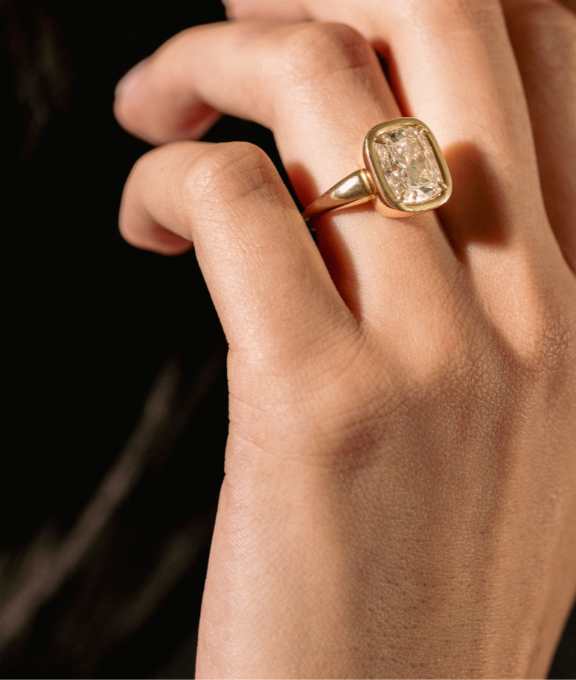
The cleanest diamond shapes are defined by balance, precision, and geometry.
The Cleanest Diamond Outlines
The round brilliant is the cleanest outline a diamond can have, and the Asscher and emerald step cuts come right behind it. A circle is the only radially symmetric shape, which means it looks identical when rotated to any angle around its center. That makes it the hardest silhouette to fault, since there is no long axis or single point where a slip can show. The Asscher is a near-square step cut and the emerald a rectangle, both built from broad parallel facets that give them a ruled, linear look.
Princess is close to them, a crisp modern square. Cushion is symmetric too, but soft and pillowed by design, and belongs with the warmer stones rather than the exacting ones. The elongated and pointed outlines, oval and marquise and pear and heart, are the ones that can look flawless or lopsided depending on the cutter’s patience.

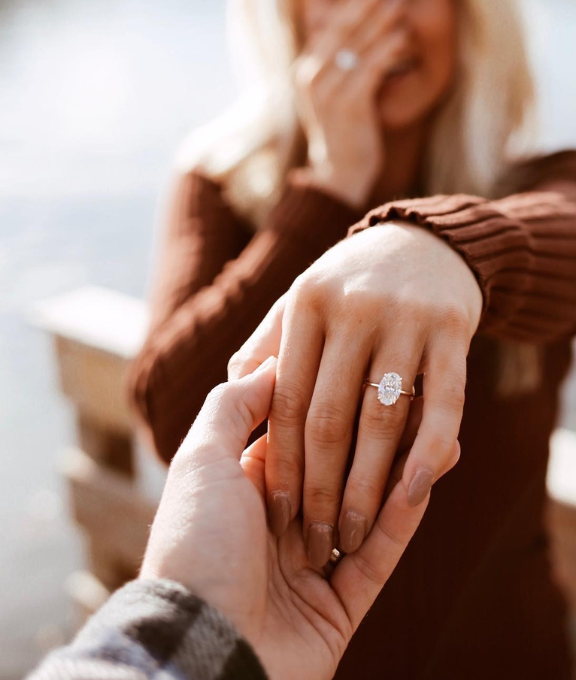
Round, Asscher, and emerald cuts stand out for their naturally balanced silhouettes.
Why Round and Step Cuts Look Clean
Order in a diamond comes from geometry you can check without instruction. A round brilliant gives the eye nothing to catch on. Every direction around the center matches every other.
When a round is cut to the highest optical symmetry, it shows the hearts-and-arrows pattern, eight arrows from the top and eight hearts through the pavilion, a direct visual proof that the facets line up almost perfectly. Cutters spend far longer on those stones and lose more rough to reach that point, and fewer than 1% of rounds ever get there.
The step cuts earn their clean look a different way. Their broad, open facets run in parallel rows like a staircase, producing the stepped, square-within-a-square look and the central X you see when you look straight down into an Asscher. That geometry is so exposed that any misalignment shows at once.
The same openness that makes them look orderly also leaves every inclusion on view, so buyers are steered toward higher clarity, VS1 or VS2, and the cutting has to be precise from the first facet.

Round brilliants achieve visual balance through perfect repetition, while step cuts rely on crisp, parallel facets.
Two Kinds of Diamond Symmetry
Symmetry in a diamond means two distinct things, and keeping them apart avoids a lot of confusion. The first is the symmetry of the outline, how balanced the silhouette looks face-up. That is what makes a round look even and a lopsided pear look wrong.
The second is the Symmetry grade on a diamond report, a cut-finish mark that spans five steps from Excellent down to Poor, judged under 10x magnification. It measures how precisely the facets are placed and aligned, from table centering to the cleanliness with which the points and corners meet. It also notes any facets that are extra or missing.
These two do not always agree. A round brilliant can have a low Symmetry grade and still look balanced from a normal distance. A pear can earn Excellent Symmetry on the report and still look lopsided if its wings and shoulders were shaped unevenly, because the grade scores facet precision while saying nothing about the sweep of the outline. When someone says a shape looks clean, they usually mean the outline, while a lab grading symmetry means the facets, and each answers a different question.

A beautifully symmetrical diamond is about more than the grade on its report. Facet precision matters, but the balance of the overall silhouette is what your eye notices first.
The Bowtie Effect
Every elongated brilliant shows a bowtie to some degree, a dark band across the center of the stone in the shape of a bowtie. It is a shadow, a place where light entering the stone does not return to the viewer, partly because your own head and shoulders block the light as you look down. Ovals and marquises show it most. Pears show less, and hearts and radiants only sometimes.
The bowtie is a symmetry problem at heart, driven by facet alignment and pavilion angles. A deviation of only a degree or two in the wrong facets can turn a faint shadow into a heavy black band. The marquise is the most prone to a severe one, while a well-cut pear spreads light more evenly across its belly and shows less.
The trouble is that no grading report tells you how bad a bowtie is. It changes as the stone moves in the light, so the only reliable way to judge it is to watch a video or see it in person. A diamond can grade Excellent Symmetry and still darken across the middle.

Elongated diamonds can develop a shadow across their center known as a bowtie.
How to Check a Diamond’s Symmetry
Pointed and elongated shapes are judged by how evenly the two halves match, since a grade never captures how balanced the outline looks. You draw a line down the long axis and compare the two halves. The standard advice for these outlines is to buy Excellent or Very Good symmetry and skip Good or below. Any imbalance shows far more here than on a round.
The Pear
Draw an imaginary line from the rounded head to the point. The two halves should match each other, with the shoulder and wing on one side matched to the other and the belly even across. Watch for one shoulder sitting higher than the other, and for a point that does not line up with the center of the round end. Wings cut too flat make the stone look narrow, while wings too rounded make it look short and bulbous.

A beautifully cut pear should feel perfectly balanced from its rounded end to its delicate point.
The Marquise
The two endpoints have to lie on the same center axis. If one tip is offset even slightly, the whole outline looks tilted, and the offset is obvious the moment the ring sits straight on a finger. The two curved sides should be even as well. Misaligned points are the classic marquise tell.

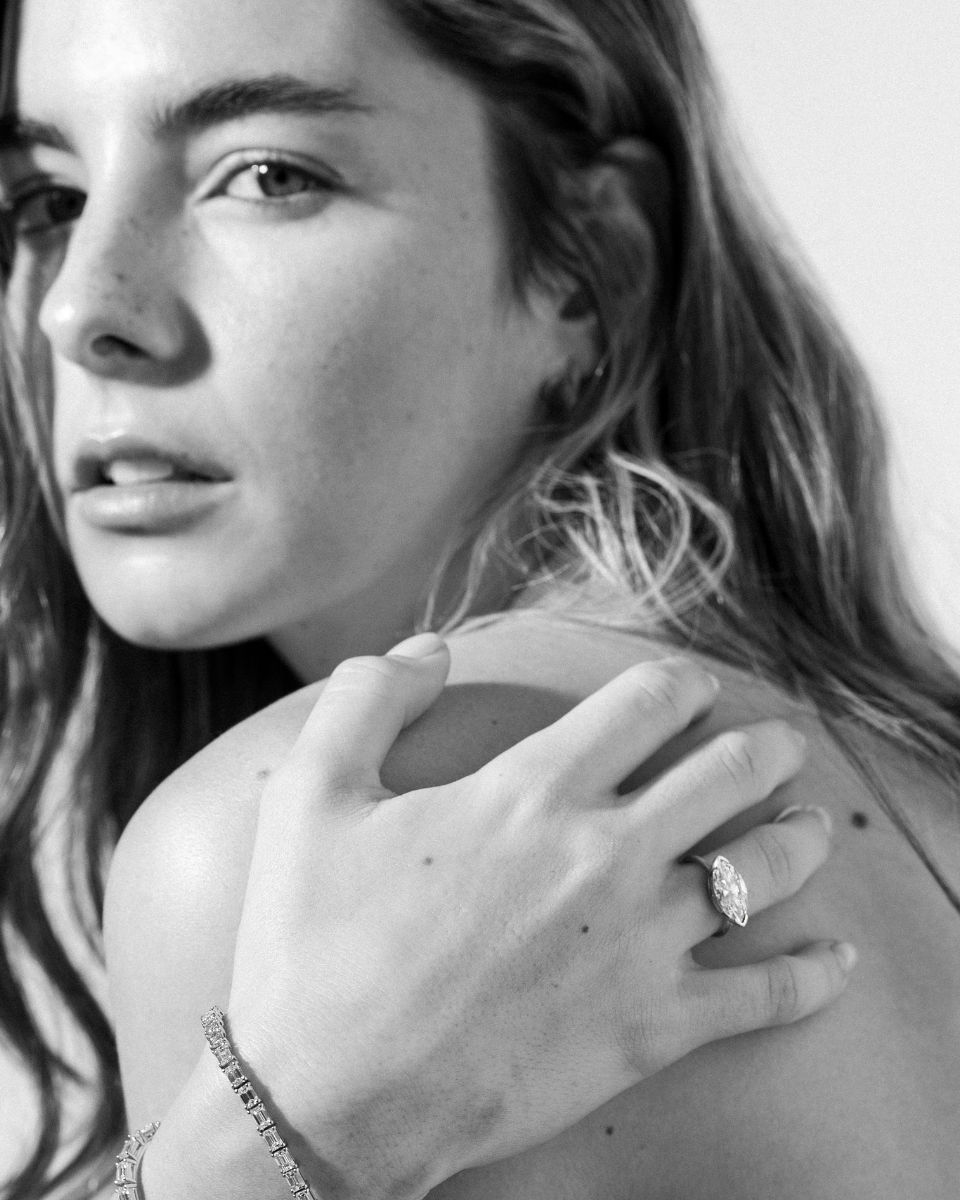
Perfectly aligned points and matching curves create the long, dramatic silhouette that makes this shape appear so striking on the hand.
The Heart
The heart is the shape your eye judges hardest, because you have known the icon since childhood. The two lobes should be equal and evenly rounded, the cleft between them deep and centered, and the point sharp and aligned with that cleft. A small mismatch in one lobe registers at once as a heart that looks off.

Balanced lobes, a centered cleft, and a perfectly aligned point are what transform the familiar silhouette into a beautifully refined diamond. As you can see on our Midi Bezel Set Eternity Band With Heart Cuts.
The Oval
Look for smoothly curved shoulders with no flat spots and no bulges, and a bowtie that stays centered on the long axis. Most buyers prefer a length-to-width ratio near 1.40 to 1.45, which gives a flattering shape without inviting a heavy bowtie.

A well-proportioned oval should feel smooth, balanced, and effortless. Even curves and a subtle bowtie allow its elongated silhouette to remain the focus.
The Value of the Symmetry Grade
For most shapes, the Symmetry grade matters less than the price gap suggests. Between Excellent and Very Good, the naked eye sees almost nothing, and even an expert with a loupe can struggle to separate Good from Excellent on two otherwise identical stones. Visible symmetry faults generally show up only at Fair or Poor. Excellent symmetry and polish can add roughly 5 to 10% to the price, and much of that premium buys perceived value while adding little you can see.
The exception is the step cuts and the pointed shapes. On those outlines, small asymmetries are visible, so paying up for Excellent or Very Good symmetry is worth it there. On a round or a cushion, Very Good is strong value.
A grade never scores the sweep of an outline, and a fancy shape is worth studying closely before choosing. GOODSTONE builds engagement rings one-on-one with a designer, so a buyer can hold a fancy shape’s wings and points, or a step cut’s alignment, up to the light and check how they line up.

The highest symmetry grade isn't always necessary to find a beautiful diamond. The best value comes from understanding when precision creates a visible difference and when the eye simply can't tell.
Frequently Asked Questions
What is the most symmetrical diamond shape?
The round brilliant is the most symmetrical shape because it is radially symmetric, meaning it looks identical turned to any angle around its center. Among the angular shapes, the Asscher and emerald step cuts are the most symmetrical, prized for their ruled, balanced geometry.
Which diamond shapes have the cleanest lines?
The step cuts have the cleanest lines, the square Asscher and the rectangular emerald, both built from broad parallel facets in an Art Deco geometry. The round brilliant belongs in the same group for its balanced, radial silhouette.
What does diamond symmetry mean?
Symmetry describes how precisely a diamond’s facets are shaped and aligned, from table centering to how uniformly the facets meet at points and corners. It measures something different from the balance of the outline you see face-up.
How is diamond symmetry graded?
The Symmetry grade on a diamond report uses a five-step scale from Excellent down to Poor, assessed under 10x magnification. Excellent means the facets align with no visible misalignment and the table is centered, with no extra or missing facets.
Does diamond symmetry really matter?
Symmetry faults are generally visible to the naked eye only at Fair or Poor. Between Excellent and Very Good, the difference is negligible on most shapes, though symmetry matters more on step cuts and pointed shapes, where the open facets and outline make small errors show.
Is Excellent symmetry worth the extra money?
Excellent symmetry and polish can cost roughly 5 to 10% more than Good, but much of that reflects perceived value while adding no visible gain. Very Good symmetry looks nearly identical on most shapes and offers strong value.
What is the difference between symmetry and polish on a diamond report?
Symmetry grades how precisely the facets are shaped and aligned. Polish grades how smooth the facet surfaces are. Both appear as separate lines on a diamond report.
What is the bow-tie effect in a diamond?
A bowtie is a dark, bow-tie-shaped band across the center of an elongated diamond, cast by pavilion facets that misdirect light instead of bouncing it back. Because it tracks facet alignment rather than clarity, a faint one is normal while a heavy one points to uneven cutting, not a flaw in the stone.
Which diamond shape has the worst bowtie?
The marquise is the most prone to a severe bowtie. A well-cut pear with good symmetry distributes light more evenly and shows less of one.
What symmetry grade should I buy for a fancy-shaped diamond?
For elongated and pointed shapes, choose Excellent or Very Good symmetry and avoid Good or below, because asymmetry shows far more on these outlines than on a round.
What is the best length-to-width ratio for an oval diamond?
Most buyers prefer a length-to-width ratio of about 1.30 to 1.50, with 1.40 to 1.45 often cited as the best balance of a flattering shape and a controlled bowtie.
Is a cushion cut symmetrical?
A cushion is symmetric in outline, but it looks soft and rounded like a pillow rather than sharp-edged. It belongs at the opposite end from the step cuts, warmer and less ruled, though still balanced.



Leave a comment (all fields required)