





What Happens to Lab-Grown Diamond Prices Over Time?
A 1.5-carat lab-grown emerald cut diamond sold for $10,300 in 2016. By 2021, that same stone was valued at $3,975. By early 2025, the per-carat price for lab-grown diamonds reached approximately $168.
If you purchased a lab-grown diamond five years ago and tried to sell it now, you would recover only a small portion of what you paid. Buyers entering the market today are seeing prices roughly 96% lower than their peak in 2018.
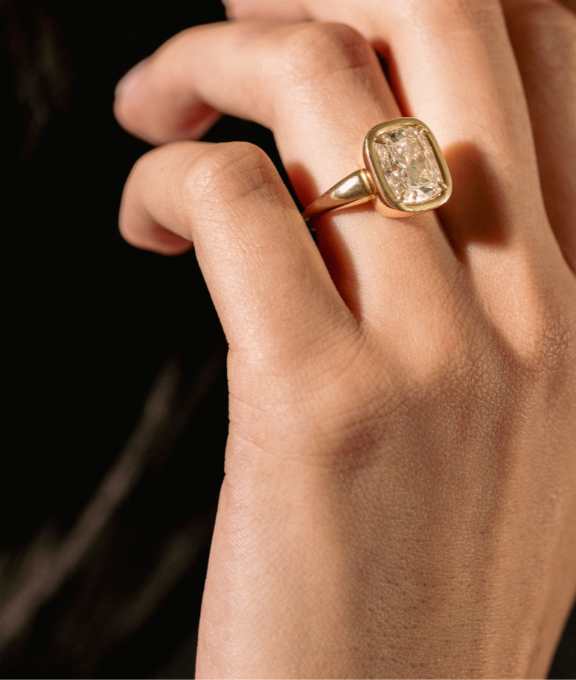
This is an important consideration for anyone purchasing a lab-grown stone whether it's an emerald or cushion cut, prompting questions about future trends.

For anyone buying a lab-grown stone today, understanding how that price trajectory happened and where it may be heading is one of the most important parts of making an informed decision.
Where Prices Are Right Now
At retail, a 1-carat lab-grown diamond averages around $1,000 or less in 2025, compared to approximately $4,200 for a natural diamond of similar size. The price difference is typically 80% to 90%, depending on the stone and the seller.
Wholesale prices show a notable decline. Select stones traded for $80 to $105 per carat by mid-2025, according to Edahn Golan’s data. Year over year, wholesale prices decreased by 37%. In the second quarter of 2025, they dropped an additional 9%.
Recent months have seen lab-grown diamond prices increase by about 3.32%, and some analysts believe prices are nearing production costs. When prices reach production cost, further declines are limited.

Wholesale prices have fallen even more sharply, though a recent uptick of about 3% has led some analysts to suggest prices may be approaching the production cost floor.
Why Prices Kept Falling
Production volume is a main factor. In 2010, about 1 million carats of lab-grown diamonds were produced globally. By 2023, the total reached over 9 million carats. China produces approximately 40% of gem-quality lab-grown diamonds, mainly using HPHT, a cost-effective process. India performs more than 50% of cutting and polishing.
The substantial supply growth contributed to falling prices. Wholesale declines were sharper than retail, as retailers increased markups. The typical retail markup on a loose lab-grown diamond ranges from 250% to 300%, with average gross margins near 73%. As a result, retail prices declined more gradually than wholesale costs.

Global lab-grown diamond production grew from about 1 million carats in 2010 to over 9 million carats by 2023, with China supplying roughly 40% of gem-quality stones through cost-effective HPHT production.
How Buyers Are Responding
Lower prices have affected buying behavior:
- The average size of a lab-grown engagement ring center diamond increased from 1.31 carats in 2019 to 2.45 carats by 2025.
- Many buyers chose larger, higher-quality stones.
- In 2020, 37.7% of lab-grown diamonds sold were colorless.
- By 2025, that figure reached 85.9%.
Additional trends include:
- Among center stones, 52% were lab-grown in 2024, up from 12% in 2019.
- About two-thirds of Gen Z engagement ring buyers selected lab-grown options.
- The average engagement ring price decreased from $6,000 in 2021 to $5,200 in 2024, driven by lower lab-grown diamond prices.
Resale Value and What to Expect
In 2025, lab-grown diamonds retain about 30% to 40% of their purchase price on the secondary market. For example, a stone purchased for $1,000 might resell for $300 to $400.
Natural diamonds typically resell for 20% to 60% of their original retail price. While the percentage retained may be higher, the absolute dollar loss can be greater due to higher initial prices.
A natural diamond purchased at $5,000 might lose $2,000 to $3,000 on resale, while a lab-grown stone bought at $1,000 might lose $600 to $700. Lower initial costs result in smaller total losses, even when the percentage drop is steeper.

A lab-grown stone bought for $1,000 might resell for $300 to $400, while a natural diamond purchased at $5,000 could lose $2,000 to $3,000 on resale.
GIA’s New Grading System Changes the Conversation
Beginning in late 2025, the Gemological Institute of America stopped using the traditional color and clarity grading scale for lab-grown diamonds. Since 2022, 95% of artificial diamonds submitted to GIA have been colorless (D, E, or F grades), and 98% have received clarity grades of VS1 or higher. With nearly every stone falling into the top tier, the old grading system stopped being useful.
GIA replaced full grading reports with two descriptive categories for lab-grown stones: Premium and Standard. This change makes the distinction between natural and synthetic diamonds clearer and may influence how buyers assess the resale potential of lab-grown stones.

Starting in late 2025, GIA replaced its traditional color and clarity grading scale for lab-grown diamonds with two broader categories.
Tariffs and Trade Policy Add Pressure
The 50% tariffs on diamonds shipped from India to the United States hit the supply chain hard. Cut-and-polished diamond shipments from India to the U.S. dropped by 60%.
But in early 2026, an interim trade agreement between the U.S. and India brought those tariffs down to 18%. Loose lab-grown diamonds are not included in the duty-free provisions, so they will be subject to the 18% tariff once the deal is finalized.
This added cost may offset some ongoing wholesale price drops and lead to short-term stability at the retail level. Pricing is expected to adjust throughout the remainder of 2026.
What the Market Looks Like Going Forward
Per-carat prices may be near the bottom, but the overall market is growing because of volume. Fortune Business Insights valued the global lab-grown diamond market at $29.46 billion in 2025 and projects it to reach $91.85 billion by 2034, growing at about 13.42% per year.
For buyers, the math is fairly straightforward. Lab-grown diamonds give you a larger, higher-quality stone for less money, and the savings are real. But the resale value is low and likely to stay low. If long-term financial retention matters to you, a natural diamond holds up better on that front. If size, appearance, and upfront affordability matter more, lab-grown pricing in 2025 makes a strong case.
Working with a jeweler who carries both options and explains the tradeoffs honestly is worth the effort. GOODSTONE offers natural and lab-grown diamonds with a concierge approach that walks you through each choice. Our handcrafted pieces are made in the U.S., come with a lifetime warranty, and include complimentary resizing. Having that kind of guidance helps when the pricing picture is this complicated.

For buyers, the value proposition is clear: lab-grown diamonds offer significantly more size and quality for the money, with the trade-off being low resale value that is likely to remain low.
Buying With Open Eyes
Lab-grown diamond prices have dropped by roughly 96% over the past seven years. They may be near the production cost floor and stabilize. But the pattern so far has been consistent and steep.
Buy a lab-grown diamond because you want to wear it, not because you expect it to hold its value. The stone will look identical to a natural diamond on your hand, and it will cost a fraction of the price. That is the deal you are getting, and it is fair, as long as you go in knowing exactly what it is.



Leave a comment (all fields required)