





Elongated Old Mine Cuts vs. Standard Old Mine Cuts
Standard old mine cuts and elongated old mine cuts share the same antique foundation, including 58 facets, a high crown, a small table, and a large open culet. The difference comes down to shape. A standard old mine cut appears more square with a length-to-width ratio between 1.00 and 1.10, while an elongated old mine cut is a longer, cushion- or oval-shaped stone, usually 1.20 to 1.40 or more.
Anyone who has seen photos of Taylor Swift’s engagement ring knows how the elongated version sits on the hand. The squarer form has existed for centuries, while the elongated version has recently moved into the spotlight.

Standard and elongated old mine cuts share the same antique foundation, with one key difference: shape
What Is an Old Mine Cut?
An old mine cut is a hand-cut antique diamond shape dating from the early 1700s to the late 1800s. It is defined by 58 facets, a soft, squarish cushion outline, a high crown, a smaller table, and an open culet visible through the table. It shares its facet count with the modern round brilliant, but its proportions feel older and chunkier in the hand. The table occupies 38 to 45% of the diamond’s diameter, which is smaller than the brilliants seen in modern engagement rings. The crown sits taller, while the pavilion runs deep.
The cut originated in a time when diamonds were measured by eye and shaped by hand. Lang Antiques traces it to 18th-century European workshops, where cutters worked with rough from Brazil before South African mines opened. The culet was ground flat, which is why a small circle often appears in the center of the table. That tiny window distinguishes an old mine from a later antique cushion that closed the culet down.
Old mine cuts dominated Georgian and Victorian jewelry before fading out with the arrival of the steam-powered bruiting machine in the late 1800s, making rounder, more uniform stones easier to produce. The old European cut followed, and the modern round brilliant eventually replaced both. For most of the 20th century, old mine cuts sat on the sidelines as cutters reshaped many original stones into modern forms. The surviving stones now make up one of the antique market’s richest sources of character, with elongated examples among the rarest.
Compared to the old mine, the old European cut appears rounder, even though both are hand-cut antiques with high crowns and visible culets. The antique cushion developed directly from the old mine has a similar outline, but the culet has been reduced, and the table opened up, increasing its brightness. Modern cushion brilliants push that transition further through additional facets and proportions designed for electric light. Once these shapes become easier to visualize, the old mine appears as the oldest and most visibly hand-shaped of the four.

An old mine cut is an antique diamond shape dating from the early 1700s through the late 1800s, cut by hand and by eye before mechanical tools existed.
How Their Outlines Differ
The clearest difference between the two cuts is the shape when looking straight down at the stone. A standard old mine cut is a soft square with rounded corners, while an elongated old mine cut is a longer cushion resembling an oval, with the same rounded shoulders and an extended body.
A standard old mine has a length-to-width ratio between 1.00 and 1.10, which Petra Gems and other cutters describe as squarish for cushion family stones. Anything above 1.10 is longer in the hand. Antique elongated old mine cuts range from 1.15 to 1.30, with examples rarely exceeding 1.30. ROEN’s antique cushion notes indicate that even a 1.10 ratio is elongated by antique standards, because most 18th- and 19th-century cutters worked towards square designs.
Modern cutters and lab-grown producers can further refine this ratio. Brilliant Earth and other specialty cutters now offer old-mine-style stones in the 1.30 to 1.40 range, and a handful go beyond that into vintage emerald-shape territory. Their facets resemble old mine cuts, but their footprint is intentionally extended beyond period work.
That scarcity is part of why Swift’s ring resonated. Sotheby’s coverage of the Kindred Lubeck-designed piece called the elongated old mine “the holy grail” of antique stones, because so few period examples exist with strong proportions. The center stone is reportedly in the 8-to-10 carat range, with a length-to-width ratio of nearly 1.40, placing it at the higher end of the range.

The most immediate difference between the two cuts is visible from directly above.
Sparkle and Light Return
Both cuts produce a broad chunky flash pattern, with elongated stones spreading those flashes across a longer axis. Since they share the same faceting, high crown, large culet, and small table, they handle light similarly. The difference lies in their geometry, not their architecture.
The light return on both designs leans toward fire over brilliance. Erstwhile Jewelry refers to old mine cuts as “candlelight diamonds” because they sparkle under candlelight and gas lamps, which cast warm, point-source light at a soft angle. Larger facets catch that light in slow, dimensional flashes, and modern brilliants were engineered for cooler, brighter electric light, producing a faster, finer sparkle.
In a standard old mine cut, chunky flashes radiate outward from the center in a balanced pattern. In an elongated version, those flashes travel along the length of the stone, creating a more theatrical appearance under spot lighting and a softer glow in candlelight. The effect is unmistakably antique, with rainbow fire emerging from broad facets in a way modern cuts rarely replicate. GIA’s 4Cs attributes that fire to the steep crown and smaller table, both of which encourage spectral color dispersion.
Both versions read warmer than modern brilliants of the same color grade because the chunkier facets soften how the color displays. An old mine K or L color often looks more like an I or J in person, and that warmth suits yellow gold settings well.
When comparing old mine cuts in online photos, lighting conditions matter. Studio strobes can flatten broad facet flashes, making the stone appear quieter than it does in person. Candlelight, lamplight, and low-angle sunlight bring the chunky fire forward in a way that brightly lit jewelry counters often conceal. As a result, the difference in sparkle between a standard square old mine cut and an elongated version can appear more dramatic in retail photography than it does in everyday wear.

In an elongated old mine, flashes travel across a longer axis, creating a more theatrical glow.
Pricing and Availability
Standard old mine cuts are easier to find, while elongated antique examples cost meaningfully more per carat due to limited inventory. Modern recuts and lab-grown old mines ease that pressure, especially in the elongated outlines that the antique market cannot supply at scale.
Pricing data from major retailers, along with PriceScope’s antique pricing chart, helps define the market. The Diamond Pro lists old mine cuts in the 0.5 to 0.69 ct range at roughly $2,000, while stones between 2.0 and 2.99 ct typically range from $4,500 to $5,800. Smaller stones below the half-carat mark can be found for a few hundred dollars.
The Diamond Pro reports that old mine cuts sell for 10 to 15% less than comparable old European cuts. PriceScope and Estate Diamond Jewelry note that well-preserved 1-carat old mine-cut diamonds can command premiums of 10 to 25% over modern equivalents due to antique demand and the preservation of their original cut.
Estate Diamond Jewelry indicates that antique old mine cuts over 2 carats in good condition are rarer because several were recut for modern fashion in the 20th century. Antique elongated stones of similar weight are scarcer still, which is why dealers describe them as holy-grail material when they surface.
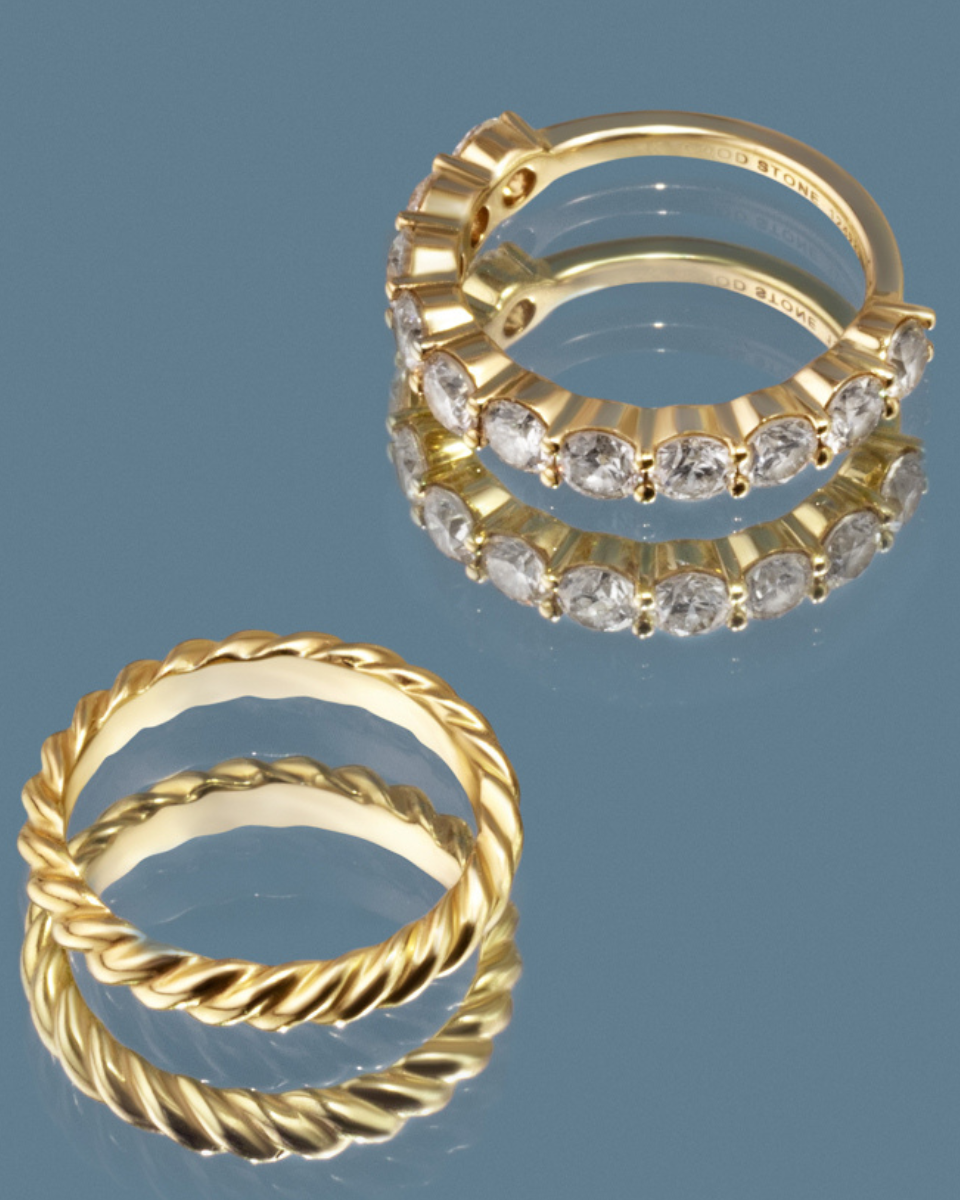
Those who want the elongated look without the antique price tag or the long search can find it in the lab-grown market. The Brilliant Earth buying guide notes that several cutters now produce lab-grown old-mine cuts in commissioned ratios ranging from 1.20 to 1.40, and that old-mine-style moissanite is also available. These stones offer antique faceting with higher clarity and at a lower price per carat, but they lack antique origins. GOODSTONE offers square and elongated old mine-cut engagement rings, bringing a classic feel to modern designs.

Standard old mine cuts are easier to source, while antique elongated examples command meaningful premiums due to limited inventory.
How Each Looks in a Setting
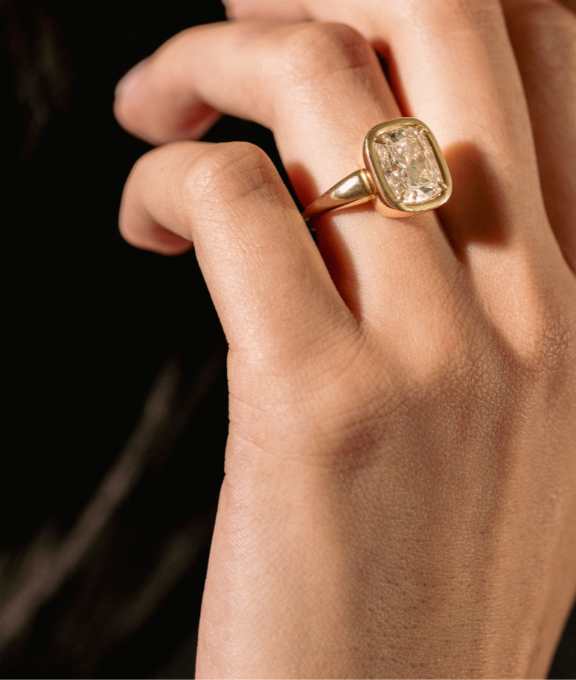
A standard old mine cut sits centered on the finger and fills the width of the band, while an elongated one runs along the finger, giving the ring a longer line. Both work in the settings used for antique stones, and the choice is based on the visual effect you want from the hand.
Bezels suit both shapes well. A full bezel cleanly frames the cushion outline and protects the high crown, making it a strong choice for antique stones with thinner girdles. Half bezels and east-west settings pair well with elongated stones, where the longer body has more room to breathe within a softer frame. Four-prong claw and compass-set styles leave more of the crown visible, allowing the chunky flash pattern to appear without interruption. Halos also suit either outline, especially when smaller round or rose-cut accent diamonds reinforce the candlelit character of the center stone.
Yellow gold is the most common metal pairing for antique cuts for practical reasons. Antique stones often grade in the J to N color range, and a warmer metal flatters those tones in a way platinum or white gold cannot. White metal works beautifully with high-color modern recuts and lab-grown old mine cuts, where the body color stays cleaner. Rose gold is somewhere in between, lending warmth without pulling the diamond yellow.
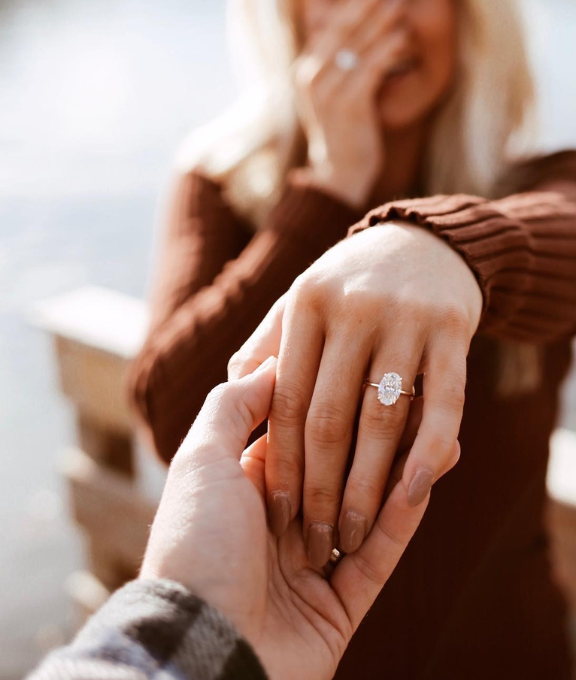
Finger coverage offers the most visual difference. A 2 ct standard old mine cut is a soft square, and a 2 ct elongated old mine cut at a 1.30 ratio appears longer along the finger and looks more graceful. Taylor & Hart’s elongated cushion guide indicates this in their sizing notes, while Keyzar’s elongated cushion size chart shows the same effect in millimeters across carat weights.

A standard old mine cut sits centered on the finger as a soft square, while an elongated version runs along the finger's length, giving the ring a longer, more graceful line.
Making the Right Choice for Different Hands and Tastes
Choose between the two by deciding what you want the ring to do on the hand and how much period character you want for the stone. Standard old mine cuts appear classically antique, with a softer square that sits comfortably inside Georgian and Victorian style settings. Elongated old mine cuts combine romantic and modern looks, with the antique facet pattern adding warmth and the longer outline giving the stone presence.
For shorter fingers or those seeking a longer line on the hand, elongated is the more flattering option. On longer fingers, a standard square seems more architectural, spotlighting the cushion outline. Neither is right nor wrong, and the decision depends on the kind of statement you want to make, from a quiet heirloom to something that draws attention across a room.
Heirloom intent matters, and an antique standard old mine cut is the easier path for buyers seeking a stone with documented period origin. Antique elongated old mine cuts are harder to find, take longer to source, and command higher per-carat prices, but the result is a rare and visually distinctive stone. Lab-grown and modern recut elongated designs deliver a similar look at a lower price point, although the stone itself is contemporary, even if the style is not.
Custom work also deserves consideration. Skilled cutters can shape antique-style rough into old mine cuts with a specific ratio, which is how many modern elongated designs come to life. Buyers can specify length-to-width ratio, color, and clarity in ways the antique market cannot.
This approach also allows antique-inspired stones to pair with newly built modern settings without the concerns that often come with older diamonds, such as thin girdles, chips, or accumulated wear.
The two cuts are siblings, not rivals, as they come from the same family, share the same facet language, and produce a similar warm candlelight sparkle. The standard old mine cut retains the original square footprint, while the elongated old mine cut stretches it, resulting in an antique character and a longer silhouette.
Buyers make their decision by observing both shapes in their hands before committing. Trying a standard old mine cut next to an elongated one in the same metal and a similar setting is more effective than making a decision based solely on pictures. Many expect to like one and leave drawn to the other, which is part of the quiet pleasure antique cuts provide.
For shorter fingers or anyone wanting a longer line on the hand, the elongated old mine is the more flattering choice while for longer fingers, the standard square version's architectural quality draws attention to the cushion outline itself.
Frequently Asked Questions
What length-to-width ratio is an old mine cut?
A standard old mine cut typically falls between 1.00 and 1.10, which reads as a soft square. Antique elongated old mine cuts usually range from 1.15 to 1.30, while modern recuts and lab-grown versions can reach 1.40 and beyond. Anything over 1.10 counts as elongated by antique market standards, according to ROEN’s antique cushion notes.
How can you tell an old mine cut from an antique cushion?
Look at the center of the table from directly above. An old mine cut usually shows a small visible circle through the table, which is the open culet ground flat by hand. Antique cushions descended from the old mine, but with a reduced cut, so the center looks cleaner. Lauren B Jewelry notes that the old mine also has a smaller table and a higher crown than the cushion.
Are old mine-cut diamonds rare?
Yes, especially in well-preserved condition and in larger sizes. Estate Diamond Jewelry notes that 2-carat and larger antique old mine cuts are rare because many original stones were recut into modern shapes; elongated antique examples are even more so. Sotheby’s referred to them as holy-grail material in reference to Taylor Swift’s ring.
Do old mine-cut diamonds sparkle?
They do, but with a chunkier flash pattern and more colored fire than modern brilliants. Erstwhile Jewelry calls them candlelight diamonds because the cut was tuned to sparkle under candle and gas lamp light. The 58 large facets, steep crown, and small table favor fire over the sharp white brilliance of modern cuts.
Can you get a lab-grown elongated old mine cut?
Yes. Several cutters now produce lab-grown old mine cuts in elongated styles that are difficult to come across in antique inventory. The Brilliant Earth buying guide and retail listings from DovEggs and Diamondrensu show options ranging from 1.20 to 1.40. Old-mine-style moissanite is also available in elongated outlines for buyers who want the look at a lower price point.
Why is Taylor Swift’s ring an old mine cut?
Designer Kindred Lubeck of Artifex Fine Jewelry chose an elongated cushion-shaped old mine-cut for the center stone, set in 18k yellow gold, and announced it on August 26, 2025. The ring reportedly weighs 8 to 10 carats with a length-to-width ratio of nearly 1.40, and is valued at $400,000 to $1 million. Sotheby’s noted that the choice revived broad interest in antique elongated cuts, particularly those nearly forgotten in the mainstream engagement-ring inventory.



Leave a comment (all fields required)