





What Makes a Diamond Sparkle? The Role of Cut Quality
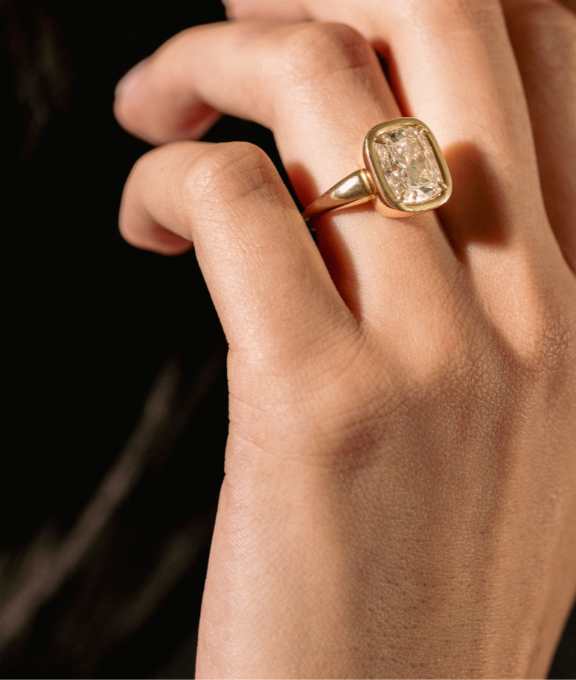
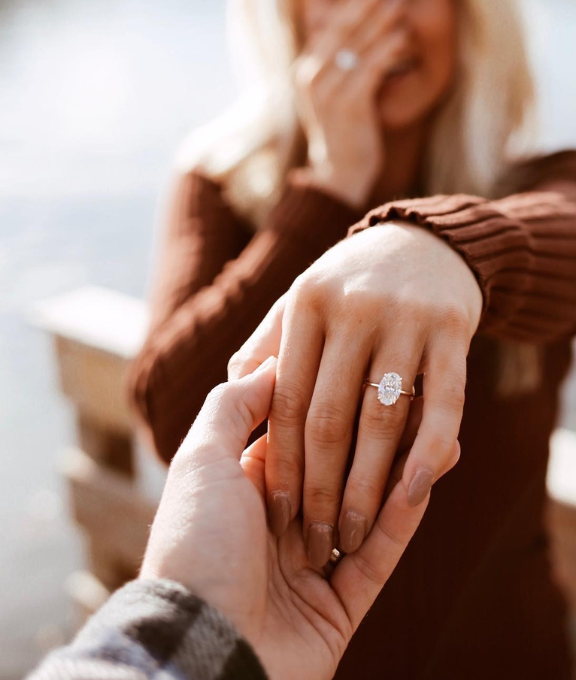
Set two diamonds graded Excellent for cut side by side, and one can still out-sparkle the other by a margin you can see. That gap is the whole reason to treat cut as the first of the four Cs to get right. Cut quality determines how much light a stone returns to your eye, and light return is the part of a diamond anyone notices before they ever hear its carat weight or color grade. Carat buys size, and color sets warmth, but cut is what makes a stone look brighter than its paperwork suggests. This goes for diamonds of all shapes, ovals, cushions, you name it.

More than carat weight or color, exceptional cut quality determines how much light comes back to your eye and how brilliantly the stone performs.
The Case for Cut First
Two Excellent stones can look so different because of what a grade can and cannot say. A cut grade summarizes a stone’s design, yet you are reading something more specific in the moment. You are judging how much light returns and how much leaks away. Set a triple-Excellent stone beside a more tightly cut one, and with both in hand, the tighter cut can move ahead of its paper equal. The grade had not told the full story.
A well-cut 1.0-carat diamond can look livelier than a poorly cut 1.5-carat emerald diamond that weighs half again as much. Weight and sparkle are not the same measure. A single grade of color or clarity is invisible across a table, yet the brighter of two stones is obvious to almost anyone. Cut is the C a shopper reads first and settles on before the others.

Prioritizing cut allows even a smaller stone to appear brighter, livelier, and more captivating than its carat weight suggests.
The Path Light Takes Through a Diamond
Cut quality determines how much a diamond sparkles by shaping the way light moves through it. Light enters through the flat table on top and the crown facets around it. It travels down into the stone, bounces off the pavilion facets at the bottom, then comes back up through the crown and table to the viewer.
In a well-cut stone, most of that light returns as brightness and fire, along with the play of light and dark that shows when the stone moves. In a badly cut one, the light leaks out.
Light leakage is the failure everyone is trying to avoid. When the angles are wrong, light escapes through the bottom or the sides and never reaches the viewer, causing the stone to go flat. A pavilion cut too deep sends light out the sides and leaves the center looking dark, which jewelers call a nailhead.
Cut too shallow, and the failure goes the other way, with light bouncing back out before it reaches the viewer. Either one can dull a diamond that scored well on color and clarity. Cut is doing work the other grades never touch.

Precise angles guide light back through the top of the diamond, while poor proportions allow that sparkle to escape through the sides or bottom.
Proportions Behind Light Return
Good light return comes from a set of measurable proportions, and the ranges are well established for a round brilliant. Total depth generally performs best between about 59% and 62.9% of the stone’s width, with the table between roughly 53% and 58%. The crown angle is best near 33.5 to 35.5 degrees, and the pavilion angle near 40.6 to 41 degrees. Move outside those bands and light starts leaking before you ever notice a number.
These ranges are not new. Marcel Tolkowsky, a Belgian engineer from an Antwerp cutting family, worked out the math in 1919 by tracing how light rays would move through a stone at different angles. His specifications, from a pavilion angle of 40.75 degrees to a 53% table and 57 facets, still define the modern round brilliant more than 105 years later.
Proportions work as a balance, several angles tuned against each other. Tuning the angles for maximum brightness can cost some fire, and chasing fire can cost some brightness. Ideal proportions hold the two in tension, and drifting too far in either direction gives up part of both.

Table size, depth, crown angle, and pavilion angle work together to create the brightness and fire we associate with a beautifully cut diamond.
How Cut Buys Room on the Other Cs
Cut takes priority partly because it creates margin on the other three Cs. A stone with strong light return can help hide small inclusions, and a lower clarity grade can still look eye-clean. That same brightness can make a stone read whiter than its color grade, letting a slightly warmer stone pass for a cooler one. Spend on cut, and you give yourself room to economize elsewhere without the stone showing it.
The trade reverses when people chase weight. A heavier stone cut to hold weight, with light return sacrificed, will not outshine a lighter stone cut with care, no matter what the carat number says. Color and clarity are mostly on the report, at grades few shoppers can tell apart by sight. Cut is the part you see, the gap between a diamond that catches a room’s light and one that goes flat. That is what buyers register in the end, and the one thing to protect first.

Investing in cut quality can give you more flexibility with color, clarity, and carat.
The Limits of the Cut Grade
For all its value, the cut grade has a limit buyers should know about. The standard cut grades run from Excellent at the top to Poor at the bottom, and they do sort stones usefully. An Excellent stone looks bright with an even balance of light and dark, while a Poor one goes flat and dark from leakage. What the grade does not do is measure light performance directly, and that alone explains why two Excellent stones can differ side by side.
Some Excellent stones still have slightly off proportions or minor leakage the grade rounds past. The tighter tier that cutters call super-ideal exists to close that gap, holding proportions and symmetry to narrower tolerances than an Excellent alone requires.

An Excellent cut grade is a strong starting point, but it does not tell the entire story.
The Finishing Role of Polish and Symmetry
Two components finish the cut and help decide how far a stone reaches its potential. Symmetry describes how precisely the facets line up, and polish describes how smooth their surfaces are.
Poor symmetry lets light leak from the side or bottom, dulling a stone even when its main proportions look ideal. Poor polish scatters light across abrasions and fine scratches, leaving a stone looking hazy. Of the two, symmetry has the slightly larger effect on light performance, and it also caps the overall grade, since a stone with only Good symmetry cannot reach an Excellent cut.

Precise symmetry and exceptional polish allow each facet to work together, creating cleaner, more consistent light return.
Hearts and Arrows and Optical Symmetry
Hearts and arrows is the visible proof of symmetry taken to its strictest form. In a round brilliant cut to ideal optical symmetry, all 57 facets align precisely enough to show a pattern of eight arrows from the top and eight hearts from the bottom, seen through a special viewer.
Japanese cutters developed the technique in the 1980s, building on Tolkowsky’s earlier math, and fewer than 1% of diamonds achieve that precision. It is a step beyond a strong grade on paper. A stone can score Excellent symmetry and still show fuzzy or uneven hearts under the scope. For a buyer, the clean pattern makes precision visible.

Perfectly aligned facets create a distinctive optical pattern that makes exceptional symmetry visible rather than simply something written on a grading report.
How to Judge Cut on Fancy Shapes
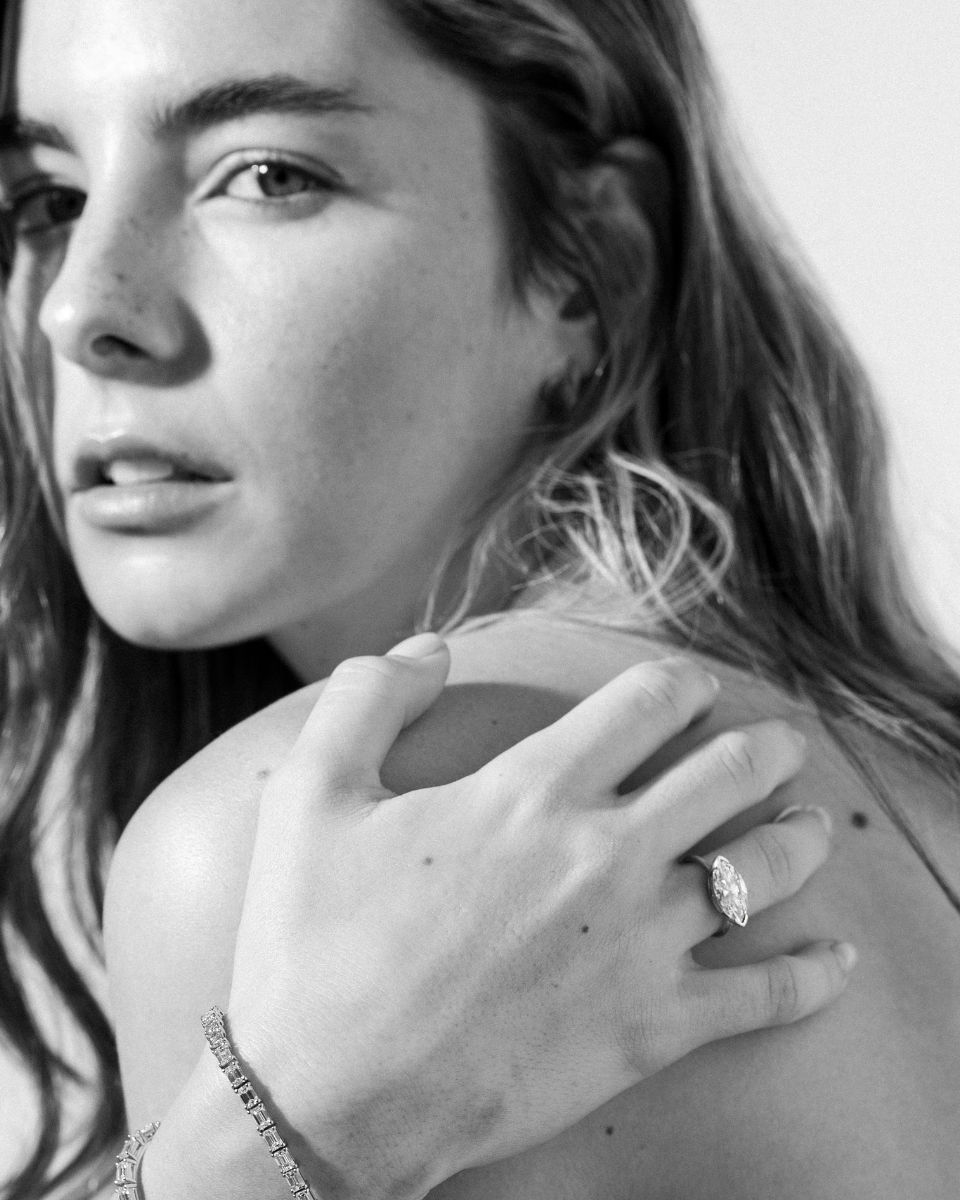
The cut-first rule holds even where no cut grade exists, which is the case for most of the shapes people love. Ovals and cushions, like every other fancy silhouette, receive no standard cut grade at all, because each one has too many acceptable variations to score against a single standard. That absence trips up buyers who expect the report to protect them.
A fancy shape that measures well on paper can still show a pale center where light passes straight through, or a dark bowtie across it, either one appearing only once the stone is in your hand or in a light-performance image.
Judging one means reading proportions and pictures, since no letter grade exists. The depth and table percentages give you a starting read, together with the length-to-width ratio and symmetry. A cushion aiming for strong fire usually falls around 65% to 69% depth with a table near 60% to 65%, while a well-balanced oval shows a length-to-width ratio between about 1.20 and 1.55, with depth near 58% to 62%.
Those ranges help you skip an obviously poor stone, but they do not replace a direct look. The most reliable check is still a light-performance image or an in-person look, where a see-through center or a bowtie shows itself in a way no measurement quite predicts.

Fancy shapes like oval and cushion require a more personal approach to evaluating cut.
How to Prioritize Cut When Buying
The order of priorities is simpler than the shopping usually seems. Get the cut right first, then balance the carat weight against color and clarity. On a round brilliant, the grade gives you a strong starting filter, and moving from Excellent toward the tighter super-ideal range buys the last few percent of light return that enthusiasts happily pay for. On a fancy shape, there is no grade to lean on, and the judgment moves to proportions and ratio, plus an honest look at the stone itself before you commit.
A cut-first order of priorities only becomes real when you can hold the stones up to the light and compare them. GOODSTONE designs across every shape and gives buyers one-on-one designer access, with a round set beside its report and a fancy shape beside its light-performance image. Side by side, one stone plainly returns more light. The stone that sends the most light back to your eye is the one you will keep noticing when it catches the light, whatever the grades on the paperwork say.

Choose cut quality first, then balance carat, color, and clarity around it.
Frequently Asked Questions
What makes a diamond sparkle?
Sparkle comes from cut quality. Light enters through the table and crown, bounces off the pavilion facets, and returns to your eye as brightness and fire, with flashes as the stone moves. Well-cut proportions send most of that light back, while poor proportions let it leak away.
Which of the 4Cs is most important for sparkle?
Cut. It governs how light behaves inside the stone more than color, clarity, or carat do, and it is the one difference the naked eye reads instantly across a table. The other three grades describe what the stone is made of. Cut decides what it does with light.
Is cut more important than carat?
For how a diamond looks, yes. A well-cut 1.0-carat stone can out-sparkle a poorly cut 1.5-carat one, and strong light return can make a diamond look larger than its weight. Size is one scale, but sparkle depends on how the stone handles light.
What is the standard diamond cut grade scale?
The standard cut grades run from Excellent at the best end down to Poor at the worst. Excellent stones look bright with an even balance of light and dark, while Poor stones look dull from light leakage. Very Good ranks immediately below Excellent and is close enough that most eyes cannot separate the two.
Do all diamonds get a cut grade?
No. The standard cut grade applies only to round brilliant diamonds. Fancy shapes such as oval, cushion, and pear receive no cut grade, and buyers judge them by proportions and ratio plus a visual inspection.
Why don’t fancy shape diamonds get a cut grade?
Each fancy outline has too many acceptable variations for graders to standardize a single score. A cushion or a pear can be beautiful across a wide band of proportions, and no single template fits them all. Buyers judge these shapes by their proportions, length-to-width ratio, symmetry, and how they look in person or in a photo.
What are ideal diamond proportions?
For a round brilliant, aim for a table of 53% to 58% and a total depth of 59% to 62.9%. The crown angle falls near 33.5 to 35.5 degrees, with the pavilion angle near 40.6 to 41 degrees. These ranges trace back to Marcel Tolkowsky’s 1919 calculations and still define the modern round brilliant.
What is light leakage in a diamond?
Light leakage is light escaping through the pavilion before it reaches your eye, caused by proportions that are too deep or too shallow. Light from the bottom reduces brightness, and light from the sides makes the stone look dark. It is the main way a poor cut dulls a diamond.
What are hearts and arrows in a diamond?
Hearts and arrows refers to a round brilliant cut with ideal optical symmetry, showing a pattern of eight arrows from the top and eight hearts from the bottom when viewed through a special viewer. Fewer than 1% of diamonds reach that precision, a tighter tier inside the ideal-cut range.
Do polish and symmetry affect sparkle?
Yes. Poor symmetry lets light leak away, dulling a stone even with ideal main proportions, and poor polish scatters light, leaving a hazy look. Symmetry has the slightly larger effect on light performance, and weak symmetry also blocks a stone from reaching the top cut grade.
Can two Excellent-cut diamonds look different?
Yes. The cut grade does not measure light performance directly, so two Excellent stones can differ visibly when set side by side. Some Excellent stones still show slightly uneven proportions or minor leakage, which is why the tighter super-ideal tier exists.



Deja un comentario (todos los campos son obligatorios)