





Elongated Cushion Diamond Ratios Explained
Most people shopping for a cushion-cut diamond already know they want soft, rounded corners and a warm sparkle. But when elongated cushion cuts are placed side by side, the difference between a 1.15 ratio and a 1.35 ratio can be difficult to recognize without context.
The length-to-width ratio of an elongated cushion affects how the stone sits on your finger, how large it appears, and how much light it returns to your eye. Because the GIA does not assign a cut grade to fancy-shaped diamonds, the ratio becomes one of the most useful metrics for comparing stones.
Understanding how those ratios influence appearance helps narrow the search and avoid proportions that look awkward or unbalanced.

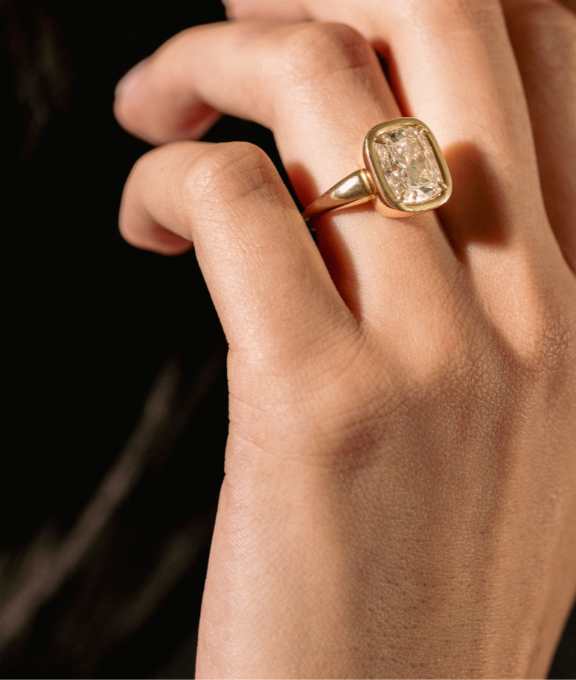
Ratio can completely change the look of your diamond, which one will you choose?
What the Length-to-Width Ratio Tells You
The length-to-width ratio is calculated by dividing the diamond’s length by its width in millimeters. A perfectly square cushion has a ratio of 1.00, and the number increases as the stone becomes more rectangular.
|
Ratio Range |
Appearance |
Notes |
|
1.00 |
Perfectly square cushion |
Traditional square cushion shape. |
|
1.15-1.20 |
Subtle elongation |
Often considered the classic elongated cushion look. |
|
1.15-1.25 |
Balanced elongated cushion |
Range recommended by Natural Diamonds for a recognizable cushion shape with added finger coverage. |
|
1.15-1.40 |
General elongated cushion range |
Wider spread of proportions with increasingly rectangular appearance. |

All the elongated cushion cut diamond ratios compared on hand.
How Different Elongated Cushion Ratios Look
Elongated cushion ratios fall into several visual categories, each producing a different look on the hand.
|
Ratio Range |
Appearance |
Style Notes |
|
1.21-1.30 |
Noticeably elongated cushion |
Rectangular profile while maintaining the soft, curved corners typical of a cushion cut. Often considered a balanced middle ground. |
|
1.31-1.40 |
Strong elongation |
Creates a longer, slimmer appearance on the finger and carries more visual presence. Suitable for buyers who prefer bolder proportions. |
|
1.40-1.50 |
Dramatic elongation |
Distinctly rectangular shape with maximum finger coverage. Natural Diamonds notes this range is gaining popularity among buyers seeking a longer, modern look. |

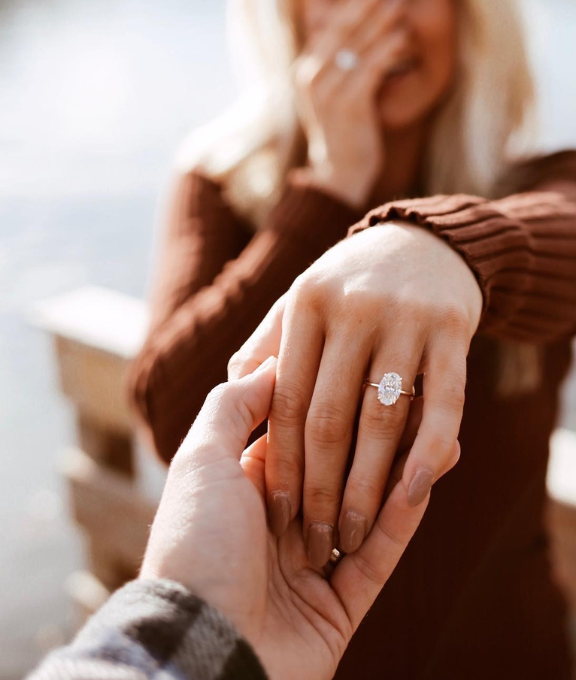
Two popular ratios, 1.2 vs 1.3, are compared on hand.
The Awkward Zone to Avoid
GOODSTONE and the International Gem Society recommend avoiding the 1.06 to 1.10 range. At this ratio, the stone doesn’t quite look square or rectangular. It ends up in an in-between place that can feel visually off. If you’re going elongated, commit to 1.15 or above. If you want square, stay at 1.05 or below.
Why There Is No GIA Cut Grade for Elongated Cushions
The GIA does not issue an overall cut grade for fancy-shaped diamonds, including cushion cuts. According to the GIA, an internationally accepted system for visually evaluating the appearance of fancy-cut diamonds does not exist at this time.
What you will find on a GIA report is the stone’s polish and symmetry grades, its measurements, a proportion diagram, and a description of girdle thickness.
This puts more responsibility on the buyer. You need to look at the ratio, the depth percentage, the table percentage, and the symmetry grade yourself. Aim for Very Good to Excellent grades in polish and symmetry. Pay attention to the millimeter dimensions listed on the report, because carat weight alone won’t tell you how large the stone looks face-up.
Depth, Table, and Light Performance
Natural Diamonds recommends keeping both depth and table percentages under 70% to avoid a stone that hides its weight below the surface and appears smaller than its carat size.
|
Proportions |
Recommended Range |
Why It Matters |
|
Depth Percentage |
58%-62% |
Helps maintain strong light return in elongated cushion diamonds. |
|
Table Percentage |
53%-63% |
Supports balanced light performance without flattening the crown. |
|
Upper Guideline |
Under 70% |
Higher numbers may hide weight in the stone’s depth, making it appear smaller than expected for its carat size. |
Cushion cuts are among the deeper cuts out there, so they can appear a bit smaller face-up compared to a round of the same carat weight. The elongated version helps offset this by distributing more of the stone’s surface area across the finger.
Brilliant vs. Modified Brilliant Cushions
There are two main faceting styles for cushion cuts, and they produce very different kinds of sparkle.
-
A cushion brilliant has larger facets, typically 4 or 8 kite-shaped mains between the girdle and culet. This gives you broader, softer flashes of light.
-
A cushion modified brilliant adds extra facets below the girdle, creating shorter, sharper sparkles that some people describe as a “crushed ice” effect. The light breaks up into smaller pieces, and the stone can look like glistening water when it catches light.
Both styles offer distinct visual effects. Viewing each in person or on video can help with your selection.
Color, Clarity, and Pricing
We recommend at least an H color grade and VS2 clarity or better for elongated cushion diamonds. These grades generally result in a stone that appears clean to the eye without the higher cost associated with invisible characteristics.
Cushion cuts are typically priced lower than round diamonds of the same carat weight. This allows buyers to consider larger carat weights or higher color and clarity grades within a set budget.
Setting Options That Work Well
Elongated cushions suit solitaire settings, highlighting the stone. Half bezel styles provide a modern appearance. Three-stone designs with tapered baguettes or pear-shaped side stones complement the cushion. Halo settings can increase the diamond’s apparent size.
An east-west setting positions the diamond horizontally, creating the impression of a larger stone and adding a contemporary element to the ring.

Dress up your solitaire with our Finest Ridged Solitaire Engagement Ring With Elongated Cushion Cut Diamond.
A Few Historical Notes Worth Knowing
The cushion cut has been around since the 1700s. Its earliest form, the old mine cut, was the most common diamond cut until the late 19th century. Modern cushion cuts are refined versions of that original style.
Well-cut cushion diamonds have the highest dispersion of any cut, meaning those colored flashes of light you see within the stone are especially strong in this shape.
Picking the Right Ratio for You
The ratio you choose ultimately comes down to how you want the diamond to look on your hand and the kind of presence you prefer. Ratios between 1.15 and 1.20 create a classic, understated elongation.
Ratios of 1.30 and above produce a more pronounced elongated look. Avoid the 1.06 to 1.10 range, and pay close attention to depth, table, polish, and symmetry since there is no cut grade to rely on for fancy shapes. Comparing millimeter dimensions alongside carat weight will also give you a clearer sense of how large the stone will appear once set.
That combination of details makes it much easier to identify a well-balanced, elongated cushion.



Deja un comentario (todos los campos son obligatorios)