





How to Pair a Wedding Band With Any Engagement Ring Style
Choosing an engagement ring often takes time and repeated comparison. The center stone draws attention, the setting gets reconsidered more than once, and metal colors are tried on several times before a decision feels right.
Then the conversation turns to the wedding band, and that step can catch couples off guard. The band has to sit next to a ring that already means something, pairing with it comfortably every day without competing for attention.
A few practical factors make that pairing easier. Once you know what to check before you begin browsing, the process tends to feel much more manageable.

Choosing a wedding band to sit beside an engagement ring that already means something requires more thought than most couples anticipate
Start With the Physical Fit
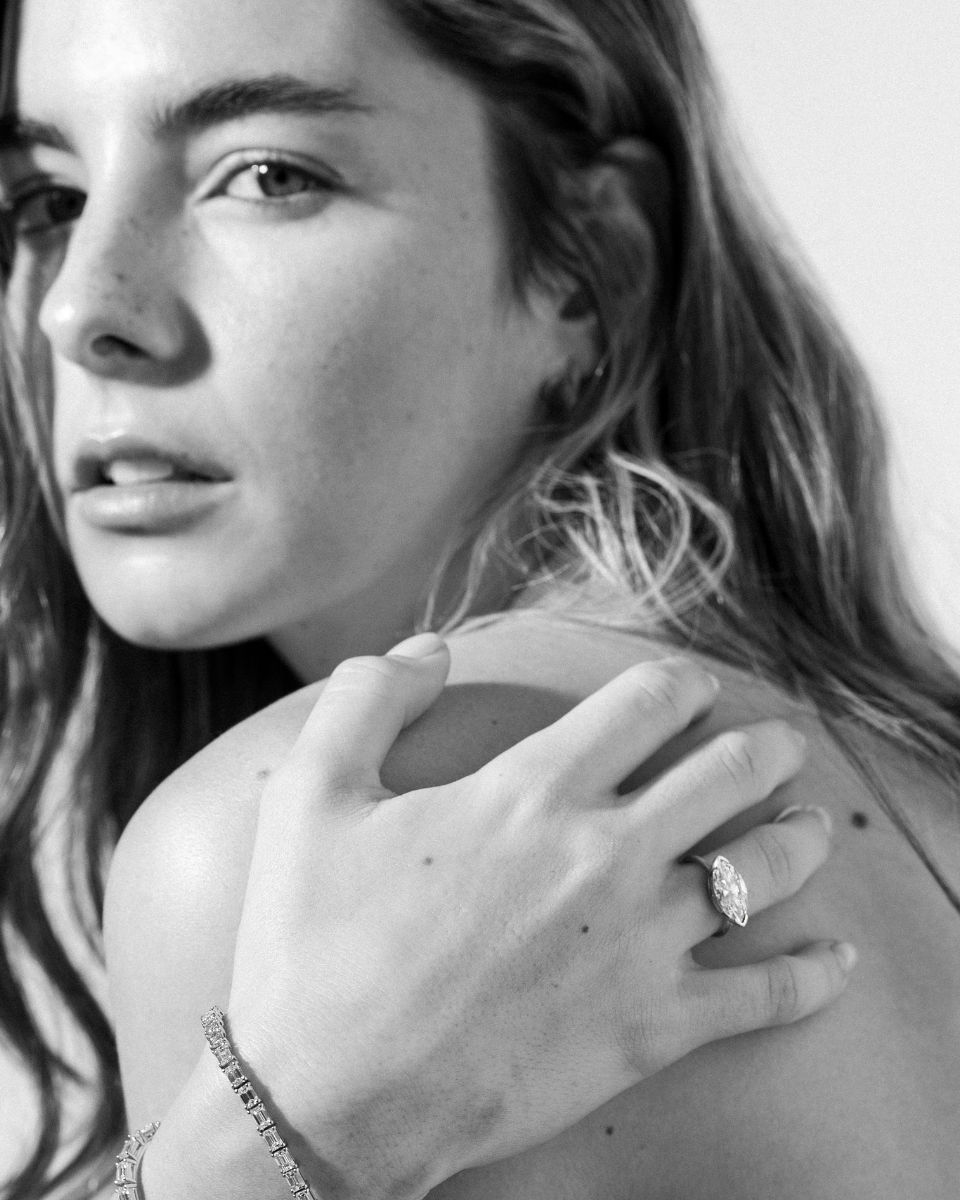
Before thinking about style, metal, or gemstones, look at the physical gap between your engagement ring and a flat band. If your center stone has an elongated or pointed profile, a straight band will likely leave a visible gap where the two rings meet. This applies to marquise, pear, and many oval cuts.
Contoured and curved bands solve this problem directly. They are cut to follow the outline of your engagement ring so the two pieces sit flush against each other. Our mixed-shape contoured wedding band, for example, is set with round, pear, and marquise diamonds and is designed to flow with the engagement ring without leaving awkward gaps.
We also offer a contoured band in plain precious metal, curved to create an organic fit around the finger, which works well for people who want a cleaner look beside a more detailed engagement ring.
For marquise cuts specifically, a curved band that hugs the pointed tips keeps the set tight and visually connected. The same logic applies to pear shapes, where a contour band mimics the stone’s rounded bottom and holds the whole pairing together.

Before considering style or metal, check whether a flat band will leave a visible gap beside your engagement ring's center stone.
Chevron and V-Shaped Bands for Pointed Stones
If a contoured band feels too subtle, chevron and V-shaped bands are a strong alternative. The V naturally frames and cradles the center stone, and this silhouette has gained significant momentum heading into 2026. It works particularly well with marquise and pear diamonds, where the pointed ends need a band that meets them rather than sits flat beneath them.
The angle of the V can vary from a sharp geometric point to a softer curve, so there is room to match it to your personal taste. A sharp chevron pairs well with angular, architectural engagement rings, while a gentler curve suits more rounded or organic settings.

A chevron or V-shaped band naturally frames and cradles pointed center stones, meeting the tips of a marquise or pear diamond rather than sitting flat beneath them.
Matching Metals and Mixing Them
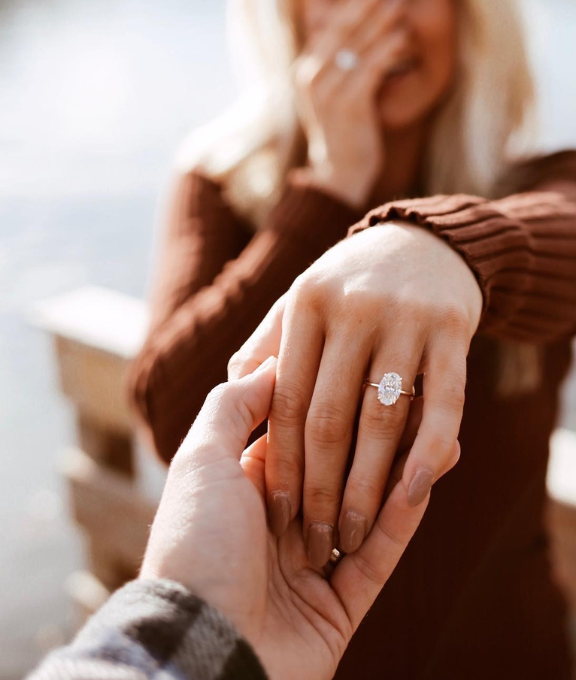
Oval engagement rings remain one of the most popular choices going into 2026, and metal selection is a big part of getting the band pairing right. Yellow gold, white gold, rose gold, and platinum are the main options, and the old rule about matching your metals has largely faded.
Mixing metals is now a deliberate styling choice many couples make. Combining yellow gold with white gold, or rose gold with platinum, creates contrast that keeps a ring stack from looking too uniform.
We encourage this approach across our collections and highlight mixed metals, asymmetrical designs, and engraved details as ways to build a stack that feels personal. Our ring stacking guide makes the point that this is where couples can really play with their preferences.
If you prefer a uniform metal tone, that works too. The key is making sure the band complements the engagement ring rather than competing with it visually.

The old rule about matching metals has largely faded. Mixing yellow gold with white gold or rose gold with platinum is now a deliberate styling choice that keeps a ring stack from looking too uniform.
Chunky Bands and Bold Proportions
Thicker, more sculptural bands have been picking up interest throughout 2025 and into 2026. According to the Natural Diamonds Council, chunky gold rings are leading the charge in engagement ring trends this year, with gold prices at record highs and buyers gravitating toward rings that carry a substantial amount of gold paired with a diamond.
The Zoe Report has confirmed this direction as well, with designers noting “a clear uptick in asymmetrical and curvier designs, as well as thicker bands overall.”
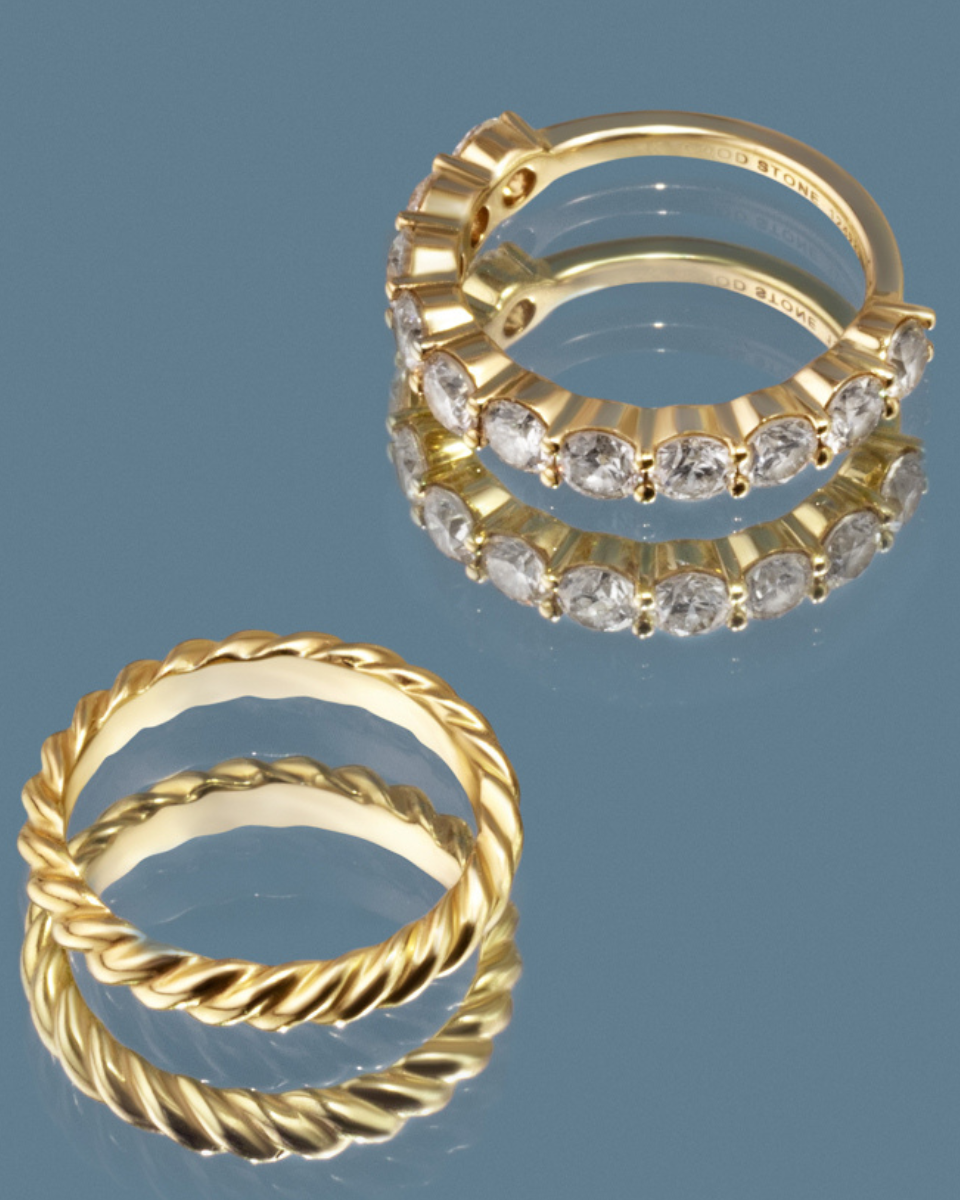
We carry a full range here, from our Chunky and Bold Rings category to thin stackable rings, so you can go as minimal or as substantial as you want. A thicker band can hold its own next to a bold solitaire, and it gives the whole set a grounded, intentional proportion.

Thicker, more sculptural bands have been building momentum throughout 2025 and into 2026, with the Natural Diamonds Council confirming chunky gold rings as a leading engagement ring trend.
Vintage Details That Add Texture
Milgrain edges, hand engraving, filigree work, and Art Deco geometry are all showing up in wedding bands more frequently this year. These details bring texture and visual depth without making the band feel overdone, and they pair particularly well with engagement rings that already carry some historical influence.
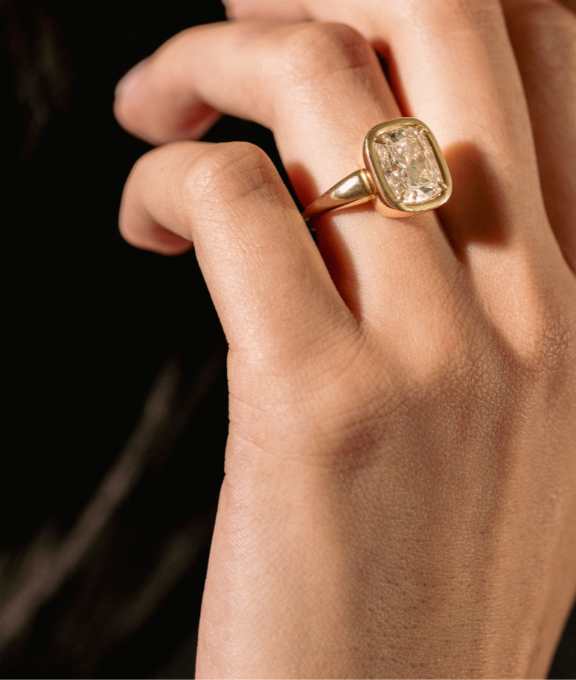
Taylor Swift’s engagement ring has added fuel to this trend. Her old mine elongated cushion-cut diamond sits on a hand-engraved yellow gold band, and the combination of antique stone cutting with warm metal and fine engraving has sparked significant interest in vintage-inspired pairings.
If your engagement ring has any period-influenced elements, a band with milgrain or engraving will tie the set together in a way that feels considered.

Milgrain edges, hand engraving, filigree, and Art Deco geometry are appearing in wedding bands with increasing frequency, adding texture and visual depth without overwhelming the set.
Adding Color With Gemstone Bands
You are not limited to diamonds for your wedding band. We recommend gemstone stacking your rings in emerald, ruby, and sapphire to introduce color and personal meaning to a ring stack. A sapphire band beside a white diamond engagement ring creates a contrast that draws attention to the center stone while keeping the overall look balanced.
Colored gemstone bands also make good anniversary additions to a stack over time. Starting with a classic diamond band and adding a colored stone ring later gives you room to build the set as your collection grows.

A gemstone wedding band in sapphire, emerald, or ruby introduces color and personal meaning to a ring stack while creating contrast that draws attention back to the center diamond.
Setting Height and Practical Pairing
One technical detail that gets overlooked is the height of your engagement ring setting. A 3-stone ring or a high-set solitaire may sit taller on the finger, and some bands will not nest properly beneath them.
We design our 3-stone rings at a carefully calculated height so that a wedding band can still pair comfortably without catching or pushing against the setting.
If you have an active lifestyle, the setting and band choice also affect durability. Platinum is the most durable option, followed by 14k and 18k gold. Secure settings like bezel or channel styles hold up better for people who use their hands throughout the day.
Celebrity Pairings Worth Noting
A few high-profile engagements from 2025 have given couples a useful reference point for different pairing approaches. Selena Gomez’s marquise diamond, estimated at 6-8 carats, pairs best with a contoured or V-shaped band that accommodates its pointed ends. Dua Lipa’s round brilliant on a thick 5mm cigar-style yellow gold band calls for a complementary chunky stacking ring rather than a thin, delicate band.
Each ring demands a different pairing strategy, and looking at these real examples can help you figure out what direction makes sense for your own set.
Building a Stack Over Time
Some couples prefer a single wedding band for life, and others add to their stack with anniversary bands, gemstone rings, or textured pieces over the years. There is no prescribed way to do this. We offer pre-mixed stacks and numbered stack sets alongside individual bands, which makes it easier to see how different combinations work before committing.
The balance to keep in mind is proportion. Too many wide bands together can feel heavy on the finger, while mixing textures, stone sizes, and widths tends to create a more comfortable and visually interesting result. A hammered finish next to a polished diamond band, for example, gives each ring its own presence without the stack becoming cluttered.

Some couples choose one wedding band for life while others build their stack gradually with anniversary bands, gemstone rings, and textured pieces over the years.
Finding the Right Pairing for You
The best wedding band pairing is the one that feels natural on your hand and looks like it belongs next to your engagement ring. Start with fit, pay attention to how the two rings sit together, and then work through style choices such as metal, width, and finish.
GOODSTONE’s personal concierge service can walk you through our collections and help match specific engagement ring profiles to the right band, with every piece handcrafted and made in the US. The small details in this decision, the curve of a contour, the warmth of a mixed metal, the texture of an engraved edge, are what make a ring set feel like yours.



Leave a comment (all fields required)