





How to Choose a Wedding Band That Stacks Perfectly With Your Engagement Ring
You've been wearing your engagement ring for months now. Maybe you catch yourself looking at it during meetings, or you've gotten used to the weight of it on your finger. Now you're thinking about wedding bands, and you're wondering how to make them work together.
 Now that your engagement ring feels like home, it’s time to find the band that completes it.
Start With What You Already Have
Your engagement ring sets the tone for everything else. Look at it closely. Really study it.
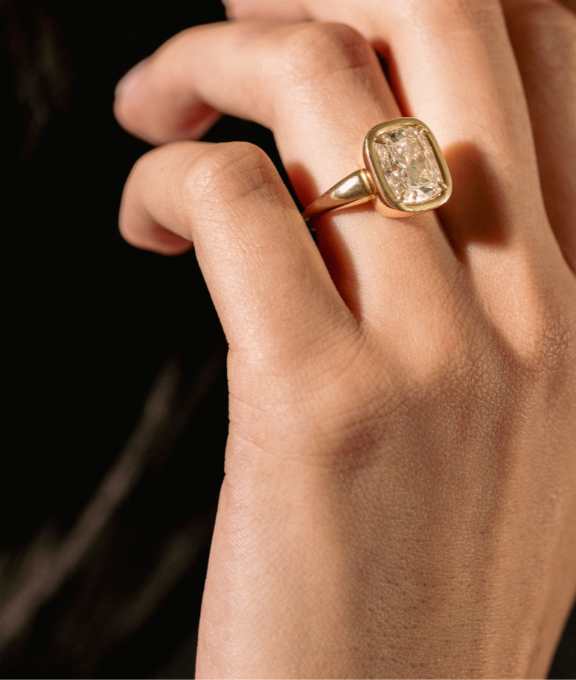
Is the center stone sitting high above the band? That height matters. High settings need bands that curve or leave space. Otherwise, the rings push against each other. You'll feel them shifting around all day. Low settings give you more options. Straight bands, curved bands, textured bands - they all work when the stone sits closer to your finger.
Check the width of your engagement ring band, too. A thin band pairs well with other thin bands. You can stack several without overwhelming your finger. A thick band makes a statement on its own. Adding another thick band might feel heavy or look unbalanced.
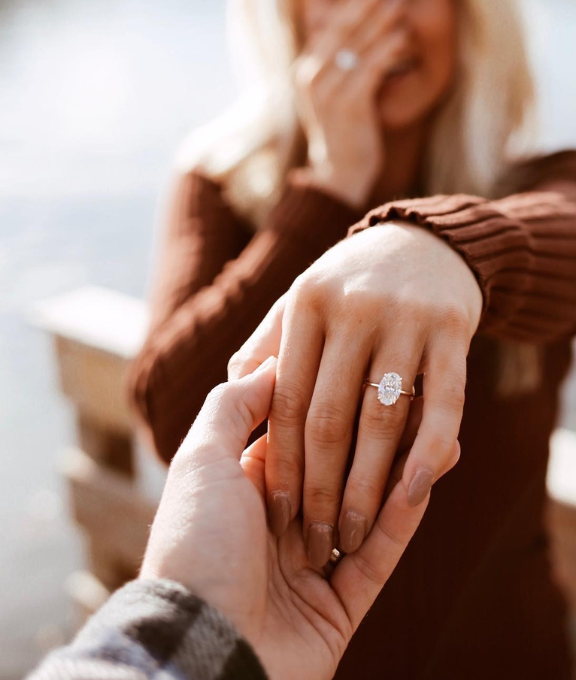
The shape of your center stone affects your choices. Round stones are forgiving. Most band styles work with them. Oval, pear, or marquise stones have points or curves that extend beyond the band. These shapes often need contoured bands that follow their outline. Some people like the gap this creates. Others want everything to sit flush.

Let the proportions of your engagement ring guide every stacking choice. This Baguette Diamond Medley Halfway Wedding Band seamlessly compliments our Starfire Engagement Ring with Oval Cut Diamond.
Consider How Rings Wear Against Each Other
Different metals have different hardness levels. Platinum is harder than gold. When a platinum ring sits next to a gold one, the platinum slowly wears down the gold. This happens over years, but it does happen.
If your engagement ring is platinum and you want a rose gold wedding band, ask a jeweler about this. They might suggest adding a thin spacer band between them. Or they might recommend choosing metals with similar hardness.
The finish matters too. A polished band next to a matte one creates contrast. Some people love this look. Others prefer consistency. Think about what feels right to you.

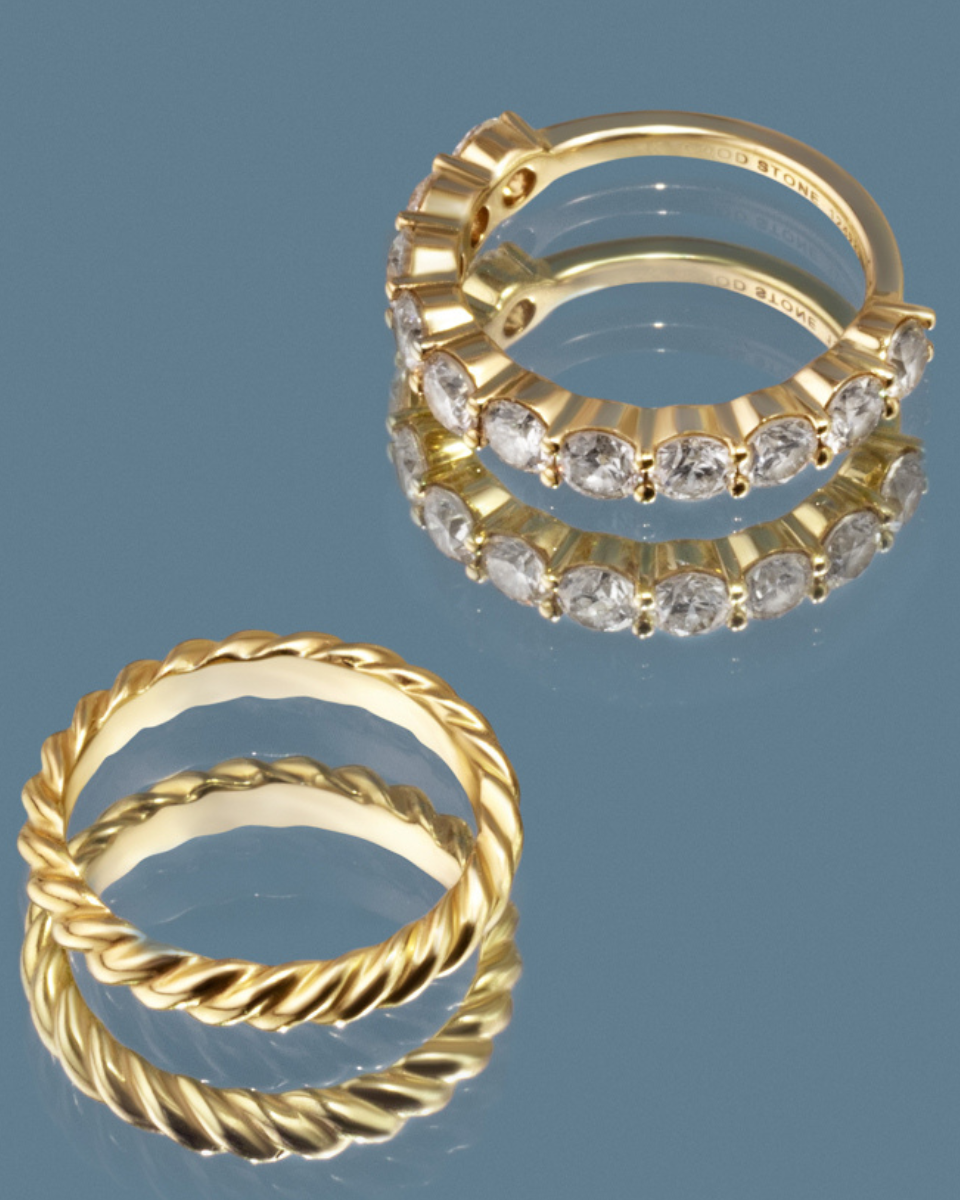
Your metals matter, choose combinations that age well together. Like this beautiful pairing of our Wide Flat Diamond Pavé Eternity Band with our Petite Shared Prong Wedding Band with Oval Diamonds.
Finding the Right Proportions
Balance makes a stack look intentional rather than random. If your engagement ring has a large center stone, a very thin wedding band might disappear next to it. A wider band holds its own better.
But there's no single rule here. Some people with large center stones prefer delicate bands specifically because they don't compete for attention. The engagement ring stays the star.

Your stack should look curated, not crowded. Balance is everything.
Working With Different Stone Shapes
Round brilliant diamonds are straightforward. Straight bands usually work. So do curved ones if you prefer that look.
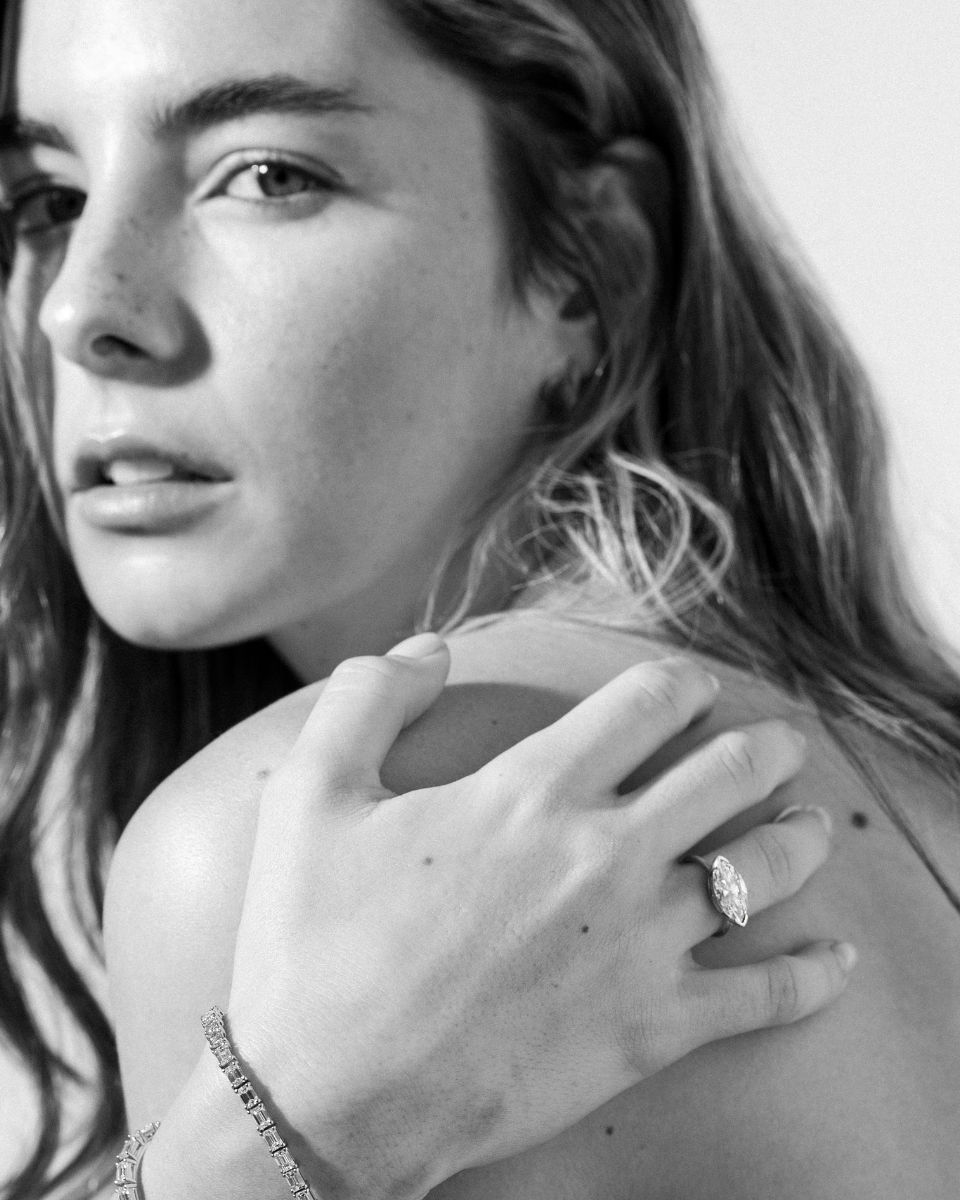
Elongated stones need more thought. An emerald cut might have sharp corners that a straight band bumps into. A marquise has points on both ends. These shapes often pair best with curved or V-shaped bands that follow their contours.
Some jewelers now design bands specifically for these shapes. The band has a notch or curve that fits around the stone's unique outline. GoodStone often creates custom bands for unusual settings, ensuring everything sits together comfortably.
Step-cut side stones or baguettes along your engagement ring band present another consideration. These geometric stones might prevent a straight band from sitting flush. Again, a contoured band solves this.

When your diamond has points or corners, a contoured band makes all the difference.
The Order Matters
Tradition says the wedding band goes on first, closest to your heart. The engagement ring sits on top of it. Most people still follow this pattern.
But comfort matters more than tradition. If you're adding multiple bands, put the widest or heaviest one closest to your palm. Stack lighter bands on top. This arrangement feels more stable and comfortable throughout the day.
Some people remove their engagement ring during the ceremony, put the wedding band on alone, then add the engagement ring back afterward. Others slide both on together. There's no wrong way.

Follow tradition or follow comfort, both choices are beautiful.
Adding Texture and Interest
Plain bands have their place. They're classic and versatile. But textured bands add personality to your stack.
Milgrain creates tiny beaded edges. Hammered finishes catch light differently from smooth ones. Twisted or braided designs add movement. These details matter more than you might think.
Diamond bands bring sparkle. But consider how much sparkle you want. A band covered in diamonds next to an engagement ring covered in diamonds might feel like too much for daily wear. Or it might be exactly what you want. Trust your instincts.

Mixing textures creates depth. Mixing diamonds makes a statement. Choose your vibe.
Mixing Metals Intentionally
Matching metals creates cohesion. A platinum engagement ring with a platinum wedding band looks unified and traditional.
But mixed metals work too. Rose gold adds warmth to cool platinum. Yellow gold brings classic appeal to modern white gold. The key is making it look intentional.
If you're mixing metals, consider a two-tone band that incorporates both. Or add a third band later that bridges the two colors. Some people use diamonds as the unifying element across different colored metals.
Building Your Stack Over Time
Your wedding band doesn't have to be the end of your ring collection. Many people add bands for anniversaries, births, or other milestones.
Think about leaving room for growth. If you know you want to add anniversary bands later, choose a wedding band that works well in a larger stack. A very wide wedding band might limit your options later.
Some people plan their entire stack from the beginning. Others let it grow organically. Both approaches work.

Anniversaries, milestones, memories, your rings can mark them all.
Practical Considerations
You'll wear these rings every day. They need to work with your life.
If you work with your hands, consider lower-profile options. High settings catch on things. Multiple tall bands might interfere with typing or other daily tasks.
Think about maintenance, too. Intricate designs trap dirt and lotion. Smooth bands clean easily. Diamond bands need regular checking to ensure stones stay secure.
Consider your lifestyle changes throughout the year. Some people have summer stacks and winter stacks. Swelling in hot weather might make a tight stack uncomfortable. Cold weather might make rings feel loose.

Your lifestyle changes, your stack can adapt with it.
Custom Solutions
Sometimes, nothing off the shelf works perfectly. That's when custom bands make sense.
GoodStone can create a band that follows the exact curve of your engagement ring. They can match the width precisely. They can incorporate design elements from your engagement ring into the wedding band.
Custom doesn't always mean expensive. Sometimes it's the most practical solution, especially for unusual engagement ring settings.

For a band that feels truly made for your ring, go custom.
Testing Your Choice
Before committing to a wedding band, wear it with your engagement ring for a full day if possible. Many jewelers offer this option.
Pay attention to how the rings feel together. Do they spin independently? Do they pinch your skin? Do they make noise when they move against each other?
Notice how they look in different lighting. Office fluorescents show things differently than natural sunlight. Evening lighting changes the appearance again.
Take photos from different angles. Sometimes what looks good from above looks strange from the side. Ask friends for honest opinions, but remember that you're the one wearing them.

The right band feels perfect from every angle, in every situation, all day long.
Common Stacking Patterns
While every stack is personal, certain combinations appear frequently because they work well.
The classic combination pairs a solitaire engagement ring with a plain or diamond wedding band. Simple and timeless.
The framed look puts identical bands on either side of the engagement ring. This creates symmetry and makes the center stone appear larger.
The graduated stack uses bands of decreasing width or decreasing diamond sizes moving up the finger. This creates visual flow.
The mixed texture stack combines different finishes and patterns for interest without adding more diamonds or gems.

Some stacks just work, timeless, balanced, and beautifully familiar.
When Gaps Are Good
Not every stack needs to sit perfectly flush. Sometimes gaps add character.
Architectural stacks intentionally incorporate negative space. The gap becomes part of the design rather than a flaw.
These open stacks feel modern. They work especially well with geometric engagement rings or unusual stone shapes.
If you're considering a gap, make sure it's consistent. An intentional, even gap looks purposeful. An uneven gap where rings tilt looks accidental.

A modern stack embraces space, especially with geometric or unique stones.
Making Your Decision
Choosing a wedding band is personal. What works for your friend might not work for you.
- Consider your engagement ring's specific features. Think about your daily life and how you use your hands. Decide if you want contrast or consistency.
- Visit jewelers and try different combinations. Take pictures. Sleep on it. This ring will be with you for decades.
- Remember that perfection isn't the goal. The goal is finding something that feels right in your hand and works with your engagement ring in a way that makes you happy every time you look at it.
- Some couples choose wedding bands together, finding styles that complement each other. Others choose independently. Both approaches have merit.
The wedding band you choose becomes part of your story. It marks the transition from engaged to married. It sits next to your engagement ring through all the days that follow. Choose something that feels authentic to you, and the rest falls into place.



Leave a comment (all fields required)