





What Is the Length-to-Width Ratio in Diamonds?
Diamond measurements provide valuable information before visual inspection. Two numbers on a grading report, the length and width, offer insight into how the diamond will appear.
Length divided by width produces a ratio that influences a diamond’s appearance. A ratio of 1.00 indicates symmetry in shapes such as squares. Higher ratios indicate greater elongation and a diamond that covers more of the finger.
The length-to-width ratio can noticeably influence a diamond’s appearance when viewed from above.

The length-to-width ratio is one of the most practical tools for understanding how a diamond will look before you ever see it in person.
How the Ratio Is Calculated
To calculate the ratio, divide the length of the diamond in millimeters by its width. For instance, a stone measuring 7mm long and 5mm wide results in a ratio of 1.40.
These measurements appear on grading reports as length × width × depth for fancy shapes and as minimum diameter × maximum diameter × depth for rounds. Calculating the ratio offers an immediate sense of how round, square, or elongated a diamond will appear face-up.

The ratio is simply the diamond's length in millimeters divided by its width.
Why This Matters More for Fancy Shapes
Round brilliant diamonds get a formal cut grade from GIA. That grade accounts for angles, facet proportions, and how well the stone returns light. Fancy shapes like ovals, pears, emeralds, marquise, cushion, and princess cuts do not receive an overall cut grade on GIA reports.
GIA has stated that there is currently no internationally accepted system for evaluating the appearance of fancy-cut diamonds, and research is ongoing. As a result, assessing proportions becomes the buyer’s responsibility. The length-to-width ratio serves as a practical tool for this purpose.
Recommended Ratios by Shape
Common length-to-width ratio ranges for popular diamond shapes are listed below.
|
Diamond Shape |
Typical Ratio Range |
Visual Effect |
|
Oval |
1.30-1.60 (1.35-1.50 common) |
Balanced elongated oval |
|
Emerald |
1.30-1.45 |
Classic rectangular step cut |
|
Pear |
1.50-1.75 |
Teardrop silhouette |
|
Marquise |
1.75-2.25 |
Long narrow outline |
|
Radiant |
1.00-1.40+ |
Square to rectangular |
|
Cushion |
1.00-1.05 (square), 1.15-1.40 (elongated) |
Soft square or rectangular cushion |
|
Princess |
1.00-1.05 |
Square appearance |
|
Asscher |
~1.00 |
Square step-cut appearance |
|
Heart |
~1.00 |
Symmetrical heart outline |
What GIA’s 2009 Study Found
In 2009, GIA surveyed 19 trade professionals and 25 consumers using outline sketches of ovals, emeralds, pears, and marquise shapes. Preferences peaked around a ratio of 1.70, which is more elongated than what is commonly produced in the market.
The peak ratio of oval diamonds submitted for grading was near 1.40. Ratios above 1.70 are uncommon because the shape of diamond rough typically does not support such elongated cuts. At high ratios, cutting facets that yield strong scintillation becomes more difficult.
The Bow-Tie Effect
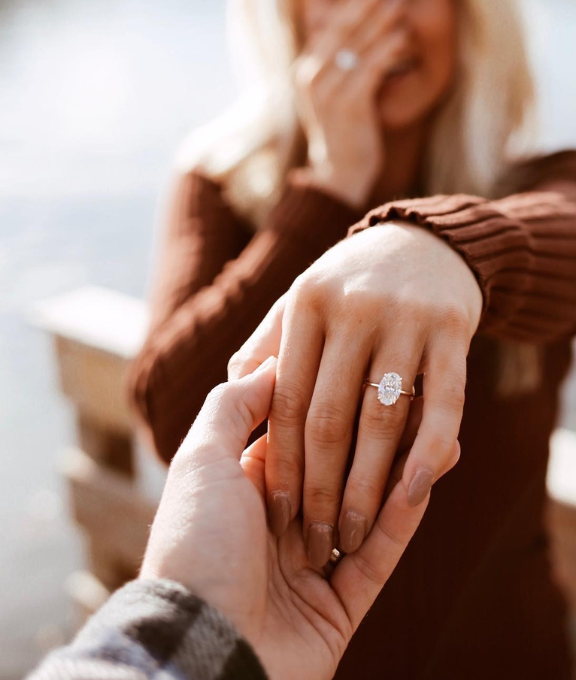
Elongated shapes, such as ovals, pears, and marquise diamonds, can display a dark shadow across the center, known as the bow-tie effect. This results from light leakage and facet misalignment, and becomes more pronounced as the ratio increases. Ovals with a ratio above 1.50 are more likely to show this feature.
All oval shapes display some degree of bow-tie effect, though well-cut stones minimize its visibility. For higher ratios, reviewing photos or videos of the diamond is particularly helpful.

As the length-to-width ratio increases in elongated shapes, the bow-tie effect tends to become more pronounced.
How Ratio Affects Perceived Size
Elongated diamonds distribute weight across the top surface rather than in the depth of the stone.
For example, ovals often appear 10% to 15% larger than round diamonds of the same carat weight. A 0.9 carat oval with a higher ratio may appear larger than a 1 carat oval with a lower ratio.
For those concerned with the perceived size of a diamond on the finger, ratio is an important factor.

For buyers focused on finger coverage and perceived size, a higher ratio can offer more visual impact per carat.
Durability at Extreme Ratios
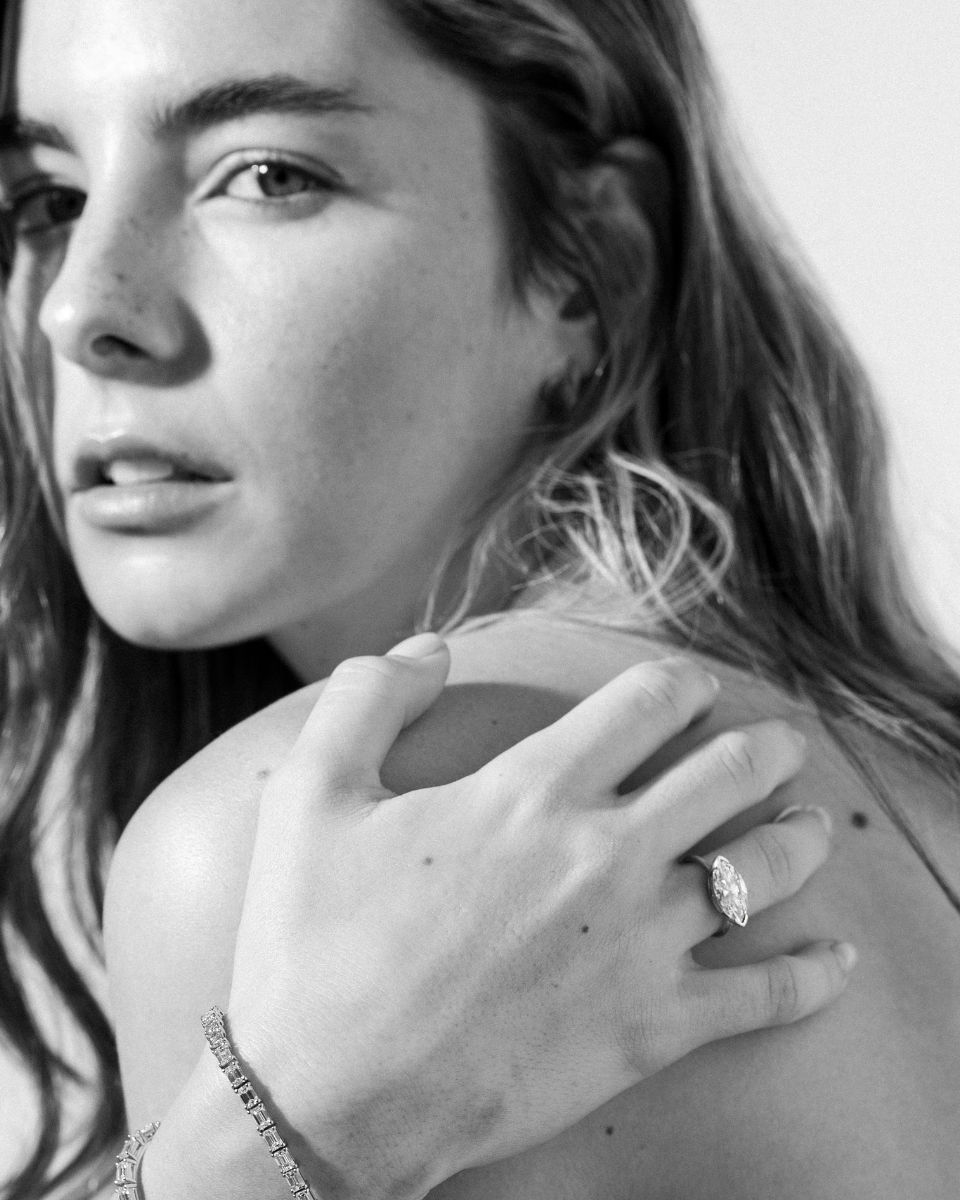
Highly elongated marquise and pear shapes are more susceptible to chipping at the pointed ends. Extreme ratios increase the vulnerability of these tips. Protective settings, such as V-prongs or bezels, help minimize this risk and should be considered for longer stones.

The pointed tips of highly elongated marquise and pear shapes are more vulnerable to chipping, and the risk increases as the ratio climbs.
How Settings Interact with Ratio
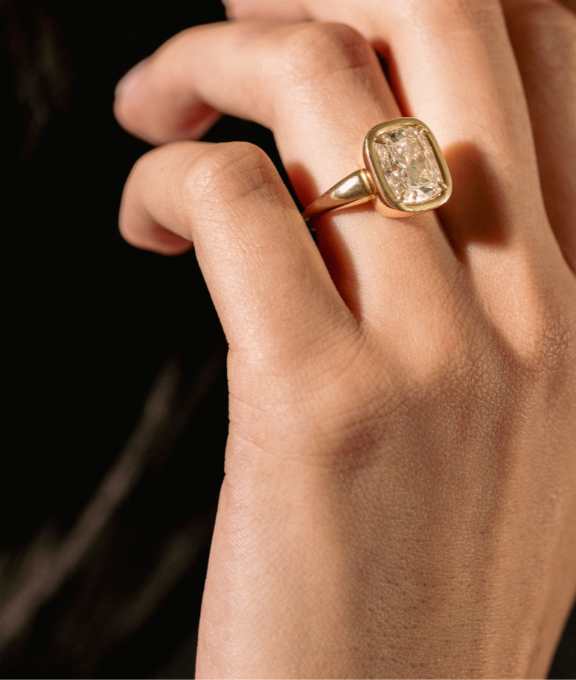
A halo of smaller stones around the center diamond can alter the perceived ratio by making the overall cluster appear wider or longer. A bezel setting surrounds the stone with metal, making an elongated stone appear more proportional and providing added protection. For smaller stones, bezel or 3-prong settings can better preserve the intended shape.

A halo can make a stone appear wider or longer, while a bezel wraps the perimeter in metal, making an elongated shape look more proportional and offering added protection.
How to Choose the Right Diamond Ratio
Preferences for diamond ratios vary. Those with longer, narrower fingers may find a wider ratio, such as a 1.30 oval, provides balance. A 1.45 to 1.55 ratio often appeals to those seeking an elongating visual effect.
Viewing the diamond in high-quality video, comparing millimeter dimensions rather than relying solely on carat weight, and considering how the ratio interacts with depth, bow-tie visibility, and setting style can help guide your choice. The grading report ratio offers a useful starting point for selection.



Deja un comentario (todos los campos son obligatorios)