




What Ring Resizing Costs, and When It Can't Be Done
A standard ring resize costs $25 to $200 in 2026, and most plain-band jobs fall between $40 and $120. Where a given ring falls in that range depends on its metal and on the direction of the size change. A harder limit applies before price enters the discussion. Several common ring types, like an eternity band, cannot be resized at any figure, and several more accept only narrow adjustment. Buyers who read the ring before requesting a quote avoid both surprises.

A perfectly fitted ring should feel comfortable, secure, and effortless to wear. Understanding the cost and limitations of ring resizing helps protect both the beauty of your jewelry and the craftsmanship behind it.
How Much Does Ring Resizing Cost?
A silver band going down half a size and a platinum three-stone going up a full size are different jobs that share a name. The bench reads the ring before it quotes. The reader who does that reading first can predict where in the range the ring will fall.
All figures here are US-dollar. Retailer guides disagree at the edges, with some putting the floor at $20 and others at $40. No industry pricing survey exists for resize work. Every published number is retailer-set.

Ring resizing costs depend on more than the number of sizes being adjusted.
What Does Resizing Cost by Metal?
Metal sets the floor of the quote before any labor enters it.
-
Silver is the cheapest metal to work, with a plain silver band typically costing $40 to $75.
-
Standard gold runs $60 to $120 for a plain band, and most engagement-ring jobs fall in this bracket.
-
Platinum starts near $80 and reaches $200 or more, with platinum engagement rings priced at $100 to $250 in current guides.
-
Multi-stone and ornate designs run $120 to $250 and above in any metal, because the work around the stones adds labor time to the metal work.

From yellow gold to platinum, each precious metal requires a different approach at the jeweler's bench.
Fees That Add to the Quote
White gold adds a fee most first quotes omit. Because soldering heat disturbs the rhodium plating, re-plating afterward adds $50 to $100 to the bill. Rush turnaround of 24 to 48 hours costs $50 to $150 above the standard one to two week bench window. Stone-heavy settings can add another $50 to $100 in labor when stones must come out before the cut.
When Is the Resize Free?
Many retailers include one free resize in a window after purchase. The window commonly runs 30 to 90 days. Some guarantee plans extend a complimentary resize across the first year.
This reframes cost as timing. A ring bought last month from a retailer with a sizing policy may cost nothing to adjust. An identical job on an older ring bills at full bench rate.
Why Does Sizing Up Cost More Than Sizing Down?
Sizing down is subtractive work in which the jeweler cuts the shank, removes a segment, and closes the ring with a single solder joint.
Sizing up is additive work, since the jeweler cuts the shank and inserts a bridge segment matched to the exact alloy. A 14K yellow gold ring gets a 14K yellow gold insert. Two solder joints replace one, and the insert metal sells at current market price. The typical delta on one ring is $10 to $30.
Budget shops sometimes stretch a plain band instead of adding metal. Stretching thins the shank and makes it brittle, and it can draw prongs away from stones. The practice is defensible on a plain band with a very small adjustment. Anywhere a setting is involved, it is the wrong economy. The alloy-matched insert is what a $200 job buys that a $60 job does not, and the quote should name which method the bench will use.

Making a ring smaller often means removing a small section of metal, while sizing up may require adding new material to the band.
How Many Sizes, and How Many Times, Can a Ring Be Resized?
Most jewelers limit a single resize to two sizes up or down. Past that point the change in curvature compromises the shank and destabilizes any settings. The repeat ceiling has an identical logic. A ring tolerates roughly two to four resizes across its life. Each job reworks metal that has been worked before and thins the solder point incrementally. Some direct-to-consumer brands advise customers not to resize more than once.
Done properly, a resize is invisible once the jeweler reshapes and polishes the joint until no seam shows. A resize devalues a ring only when the work is poor, with visible solder marks or weakened structure. A ring that has already been resized twice is a poor candidate for a third major change. Forum threads record a consistent regret pattern on direction, with downsizing after a winter proposal producing most of the second visits to the bench.

A well-executed resize should preserve the ring's original beauty and proportions.
Rings That Cannot Be Resized
The can't-resize taxonomy comes first in any cost guide, because for these rings there is no price at which the job can be done. What to do next is the only thing left to settle.
Tungsten carbide cannot be resized at all. The metal is too hard and too brittle, and any cut attempt cracks it. Reputable sellers handle fit through size-exchange programs. Titanium rarely accepts traditional cut-and-solder resizing, though one guide allows limited adjustment. The advice that recurs across guides is a sizing liner, an exchange, or replacement.
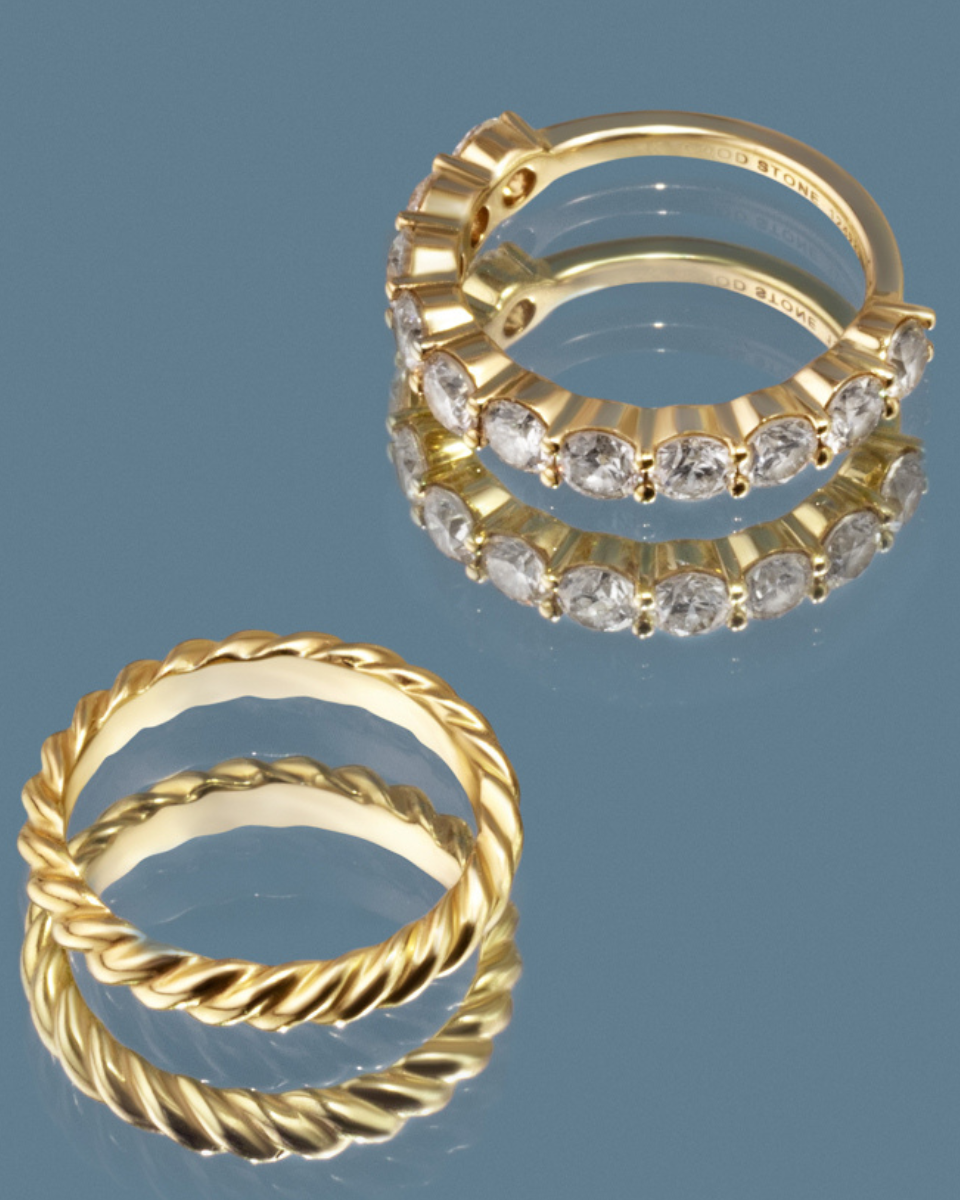
Because stones run the full circumference of a full eternity band, no bare metal exists to cut. The remaining options are a sizing bar added to the base, complete reconstruction, or a remake. Half-eternity designs exist as the practical alternative, and buyers who expect size changes should weigh that before purchase.
A tension setting keeps the stone in place through calibrated pressure between the two ends of the shank. Any change in circumference upsets that balance and can release the stone, and specialist guidance is unambiguous on this point, with tension-set rings never resized.
Resizing changes the arc of the band, and that change loosens the small prongs or the channel walls along it. Stones frequently have to be unset and reset. On full-circle designs the trade describes the job as prohibitively time-consuming and costly, with no guarantee of success. A new ring is the practical answer at that point.
Opals and pearls risk cracking from soldering heat, while emeralds and turquoise risk discoloration, so the jeweler removes these stones before the work and resets them afterward, the added labor raising the quote and on some pieces ending the job outright.
Very thin shanks cannot survive cutting. Rose gold cracks when sized up because its copper alloy is brittle, and the repaired area is difficult to color-match. Antique rings have older alloys and past repairs, and filigree can distort under heat. Interior engravings are frequently cut through and must be re-engraved. Antique work belongs with a specialist bench.

Not every ring can be adjusted after it's made. Full eternity bands, tension settings, and certain metals require precise construction from the beginning, making accurate sizing especially important before purchase.
Can a Ring Be Made to Measure From the Start?
The dead ends above share one cause, since each ring was built before its size was settled, and the correction arrived after construction had ruled it out. The alternative is to resolve size before the ring exists.
GOODSTONE builds its custom rings to measure, with finger size confirmed during the design phase rather than corrected after delivery. Made-to-measure applies only to commissions, on a build schedule measured in weeks. Nothing in that approach helps a ring the reader already owns.
How Can You Tell if Your Ring Needs Resizing?
A portion of resize requests answer a fit problem that is seasonal. Finger size moves about a quarter size day to day with heat and daily activity. It moves up to half a size across seasons. Sizes between 3.75 and 4.25 can all be correct for the same finger depending on weather, and a wearer whose size swings across that range can manage the thin-finger days with a small spacer ring chosen to disappear against the skin. A proposal made in winter produces a ring that spins in February and fits by June.
Under the community fit standard, a ring should come off with some resistance. If it flies off when you shake your hand, it is too big even accounting for warm weather. If it spins at the base without passing the knuckle, many wearers accept that fit, particularly with large knuckles.
When the ring is loose but the fit is otherwise right, reversible plays come first. Sizing beads and ring guards snug a ring without cutting it, and spring inserts do similar work.
Forum consensus for a winter purchase is to wait for summer before deciding. Sizing specialists add a weight caveat. Buyers within roughly 20 pounds of a goal weight should delay a permanent purchase. Retail data confirms the direction of error, since first-time wearers overestimate their size. The vast majority of one direct-to-consumer jeweler's resize requests are to size down.

A ring that feels slightly loose in winter or snug in summer may not need a permanent adjustment, making it worth understanding how the fit changes throughout the year.
What Should You Ask the Jeweler and Check After the Resize?
The bench interview matters more than the quote comparison. Jeweler-authored guides repeat a four-point checklist. Ask if the work happens on-site or goes to an outside trade bench, since send-away chain-store repair is the option forum veterans warn against. Ask about laser welding versus torch soldering for platinum and stone-heavy pieces, where laser work puts less heat into the settings. The interview should also cover the warranty on the work and an inspection before the quote.
The post-resize check is where the documented failures get prevented. Resizing changes curvature, and prongs and channel walls can loosen days to a month after the ring comes back.
Jeweler-authored accounts record channel-set side stones lost within a week of a resize and center stones loosening a month after a sizing down when the stones were not re-tightened. One 1950s heirloom taken from size 6 to size 4 came back with the diamond loose, the prongs visibly farther apart in before-and-after photos.
Have every prong checked when the ring comes back, a step that costs minutes. Owners handing over an heirloom should have the jeweler map the diamond's inclusions on paper before the work. Any later jeweler can then confirm the returning stone against that map.

A skilled jeweler should inspect the setting, prongs, and overall structure to ensure the ring remains secure and beautifully finished after the adjustment.
Frequently Asked Questions
How much does it cost to resize a platinum ring?
Platinum resizing typically runs $80 to $250, the highest quote among the standard metals. The high melting point demands specialized equipment. Labor time runs longer than an identical job in gold. The equipment and labor, more than the metal's market price, raise the quote.
Can a tungsten ring be resized?
Tungsten carbide cracks under any cut attempt, so sellers handle fit through size-exchange programs. Ceramic rings fall in that category.
Can you resize an eternity band?
An eternity band cannot be resized conventionally, because stones run the full circumference and no bare metal exists to cut. Some jewelers will quote a remake with a small plain-metal sizing section built into the base, so future adjustments become possible.
How many sizes can a ring be resized?
Most jewelers work within two sizes up or down, and a minority of guides extend the limit to two or three before curvature and setting stability rule the job out.
Does resizing a ring devalue it?
Properly done resizing does not devalue a ring, while poor work with visible seams or weakened structure does. Antique pieces need one extra step. Any modification should be documented for the appraisal file, since undocumented alterations complicate later valuation.
Can you resize a ring with diamonds or gemstones?
Usually yes for heat-tolerant stones such as diamonds and sapphires. Opals and pearls must come out before the work, along with emeralds and turquoise, which adds labor and can end a fragile job.
Why is my ring loose in winter and tight in summer?
Fingers fluctuate about a quarter size day to day and up to half a size seasonally with temperature and activity. They are also largest in the evening. Jewelers advise sizing decisions on warm-weather, end-of-day fit.
What are sizing beads?
Sizing beads are small metal beads soldered inside the shank to snug a slightly loose ring, and a jeweler can remove them later without altering the band.
Can I get my ring resized for free?
Many retailers include one free resize within 30 to 90 days of purchase or across the first year. Some protection plans cover resizes past that window. Check the plan paperwork before paying bench rate.
Can you resize a ring at home yourself?
Home attempts risk cracking the band and loosening stones, and the clamping tools involved can injure the hand. Even temporary adjusters should be fitted by a jeweler for correct tension.




Deja un comentario (todos los campos son obligatorios)