





Marquise Diamond Ratios Explained
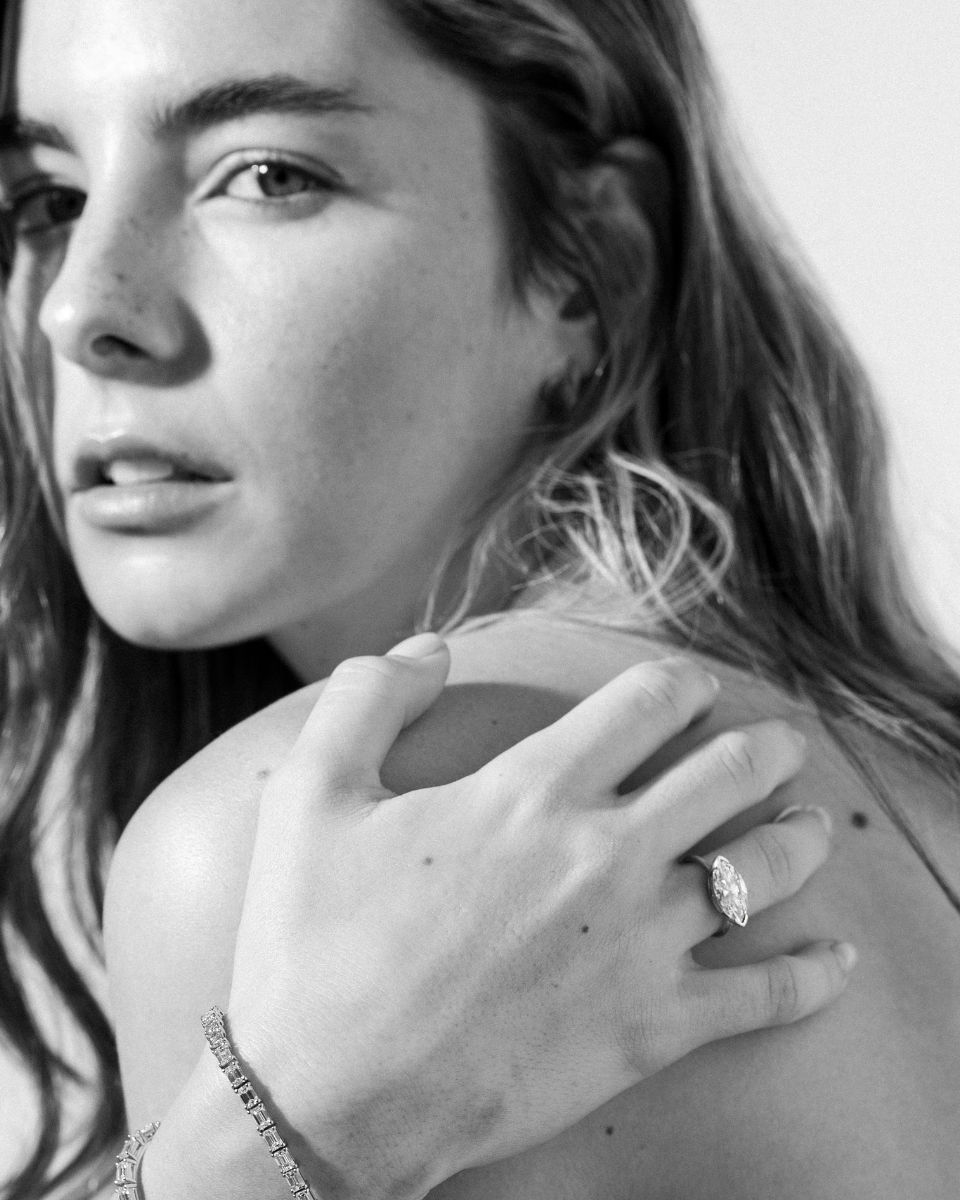
Most people shopping for a marquise diamond will eventually land on the same question, and it has nothing to do with color or clarity. It has to do with how long and how narrow the stone should look.
That question comes down to the length-to-width ratio. This proportion directly influences the visual impression of a marquise diamond.
A ratio of 1.6 results in a wider appearance. A ratio of 2.2 produces a more elongated silhouette. Ratios between these points offer a range of looks.
Selecting an appropriate ratio directly affects both the appearance of the marquise on the hand and the perceived balance of the stone.

The most important question when shopping for a marquise diamond isn't about color or clarity, it's about how long and narrow the stone should look
What the Length-to-Width Ratio Means
The length-to-width ratio is calculated by dividing the length of the diamond (measured from tip to tip) by its width across the widest curved section. For example, a marquise measuring 10 mm long and 5 mm wide has a 2:1 ratio.
According to the Gemological Institute of America, the most common marquise diamond ratios submitted to its lab range from 1.6:1 to 2.2:1, with 2:1 being the most preferred by both jewelers and buyers. The 2:1 ratio is widely regarded as offering a balanced, classic silhouette for this cut.

How Different Ratios Change the Look
The ratio affects whether the marquise appears fuller or more slender when viewed from above.
|
Ratio Range |
Visual Appearance |
Notes |
|
1.5–1.6 |
Short / wider marquise |
Fuller look that reads broader on the finger |
|
1.8–2.0 |
Balanced classic shape |
Most common and widely preferred proportions |
|
2.1–2.2 |
Long, narrow silhouette |
Sleeker look but harder to cut with strong brilliance |
|
2.7+ |
Extremely elongated |
Classified as “long” by GIA standards |
The Bow-Tie Effect
A marquise diamond often displays a dark shadow across the center of the table, resembling a bow-tie. A faint shadow is considered normal and may add visual interest. However, a pronounced bow-tie can draw attention away from the stone’s brilliance.
The bow-tie effect appears more frequently in stones with either shallow or deep pavilions. Depth percentages between 58% and 62% and table percentages between 53% and 63% are generally recommended. Outside of these ranges, light leakage increases and the bow-tie effect may become more noticeable.

Like other elongated shapes, marquise diamonds often show a dark shadow across the center table.
Why There’s No GIA Cut Grade for Marquise Diamonds
When evaluating a marquise diamond, use proportion guidelines instead of a formal cut grade:
-
Ratio: 1.8-2.05
-
Depth: 56%-64%
-
Table: 52%-63%
-
Polish: Excellent
-
Symmetry: Excellent
Perceived Size and Finger Coverage
Typical marquise dimensions by carat weight look roughly like this.
|
Carat Weight |
Typical Marquise Dimensions (mm) |
|
0.50 ct |
~8 × 4 mm |
|
1.00 ct |
~10.74 × 5.12 × 3.20 mm |
|
2.00 ct |
~12.82 × 6.52 × 4.14 mm |
How Settings Affect the Ratio on Your Finger
For halo settings, the surrounding ring of smaller stones increases the apparent width. Choosing a marquise with a slightly higher ratio can help maintain the intended proportions when set in a halo.
V-prongs protect the pointed ends, while bezel or partial bezel settings provide additional security. A full bezel encircles the stone in metal, slightly compressing the outline and making the shape appear less elongated. Consider the setting type early in the selection process when deciding on a ratio.
Symmetry and Wing Shape
Symmetry is especially important for marquise cuts, as the elongated shape makes misalignment more visible. The left and right halves of the stone should closely match, and the points should align precisely.
The GIA grades symmetry on a five-point scale from Excellent to Poor. Aim for Excellent symmetry. The wings, or the curved sections between the belly and the points, should appear balanced and smooth, not too flat or bulging.

Symmetry is especially critical in a marquise because the elongated shape makes even minor misalignment easy to spot.
French Tips and Durability
Some cutters use a technique called French tips. This replaces the large bezel facet at each point with modified star and upper girdle facets, distributing stress more evenly at the tips. French tips can also produce a subtle star-shaped pattern at the ends, which some buyers prefer. For enhanced durability at the points, consider asking about this feature.

French tips replace the large bezel facet at each point with smaller modified facets, distributing stress more evenly across the vulnerable tips and reducing the risk of chipping.
Choosing the Right Marquise Ratio
The ratio you choose for a marquise diamond influences its presentation, how a setting frames the stone, and its light performance. Begin with the preferred ratio, then review depth, table, symmetry, and bow-tie appearance in sequence.
Millimeter measurements provide more information about the face-up size than carat weight alone. Compare these measurements when evaluating options. For halo settings, select a slightly higher ratio to maintain desired proportions.



Deja un comentario (todos los campos son obligatorios)