





Oval Diamond Ratios Explained
Oval diamond shoppers often focus on carat weights and color grades, but the length-to-width ratio determines how the stone appears on the finger.
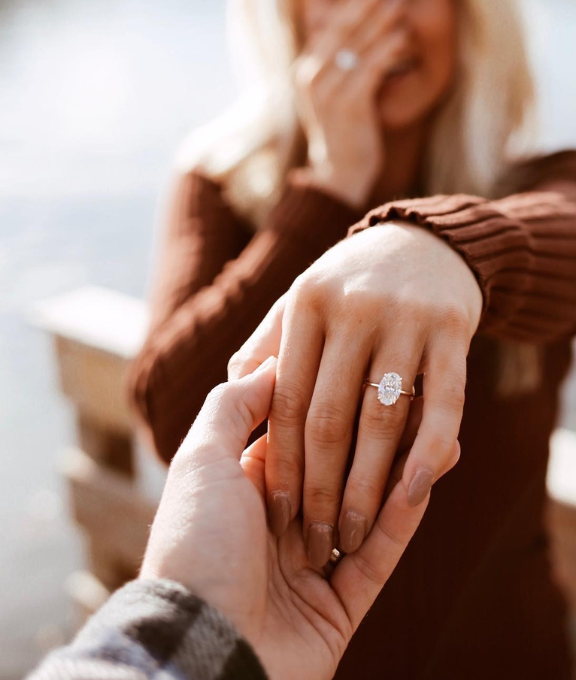
Two oval diamonds with the same carat weight can look different because of their ratios. The ratio influences whether the stone appears more elongated or rounded, alters its apparent size, and affects how it interacts with light.
Ratios work in combination with depth, table, and the bow-tie effect. Considering all these factors helps you choose an oval diamond that looks balanced on the hand.

Two oval diamonds can share the same carat weight and look completely different on the finger, and the length-to-width ratio is usually why.
How the Ratio Works
Oval diamonds typically have ratios between 1.30 and 1.50. Each ratio produces a distinct visual effect.
|
Ratio Range |
Appearance |
Notes |
|
1.30-1.35 |
Rounder oval |
Slightly fuller shape, sometimes cushion-like. |
|
1.36-1.40 |
Softly elongated |
Balanced proportions with subtle length. |
|
1.41-1.50 |
Classic oval |
Most common and widely preferred proportions. |
|
Above 1.50 |
Long and narrow |
Dramatic elongation, can emphasize the bow-tie. |
Why Depth and Table Matter Alongside Ratio
Depth and table percentages affect how a diamond returns light.
|
Proportion |
Recommended Range |
Why It Matters |
|
Depth % |
58-62% |
Keeps carat weight visible while maintaining light return |
|
Table % |
53-63% |
Balances brilliance and overall brightness |
Visual Spread and the Size Advantage
Oval diamonds usually appear 10% to 15% larger than round diamonds of the same carat weight. Their shape distributes weight across a broader surface area rather than concentrating it in depth.
Estimate face-up area with this formula: π × (length ÷ 2) × (width ÷ 2). This approach helps when comparing diamonds of different carat weights. A 0.9-carat oval with good proportions can provide a similar face-up footprint to a poorly cut 1-carat stone, with improved light performance and a lower price.
When evaluating ovals, review the millimeter dimensions on the grading report. Carat weight alone does not indicate how large the stone appears.

A well-proportioned 0.9-carat oval can match the face-up footprint of a poorly cut 1-carat stone while delivering better light performance at a lower price.
The Bow-Tie Effect
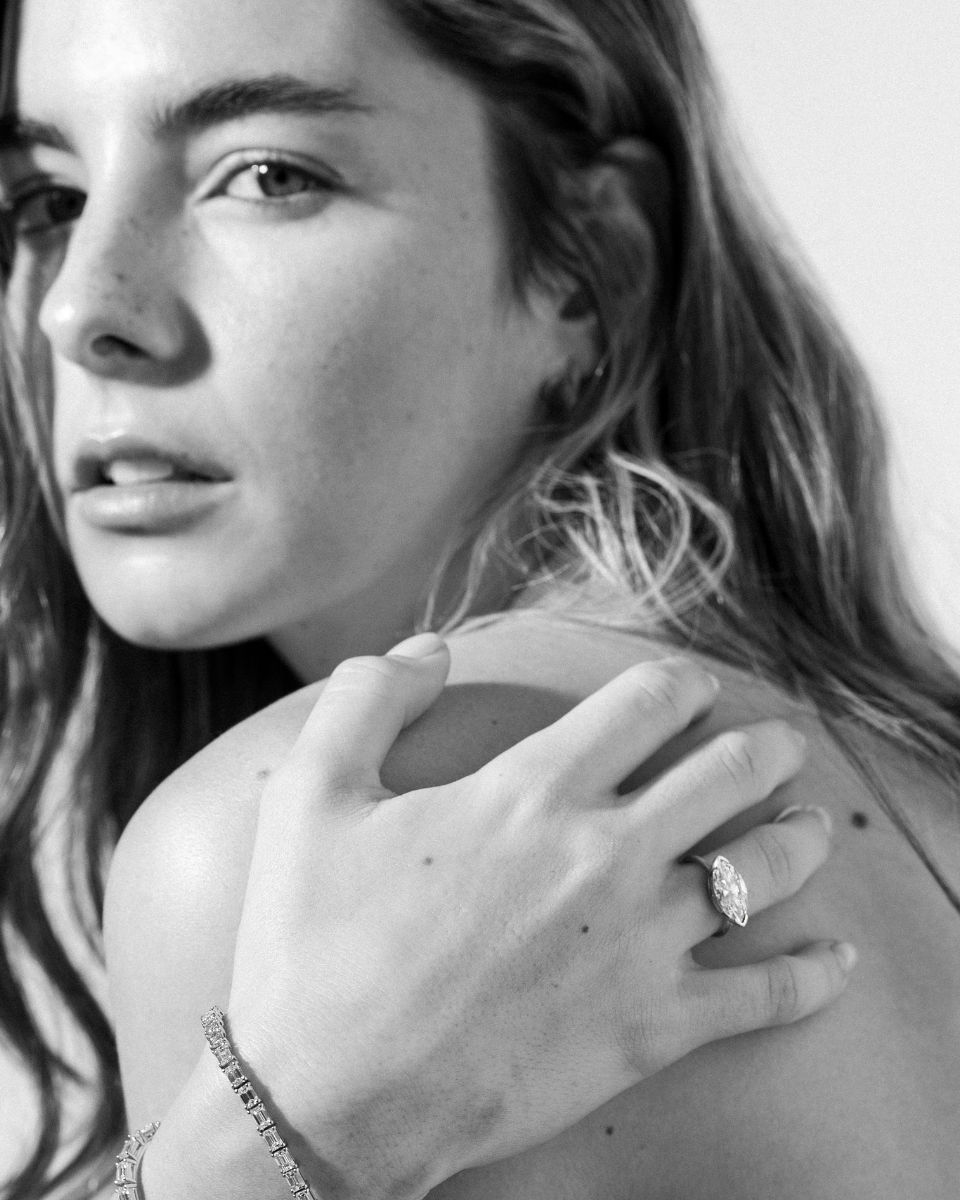
Every oval diamond displays some degree of bow tie, a darkened area across the center that resembles a bow tie. GIA states that this occurs when the viewer’s head and shoulders block the light that the facets reflect to the eye. The effect appears more pronounced the closer your face is to the diamond.
The appearance of the bow tie depends on the alignment of the pavilion’s facets. Well-aligned facets distribute light more evenly and keep the bow tie subtle. Poor alignment can cause dark patches and a more distracting effect. Higher ratios often make the bow tie more noticeable because longer facets allow for greater unevenness in light distribution.
No grading metric measures the bow tie. Reviewing photos or videos of the actual diamond is essential before purchasing.

Every oval diamond shows some degree of bow-tie, a darkened shadow across the center caused by the viewer's head blocking incoming light
Why There Is No Cut Grade for Ovals
GIA provides an overall cut grade for round brilliant diamonds, but not for ovals or other fancy shapes. Because oval proportions and faceting styles vary widely, standardized grading is impractical. However, GIA does evaluate polish and symmetry for ovals, and aiming for Excellent or Very Good in both areas is recommended.
Without a formal cut grade, rely on proportion data and visual inspection. Examine the diamond’s outline closely. Flat shoulders can push an oval toward a marquise-like silhouette, while bulging shoulders can create a pill-like appearance. A well-cut stone features smooth, even curves from end to end.
How Your Hand and Setting Play Into It
Longer ratios often make fingers appear more slender and suit larger hands. Shorter, rounder ovals can feel more proportional on petite hands. This is entirely a matter of personal preference.
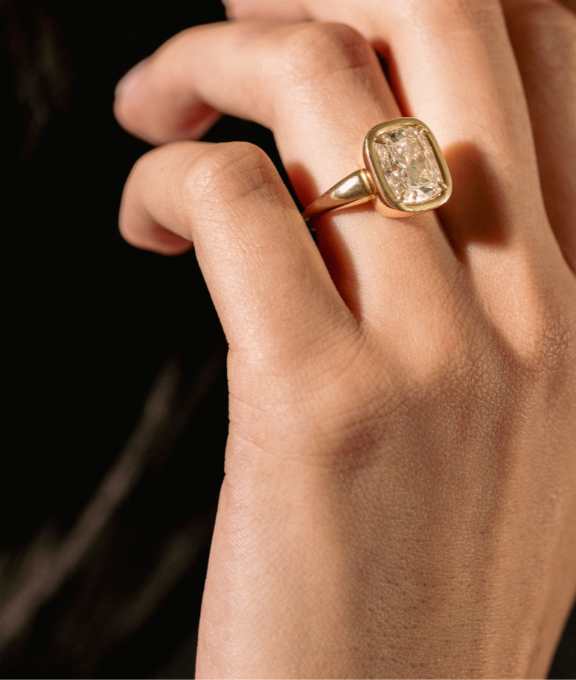
The setting can influence how the ratio appears. A solitaire setting emphasizes the diamond’s outline, making ratio and bow-tie visibility particularly important. A halo setting adds visual size around the perimeter and can soften the bow-tie effect. Three-stone settings frame the center oval, and bezel settings surround the diamond in metal for a streamlined appearance.
The Knot’s 2023 Real Wedding Study found that oval diamonds accounted for 23% of all engagement rings purchased that year, making them a popular choice.

Longer ratios tend to elongate the appearance of the finger and suit larger hands, while rounder ovals feel more proportional on petite frames.
How to Choose the Right Oval Ratio
Begin by considering the ratio and how elongated you want the diamond to look. Next, review the depth and table percentages to ensure the carat weight is distributed efficiently.
Compare millimeter dimensions for each diamond rather than relying on carat weight alone. Review images or video to assess the bow tie, and confirm that polish and symmetry receive Excellent or Very Good ratings.
A well-proportioned oval with moderate depth and a ratio between 1.40 and 1.50 can provide the same face-up presence as a heavier stone cut too deep. Carat weight affects price, so choosing the right proportions is a smart way to maximize visual impact for your budget.



Deja un comentario (todos los campos son obligatorios)