





Yellow Gold vs. White Gold vs. Platinum for Engagement Rings
Most couples spend weeks comparing diamond cuts, carat weights, and settings before they stop to consider the metal that holds everything together. That detail can make a noticeable difference, both in how the ring looks on the hand and in how it wears over time.
The metal you choose affects the appearance of your diamond, the maintenance the ring will require, and the overall price. Yellow gold, white gold, and platinum each involve different trade-offs, and the best choice depends on your taste, budget, skin tone, and the stone you plan to pair with it.
The differences between yellow gold, white gold, and platinum come down to how each performs in daily wear, appearance, and upkeep.

The metal you choose for an engagement ring does more than hold the diamond, it shapes the ring's overall look, how it wears over the years, and what it costs to maintain.
What’s Happening With Metal Prices Right Now?
Gold has been on a wild run. As of February 17, 2026, the gold spot price was roughly $4,893 per troy ounce, according to JM Bullion. Fortune reported it trading at $5,066 per ounce on February 12, up more than $2,139 from a year prior. It even briefly touched $5,594 per ounce on January 29 before dropping nearly 10% the following day.
Platinum, meanwhile, was priced at $2,033 per troy ounce on February 17, 2026. Fortune listed it at $2,099 per ounce on February 12, noting a rise of over $1,100 over the past year.
So ounce for ounce, gold is currently trading well above platinum as a raw commodity. That is a reversal from where things stood a decade ago. But finished platinum rings still tend to cost more at retail.
Platinum is denser than gold, meaning more material is needed for the same-sized ring. Platinum jewelry is typically 95% pure, while 14k gold is about 58% pure. Once fabrication and labor are factored in, platinum settings still carry a higher price tag in most cases.
The gap between the two has narrowed, though, and for many couples it is no longer the deciding factor.
Why Yellow Gold Is Leading in 2026
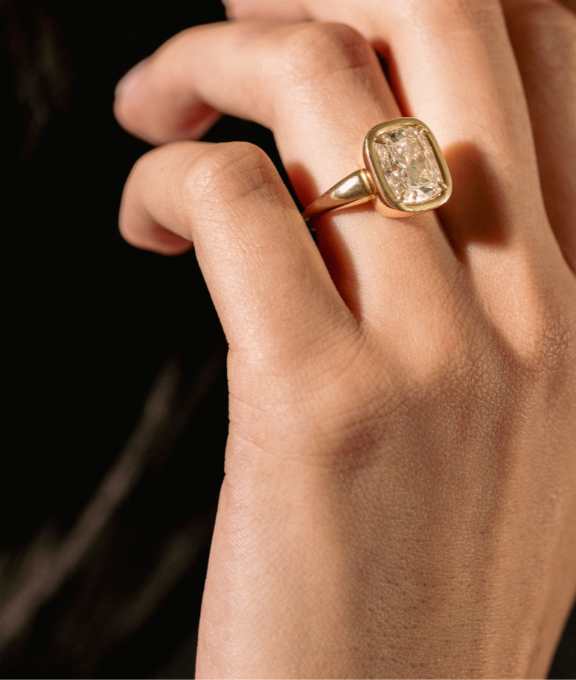
Yellow gold accounts for 57% of engagement ring sales in 2026, up from 45% last year, according to a recent engagement ring trends report. Platinum follows at 42%, and white gold and rose gold have each dropped below 1% of sales. Yellow gold is now the most frequently chosen metal for engagement rings.
National Jeweler noted that yellow gold is expected to remain a top choice in the bridal market, offering a classic yet modern look that pairs well with both vintage-inspired and contemporary designs.
Several factors contribute, including increased interest in warm tones and vintage-inspired aesthetics, as well as the popularity of bold, sculptural band styles this year.

Yellow gold now accounts for 57% of engagement ring sales in 2026, up from 45% the year prior, driven by renewed interest in warm tones and vintage-inspired aesthetics.
Chunky Bands and Mixed Metals
Oversized, high-shine bands in 14k or 18k yellow gold have become one of the more visible trends in rings right now. Wide bands, dome rings, and organic gold forms are showing up in collections everywhere.
Natural Diamonds reports that chunky gold rings are prominent in 2026 engagement ring trends. High gold prices reinforce the appeal of substantial gold paired with a natural diamond.
Mixed-metal and two-tone settings are also becoming more common. Some couples choose rings that combine metals to enhance the center stone or reflect personal style. Hearts On Fire noted that mixing metals remains a preferred way to personalize a ring.

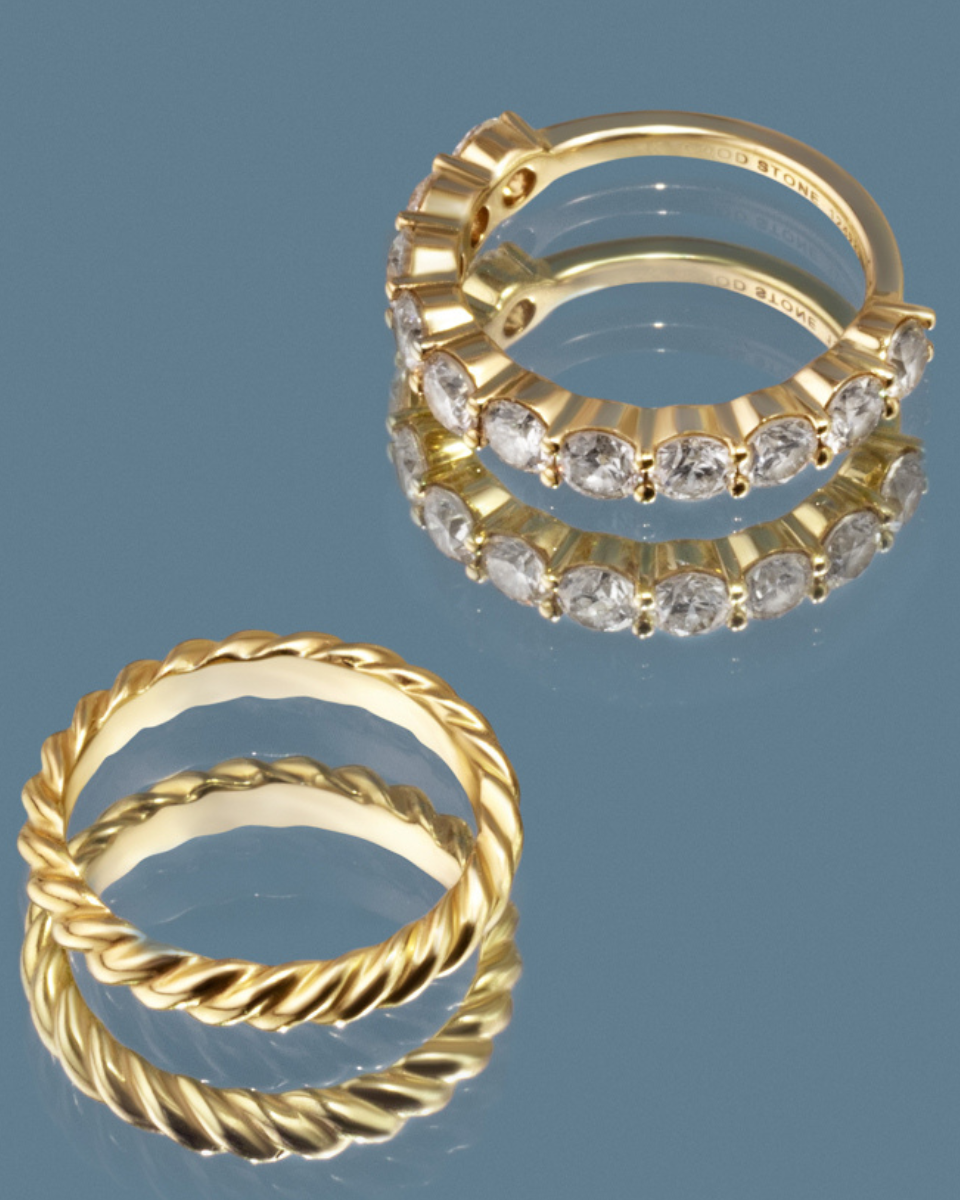
Wide, high-shine bands in 14k and 18k yellow gold are one of the most visible ring trends of 2026, like our Chunky Channel Set Halfway Wedding band.
Celebrity Rings That Set the Tone
Three high-profile engagement rings from the past year have had a noticeable effect on what people are searching for. Dua Lipa wears a 2-carat round-cut diamond on an approximately 5mm-thick 18k yellow gold band, as confirmed in a June 2025 interview with British Vogue.
National Jeweler pointed out that her ring hits several popular notes at once, including chunky bands, bezel settings, solitaires, and yellow gold.
Zendaya’s engagement ring, a reported 5-carat cushion-cut diamond set east-west, drew attention to “east-west engagement ring” searches. Taylor Swift’s ring from Travis Kelce is estimated to feature an old mine diamond weighing more than 8 carats, set on a yellow gold band with a detailed vintage-inspired design. Each of these rings includes warm-toned gold and bold proportions.

Dua Lipa, Zendaya, and Taylor Swift have each sparked noticeable shifts in what ring shoppers are searching for, all three feature yellow gold bands and bold proportions.
How Each Metal Holds Up Over a Lifetime
Platinum
The GIA notes that platinum is denser and stronger than gold, making it suitable for everyday rings. When platinum is scratched, the metal shifts on the surface rather than being lost, so the ring retains its original weight. Many people are not aware of this property of platinum.
Gold, by contrast, can lose a small amount of metal with each scratch, which means prongs and shanks may thin over decades of daily wear. The prongs holding a center stone in a platinum ring are less likely to break than those in a gold ring, according to the GIA.

Platinum is denser and stronger than gold, and when scratched it displaces rather than loses metal, meaning the ring retains its original weight over time.
Gold Karat Options
The karat of gold you choose makes a real difference in how the ring wears. 14k gold is composed of 58.3% gold and 41.7% other alloys, while 18k gold is 75% gold with 25% alloys.
Eighteen-karat gold is more valuable and has a richer color, but it is softer and scratches more easily. Fourteen-karat gold is more durable, more scratch-resistant, and less expensive. If you work with your hands or lead an active lifestyle, 14k may be the more practical choice.

18k gold has a richer, deeper color but scratches more easily, while 14k is more resistant to wear and better suited to active lifestyles.
White Gold and Rhodium Maintenance
White gold requires rhodium replating, which is a running cost many people do not plan for. The rhodium coating wears away gradually, and most pieces need replating every 1 to 3 years, depending on wear.
For engagement rings worn daily, replating every 12 to 18 months is recommended. Each session typically costs between $30 and $125, with most jewelers charging in the $60-$80 range. Over the life of a ring, that adds up.

White gold requires periodic rhodium replating as the coating gradually wears away, typically every one to three years, at a cost of roughly $60 to $80 per session.
Allergies and Skin Sensitivity
White gold can contain trace amounts of nickel. While rhodium plating acts as a hypoallergenic barrier, once it wears thin, the underlying nickel alloy may come into contact with the skin. For anyone with nickel sensitivity, this is something to consider seriously.
Platinum is naturally hypoallergenic and maintains its white color without any plating. Yellow gold, when alloyed without nickel, is also generally safe for most skin types.
How Metal Affects Your Diamond’s Color
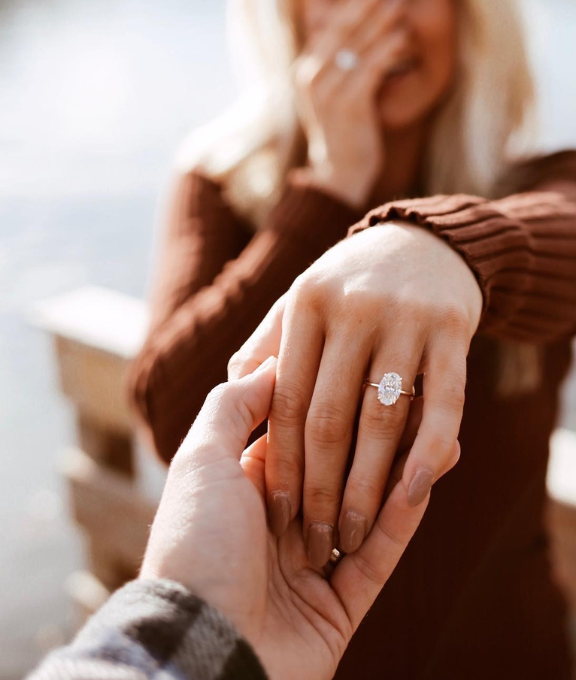
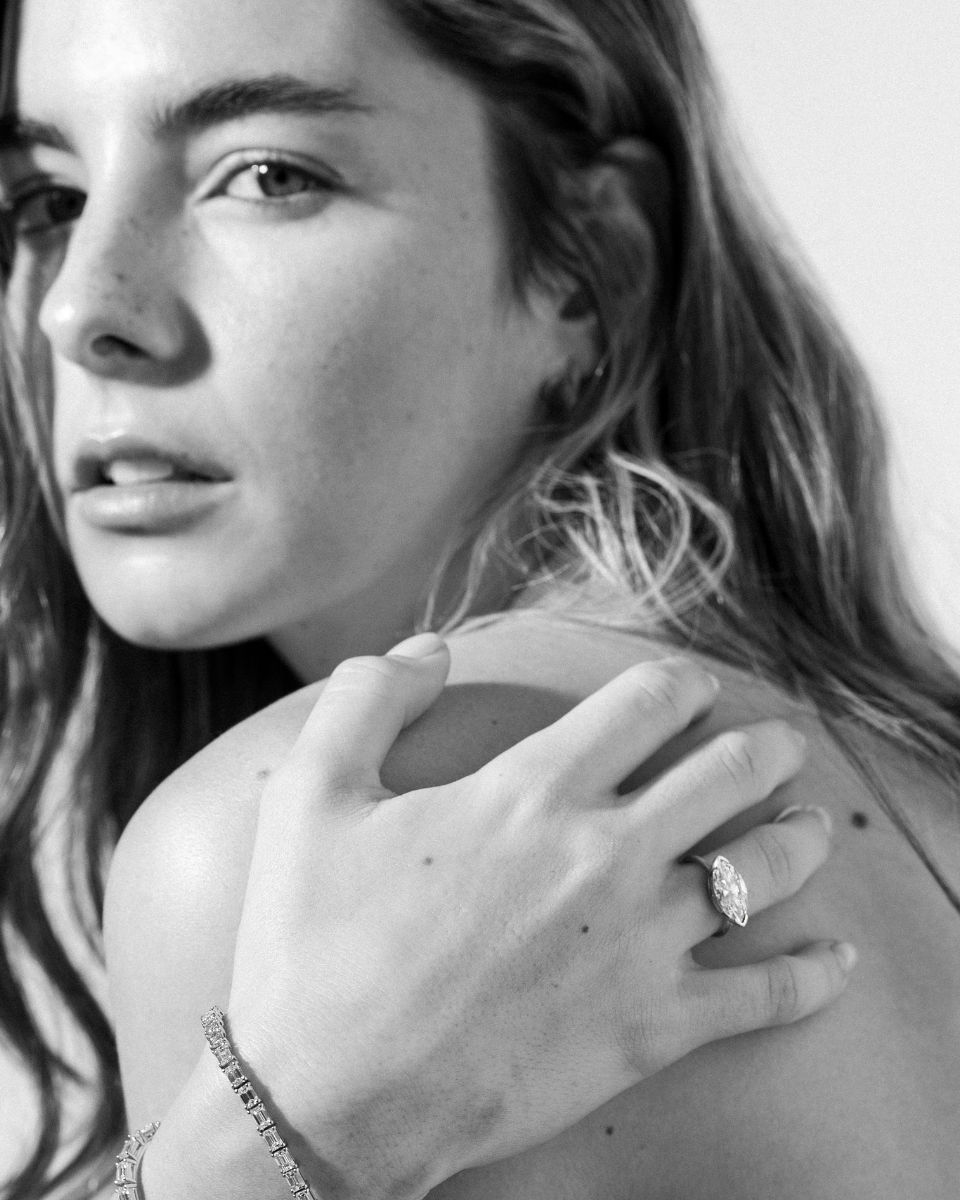
This is where choosing the metal gets strategic. According to the GIA, diamonds graded D through F on the color scale are considered colorless, and a white metal like platinum or white gold is the best way to let that colorlessness shine. Diamonds graded M or lower will have a noticeable yellow tint, and yellow gold will accentuate that warmth.
When a diamond is set in yellow gold, it can appear whiter than it would in a white metal setting. Diamonds in the J to M color range, which have a faint yellow tint, often pair well with yellow gold.
Pairing a lower-color-grade diamond with a yellow-gold setting allows for a cohesive appearance while spending less on the stone.
On the other hand, D through F diamonds are typically paired with white gold or platinum because their brilliance is more pronounced in cooler settings.
For those who want the warmth of gold on the band but prefer the diamond to appear as white as possible, a two-tone approach can be effective. A yellow gold shank with platinum or white gold prongs combines both features. If using white gold prongs, choosing an H- or I-color diamond helps keep the stone looking bright.

White metals like platinum and white gold complement colorless D-to-F stones, while yellow gold pairs naturally with diamonds in the J-to-M range that carry a faint warm tint.
How GOODSTONE Guides Your Metal Choice
Matching metal to diamond and setting is where working with a jeweler who understands materials in practical terms makes a difference. Based in Los Angeles, we handcraft every ring through a team of generational artisans. Our Jewelry Metal Guide explains both 14k and 18k yellow gold options, with 18k offering a deeper hue and 14k providing a softer tone.
For white gold, we favor 18k alloyed with iridium or palladium, then rhodium-plated. It remains our preferred choice for most white metal rings. For platinum, we often recommend it for wider bands and 3-stone designs because of its density and natural white luster.
We also cover rhodium replating and resizing for life as part of our warranty, removing one of the long-term maintenance costs associated with white gold. Our work also uses recycled precious metals, reducing the need for new mining.
You can choose from existing designs on the site or work directly with our designers to create a fully custom design.
Choosing the Right Metal for Your Engagement Ring
For those seeking warmth, a strong pairing with near-colorless or faint-color diamonds, and a look that matches current bridal trends, yellow gold is a fitting choice.
If you prefer a cool, bright white appearance that highlights a colorless stone and are comfortable with periodic rhodium maintenance, 18k white gold is a lower-cost alternative to platinum.
If long-term durability, hypoallergenic properties, and a metal that never needs replating are priorities, platinum remains a standard for longevity.
The right ring fits your daily routine, matches the diamond you have chosen, and feels right for years to come. Choosing the appropriate metal is one of the most important steps in the process.



Leave a comment (all fields required)