




Moissanite vs. Lab Diamond: Understanding the Differences, Pros, and Cons
Lab-grown diamonds are made of carbon atoms bonded tightly together, sharing nearly identical chemical, optical, and physical properties with natural diamonds pulled from the earth.
They form in controlled environments that replicate the high-pressure, high-temperature conditions found deep underground. General Electric produced diamonds using this method in the 1950s, and the technology has since refined.
Moissanite is composed of silicon carbide, a material distinct from diamond at the atomic level. First discovered in a meteor crater in Arizona by French scientist Henri Moissan in 1893, moissanite is now nearly all lab-created because natural deposits are rare.
While both stones are suitable for ring settings and exhibit attractive optical effects, they remain fundamentally different gemstones with their own characteristics.

Lab-grown diamonds and moissanite may look similar at first glance, but they are fundamentally different gemstones.
A Side-by-Side Look at the Differences
|
Characteristic |
Lab-Grown Diamond |
Moissanite |
|
Composition |
Carbon |
Silicon carbide |
|
Hardness (Mohs Scale) |
10 |
9.25 |
|
Brilliance |
White light reflections |
Rainbow fire (more colorful dispersion) |
|
Color Range |
Graded D through Z |
Often resembles K grade; may show yellow or green tints |
|
Price (1 carat) |
$1,000 to $5,000 |
$50 to $100 |
|
Certification |
GIA and IGI grading with 4Cs |
Typically graded for color only |
|
Resale Value |
Low, declining further |
Very low (30% to 50% of the original price) |
|
Toughness |
High, but has a cleavage direction |
Higher overall toughness; no cleavage direction |
How They Look on Your Hand
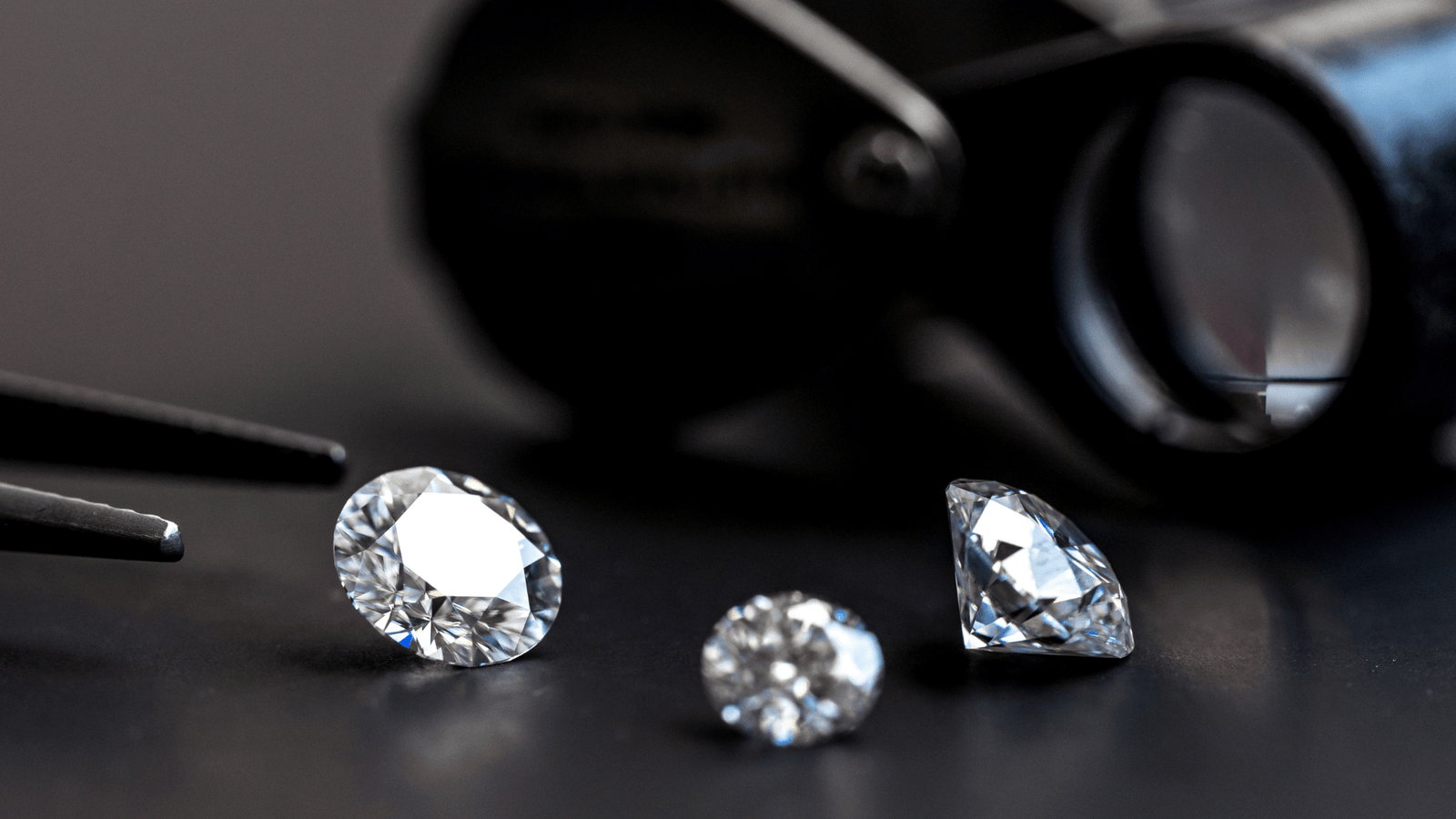
The optical differences between these stones show up most clearly when you see them side by side in person. Lab-grown diamonds reflect white light at you, creating that classic sparkle people associate with diamond jewelry. The light enters the stone, bounces around, and returns as bright flashes of white.
Moissanite handles light differently. It disperses light into a rainbow effect, producing more colors than a diamond. Some people appreciate this characteristic and find it eye-catching. Others find it less natural, particularly in larger stones, where the effect is more pronounced.
Color is another consideration. Lab-grown diamonds are graded on the same color scale as natural diamonds, from D (colorless) down through the alphabet. Moissanites tend to sit around the K grade equivalent, and under certain lighting conditions, you may notice yellow, green, or gray tints. This becomes more visible as the stone size increases.

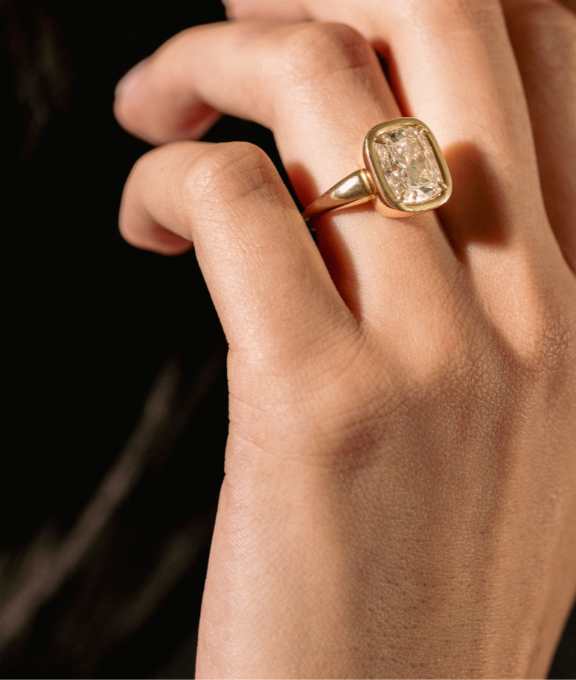
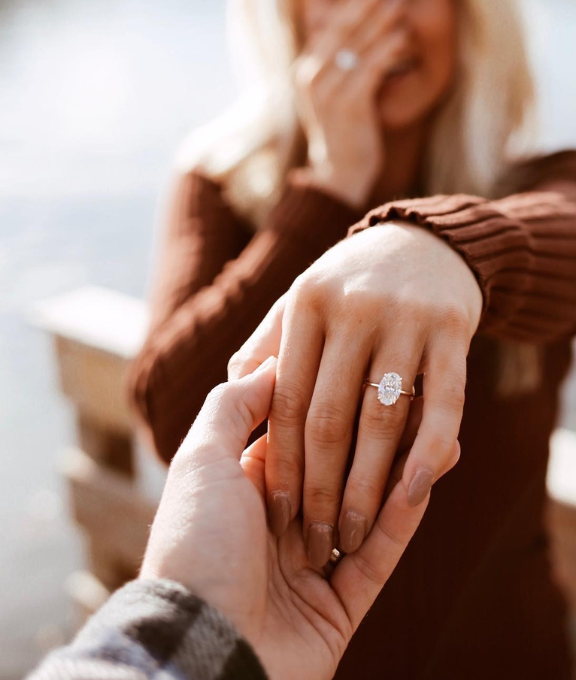
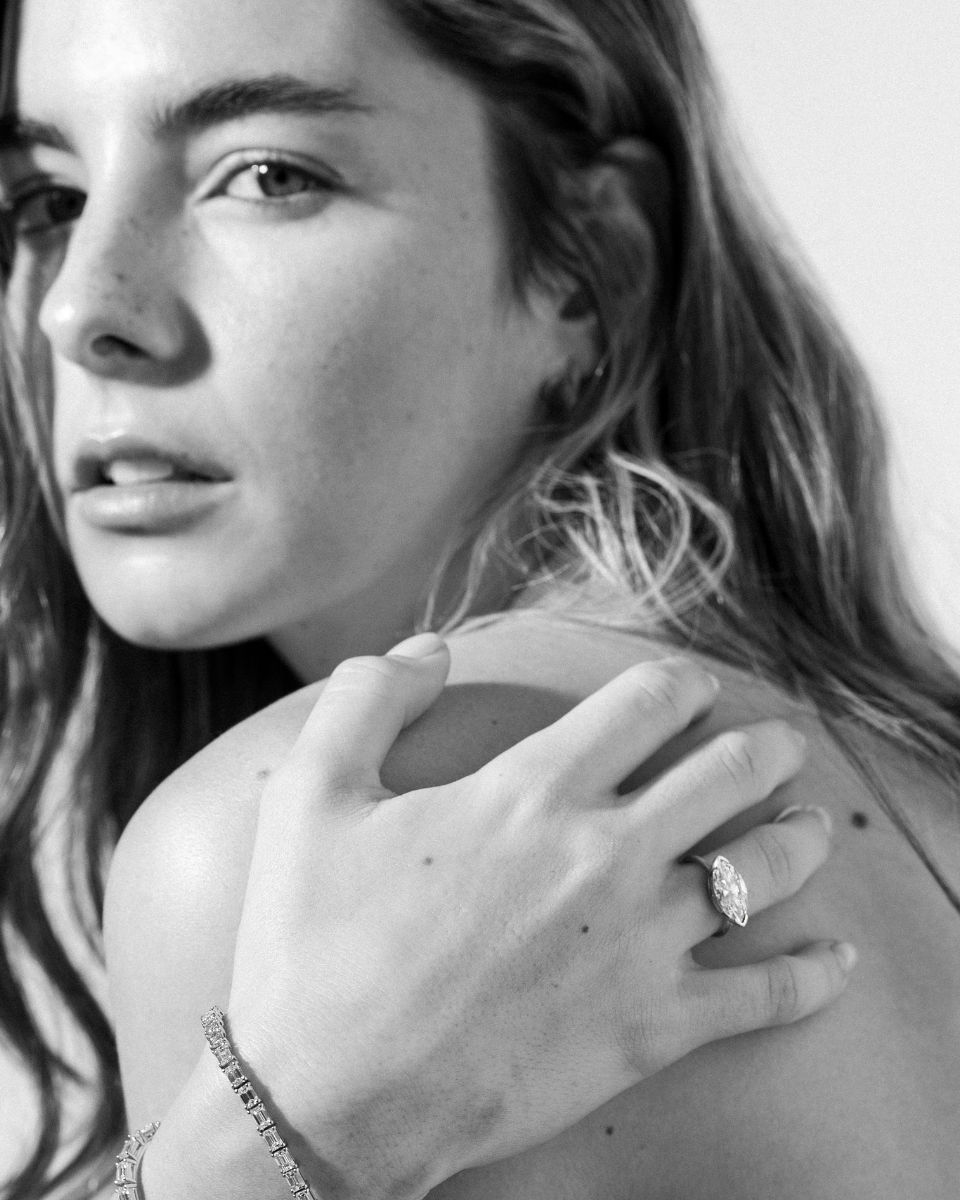
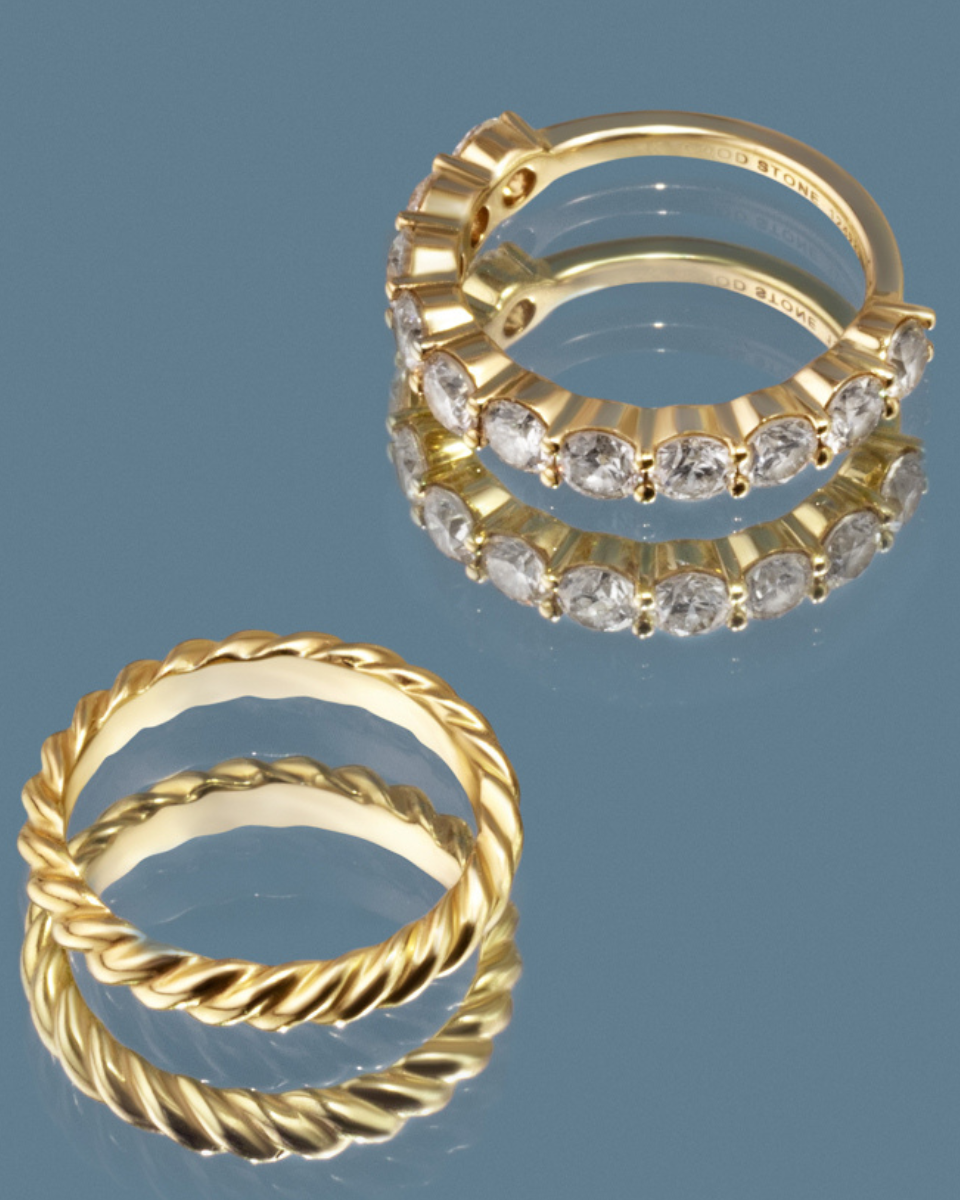
The biggest difference between lab diamonds and moissanite becomes obvious once you see them on the hand.
Durability and Everyday Wear
If you plan to wear your ring every day for decades, durability matters. Lab-grown diamonds earn a 10 on the Mohs hardness scale, making them the hardest known material. They resist scratches extremely well and hold up to daily wear without losing their surface quality.
Moissanite scores 9.25 on the same scale, which is higher than sapphires, rubies, and most other gemstones used in rings. Scratches are typically not a concern.
Moissanite surpasses diamond in overall toughness. Diamonds have a cleavage direction, meaning they can chip when struck at a specific angle. Moissanite lacks this structural weakness. Its high melting point (2,730°C) allows jewelers to use a torch to resize the stone without damaging it.

Both lab-grown diamonds and moissanite are durable enough for everyday wear.
The Price Conversation
Pricing differences are substantial. A 1-carat lab-grown diamond generally costs between $1,000 and $5,000, depending on cut, color, and clarity. A 1-carat moissanite usually ranges from $300 to $600, though lower-priced options are sometimes available.
For reference, a nearly colorless 1-carat natural diamond costs around $5,500. A lab-grown diamond of similar quality averages about $1,800. Moissanite typically costs $300 to $600 per carat, depending on quality.
This price difference allows shoppers to choose a larger moissanite for the same budget as a smaller lab-grown diamond. Some prioritize carat weight and visual impact, while others prefer diamond composition even when the diamond is smaller.

The price gap between lab diamonds and moissanite is significant. This section breaks down what you can expect to spend, and how that difference affects size, composition, and value.
Certification and Knowing What You Are Buying
Lab-grown diamonds come with the same certifications as natural diamonds. Organizations such as GIA and IGI grade them using the 4 Cs: cut, color, clarity, and carat weight. This standardized system helps you understand precisely what you are purchasing and allows for easier comparisons between stones.
Moissanite certification works differently. Most moissanite is graded only for color, ranging from colorless to near-colorless. You will not find detailed clarity or cut grades because moissanite is generally eye-clean and well-cut by default.
In May 2024, Charles & Colvard announced a partnership with the International Gemological Institute to provide comprehensive grading reports for moissanite gemstones, which may help standardize the buying process.
What About Resale Value?
If you are treating your purchase as an investment, both options require realistic expectations. Moissanite has poor resale value, typically returning only 30% to 50% of the original purchase price. Lab-grown diamonds face similar challenges, with resale value expected to remain low as production increases and prices decline.
The Knot reported that 46% of engagement rings in 2023 featured lab-grown diamonds, up from 12% in 2019. However, this increase in popularity has not created robust resale markets for these stones.
Neither moissanite nor lab-grown diamonds hold strong resale value as the market continues to grow.
Environmental and Ethical Considerations
Lab-grown diamonds have been marketed as eco-friendly alternatives because they do not require mining. The reality is more complicated. Creating lab-grown diamonds requires an enormous amount of energy, with some reports suggesting 10 to 12 times as much energy as mined diamonds, often generated by burning fossil fuels.
Moissanite production is generally less energy-intensive than lab-grown diamond production. Both options avoid the issues associated with traditional diamond mining.
According to a 2024 Boston Consulting Group study, nearly 60% of millennials and 45% of Gen Z consumers are willing to buy lab-grown diamonds, driven by affordability and ethical sourcing.
Pros and Cons at a Glance
Lab-Grown Diamond Pros
- Identical to natural diamond in composition and appearance
- Highest hardness rating for scratch resistance
- Certified and graded using industry-standard 4Cs
- Growing consumer acceptance for engagement rings
Lab-Grown Diamond Cons
- More expensive than moissanite
- Low and declining resale value
- High energy consumption during production
Moissanite Pros
- Significantly more affordable
- Higher overall toughness than diamond
- Eye-catching rainbow sparkle
- Heat-resistant for jewelry repairs
Moissanite Cons
- Different optical properties may appear less natural
- May show color tints, especially in larger sizes
- Limited certification and grading standards
- Very low resale value
Which One Feels Right for You?
Choosing between moissanite and lab-grown diamond depends on specific preferences. Those seeking a stone chemically and optically identical to a diamond, with industry-standard certification and classic white sparkle, may prefer a lab-grown diamond.
For those seeking maximum size and sparkle within a budget and who appreciate the colorful optical effects of moissanite, this option offers distinct advantages.
Both stones are attractive and durable enough for daily wear. Ultimately, the choice should reflect personal preferences, priorities, and budget.

Whether you value diamond authenticity or standout size and brilliance, both stones hold up beautifully over time.



Leave a comment (all fields required)