





Is Platinum More Expensive Than Gold? Comparing Cost, Durability, and Value
Choosing between platinum and gold is about how each metal’s cost, durability, and value align with your priorities. Platinum offers a substantial feel due to its density; gold brings a variety of colors and finishes, shaping both your style and your jewelry's lasting performance.
While price matters, key factors such as durability, maintenance, and long-term value define how your ring performs over time. Understanding these differences is essential for making a confident, lasting investment in platinum or gold.

Choosing between platinum and gold involves more than comparing price tags, durability, maintenance, and long-term value all play a role in how the right metal performs over a lifetime of wear.
The Price Relationship Has Flipped
For most of recorded history, platinum cost more than gold. That relationship reversed about a decade ago, and the gap has grown wider. As of January 2026, gold trades near $4,616 per ounce while platinum sits around $2,343 per ounce. Gold now costs roughly twice as much as platinum.
Twenty years ago, today’s pricing would have surprised most. Although platinum is about 30 times rarer than gold, all the platinum ever mined would barely fill an Olympic pool. Rarity alone doesn’t set market prices; other factors drive current values.
Metals markets have moved drastically. Platinum grew by over 77% since early 2025. Silver jumped 170%, palladium 95%, and gold 65% in the same period. These swings reflect current demand and supply pressures.

For most of history platinum cost more than gold, as of January 2026, gold trades near twice the price of platinum
Why Platinum Costs Less Despite Being Rarer
Gold benefits from its role as a financial safe haven. Central banks hold it. Investors turn to it during uncertainty. Platinum doesn’t carry that same monetary status, so its price depends more heavily on industrial use.
About 70% of platinum comes from South Africa, where mining faces ongoing challenges. Annual production is around 180 metric tons, versus 3,300 for gold. Supply has lagged pre-pandemic levels, and new mines take over a decade to develop.
According to the World Platinum Investment Council, 2025 marked the third straight year where demand exceeded supply. The shortfall ranged from 850,000 to 966,000 ounces. Above-ground stockpiles have dropped to about five months of demand coverage.

Platinum's lower price isn't a reflection of lesser quality, it simply doesn't carry gold's role as a financial safe haven for central banks and investors.
Industrial Demand Keeps Growing
Automotive applications account for over 44% of global platinum demand, making it the largest use category. Catalytic converters need platinum to reduce vehicle emissions.
The hydrogen economy creates an additional pull-on supply. Platinum serves as a catalyst in PEM electrolyzers, which produce green hydrogen from water, and in fuel cells that power heavy trucks without emissions. Large-scale hydrogen projects in Europe and the Middle East are moving from planning stages to commercial operation in 2026.
Projections show that platinum demand from electrolyzers and fuel cells will reach nearly 900,000 ounces by 2030. China recently classified platinum as a critical mineral. The country produces very little domestically and imports more than 95% of what it needs.

Automotive catalytic converters account for over 44% of global platinum demand, and the emerging hydrogen economy is adding significant new pressure on supply.
What This Means for Jewelry Buyers
The price gap means you can choose platinum’s durability and purity at a lower entry cost than gold. To make an informed decision, look beyond price per ounce and focus on how each metal’s qualities affect the jewelry you wear.
Because platinum is denser, finished pieces weigh more than gold designs. This increased weight partially offsets per-ounce savings. The final price depends on design, stone settings, and craftsmanship.
Demand for platinum jewelry has been climbing. The World Platinum Investment Council projects a 7% increase in 2025, bringing levels to their highest since 2018. In China alone, demand jumped 44% to 594,000 ounces. North American demand should reach 467,000 ounces, up 5% from the prior year.
The current price gap gives buyers access to platinum's durability and purity at a lower entry cost than gold.
Durability Differences That Matter Over Decades
Platinum and gold behave differently under daily wear. Both metals develop surface marks over time, but the way those marks form and affect the material differs.
Gold tends to scratch by shedding small amounts of metal, gradually reducing its mass. Platinum reacts differently. Instead of wearing away, the metal shifts along the surface, allowing the piece to retain more of its original weight over time.
That density plays a role in longevity. Because platinum is heavier and more compact, it resists thinning and structural wear better in pieces designed for long-term use.
As platinum ages, those surface shifts create a soft patina with a muted, matte appearance. Some people appreciate this lived-in look, while others choose occasional polishing to restore a brighter finish.

Gold gradually loses small amounts of metal with each scratch, slowly reducing its mass over time, while platinum displaces rather than sheds material.
Purity and Alloy Composition
Platinum jewelry uses 90% to 95% pure metal. Stamps marked “950,” or “PLAT,” contain 95% platinum and 5% other metals.
By comparison, 14K gold is 58.5% pure and marked “585.” 18K gold is 75% pure. Remaining metals affect color, hardness, and durability.
This purity difference matters for sensitive skin. Platinum is hypoallergenic. Some gold alloys contain nickel, which can irritate certain wearers.
Platinum stays naturally white without any coating. White gold requires rhodium plating to achieve its bright appearance, and that plating wears off over time. Most white gold rings need replating every 1 to 2 years to maintain their color.
How Each Metal Holds Stones
For engagement rings with center diamonds or gems, setting security is key. Platinum’s strength allows prongs to hold stones with less metal for cleaner sight lines while maintaining grip.
The density means prongs bend and wear less. Stones remain secure longer, requiring fewer service visits.
Color matters here, too. Platinum’s natural white tone won’t cast any tint onto your diamond. Yellow gold can infuse the stone with its warmth, affecting how the diamond’s color appears to the eye.

Platinum's density allows prongs to hold stones securely with less metal, meaning they bend and wear down more slowly over time and require fewer service visits.
Investment Outlook and Future Pricing
Analysts watching platinum see potential for price increases. Base-case projections point to $2,170 to $2,300 per ounce in 2026 under favorable conditions. The platinum deficit should continue through 2029, though it may narrow as recycling increases.
The investment thesis rests on the assumption that historical patterns will return to normal. When the gold-to-platinum ratio sat near 1:1 for most of history and is currently near 2:1, some investors expect platinum to close that gap. Even with gold prices holding steady, platinum would need substantial gains to reach parity.
Platinum prices tend to swing more than gold because of that industrial demand connection. Automotive trends, hydrogen technology adoption, and energy policy all affect platinum’s market in ways that don’t touch gold.
Choosing Between Platinum and Gold
Your decision ultimately comes down to what you value most in the platinum-versus-gold comparison.
Platinum is ideal for those seeking maximum durability, secure stone settings, a naturally white color, and hypoallergenic materials.
Gold is suited to those who prefer a choice of colors, more price flexibility with karat options, or a polished finish without patina.
For 14K gold, you get a balance of durability and cost. For 18K gold, you get higher purity with a richer color. For 950 platinum, you get lifetime durability and the highest purity available in precious metal jewelry.

Platinum suits those who prioritize durability and hypoallergenic materials. Gold offers more flexibility in color and karat options.
Handcrafted Options Built to Last
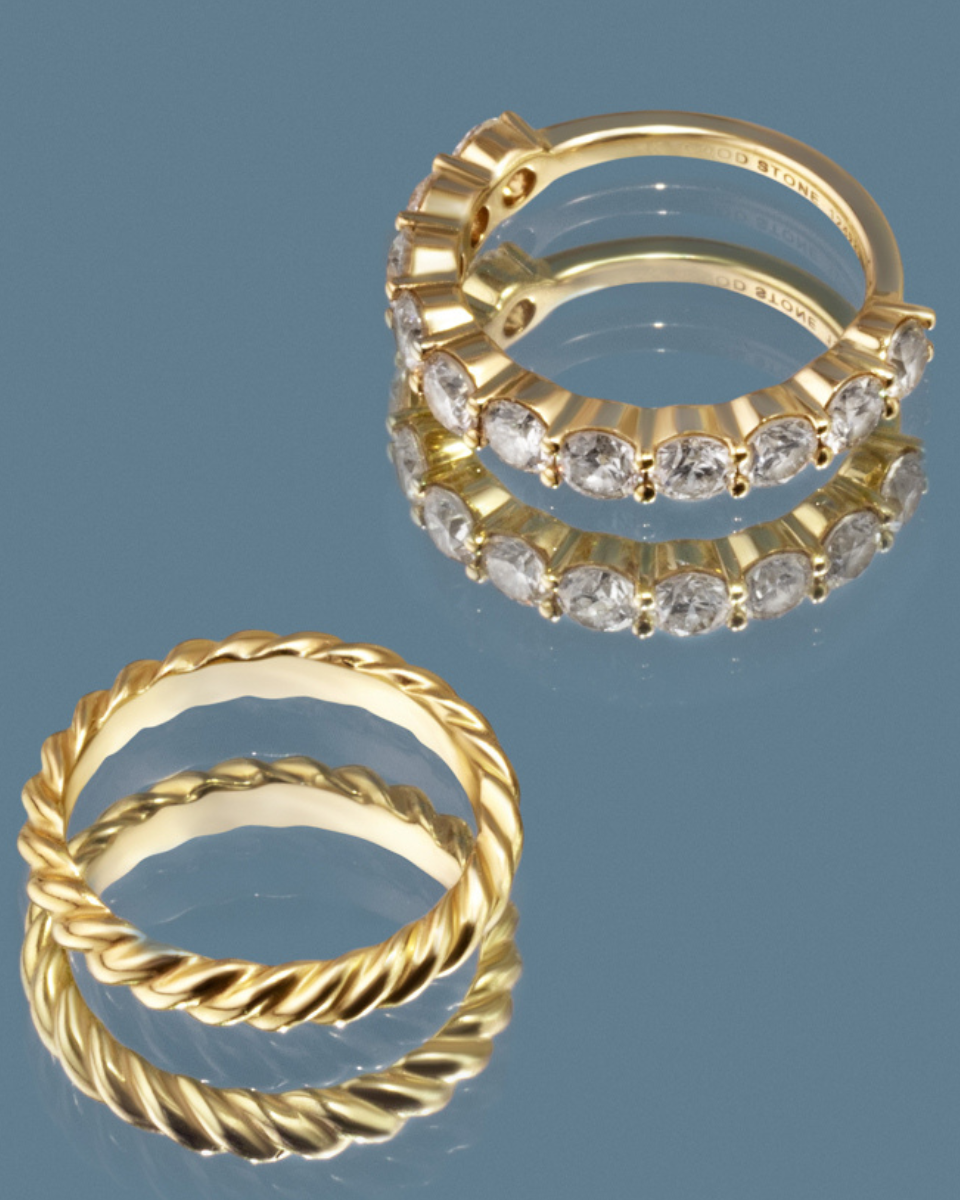
GOODSTONE creates every ring through bespoke craftsmanship by generational artisans in Los Angeles. Using the most durable alloys of gold and platinum, each piece functions as an instant heirloom.
You can work from existing designs in the archive or collaborate with our designers for something entirely original. All of our fine jewelry includes a lifetime warranty along with detailed care guidance to maintain brilliance and integrity over the years ahead.
Solid 14K gold, 18K gold, and platinum rings combine sophisticated design with exceptional durability, suited for daily wear and meaningful moments. By choosing a handcrafted, bespoke piece, you invest not only in lasting craftsmanship but in a story that endures. Let your jewelry become an enduring reflection of your values, designed for a lifetime, crafted for generations.




Leave a comment (all fields required)