

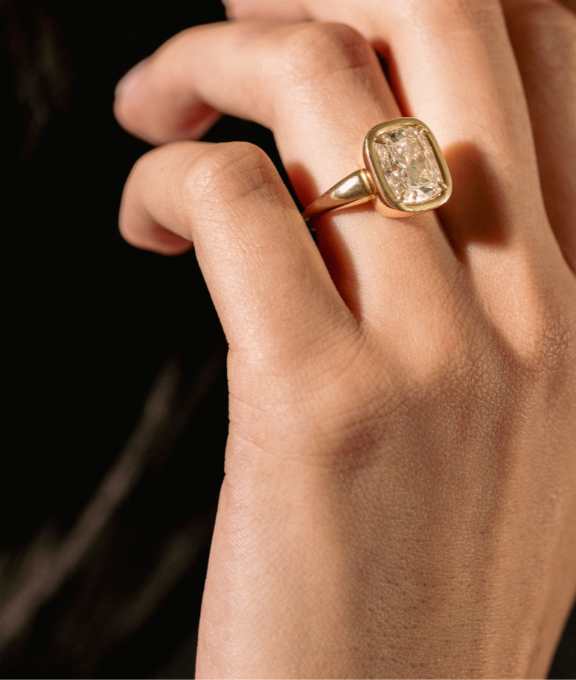
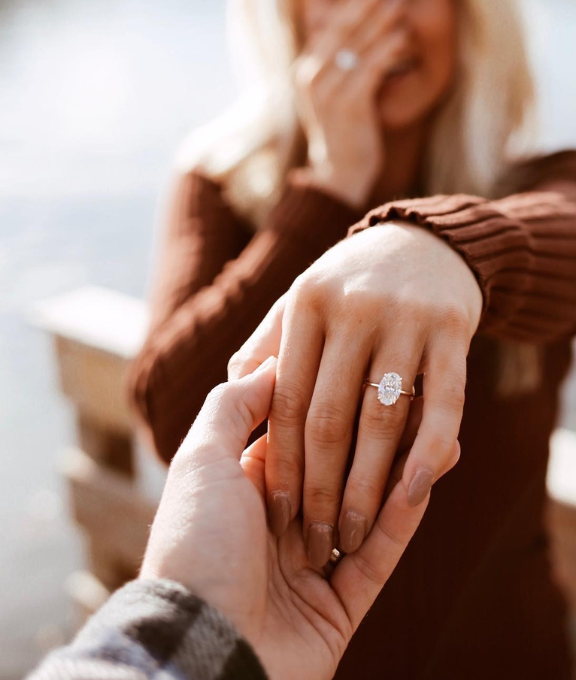

The right piece tells the person you chose, and keep choosing, that the years behind you matter, and that the years ahead still feel wide open.

Anniversary traditions follow year-by-year tradition, with specific gemstones and metals tied to each milestone. Choosing the right piece means understanding those traditions, recognizing how they translate into modern jewelry, and aligning them with what your partner already wears. Factors like budget, ring sizing, material differences, and personalization inform the final decision. Each one plays a role in how the gift is received and worn.
Pairing wedding anniversaries with specific materials is a centuries-old tradition. Germanic records from the 1500s already tied silver to 25 years of marriage and gold to 50, long before any retailer turned the idea into a list. A husband would often crown his wife with a silver wreath at 25 years and a gold one at 50. Silver and gold are long-lasting and symbolize a successful marriage. A marriage that reaches those years should be honored with something that does the same.
The tradition spread into English-speaking countries in the 1800s and remained loosely defined for years. Couples celebrated the big milestones and largely ignored the years in between. That changed in 1937, when the American National Retail Jeweler Association published an expanded list covering every year up to the 20th anniversary and every fifth year after that.
Their version is what most people now call the traditional list. It added materials such as paper, cotton, leather, wood, iron, wool, bronze, and tin to the sequence. Each one was chosen for a loose symbolic fit with the year it marks, moving from fragile materials in the early years toward enduring ones later.
The list was updated in the 20th century to cover newer tastes and pricier materials. A gemstone list followed, developed and maintained with input from the Gemological Institute of America and Jewelers of America. It pairs each year with a stone the couple could wear rather than store. That is the version jewelers rely on today, and it is the one we use to guide the majority of anniversary pieces we design.
Canada, the UK, and Australia follow similar lists, with small regional differences. The UK traditionally reserves cotton for the first anniversary and paper for the second, a reversal of the American list. It also assigns leather to the third year rather than a separate category. These differences are worth checking if you are buying for someone with strong ties to another country’s tradition. However, the three standard lists, traditional, modern, and gemstone, will cover the occasion you’re commemorating.
The three lists below show the traditional and modern material, along with the gemstone or metal associated with each year. If an official assignment does not exist for a given year, you’ll see the word “None.” Use these lists as a handy reference for every year of your marriage.
| Year | Traditional or Modern | Gemstone or Metal |
|---|---|---|
| 1 | Paper or Clocks |
Gold |
| 2 | Cotton or China |
Garnet |
| 3 | Leather or Crystal/Glass |
Pearl or Moonstone |
| 4 | Fruit/Flowers or Appliances |
Blue Topaz |
| 5 | Wood or Silverware |
Sapphire or Rose Quartz |
| 6 | Iron/Candy or Wood |
Amethyst |
| 7 | Wool/Copper or Desk Sets |
Onyx or Yellow Sapphire |
| 8 | Bronze/Pottery or Linen/Lace |
Tourmaline |
| 9 | Pottery/Willow or Leather |
Lapis Lazuli or Morganite |
| 10 | Tin/Aluminum or Diamond Jewelry |
Diamond |
| 11 | Steel or Fashion Jewelry |
Turquoise |
| 12 | Silk/Linen or Pearls |
Jade |
| 13 | Lace or Textiles/Furs |
Citrine |
| 14 | Ivory or Gold Jewelry |
Opal |
Use the column that fits your partner. Traditionalists often expect original material, even if it means a simple paper note for the first year. Contemporary tastes lean toward the modern list, where diamond jewelry replaces tin at year 10 and then replaces pearl again at year 30.
The gemstone list is the one we rely on at GOODSTONE, because it translates into rings, pendants, earrings, and bracelets that the person will wear every week rather than shelve after a weekend.
Each list tells a different story, and the story behind the gift matters almost as much as the gift itself. The traditional list leans on history and meaning. The modern list leans on function and taste. The gemstone list treats the anniversary as a special occasion with something a person will actually wear.
The traditional list is the oldest of the three and the one most couples remember from movies and grandparents. It uses humble early-year materials like paper, cotton, and wood that grow sturdier, ending with materials like diamond and platinum once the years carry enough weight to warrant them. Pick the traditional column if your partner values the lineage of a gift. A handwritten letter on heavy paper for year one has depth that a more expensive item would not match, because it follows the tradition as practiced a century ago.
The modern list, drafted in the mid-20th century, matches how couples really live. It replaces paper with clocks, cotton with china, and tin with diamond jewelry. These changes recognize that many couples now own homes, travel, and accumulate fine objects earlier in their relationships. Pick the modern column if your partner is less attached to the historical version and more interested in a piece that fits their lifestyle.
The gemstone list is the one most jewelry buyers follow because it translates into a wearable piece for each year. Each stone pairs with rings, pendants, earrings, and bracelets, and the pieces can be worn daily instead of displayed. Most of our anniversary commissions follow the gemstone list, since it gives a partner a physical reminder of the year their marriage crossed that milestone.
Mix the lists where appropriate. For example, a third-year anniversary gift can pair a leather-bound journal, a crystal vase, or a pearl pendant. The person receiving it will not know which list you used, only that you picked the right item.
The first decade sets the tone for every anniversary afterward. The gifts are smaller, the materials humbler, and the pressure to get it right is higher. This is because early anniversaries are when couples build the habit of marking the occasion.
Gold is the first-year gemstone pairing. It is the only metal that appears twice on the list, returning at year 50. Year one is the year the marriage takes shape, and gold retains its value longer than any other. A gold piece given in year one becomes the anchor of a collection that leaves room for growth.
The traditional list names paper for year one, which pairs naturally with a gold pen, a handwritten letter, or a gold-accented journal. The modern list names clocks, which some couples take as a cue to invest in an heirloom-quality watch. For most first anniversaries, a small gold piece, a thin chain, a pair of studs, or a simple band in 14k or 18k is better than anything else. Keep it understated. The years ahead will add weight.
Garnet is the second-year gemstone and one of the least expensive on the list, making it a strong choice for a couple still early in their finances. The stone has been associated with devotion for centuries, carried by travelers as a symbol of safe return home. A garnet pendant, ring, or earrings in yellow or rose gold are a good match for most couples at this stage.
Year three is paired with pearl on both the gemstone list and some versions of the traditional list. It’s paired with moonstone on other lists that prefer a less common stone. Pearl earrings are the most-purchased anniversary piece this year because they fit almost anyone, are suitable for daily wear, and translate easily into a piece the receiver wants to own.
Blue topaz is the year four gemstone, and is sometimes overlooked because year five is right around the corner. Year four is the last of the early chapters, and a blue topaz pendant or ring sets the stage for the bigger sapphire gift in year five without overshadowing it.
This is the first anniversary that most couples treat as a milestone. The traditional gift is wood because it symbolizes strength and growing roots. The gemstone pairing is sapphire, a stone that lasts beyond a lifetime. It comes in a wide range of colors, from classic cornflower blue to pink, yellow, and green. A sapphire ring in a three-stone or solitaire setting carries the same weight as an engagement ring. Many couples treat year five as the year they add a second ring.
Years six through nine sit in the quiet middle of the first decade. Amethyst, onyx, tourmaline, and lapis lazuli let you pick a piece your partner will reach for. Amethyst pendants, onyx signet rings, tourmaline earrings, and lapis lazuli stacking bands are all budget-friendly pieces. The goal in these years is continuity. Keep the habit of marking the anniversary with something wearable, building momentum for the tenth anniversary.
Year ten is the first diamond anniversary on the list, and is the year most couples invest in a piece to be worn for life. The traditional gifts are tin or aluminum, which are rarely given. The modern list replaces it with diamond jewelry. A diamond eternity band, tennis bracelet, solitaire pendant, or diamond anniversary ring are the four most popular choices for this milestone. Ten years of marriage carries real weight. The gift acknowledges a bond that has endured and remains strong.
The second decade of marriage moves through smaller named materials. Highlights include turquoise at year 11, jade at 12, opal at 14, ruby at 15, and emerald at 20. These are the years when most couples settle into the tradition and start planning ahead. They will purchase a piece discussed months in advance rather than choosing the week before.
Year 15 is the ruby year. Ruby is the third-hardest gemstone after diamond and sapphire, and its deep red color is associated with passion and endurance. Ruby pendants and rings are the most-commissioned pieces at this milestone. We often design year-15 rubies with a diamond halo or accent stones, which lets the red take center stage while the diamonds add the glow.
Emerald represents year 20 on the gemstone list. A softer stone than sapphire or ruby, emerald requires a protective setting, bezel, or low-profile setting rather than a raised prong that exposes the stone. Year 20 is also when platinum first appears on the modern list. Platinum is denser and more wear-resistant than white gold. A platinum band at year 20 is a piece most people wear for the rest of their marriage.
Year 25 is the silver anniversary. It is the first of the three milestones that carry royal and presidential acknowledgment in most countries. In the UK, couples can request a personal message from the monarch at year 60, while the US sends a presidential greeting card at year 50.
Silver is the named material at 25, though many couples treat year 25 as a second diamond year. They will commission an anniversary band, a remount of their original engagement ring, or a diamond-set bracelet.
| Milestone | Traditional or Modern Gift | Typical Anniversary Piece |
|---|---|---|
| Year 10 | Tin or Diamond |
Diamond eternity band, tennis bracelet |
| Year 15 | Crystal or Watch |
Ruby pendant, ruby accent ring |
| Year 20 | China or Platinum |
Emerald ring, platinum band |
| Year 25 | Silver |
Anniversary band, engagement ring remount |
The years between 30 and 45 are the quieter years of a marriage, and their gifts follow that same tempo. They are more sentimental and usually reserved for pieces the couple already knows their partner will love.
Year 30 is the pearl anniversary on the traditional list and the diamond anniversary on the modern list. Pearl necklaces are the most common year-30 piece, often a classic single-strand in 7mm to 8mm Akoya pearls. Couples who bought a pearl piece earlier may upgrade to a diamond, which is why the modern list features diamonds at this milestone.
Coral represents year 35 on the traditional list and emerald on the modern list. Due to sustainability concerns about harvesting, coral is rarely commissioned today. Most couples choose the modern emerald instead. An emerald eternity band, or a pair of emerald studs, is a strong choice, especially when paired with a certificate of origin.
Ruby is the stone for the 40th anniversary. If you bought a ruby piece in year 15, year 40 is the year to upgrade to a larger stone, add matching earrings, or commission a ruby-and-diamond eternity band that sits alongside the original piece. A 40-year marriage deserves a piece that properly commemorates its longevity.
Year 45 is the sapphire anniversary. Sapphire is a nod to year 5, and many couples commission matching or paired sapphire pieces. They might choose a ring at year 5 and earrings or a pendant at year 45, that tell the story of the marriage in two stones. This is one of our favorite anniversaries to design for, because it pulls a decades-long arc into a beautiful matched set.
The 50th anniversary marks the second appearance of gold, a nod to the first year of marriage. A marriage that reaches this length deserves the same metal that started it. Common choices include an anniversary ring, a remount, a renewed wedding band, or a commissioned piece that references the original ring.
Year 55 is emerald on the traditional list and alexandrite on the gemstone list. Alexandrite is the rarest of the mainstream anniversary stones, and it changes color depending on the light. It appears green in daylight and red under incandescent light. It’s a great choice for someone with refined taste, and year 55 marks its first appearance in anniversary collections.
Diamond makes its second appearance on the list for year 60, and is cause for celebration. In the UK, the monarch sends a personal message for the 60th wedding anniversary. In the US, a presidential greeting card is issued on the 50th anniversary and every 5 years thereafter. Most year-60 pieces are either a remount of an existing engagement ring into a modern setting, a diamond anniversary band added to the stack, or a new solitaire sized to match the original.
Blue sapphire is sometimes associated with year 65. Platinum is the choice for year 70, and diamond or gold reappear for year 75. These are the rarest anniversaries, and the pieces commissioned for them are the most personal. They are often designed around the original wedding rings or engagement stones.
Jewelry carries anniversaries better than almost any other gift category for three reasons. It holds value. It is worn, not stored. And it collects memory the longer it stays on the body.
Handbags can be lost, and watches outgrown. Vacations end on Sunday night. A ring stays on the finger through every day between one anniversary and the next, which is where the meaning builds. The people we design for return for their 10th, 20th, and 25th anniversaries because the first piece we made for them became the one they started stacking. Anniversary jewelry works best as a series rather than a one-off.
The standard anniversary pieces fall into four categories.
Each category has a place in the anniversary sequence, and a well-planned collection moves through all four over the decades.
The National Retail Federation’s 2025 data puts average annual anniversary gift spending at around $155 per person. This figure includes cards, flowers, dinners, and small items. Anniversary jewelry buyers typically plan for a larger budget at milestone years, scaling up at 5, 10, 20, and 25, then adjusting down in the quieter years. This is the healthiest way to treat the tradition over the decades.
Buying jewelry for someone is a puzzle of small signals, most of which the person has been giving you for years without knowing they were being read. Ask yourself these four questions:
| Signal to Check | What It Tells You | How to Use It |
|---|---|---|
| Dominant metal in the jewelry bo | Match it exactly for the anniversary piece. |
Open the jewelry box before you shop. The color that appears most often is the answer. |
| Bezel vs. prong settings | Follow the pattern of their daily pieces. |
Look at the engagement ring and the most-worn pieces. One setting style will repeat. |
| Stone size and band weight | Stay within their existing range. |
Delicate pieces point to stones under half a carat and fine chains. Statement pieces point to larger stones and heavier bands. Match the category, not the exact piece. |
| Color preferences in clothing | A hint at which version of the year’s stone they will wear. |
A partner who avoids blue in their wardrobe will likely avoid a blue sapphire. Look at what they actually reach for. |
| Recent pieces added | Tells you what they are drifting toward. |
What they've chosen for themselves most recently is more reliable than what they wore five years ago. |
The most common anniversary budgeting mistake is treating every year the same. The healthier approach is to scale the budget to the milestone. Years 1 through 9, and most of the years in the 11 to 14 range, are appropriate for smaller pieces, typically priced between $200 and $800. Milestone years support larger pieces, usually from $1,500 to well above $10,000, depending on the piece.
General gift budgeting advice suggests keeping annual gift spending below 1.5% of household income. On a $100,000 household income, that allows a ceiling of roughly $1,500 per anniversary, with flexibility to pull more from the budget during milestone years and less during quieter ones. The figure is a guide, not a rule.
A practical approach is the ladder method. Start low in the quieter years, a $300 to $600 piece in year 2, a $500 to $1,000 piece in year 3. Add weight at the milestones, like a $1,500 to $3,500 sapphire at year 5, a $3,500 to $8,000 diamond piece at year 10, a $5,000 to $15,000 ruby at year 15, and so on. The piece should scale with the length of the marriage, and the receiver should notice the progression without being told.
If your budget is tight in a milestone year, change the category rather than shrinking the piece. A smaller eternity band in lower-carat weight reads better than a larger piece in lower-quality stones. We recommend trading carat for cut and clarity because a well-cut, clean stone at half a carat looks better than a poorly-cut, included stone at 1 carat.
| Year Type | Typical Budget Range | Best Piece Categories |
|---|---|---|
| Early years (1-4, 6-9) | $200 to $800 |
Studs, small pendants, stacking bands. |
| Midrange years (11-14, 16-19) | $600 to $2,000 |
Statement pendants, eternity half-bands. |
| Milestone years (5, 10, 15, 20, 25) | $1,500 to $10,000+ |
Eternity bands, three-stone rings, tennis bracelets. |
| Major milestones (30, 40, 50, 60) | $3,500 to $25,000+ |
Anniversary rings, remounts, commissioned pieces. |
If you’re considering a ring as a surprise gift, the size has to be sourced without asking. There are five methods that work, in order of accuracy.
If the ring arrives the wrong size, we offer free resizing for the life of the ring. Most solitaires, eternity half-bands, and pavé-set pieces can be moved up or down by two sizes with no visible impact on the setting. Full eternity bands cannot be resized because the stones cover the entire length of the band, and an accurate size must be sourced before the piece is made.
The lab-grown diamond is the single largest change in anniversary jewelry in the past decade, and the math around it has moved again in 2025. Both stones are chemically, optically, and physically identical. A gemologist cannot tell them apart with the naked eye. Both are graded on the same four Cs; cut, color, clarity, and carat. They cover the same full range of colors and clarities.
The price gap is what changed. A 1-carat lab-grown diamond averaged $1,000 or less in 2025, against roughly $4,200 for a comparable 1-carat natural diamond. McKinsey’s 2025 report on the category noted that lab-grown diamonds now sell for about 73% less than natural diamonds at equivalent specifications. The savings scale with size. A 2-carat lab-grown costs less than a 0.75-carat natural, and a 3-carat lab-grown costs less than a 1-carat natural. This means the same budget delivers a larger, cleaner stone in the lab-grown version.
The case for lab-grown is size and quality per dollar. If the goal is a 2-carat solitaire at year 10, a 3-carat eternity band at year 20, or a tennis bracelet with larger stones, lab-grown gets you there at a fraction of the cost. The quality ceiling is higher than most buyers realize. In 2025, 85.9% of lab-grown diamonds sold were in the D-to-F colorless range, up from 37.7% in 2020, and the VVS and VS clarity tiers now dominate the lab-grown supply.
Natural diamonds are attractive because of their rarity and long-term value. Their prices have held or slightly appreciated over decades, while lab-grown diamonds have little to no secondary market. If the anniversary ring is intended as an heirloom piece to pass to the next generation with its original value intact, natural is the better choice. Natural diamonds also carry the geological story of their formation over billions of years under pressure, which some buyers find meaningful in a way no lab-grown stone can match.
We design anniversary pieces with both, and we never push one over the other. The right answer depends on your budget, the piece’s purpose, and the couple’s own values.
| Factor | Lab Grown Diamond | Natural Diamond |
|---|---|---|
| Appearance | Identical to natural |
Identical to lab-grown |
| Hardness and durability | 10 on the Mohs scale |
10 on the Mohs scale |
| 1-carat 2025 average price | Around $1,000 |
Around $4,200 |
| Color quality available today | 85.9% D to F |
Full range, widely available |
| Resale or heirloom value | Minimal to none |
Historically stable |
| Best fit | Larger carat size on a set budget |
Long-term value, heirloom intent |
An eternity ring is a band set with a continuous line of stones around the circumference, or around the top half if it is a half-eternity. The unbroken ring of stones represents an unbroken bond. It is one of the most meaningful anniversary gifts, and it is the piece most people have heard of but cannot quite place on the anniversary calendar.
The traditional time to give an eternity ring falls in three windows. The first is year 10, when the marriage enters its second decade and the diamond anniversary appears on the modern list. The second is year 25, the silver anniversary, when many couples upgrade their original wedding band. The third is the birth of a first child, which sits outside the anniversary list but has become a common occasion for the ring.
Full eternity bands are the classic version, with stones running the full circle of the band. Half-eternity bands are the more practical version, with stones across the top half of the band and plain metal underneath. Half-eternity bands are more comfortable for daily wear, can be resized, and sit better against an engagement ring and wedding band. Full eternity bands cannot be resized, making the size-sourcing step critical.
The stones are usually diamonds, but anniversary eternity bands can use the year’s gemstone instead. A sapphire eternity band at year 5, a ruby one at year 15, or an emerald piece at year 20 each honors the year without impacting the eternity tradition.
Engraving is the most reliable personalization on an anniversary piece. A date, an initial, a short phrase, or the coordinates of the wedding location all translate well onto the inside of a band or the back of a pendant. We include engraving at no cost on every piece, and recommend engraving on the inside of a band for privacy and on the back of a pendant for a piece the receiver may want to read themselves.
Birthstone accents are another option. If the year’s assigned stone is not a fit, add a small accent stone somewhere in the piece that references your partner, your children, or the wedding date. A diamond eternity band with a single sapphire at the top for a September wedding or a child’s birth month is more personal than an engraved phrase.
Remount and heirloom redesign is the third category, and it is the most common request for milestone years. A 25th or 50th anniversary is a strong reason to take an existing engagement ring or a grandmother’s piece and recast it into a modern setting that your partner will wear daily. The original stone’s sentimental value remains intact, while the design moves into the present. We redesign more heirloom pieces for 25th- and 50th-anniversary celebrations than for any other occasion.
Pairing pieces across the decades is our favorite. A year-5 sapphire ring paired with a year-45 sapphire pendant tells the story of your marriage in two pieces. A year-10 diamond band stacked with a year-25 anniversary band is a timeline on the finger. Plan for pairing if you expect to buy multiple anniversary pieces. The pieces will mean more in combination than separately.
The three recognized anniversary gift lists are the traditional list, which assigns a material to each year and dates back to Germanic customs from the 1500s. The modern list, published by the American National Retail Jeweler Association and expanded in 1937, and the gemstone list, developed with input from the Gemological Institute of America and Jewelers of America. Each covers every year through 25, and the major milestones afterward, with the gemstone list being the one jewelers rely on for anniversary pieces.
The gemstone assignments are gold at year 1, garnet at year 2, pearl or moonstone at year 3, blue topaz at year 4, sapphire at year 5, amethyst at year 6, onyx or yellow sapphire at year 7, tourmaline at year 8, lapis lazuli or morganite at year 9, diamond at year 10, turquoise at year 11, jade at year 12, citrine at year 13, opal at year 14, ruby at year 15, peridot at year 16, carnelian at year 17, cat’s eye at year 18, aquamarine at year 19, and emerald at year 20.
From year 25 onward, the major milestones are silver at 25, pearl at 30, coral or jade at 35, ruby at 40, sapphire at 45, gold at 50, emerald or alexandrite at 55, diamond at 60, sapphire at 70, and diamond at 75.
Average annual anniversary gift spending in the US was around $155 per person in 2025, according to the National Retail Federation. This figure covers all gift types, including cards, flowers, dinners, and small items. A budgeting guideline suggests keeping total annual gift spending below 1.5% of household income. For a $100,000 household, that translates to a ceiling near $1,500 per anniversary, with flexibility to scale up at milestone years. Milestone-anniversary jewelry typically ranges from $1,500 to $10,000 or more, with smaller pieces between $200 and $800 for quieter years.
Diamond is officially assigned to year 10, year 30 on the modern list, year 60, and year 75. It is also appropriate as an accent stone for any anniversary, as diamonds pair with every other gemstone on the list. A sapphire ring with a diamond halo at year 5 accurately honors the year, while a ruby pendant with diamond accents at year 15 is a ruby anniversary gift. Using a diamond as a standalone piece outside the diamond years is fine, but pairing it with the year’s assigned stone effectively tells the anniversary story.
The three most common occasions for an eternity ring are the 10th and 25th anniversaries and the birth of a first child. A smaller half-eternity band often appears at year 5, and a larger full eternity band typically appears at year 10 or later. The ring symbolizes an unbroken bond, and the timing is chosen to match a moment that has earned that symbolism.
The traditional list is the older of the two, rooted in Germanic and English customs from the 1500s. It uses humble early-year materials like paper, cotton, and wood, progressing toward precious metals and stones in the later years. The modern list was developed by the American National Retail Jeweler Association in the 1930s to match contemporary tastes. It replaces paper with clocks in year 1, tin with diamond jewelry in year 10, and china with platinum in year 20. Most couples use a combination of both, picking the list that fits the year’s intended piece.
The most accurate method is to borrow a ring they currently wear on the finger the new piece is intended for and bring it to a jeweler for sizing. Tracing the inside circumference of the borrowed ring on paper, photographing it next to a millimeter ruler, or slipping it on your own finger and marking how far it goes are backup methods. The string method, looping floss around a sleeping partner’s finger and measuring the length, works but is the least accurate. Asking a close family member or best friend is a good final resort.
Both are chemically and optically identical, so the decision comes down to priorities. In 2025, lab-grown diamonds cost roughly 73% less than natural diamonds with similar specifications. This means the same budget can buy a larger or cleaner stone. Lab-grown is the stronger choice for maximizing size, quality, or total carat weight. Natural diamonds retain value and carry heirloom intent, making them the stronger choice for pieces meant to be passed to the next generation. We design anniversary pieces in both and never push one over the other.
The gemstone list has a secondary option or an alternative color for every year. Sapphire at year 5 comes in pink, yellow, green, and colorless in addition to the classic blue. Pearl at year 3 can be replaced with moonstone for a similar soft look. Ruby at year 15 and emerald at year 20 can be used as accent stones inside a piece built around a colorless diamond, honoring the year without making the color the centerpiece. The secondary modern and traditional lists also provide different materials to work with if the stone is not a fit.
One well-chosen piece is the tradition. Milestone years sometimes support a paired set, like a ring and earrings, or a piece alongside a dinner or weekend trip, but the piece is the anchor. Stacking multiple small gifts dilutes the milestone. A single strong piece, accompanied by a note and a date, carries more weight than several smaller items.
Most solitaires, eternity half-bands, and pavé-set rings can be resized at no cost under our lifetime guarantee. Full eternity bands with stones running the full circumference cannot be resized, which is why accurate sizing matters more for those designs. If the ring is ready to ship, resizing typically takes five to ten business days. If the ring is custom, we build the design around the verified size before production starts.
Yes. The 25th and 50th anniversaries are the most common times to remount an engagement ring. The original center stone is reset into a modern setting, with added side stones or a new diamond band, while the original stone keeps its sentimental value. Heirloom redesign is one of our most-requested services. We recommend starting the design conversation three to four months before the anniversary to allow time for stone evaluation, design, and production.


