


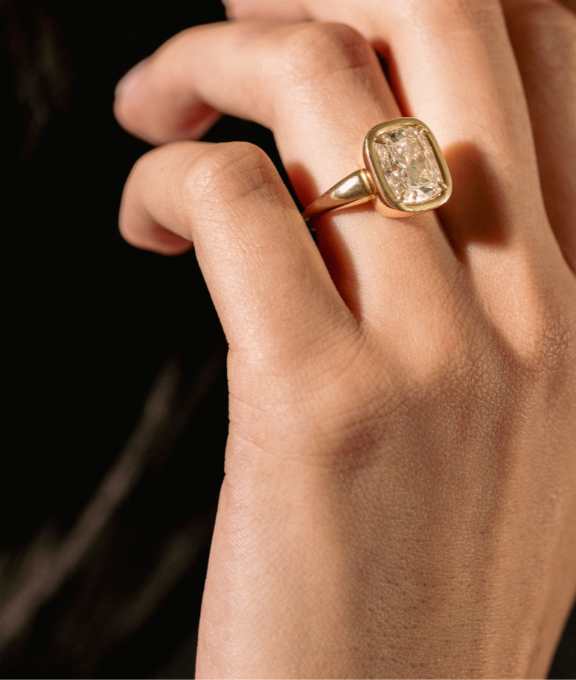



Anillos de compromiso con corte de mina antigua
Los diamantes antiguos tallados en minas ofrecen un brillo cálido y un atractivo clásico, creando una apariencia vintage con carácter y profundidad. Explore estilos moldeados por la historia y los finos detalles artesanales.
Anillos de compromiso con corte de mina antigua (0)
style setting


- $1,500+
- $1-$500
- $501-$1,500
- Alianza de boda baguette
- Alianza de boda con corte Asscher
- Alianza de boda con corte de mina antigua
- Alianza de boda con diamantes de colores
- Alianza de boda de corte trilliant
- Alianza de boda de talla esmeralda
- Alianza de boda en forma de corazón
- Alianza de boda en forma de pera
- Alianzas de boda
- Alianzas de boda anchas
- Alianzas de boda antiguas con corte europeo
- Alianzas de boda con corte cojín
- Alianzas de boda con diamantes amarillo canario
- Alianzas de boda con esmeralda verde
- Alianzas de boda con piedras preciosas de colores
- Alianzas de boda con zafiro
- Alianzas de boda con zafiro rosa
- Alianzas de boda de aguamarina
- Alianzas de boda de corte marquesa
- Alianzas de boda de corte ovalado
- Alianzas de boda de corte radiante
- Alianzas de boda de corte redondo
- Alianzas de boda de metal
- Alianzas de boda de rubí rojo
- Alianzas de boda finas y apilables
- Alianzas de boda gruesas y atrevidas
- Alianzas de boda y anillos de compromiso negros
- Alianzas de boda únicas
- Anillo de compromiso cultivado en laboratorio con talla esmeralda
- Anillo de compromiso de diamantes cultivados en laboratorio
- Anillo de compromiso de diamantes cultivados en laboratorio ovalados
- Anillo de diamantes cultivados en laboratorio de tres piedras
- Anillo de diamantes cultivados en laboratorio en forma de pera
- Anillo de diamantes radiantes cultivados en laboratorio
- Anillo de eternidad cultivado en laboratorio
- Anillo solitario de diamantes cultivados en laboratorio
- Anillos con inicial del club
- Anillos de compromiso
- Anillos de compromiso antiguos con talla europea
- Anillos de compromiso bruñidos
- Anillos de compromiso con corte de mina antigua
- Anillos de compromiso con esmeralda verde
- Anillos de compromiso con halo
- Anillos de compromiso con lazo
- Anillos de compromiso con solitario brújula
- Anillos de compromiso con talla Asscher
- Anillos de compromiso con talla cojín
- Anillos de compromiso con talla de pera
- Anillos de compromiso cruzados
- Anillos de compromiso de canal grueso
- Anillos de compromiso de diamantes amarillos
- Anillos de compromiso de doble vuelta
- Anillos de compromiso de talla esmeralda
- Anillos de compromiso de talla marquesa
- Anillos de compromiso de talla ovalada
- Anillos de compromiso de talla princesa
- Anillos de compromiso de talla radiante
- Anillos de compromiso de talla radiante cuadrados
- Anillos de compromiso de talla redonda
- Anillos de compromiso de tendencia
- Anillos de compromiso de tres piedras
- Anillos de compromiso de tres piedras con piedras laterales de escudo
- Anillos de compromiso de zafiro
- Anillos de compromiso en racimo de zafiro azul
- Anillos de compromiso horizontales Este Oeste
- Anillos de compromiso listos para enviar
- Anillos de fuego estelar
- Anillos de hombre
- Anillos de racimo exclusivos
- Anillos fundidos
- Anillos gruesos
- Anillos meñique
- Anillos Solitarios
- Apiladores y juegos
- Archivo de anillos de compromiso a medida
- Archivo de joyería a medida
- Aretes de diamantes
- banda de diamantes
- Bandas de cigarros de acordeón
- Bandas de diamantes de múltiples formas
- Bandas de eternidad con piedras preciosas de colores
- Bandas de piedras preciosas
- Bandas de puntas compartidas
- Best Diamond Earrings
- Best Engagement Rings
- Best Necklaces
- Best Wedding Bands
- BIENES
- Big Stud Energy
- Boleto alto
- Button Back Studs
- Cadena + colgante de diamantes acoplable
- Cadenas de oro
- Carolyn Bessette Edit
- Catedral de la firma
- Cathedral Engagement Rings
- Chunky & Bold Engagement Rings
- Chunky Signet Ring
- Cigar Rings
- Cinco anillos de piedra
- cita nocturna
- Club contorneado
- Clásicos de otoño
- Colección de botones en la espalda
- Colección de clubes
- Colección de microgarras
- Colección fundida
- Colección Lazo
- Colgante clásico de diamantes acoplable
- Colgante de diamantes acoplable con doble bisel
- Colgantes con botones en la parte posterior
- Colgantes de diamantes acoplables
- Colgantes de diamantes acoplables al club
- Collares con colgante de diamantes
- Collares con colgante de diamantes de medio bisel
- Collares con colgante de diamantes en bisel
- Collares de diamantes
- Collares de diamantes cultivados en laboratorio
- Collares de tenis
- Collares de tenis cultivados en laboratorio
- Colored Gems
- Compass Tapered Butter Knife Solitaire Engagement Ring Series
- Compass-Set Eternity Band Collection
- Compass-Set Tapered Wedding Band
- Conjunto de bisel
- Conjunto de bisel Alianzas de boda
- Conjunto de bisel Pavé Filo con filo cuchillo Colgantes de diamantes acoplables
- Conjunto de bisel Penumbra Anillos de compromiso
- Conjunto de bisel Serie Halo
- Conjunto de canales
- Conjunto de canales Alianzas de boda
- Conjunto de canales Anillos de compromiso
- Contoured Pavé Wrap Engagement Ring Series
- Contoured Wedding Bands
- diamantes
- Domed Solitaire Engagement
- Double Row Penumbra Bezel
- Double Row Solitaire Collection
- Dual Lasso
- Easter Collection
- Ecléctico
- El mejor anillo de compromiso con solitario acanalado
- El mejor anillo de compromiso cónico
- El mejor solitario de medio bisel
- Engagement Rings
- Entrantes
- Esenciales cotidianos
- Espectaculares
- Estilos de anillos de compromiso exclusivos
- Estilos de verano
- Exclusivo del Black Friday 2025
- Favoritos de Insta
- Fine Jewelry - Featured
- Finest Engagement Rings Full Collection
- Floating Huggie Collection
- For Him
- Gargantillas de diamantes
- Gold Bands
- Halo de vástago dividido
- Huggie & Hoop Earrings
- Inspiración vintage.
- Joyería fina con diamantes en forma de corazón
- Joyería grabada y personalizada
- Knife Edge Drop Earrings
- Lasso Drop Earrings
- Lasso Huggies
- Lazo clásico
- Lazo grueso
- Listo para enviar - Joyería fina
- Los mejores anillos de compromiso con banda para puros
- Los mejores anillos de compromiso con brújula
- Los mejores anillos de compromiso con solitario
- Los mejores solitarios con bisel cónico
- Los mejores solitarios con juego de bisel
- Los más vendidos
- Low Profile Wedding Bands
- Medio bisel
- Medio bisel de doble fila
- Menos de $1,500
- Menos de $1000
- Menos de $3500
- Menos de $800
- Molten Bezel Stud Collection
- Mom Who Does It All
- Mother's Day Collection
- New Engagement Ring - Featured
- Nueva joyería fina
- Nuevos anillos de compromiso
- Oro Amarillo
- Oro Blanco + Platino
- Oro rosa
- Pavé de firma
- Pendientes
- Pendientes colgantes
- Pendientes con botón trasero
- Pendientes de club
- Pendientes de diamantes
- Pendientes de diamantes cultivados en laboratorio
- Pendientes fundidos
- Pendientes Huggie
- Pendientes Lazo
- Pequeño lazo
- Piedras de colores
- Piezas exclusivas
- Piezas llamativas
- Piezas únicas
- Pila destacada
- Pila destacada
- Pila destacada
- Pila destacada
- Pila No. 6
- Pila No. 7
- Pila No. 8
- Pila número 1
- Pila número 2
- Pila número 3
- Pila número 4
- Pulsera del club
- Pulsera Lazo
- Pulseras de cadena
- Pulseras de diamantes
- Pulseras de tenis
- Pulseras de tenis cultivadas en laboratorio
- Puños de oreja
- Ready To Ship
- Regalos de aniversario para ella
- Regalos de cumpleaños para ella
- Regalos de graduación para ella
- Regalos de San Valentín para ella
- Regalos para ella
- Regalos para él
- Ridged Band Knot Engagement Ring Collection
- salida nocturna
- Serie apilable
- Serie Aurora Pavé
- Serie Cenit
- Serie de bandas de eternidad
- Serie de garras
- Serie de solitario de vástago dividido
- Serie de solitario delgada y simple
- Serie de vástago de cresta vintage
- Serie Laurel
- Serie Loto
- Serie Nova
- Serie Pavé con espacio de doble hilera
- Serie Pavé de Triple Fila
- Serie Pila No. 5
- Serie Solitario Creciente
- Serie Toi y Moi
- Serie translunar
- Serie tríada
- Show de baúles 11/02/2026
- Single Club Bracelet
- Single Stone Bracelets
- Solitario Bisel Catedral
- Solitario con botón trasero
- Solitario contorneado
- Solitario ondulado
- Solitarios con cuchillo de mantequilla
- Solitarios de anillo de club
- Solitarios de medio bisel
- Solitarios Iris
- Split Shank Bezel Engagement Ring Series
- Split Shank Engagement Ring
- Split Shank Half Bezel Engagement Ring Series
- Tendencia
- The Classics
- The Cool Mom
- The Floating Engagement Ring Collection
- The Generational Gift
- The Sentimentalist
- The Tennis Series
- The Upgrade
- Three Stone Engagement Ring with Kite Side Stones
- To Me, From Me
- Toda la joyería fina
- Todas las bandas de metal
- Todas las pulseras
- Todo personalizado
- Todos los anillos
- Todos los collares
- Todos los estilos
- Toi y Moi
- Tres piedras con piedras laterales de pera
- Tulip Cathedral Solitaire Rings
- Vacaciones
- Vástago triple de doble halo
- Wedding Bands for Marquise Engagement Ring
Can't find the perfect diamond?
talk to an expertNo se encontraron productos en esta colección.
AS SEEN ON YOU


Absolutely obsessed with the ring we purchased. Throughout the whole process, from just starting to look to having to get it resized, everyone we dealt with at Goodstone was extremely helpful and kind. They made Somewhat nerve-racking process (Buying a ring online) A great experience and I have nothing but good things to say about the company. And it’s a Huge bonus that my ring is even more gorgeous than I could’ve imagined.

Anillo de compromiso tríada de medio bisel con diamantes alargados de talla antigua mina
SHOP NOW


Why Choose GOODSTONE for an Old Mine Cut Engagement Ring?
Lab-Grown and Natural Old Mine Cuts Both Stocked
Old mine cuts in this collection are available in both lab-grown and natural diamonds, offering options across a wide range of engagement ring budgets.
Bezel, Claw Prong, and Milgrain Vintage Settings
The collection includes bezel, claw-prong, three-stone, and halo settings with optional milgrain detailing in 14k gold, 18k gold, and platinum. A thin solitaire starts at $1,925.
Handcrafted in Recycled Gold at Our Los Angeles Workshop
Each piece is handcrafted in recycled gold at our Los Angeles workshop, where milgrain details are finished under magnification. Delivery is overnight and fully insured, arriving in a plain FedEx box that requires an adult’s signature.
Free 30-Day Returns and Lifetime Care
Every old mine ring comes with free 30-day returns and a lifetime warranty that covers resizing, polishing, prong tightening, and replacement of small accent stones.


Compare the Old Mine Cut to Other Engagement Ring Cuts
Old Mine Cut vs. Asscher Cut Engagement Ring
The Asscher is a step-cut design that depends on crisp facet alignment. Smudges and surface film tend to be more noticeable on Asschers than on old mine cuts, which often hide everyday wear more effectively due to their broader, less uniform faceting. That makes the old mine a lower-maintenance option for daily wear.
Old Mine Cut vs. Cushion Cut Engagement Ring
A modern cushion cut retains the square or rectangular shape of an old mine cut but uses more symmetrical faceting and a brighter, more uniform sparkle pattern. The old mine cut features larger facets that produce broader flashes of light and reflect the cutting styles common before modern diamond manufacturing. Among the two, the old mine cut more closely resembles the appearance of historic diamonds.
Old Mine Cut vs. Emerald Cut Engagement Ring
Emerald cuts use long step facets that make inclusions and body color easier to see. Old mine cuts rely on chunky brilliant-style faceting that helps disguise both more effectively. Old mine cuts can therefore be more forgiving in lower clarity and color grades than emerald cuts.
Old Mine Cut vs. Marquise Cut Engagement Ring
The marquise and old mine cuts create very different visual effects. A marquise shape, with elongated lines and pointed ends, can make the finger appear longer. Old mine cuts are typically squarer and rely on broader flashes of light from their chunky faceting, creating a contrast between an elongated shape and a more compact antique profile.
Old Mine Cut vs. Old European Cut Engagement Ring
These antique cuts differ primarily in their shape and historical development. The old mine cut came first, with a square or slightly rectangular form and a visible culet. The old European cut followed later, adopting a round outline that eventually influenced the modern round brilliant. At the same carat weight, old mine cuts often provide more finger coverage, while old European cuts concentrate their weight in a rounder profile.
Old Mine Cut vs. Pear Cut Engagement Ring
A pear is a directional cut, with a rounded end and a single point that changes the appearance of the ring depending on its orientation. When worn point-out, it elongates the finger and creates a longer visual profile. The old mine cut has no orientation to manage and typically provides broader coverage across the finger, making it a simpler shape for everyday wear.
Old Mine Cut vs. Princess Cut Engagement Ring
Durability at the corners is one of the clearest differences between these cuts. A princess cut has four sharp points that benefit from protective prongs, while an old mine cut uses rounded corners that are less susceptible to chipping. The two also differ visually, with the princess emphasizing precise symmetry and the old mine retaining the broader faceting and irregularities associated with historic cutting styles.
Old Mine Cut vs. Radiant Cut Engagement Ring
A radiant cut combines cropped corners with dense brilliant faceting designed to maximize sparkle. Old mine cuts use larger facets that produce broader flashes of light and reflect older cutting styles. Under modern lighting, radiant cuts typically generate more rapid scintillation, while old mine cuts produce fewer but larger flashes.
Old Mine Cut vs. Round Cut Engagement Ring
The old mine cut is the predecessor of the modern round brilliant, with a square or slightly rectangular shape and faceting that reflects historic cutting methods. Round brilliants became the dominant diamond cut through their standardized proportions, broad market demand, and strong resale performance. Antique old mine cuts can be more expensive to source, although lab-grown versions narrow that gap while preserving the appearance of the original design.


"We don't believe in one right answer when it comes to diamonds. Lab-grown or natural stone to finished pieces, what matters is that you walk away with something exceptional. That's always been our standard."
- Blake Asaad, founder
Frequently Asked Questions
What is an old mine cut diamond?
An old mine cut diamond is the predecessor to the modern round brilliant, with a squarish or cushion-like outline, a small table, a high crown, a deep pavilion, a large open culet, and short lower half facets. The cut has 58 facets, the same count as the modern round brilliant, but arranged for candlelight performance rather than electric light. Old mine cuts were hand-cut from the early 1700s through the late 1800s and traced back to original diamond rough from India and Brazil, before South African production began.
Are old mine-cut diamonds only available as antique stones, or can I buy new ones?
You can buy either. Original antique old mine cuts date from the 1700s through the 1890s and are highly collectible because of their documented history. Modern jewelers also cut new diamonds in this style today, with the high crown, small table, and large culet recreated by hand. Lab-grown old mine cuts are an emerging category and offer the same look at a fraction of the price of antiques.
Can I get an old mine-cut diamond as a lab-grown stone?
Yes. Lab-grown old mine cut diamonds are available and stocked alongside natural options. They often achieve higher color and clarity grades than antique stones, commonly falling within the D-H color range and VS clarity range. Lab-grown versions also cost significantly less than original antique old mine cuts while preserving the appearance of the historic design.
Why do old mine-cut diamonds look different under candlelight or low light?
Old mine cuts were designed for candlelight, gaslight, and the earliest electric bulbs, which ran much warmer and dimmer than modern lighting. The small table, the high crown, and the large open culet were tuned to capture and return low warm light. The chunky, broad facets create slow, broad flashes of fire and a glowing depth in dim rooms. Modern round brilliants, tuned for bright LED and sunlight, can look dull in the same lighting where old mines shine.
Is an old mine-cut engagement ring a good value compared to modern round brilliants?
It depends on the version. Genuine antique old mine cuts with documented provenance command a 10 to 25% premium over comparable modern round brilliants, and auction data indicate roughly 25% appreciation for documented stones over the past five years. Modern recuts of natural rough in the old mine style trade closer to standard modern brilliant pricing. Lab-grown old mine cuts are the most accessible entry point, often at a fraction of the price of antiques, with similar visual character.
What is the best setting for an old mine cut engagement ring: claw prong, bezel, or vintage milgrain?
All three suit the cut. A bezel comes from Georgian and Victorian jewelry, a full metal frame around the stone that protects the irregular antique girdle and matches the period look. A claw or single prong setting lifts the crown and exposes the facets to maximum light. A vintage milgrain setting decorates the edges with tiny beaded metalwork that echoes antique hand-finishing. Filigree galleries and cathedral shanks also suit the cut in vintage-inspired ring designs.
Will an old mine-cut diamond sparkle in everyday lighting?
It sparkles differently from a modern brilliant, with broad, chunky flashes of fire rather than the rapid, uniform scintillation of a round brilliant. Under direct sunlight or strong overhead light, the fire shows in broad flashes across the table. Under flat office lighting, the stone looks softer and more romantic, with a glowing depth rather than a flashy sparkle. Buyers who choose old mine cuts usually value the glow and the warm character over uniform constant sparkle for an everyday ring.
Old mine-cut diamonds are often slightly asymmetric. Is that a flaw or a feature?
Collectors treat the asymmetry as a feature, not a flaw. Antique cutters measured the diamond rough by eye and ground each facet by hand, so minor asymmetry, varied facet sizes, and an irregular girdle all come from the era’s hand methods. Antique dealers prize stones that show period craftsmanship for the same reason. A perfectly symmetrical old mine often indicates a modern recut rather than an original antique stone, which the market values differently from a true period stone.
How do I authenticate the age and origin of an antique old mine-cut diamond?
Antique old mine cuts are often characterized by a large open culet, a high crown, a small table, an uneven girdle, hand-polished facets, and slight asymmetry. GIA reports evaluate these stones using the same 4Cs as modern diamonds but do not certify antique status. Documentation such as estate records, auction history, and independent appraisals can help establish a stone's age and historical background.
What carat weight makes sense in an old mine cut diamond, given they face up smaller?
Old mine cuts place weight in depth rather than face-up spread because of their high crown and deep pavilion, so they look smaller per carat than modern round brilliants. A common antique sweet spot is 1.5 to 2.5 carats for visible presence on the finger. Compare millimeter measurements rather than carat weight when shopping for an old mine, since spread varies stone to stone.
What color grade should I expect for an antique old mine-cut diamond?
Most surviving antique old mine cuts fall within the I to N color range, with warmer champagne or light brown tints becoming more common toward the lower end. Higher-color old mine cuts were often recut into modern round brilliants during the 20th century, making them less common today. In the antique market, warmer colors are often considered part of the appeal and pair naturally with yellow- and rose-gold settings. The chunky faceting of an old mine cut also tends to disguise color more effectively than many modern brilliant cuts.
What clarity grade is normal in an antique old mine cut diamond?
Antique old mine cuts typically grade in the SI1-I1 range, with VS examples commanding a premium. Cutters in the 1700s and 1800s worked to era standards and prized weight retention over inclusion removal, so inclusions remain in many surviving stones. The large, blocky facets can make inclusions more visible than a modern cut would, but inclusions near the girdle often hide once the stone is set. SI is the most common clarity grade across antique listings on the market.
Which metal flatters an old mine-cut engagement ring: yellow gold, rose gold, or platinum?
Yellow gold and rose gold are the traditional and historically authentic pairing for an old mine cut, since they complement the warmer I to N body color of most antique stones and reinforce the slow, warm fire of the cut. Period settings from the Georgian and Victorian eras most often used 18k or 22k yellow gold and rose gold. White metals like platinum and white gold work for a more modern look and emphasize the stone’s own color rather than amplifying warmth in the design.
How does an old-mine-cut engagement ring pair with a wedding band?
Old mine-cut engagement rings pair well with several band styles.
- Thin, plain metal bands in yellow or rose gold to match the engagement ring.
- Milgrain or hand-engraved bands.
- Eternity bands with small old mine or old European accent stones.
- Contoured or curved bands that nest against the irregular old mine outline.
- Vintage-inspired tapered baguette bands.
Solitaire old mine settings pair easily with most bands. Halo and three-stone old-mine designs often need a contoured band to sit flush with the engagement ring.
Are old mine-cut diamonds GIA-certified, or do they come with appraisals?
Modern recuts and lab-grown old mine cuts are routinely GIA- and IGI-certified, with the same 4Cs grading as modern cuts. Antique stones can also come with GIA reports for the 4Cs, but GIA does not certify antique or original-cut status. Most antique buyers obtain an independent appraisal from a gemologist specializing in antique jewelry, an AGS-credentialed appraiser, or an antique jewelry house to confirm the era, original cut, and provenance. Auction houses also provide their own provenance documentation with each sale.
What era is the typical antique old mine cut diamond from?
Most antique old mine-cut diamonds date to the Georgian and Victorian eras, with the Victorian period most closely associated with the cut. Production continued into the early Edwardian era before old European cuts gradually became more common. The discovery of South African diamond deposits in 1867 significantly increased diamond production during the final decades of the old mine cut's popularity.
Why is the culet visible from above in an old mine-cut diamond?
The culet on an old mine cut is a large open facet at the bottom of the stone rather than the tiny pointed culet found on most modern brilliant cuts. Viewed through the table, it often appears as a small circle at the center of the diamond. Open culets were common in historic cutting styles and remain one of the easiest ways to identify an antique old mine cut.
Does an old mine-cut diamond hold or appreciate in value over time?
Authenticated antique old mine cuts with documented histories can retain or increase their value because supply is finite and collector demand remains strong. Modern old mine reproductions, including lab-grown versions, generally follow the resale patterns of other contemporary diamonds and are not typically purchased for appreciation potential. Documentation and authentication are often the factors that distinguish a collectible antique stone from a modern interpretation.
Get in touch with our concierge team to book a one-on-one call with us to discuss about your Engagement Ring. We will walk through the process from diamond sourcing to choosing the perfect setting.