





How Diamond Fluorescence Affects the Way Your Ring Looks
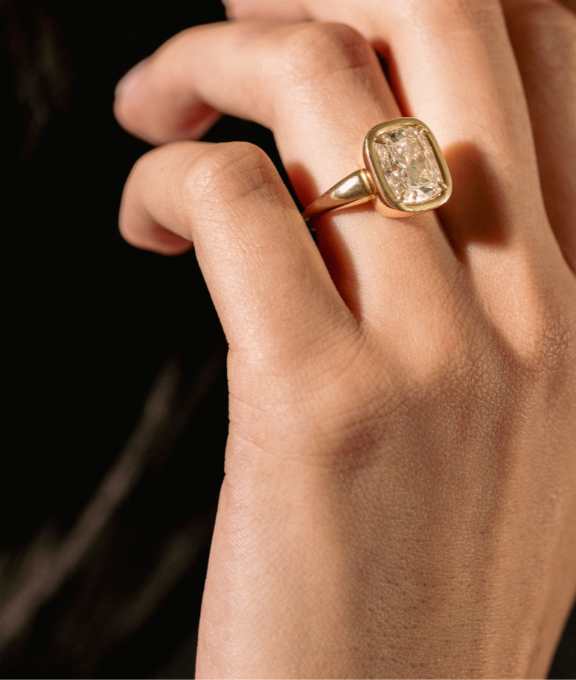
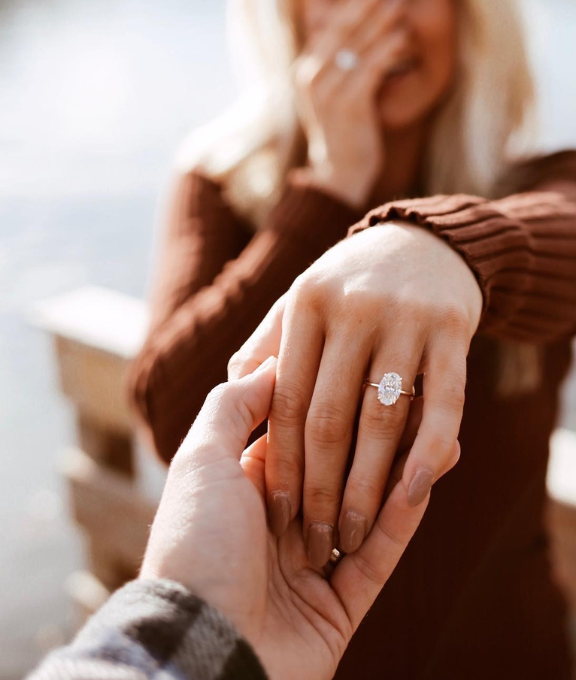
Many ring shoppers invest significant time in assessing cut, color, clarity, and carat weight when choosing a diamond. Fluorescence, however, is often overlooked. Whether you're looking at an oval cut diamond, or an elongated cushion cut.
A diamond’s fluorescence can subtly influence its appearance depending on the lighting and color grade. It may also affect a diamond's perceived whiteness in daylight and influence its price. Common beliefs about fluorescence are frequently based on outdated information.
When a diamond fluoresces, light interacts with it, creating a visible glow. Understanding this effect can help you make an informed selection when building a ring.

Fluorescence is one of the most overlooked factors in diamond shopping. Beyond the classic 4Cs, it can subtly shift how your diamond looks in everyday light, and even affect its price.
What Fluorescence Actually Is
Diamonds exposed to ultraviolet light may emit a visible glow, known as fluorescence. Over 95% of fluorescent diamonds display a blue hue, though other colors can occur.
GIA assesses fluorescence on a scale from None to Very Strong. This characteristic appears on a GIA grading report for identification, not as a grading factor like the 4Cs. When fluorescence intensity is Medium, Strong, or Very Strong, the report includes the glow’s color.
Roughly 25% to 35% of diamonds submitted to GIA exhibit fluorescence under a standard long-wave UV lamp, based on a study of over 26,000 stones. Of these, about 10% have fluorescence strong enough to affect appearance visibly.

When exposed to ultraviolet light, some diamonds emit a soft visible glow called fluorescence. GIA grades this on a scale from None to Very Strong, and it appears on grading reports as an identifying characteristic, not a quality grade like cut or clarity.
How It Looks Under Different Types of Light
Fluorescence responds to UV content in the surrounding light. The amount of UV present varies from one setting to the next, and so does how your diamond behaves.
Natural Daylight
Sunlight contains roughly 3% to 5% UV, according to GIA research. This is where fluorescence is most likely to show up. If your diamond has Medium or Strong blue fluorescence, you may notice a faint blue glow outdoors on a bright day, especially in direct sunlight.

Sunlight carries enough UV to activate a diamond's fluorescence, making the outdoors the most likely place you'll notice it.
Indoor and Artificial Light
Most indoor lighting, including LED and incandescent sources, contains very little UV. Incandescent light won’t cause a diamond to fluoresce. So, for the majority of your day, if you’re indoors at work or at home, fluorescence will have little to no visible effect.

LED and incandescent lighting contain very little UV, meaning fluorescence stays mostly dormant inside.
UV or Black Light
Under strong UV sources such as black lights, tanning beds, or certain club lighting, a fluorescent diamond may glow noticeably. Very Strong fluorescence produces a pronounced blue glow in these conditions.
Faint Fluorescence
At the Faint level, the glow is so minor that it is virtually impossible to see under normal lighting. It has no practical effect on how the diamond looks when worn.

At the Faint level, fluorescence is virtually invisible under normal wearing conditions. For most shoppers, it's a non-factor when it comes to everyday appearance.
The “Hazy Diamond” Concern
Some believe fluorescence causes diamonds to appear cloudy or milky. However, GIA data indicate that the hazy effect tied to strong fluorescence occurs in fewer than 0.2% of fluorescent diamonds examined.
Milkiness seen in some diamonds is usually the result of atomic-scale defects or nano-inclusions within the stone, rather than the fluorescence itself. The advice to avoid fluorescent diamonds due to fogginess applies to only a small percentage of stones.

The fear that fluorescence causes a cloudy or milky look is largely a myth, GIA data shows this effect occurs in fewer than 0.2% of fluorescent diamonds.
Fluorescence and Diamond Color Grades
Fluorescence can be helpful to consider when selecting a ring.
Lower Color Grades (I to M)
Diamonds in the I to M color range often display a faint yellow tint. Blue fluorescence may help offset this tone. In daylight, diamonds with Medium to Very Strong blue fluorescence can appear up to one color grade whiter. Some in the trade prefer blue fluorescence in these lower color ranges for this effect.

Blue fluorescence can actually work in your favor with warmer-toned diamonds in the I–M range, making them appear up to one shade whiter in daylight.
Higher Color Grades (D to H)
In the D to H range, blue fluorescence has historically been viewed less favorably due to concerns about a hazy or oily appearance. GIA research, however, indicates that the risk of visible fluorescence haze is extremely low for most diamonds.

In the colorless D–H range, the effect is more neutral, and the risk of any visible haze remains very low.
How It Affects Pricing
Fluorescence can influence diamond pricing, depending on the color grade.
Colorless diamonds in the D to F range with fluorescence are frequently sold at a 10% to 15% discount, occasionally up to 25% for higher grades. Fluorescence in these diamonds is often viewed as a drawback, reducing the asking price.
For I-to-N color diamonds, those with Medium to Very Strong blue fluorescence may carry a slight per-carat premium, as the fluorescence can improve perceived whiteness. Selecting a fluorescent I or J color diamond may provide a visually appealing option at a lower price than a non-fluorescent G or H.
GIA Grading Updates Worth Knowing
As of late 2025, GIA uses descriptive terms for lab-grown diamond quality assessments instead of traditional color and clarity grading language. The Premium and Standard lab-grown assessments do not list fluorescence on the report.
Fluorescence can still impact the appearance and price of a lab-grown stone. Other labs, including IGI and GCAL, continue to provide fluorescence information in their reports for lab-grown diamonds.
For natural diamonds, GIA reports remain unchanged and still include fluorescence intensity and color.
Natural vs. Lab-Grown Fluorescence Behavior
GIA research identifies a distinction between natural and lab-grown diamonds in their fluorescence. Natural fluorescent diamonds tend to glow brighter under long-wave UV light, while lab-grown diamonds glow more under short-wave UV light. This difference is used to detect the origin.

Natural and lab-grown diamonds fluoresce differently, natural stones respond more to long-wave UV, while lab-grown diamonds react more strongly to short-wave UV.
Picking a Diamond for Your Ring
When choosing a stone for an engagement ring, it is worth factoring in fluorescence. For warm-toned diamonds in the I to M range, blue fluorescence may be advantageous. For colorless D to F stones, a discount on fluorescent diamonds can provide cost savings with minimal drawbacks.
Other factors, such as cut quality, lighting, and wardrobe, can also influence how a diamond’s color appears. GOODSTONE’s concierge team can guide you through how specific stones perform in different real-world settings, which is helpful when building a ring around a particular diamond.
Our Los Angeles-based artisans handcraft every ring, and the process includes lifetime resizing, complimentary cleaning, prong checks, and repairs.
Fluorescence is one of several factors to weigh alongside cut, clarity, color, and carat. By understanding its effects in various lighting conditions and its interaction with diamond color grades, you can make informed choices and find a diamond that suits your preferences and budget.



Leave a comment (all fields required)