





Diamond Cuts 101: The Ultimate Guide for Ring Shoppers
If you have looked at many rings, you might notice that the terms start to blend. Words like brilliant cut, step cut, and modified brilliant can get confusing. There are also depth percentages, table ratios, and even bow-tie effects that have nothing to do with formal wear.
A diamond’s cut is one of the main things that affects how it looks and how much it’s worth. The cut affects how light moves through the stone, how large the diamond appears on your finger, and how much you pay for the same carat weight. Two diamonds with the same color, clarity, and carat weight can look very different due to their cut.
We’ll review the most popular styles, compare how they look and what they cost, highlight key proportions, and explain which cuts work best with different clarity grades. By the end, you’ll have the knowledge you need to choose with confidence.

Diamond cut terminology can feel overwhelming, but understanding it makes all the difference.
Understanding the Difference Between Cut and Shape
Many people conflate these terms, but they mean different things. Form is the outline you see when you look at the diamond from above, like round, oval, pear, emerald, or marquise. Cut refers to how well a diamond’s facets reflect light. For example, an oval-shaped diamond can still have a poor cut, making it appear not very interesting.
When organizations like the Gemological Institute of America grade a diamond’s cut, they look at seven things: brightness, fire, scintillation, weight ratio, durability, polish, and symmetry. These all add up to a grade from Excellent to Poor.
However, these official cut grades only apply to round brilliant diamonds with color grades from D to Z. Other shapes, like ovals, pears, and emeralds, are graded differently and often don’t have a standard cut grade.
This difference is essential when you’re shopping. For round diamonds, the cut grade on a GIA report is a good sign of how well the diamond handles light. For fancy shapes, you’ll need to look at the diamond yourself, which we’ll talk about more later.

Diamond form and diamond cut are often confused, but they mean very different things.
The Round Brilliant: Why It Costs More
Round diamonds make up more than 70% of all diamond sales. Over half of all engagement rings sold each year feature a round diamond as the center stone. The round brilliant cut has 58 facets designed to reflect as much light as possible, giving diamonds their famous sparkle.
There are two main reasons why round diamonds cost more. First, cutting a round diamond from a rough stone wastes significant material. Only about 40% of the original rough diamond ends up in the finished round diamond, while about 60% is lost during cutting. In comparison, a princess cut keeps about 80% of the rough stone. The more material that’s lost, the higher the cost per carat.
Second, round diamonds stay expensive because so many people want them. The round brilliant has been the top pick for engagement rings for many years, which keeps prices high.
A round diamond can cost 25% to 40% more than a fancy diamond of the same quality and carat weight. For example, a 1-carat G color, SI1 clarity, excellent cut round brilliant diamond might cost about $5,250, while a princess cut with the same specs could be around $3,263 (Rapaport Price List, 2024).
If you love the look of a round diamond and can pay the higher price, it’s a great choice. The round cut is popular for its reliable sparkle and works well in many settings. But if you want to save money or like a different style, fancy shapes have a lot to offer.

Round diamonds remain the top choice for engagement rings due to their consistent brilliance and versatility, like our Finest Solitaire Engagement Ring With Round Brilliant Cut Diamond.
Fancy Shapes: Finding Value and Personality
Fancy silhouettes are any diamond that isn’t round. This includes oval, pear, marquise, princess, cushion, radiant, emerald, and Asscher cuts. Each one has its own style and can save you money compared to round diamonds.
Oval, cushion, and princess cuts are among the most budget-friendly options. They often cost 20% to 30% less than similar round diamonds. In many cases, fancy shapes are more than 25% cheaper than round diamonds of the same size and quality (Rapaport Price List, 2024).
Oval Diamonds
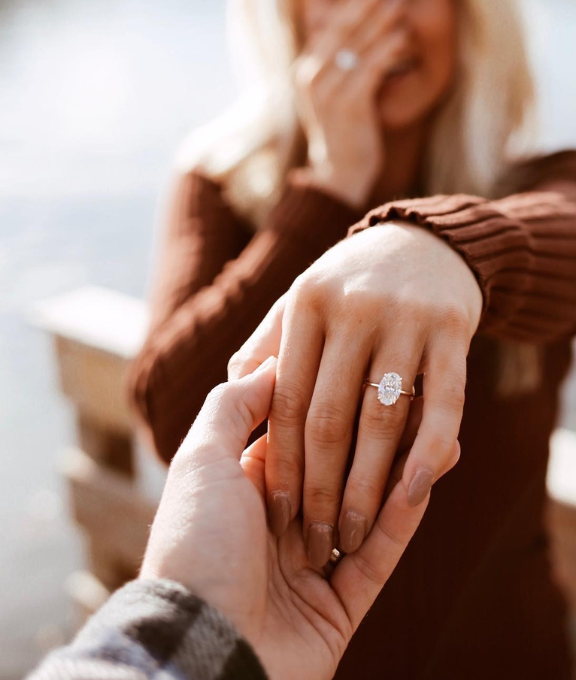
Ovals are becoming more popular. Their elongated form makes them appear bigger for their carat weight because the weight is spread across the top rather than hidden in the depth. An oval diamond can look 10% to 15% larger than a round diamond of the same carat weight (GIA, 2023).
The outline also flatters the finger, creating a lengthening effect that many people find appealing. Ovals work well in solitaire settings, halo designs, and three-stone configurations.
When you’re looking at oval diamonds, check the length-to-width ratio. Most ovals are between 1.30 and 1.60. Ratios from 1.35 to 1.50 are usually the most balanced, but it’s up to your preference. Lower ratios, like 1.30 to 1.35, make the diamond look rounder, while higher ratios give a longer look.
Watch for the bow tie effect, a dark shadow across the center of the diamond that resembles a bow tie. Every oval has some bow tie, but a good cut keeps it small. Longer ovals usually show this effect more clearly, so if you like a longer shape, be sure to check photos or videos closely.

Oval diamonds are loved for their ability to look larger than their carat weight.
Pear Diamonds
Pear cuts combine the features of round and marquise shapes to create a teardrop shape. Like ovals, they appear larger for their carat weight, making the fingers look longer. You can wear the pointed end facing your fingernail or your wrist, whichever you like best.
Pear forms are becoming popular again and share many of the same considerations as ovals. The length-to-width ratio affects appearance; you’ll need to check for bow-tie effects, and the pointed tip requires a setting that prevents chipping.

Pear diamonds blend the brilliance of a round with the elongation of a marquise. You can see the beauty a pear offers on our Lotus Triple Row Pavé Engagement Ring With Pear Cut Diamond.
Marquise Diamonds
The marquise cut resembles a football, with pointed ends. It has the largest face-up size of any diamond shape, making it appear about 15% larger than a round diamond of the same carat weight (GIA, 2023).
Celebrities have made the marquise shape more popular. For example, Selena Gomez’s engagement ring from Benny Blanco has a marquise-cut diamond. A marquise diamond of the same quality as a round usually costs about the same or slightly less: around $5,520 for one carat, compared to $5,690 for a round with similar specifications (Rapaport Price List, 2024).
The extended outline of the marquise makes color easier to see, especially near the points. If you want the diamond to appear colorless, select a D-F color grade. The pointed ends also require settings, such as V prongs, to prevent damage.

The marquise cut offers maximum visual impact with a bold silhouette.
Princess Cut Diamonds
The princess cut is a square form with many sparkling facets. It’s one of the most popular fancy shapes and offers good value because it retains more of the original rough diamond. Princess cuts are very bright and fiery, and their sharp lines are great for people who like a modern look.
The corners of princess cuts can chip easily, so it’s vital to use a setting that protects them. Color can also appear more in the corners, making it slightly more noticeable than in round diamonds.

The princess cut is known for its bright, fiery appearance and clean lines.
Cushion Cut Diamonds
Cushion cuts have a soft, pillow-like outline with rounded corners. They can appear square or slightly rectangular, depending on their length-to-width ratio. Their facets make bigger flashes of light instead of the tiny sparkles you see in round brilliants.
Cushion cuts offer good value and effectively hide flaws due to their brilliant-cut facets. They look great in vintage-style and halo settings.

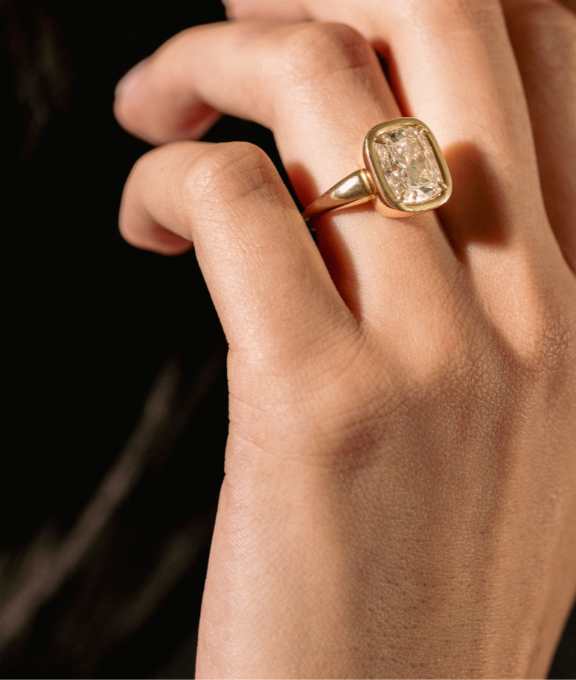
Petite Channel Set Engagement Ring with Elongated Cushion Cut Diamond.
Radiant Cut Diamonds
Radiant cuts combine the outline of an emerald cut with the brilliance of a round. The result is a rectangular or square form with trimmed corners and excellent sparkle. Radiants are versatile and work well in both classic and contemporary settings.

Radiant cuts blend the clean outline of an emerald cut with the brilliance of a round.
Step Cuts: Emerald and Asscher
Step-cut diamonds differ significantly from brilliant cuts. Instead of many small facets for sparkle, step cuts have long, straight facets that create a hall-of-mirrors effect. The light flashes across large areas rather than tiny sparkles.
Emerald cuts are rectangular with trimmed corners, while Asscher cuts are square with the same style of facets. Both shapes have a clean, stylish look that’s perfect for people who prefer subtle elegance over lots of sparkle.
The downside of step cuts is that they show flaws more easily. The big, open facets act like windows, so things you wouldn’t see in a brilliant cut can be visible here. That’s why you usually need a higher clarity grade. Brilliant cuts often appear clean at SI1 or SI2, but step cuts typically require VS2 or better.
Step cuts also show color more than brilliant cuts. If you want your diamond to look white, it’s best to choose G color or higher.
These shapes are gaining popularity again, partly because people prefer the Art Deco style. Beyoncé’s 18-carat emerald-cut engagement ring is among the most famous celebrity rings of recent years.

Step-cut diamonds offer a refined alternative to traditional sparkle. Emerald and Asscher cuts feature long, linear facets that create a hall-of-mirrors effect, delivering elegance through light reflection rather than flash.
How Different Cuts Compare: Quick Reference Table
|
Form |
Price vs. Round |
Face Up Size vs. Round |
Best Clarity Grade |
Bow Tie Risk |
|
Round Brilliant |
Baseline |
Baseline |
SI1 or better |
None |
|
Oval |
20-30% less |
10-15% larger |
SI1 or better |
Yes |
|
Pear |
20-30% less |
10-15% larger |
SI1 or better |
Yes |
|
Marquise |
5-10% less |
15% larger |
SI1 or better |
Yes |
|
Princess |
25-35% less |
Similar |
SI1 or better |
None |
|
Cushion |
20-30% less |
Similar |
SI1 or better |
None |
|
Emerald |
20-30% less |
5-10% larger |
VS2 or better |
None |
|
Asscher |
20-30% less |
Smallest face up |
VS2 or better |
None |
Understanding Cut Quality in Fancy Styles
GIA’s research shows that there is no single set of proportions that makes a diamond well-cut. Diamonds with different proportions can get the same cut grade but still look or perform differently. Proportion charts can help, but you shouldn’t rely on them alone when shopping.
For fancy styles that don’t have standard cut grades, it’s even more important to look at the actual diamond, not just the numbers on a certificate.
The American Gem Society (AGS) assigns cut grades for fancy shapes on a scale from AGS Ideal 0 (the best) to AGS 10 (the lowest). Diamonds with AGS Ideal 0 proportions reflect lighter and look brighter than those with lower grades. If you’re shopping for fancy shapes, an AGS report can give you helpful cut information that GIA reports don’t include for these styles.
Oval Diamond Proportions
For ovals specifically, recommended guidelines include:
- Table: 54% to 58%
- Depth: 62% to 66%
- Polish: Very Good or Excellent
- Symmetry: Very Good or Excellent
- Length to Width Ratio: 1.30 to 1.50, depending on preference
Depth percentage significantly affects oval performance. A depth of 62%-66% maximizes brilliance while minimizing the bow-tie effect. Ovals with depths below 60% often have low pavilion angles, creating prominent bow ties. Depths above 68% reduce the bow tie but can hurt overall optical performance.
Why Visual Inspection Matters
When you’re shopping for an oval diamond, don’t just look at the grading certificate. Check out videos or photos to see how the diamond really looks. Stores often have only a few ovals, and many on the market aren’t cut well and don’t shine as much.
This tip applies to other fancy shapes as well. Watch videos of the diamond in motion and see it under different lighting conditions. Notice how the light moves through the stone. The grading report gives you the details, but your own eyes will tell you if the diamond looks good.

Grading reports provide important data, but they don’t tell the whole story.
How Shapes Affect Color Visibility
Different cuts show color to various degrees. Brilliant cuts, with their complex faceting and light-reflection patterns, tend to mask color effectively. Step cuts and elongated fancy shapes show color more readily.
For oval diamonds, the elongated shape and broad surface area make color more visible than in round brilliants, particularly near the pointed ends. If you want a bright, icy appearance in an oval, diamonds in the D to F range perform well, especially in white gold or platinum settings.
Those who prefer warmer tones or plan to use yellow or rose gold settings may find G to H color diamonds still appear white to the eye, particularly in smaller carat weights. In ovals over 1.50 carats, color becomes more noticeable.
Emerald and Asscher cuts also show color more readily due to their significant, open facets. Most people recommend staying in the G color range or higher for these shapes if you want a colorless appearance.
Clarity Considerations by Cut Type
The same clarity grade can look different depending on the cut. Brilliant-style cuts have many small facets that create complex patterns, helping to hide flaws. The sparkle makes it hard to see any internal marks.
Round, oval, cushion, radiant, pear, and marquise cuts all use brilliant or modified brilliant facets. With these shapes, you can often pick SI1 or even SI2 clarity and still have a diamond that looks clean to the naked eye. This is especially true for smaller diamonds, where flaws are harder to spot.
Step cuts are different. The long, open facets in emerald and Asscher cuts act like windows, so flaws that are hidden in brilliant cuts can show up here. For step cuts, choose VS2 clarity or higher to ensure the diamond looks clean.
Princess cuts are in the middle. They have brilliant facets, but their pointed corners can hold color, and the shape can make some flaws easier to see than in round diamonds.

Clarity can appear very different depending on a diamond’s cut.
Settings That Complement Different Cuts
The setting you pick changes how your diamond looks and how well it holds up. Some settings make the diamond look larger, while others protect the stone from damage.
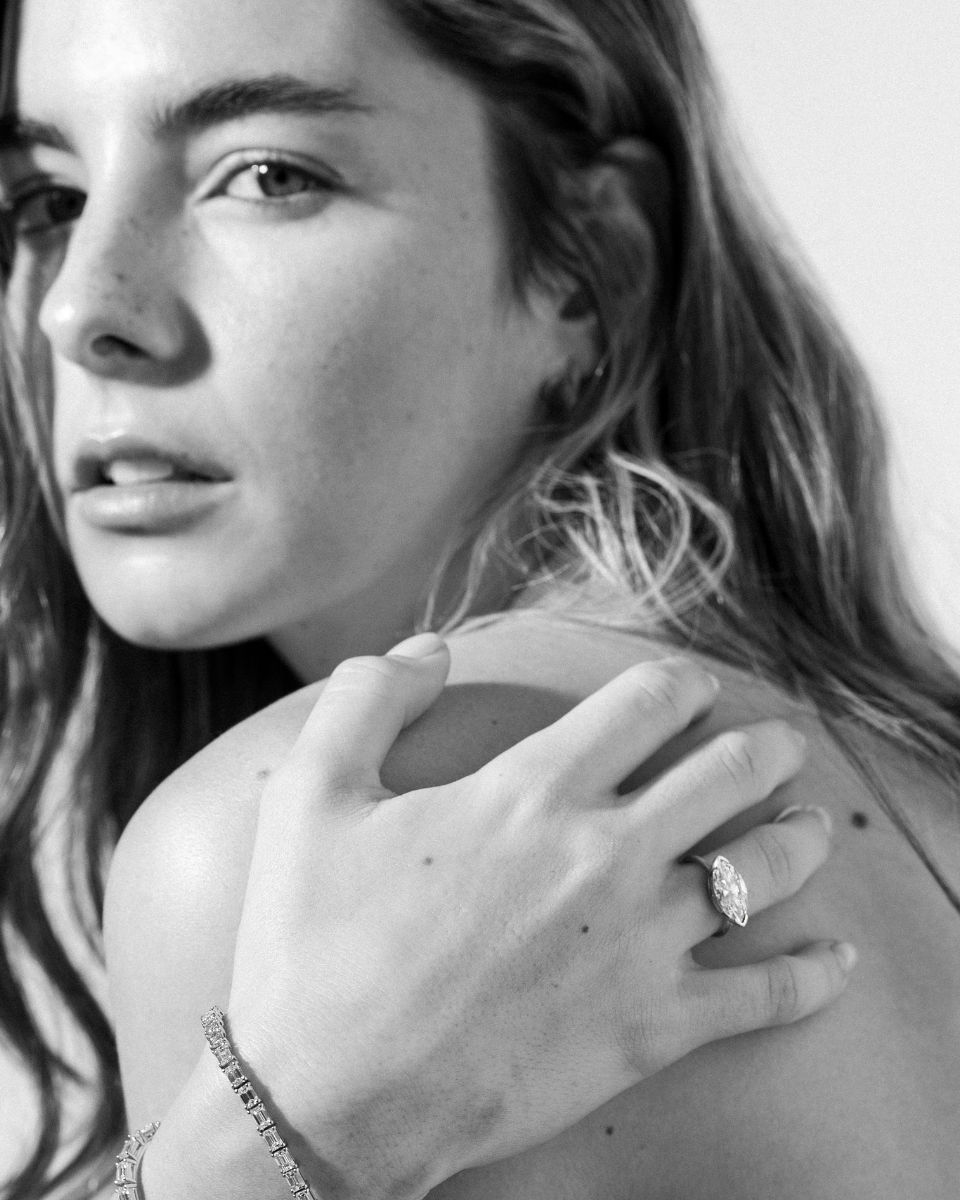
- East-west settings, in which the diamond sits sideways across the band rather than up and down, became popular in 2025. Zendaya wore an east-west diamond engagement ring at the Golden Globes, which brought new attention to this modern twist on classic settings.
- East-west settings are great for long shapes like ovals, pears, and marquises. Placing the diamond sideways can make it look bigger and stand out more on your finger.
- Bezel settings encase the diamond in metal, providing strong protection. This is especially effective for shapes with points, such as pears and marquises. Bezels also feature a clean, modern style that many people who prefer simple designs appreciate.
- Vintage filigree settings complement cushion cuts and old-style diamonds. These detailed designs match the softer sparkle and romantic look of these shapes.
- Halo settings, in which small diamonds surround the central stone, can make any shape look larger. They add extra sparkle and let you pick a smaller center diamond while still getting a bold look.

Settings play a major role in how a diamond presents on the hand.
Antique and Vintage Cuts
More people are interested in antique diamond cuts. The most common are old mine cuts, rose cuts, and European cuts. These have a chunkier, unique look inside because they were cut by hand rather than by machine, unlike modern diamonds.
These cuts are significant for those seeking something different from the usual sparkle. They’re also a good choice if you want to avoid new diamonds but don’t want lab-grown ones. Antique cuts come from stones cut many years ago, so they have a history and rarity you won’t find in modern cuts.
These classic cuts differ significantly from modern styles. Old mine and European cuts give off bigger, softer flashes of light instead of the sharp sparkle of today’s diamonds. Rose cuts are flat with a rounded top, giving them a unique look.

Antique and vintage diamond cuts offer a character that modern diamonds can’t replicate.
Making Your Decision
The best diamond cut for you depends on what you care about most. If you want the most sparkle and a classic look, a round brilliant is the top choice. If you want your diamond to look as large as possible within your budget, oval, pear, or marquise shapes offer the most size per carat. If you like a more subtle, elegant style, emerald or Asscher cuts are a great fit.
Your budget matters, too. Choosing a shape other than round can save you 20% to 40% while maintaining the same quality. You can use those savings to get a bigger diamond, better color or clarity, or keep the extra money.
Think about what looks good on your hand and matches your style. Long shapes make your fingers look longer, while square and round shapes look more compact. Some people like classic looks, while others want something unique.
It’s essential to look at real diamonds, not just the specs. Review photos and videos under different lighting conditions to see how the diamond sparkles. Pick the one you like best, instead of just going by the grading report.
Take your time making this choice. Ask questions and compare your options. We believe there’s a perfect diamond out there for every budget and taste. The most important thing is to find the one that makes you happy every time you see it.



Leave a comment (all fields required)